Changing Chinese Masculinities
豆瓣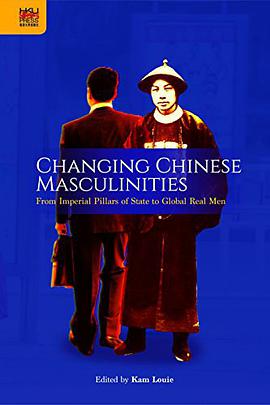
From Imperial Pillars of State to Global Real Men
Kam Louie (editor)
简介
It is now almost a cliché to claim that China and the Chinese people have changed. Yet inside the new clothing that is worn by the Chinese man today, Kam Louie contends, we still see much of the historical Chinese man. With contributions from a team of outstanding scholars, Changing Chinese Masculinities studies a range of Chinese men in diverse and, most importantly, Chinese contexts. It explores the fundamental meaning of manhood in the Chinese setting and the very notion of an indigenous Chinese masculinity.
In twelve chapters spanning the late imperial period to the present day, Changing Chinese Masculinities brings a much needed historical dimension to the discussion. Key aspects defining the male identity such as family relationships and attitudes toward sex, class, and career are explored in depth. Familiar notions of Chinese manhood come in all shapes and sizes. Concubinage reemerges as the taking of “second wives” in recent decades. Male homoerotic love and male prostitution are shown to have long historical roots. The self-images of the literati and officials form an interesting contrast with those of the contemporary white-collar men. Masculinity and nationalism complement each other in troubling ways. China has indeed changed and is still changing, but most of these social transformations do not indicate a complete break with past beliefs or practices in gender relations.
目录
Introduction
—Kam Louie
Part 1. Late Imperial Chinese Masculinity
1. Polygamy and Masculinity in China: Past and Present
—Harriet Zurndorfer
2. The Manhood of a Pinshi (Poor Scholar): The Gendered Spaces in the Six Records of a Floating Life
—Martin W. Huang
3. Theater and the Text-Spatial Reproduction of Literati and Mercantile Masculinities in Nineteenth-Century Beijing
—Mark Stevenson
4. The Plebification of Male-Love in Late Ming Fiction: The Forgotten Tales of Longyang
—Cuncun Wu
5. Aestheticizing Masculinity in Honglou meng: Clothing, Dress, and Decoration
—Louise Edwards
6. Drawings of a Life of “Unparalleled Glory”: Ideal Manhood and the Rise of Pictorial Autobiographies in China
—Binbin Yang
Part 2. Chinese Masculinity Today
7. Making Class and Gender: White-Collar Men in Postsocialist China
—Derek Hird
8. Corruption, Masculinity, and Jianghu Ideology in the PRC
—John Osburg
9. The Postsocialist Working Class: Male Heroes in Jia Zhangke’s Films
—Sheldon Lu
10. The Chinese Father: Masculinity, Conjugal Love, and Parental Involvement
—Xuan Li and William Jankowiak
11. All Dogs Deserve to Be Beaten: Negotiating Manhood and Nationhood in Chinese TV Dramas
—Geng Song
12. The Anthropology of Chinese Masculinity in Taiwan and Hong Kong
—Heung-wah Wong and Hoi-yan Yau