Negotiating Empire in the Middle East
Douban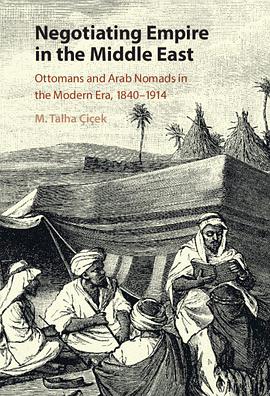
Ottomans and Arab Nomads in the Modern Era, 1840–1914
M. Talha Çiçek
sinopsis
In the early 1840s, Ottoman rulers launched a new imperial project, partly in order to reassert their authority over their lands and subjects, crucially including the Arab nomads. By examining the evolution of this relationship between the Ottoman Empire and Arab nomads in the modern era, M. Talha Çiçek puts forward a new framework to demonstrate how negotiations between the Ottomans and the Arab nomads played a part in making the modern Middle East. Reflecting on multiple aspects of Ottoman authority and governance across Syria, Iraq, Arabia, Transjordan and along their frontiers, Çiçek reveals how the relationship between the imperial centre and the nomads was not merely a brutal imposition of a strict order, but instead one of constant, complicated, and fluid negotiation. In so doing, he highlights how the responses of the nomads made a considerable impact on the ultimate outcome, transforming the imperial policies accordingly.
contenidos
Introduction
1. Conflict: The Imperial Attempts to Terminate the Nomadic Domination in the Arab Countryside and the Tribal Response
2. Reinforcement: Land Settlements and Military Fortification in the Desert and Its Frontiers, 1840–1870
3. Expansion, Reaction, and Reconciliation I: Establishment of the Deir al-Zor Mutasarrıfate and the Reconciliation with the Fid'an and Deir al-Zor's Shammar
4. Expansion, Reaction and Reconciliation II-The Nomads and Extension of the Ottoman Administration into the South of Syria
5. Partnership, Provincialization and Conflict: The Shammar in the Provinces of Mosul, Baghdad and Deir al-Zor, 1870–1914
6. Taxation: The Collection of the Shammar and Anizah Duties
7. Justice: The Imperial Legal System and the Bedouin Disputes
Conclusion.