Cotton, Climate, and Camels in Early Islamic Iran
Douban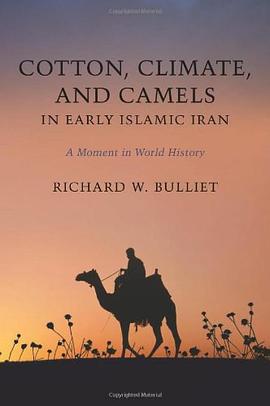
A Moment in World History
Richard W. Bulliet
sinopsis
A boom in the production and export of cotton made Iran the richest region of the Islamic caliphate in the ninth and tenth centuries. Yet in the eleventh century, Iran's impressive agricultural economy entered a steep decline, bringing the country's primacy to an end. Richard W. Bulliet advances several provocative theses to explain these hitherto unrecognized historical events. According to Bulliet, the boom in cotton production directly paralleled the spread of Islam, and Iran's agricultural decline stemmed from a significant cooling of the climate that lasted for over a century. The latter phenomenon also prompted Turkish nomadic tribes to enter Iran for the first time, establishing a political dominance that would last for centuries. Substantiating his argument with innovative quantitative research and recent scientific discoveries, Bulliet first establishes the relationship between Iran's cotton industry and Islam and then outlines the evidence for what he terms the "Big Chill." Turning to the story of the Turks, he focuses on the lucrative but temperature-sensitive industry of cross-breeding one-humped and two-humped camels. He concludes that this unusual concatenation of events had a profound and long-lasting impact not just on the history of Iran but on the development of world affairs in general.
contenidos
Preface
1. How to Identify a Cotton Boom
2. Islam and Cotton
3. The Big Chill
4. Of Turks and Camels
5. A Moment in World History
Index