101 hidden gems: the greatest films you’ve never seen

99 movies   2 tv shows  

Movie

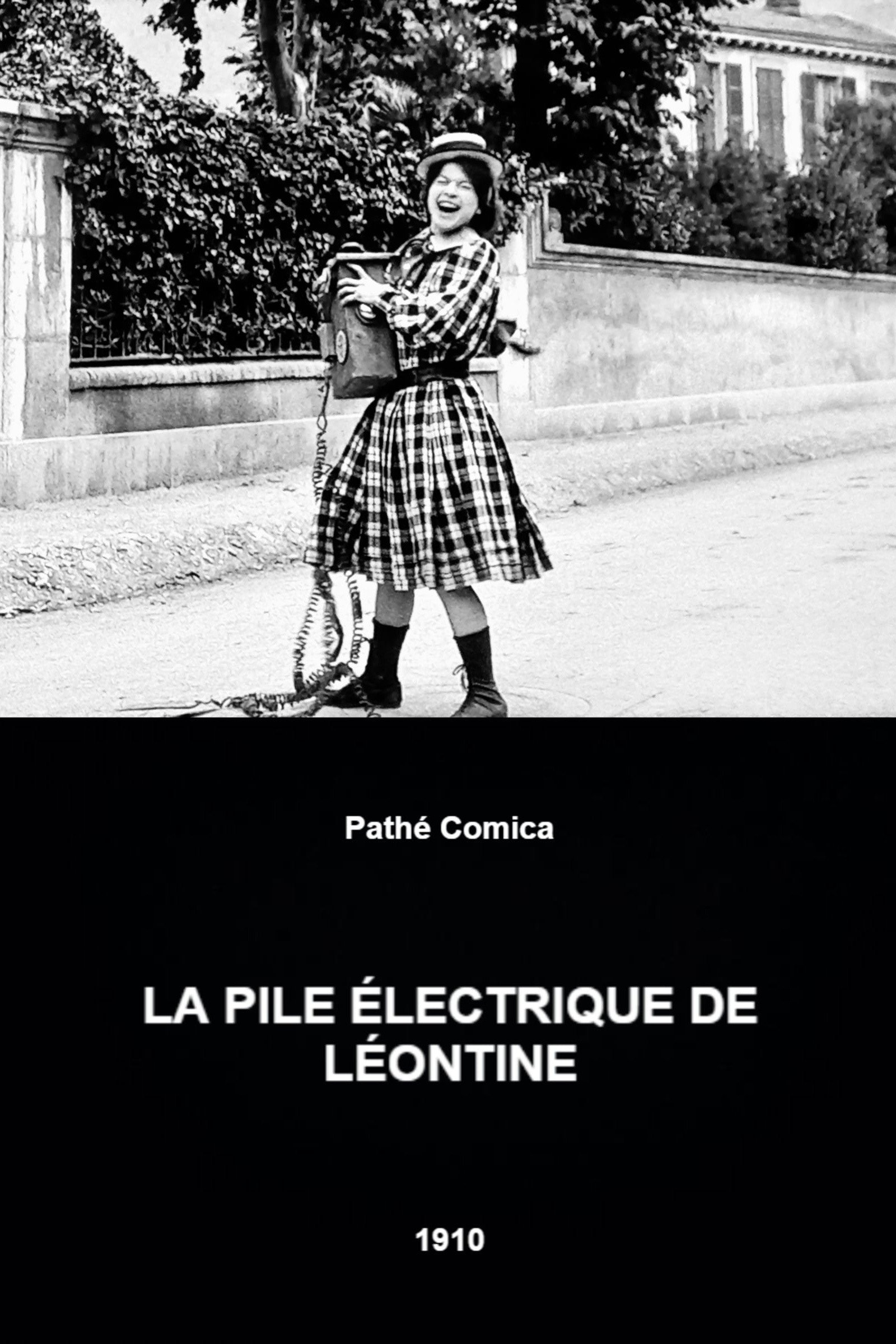
Léontine’s Battery (1910) IMDb TMDB
La pile électrique de Léontine
director: Louis Z. Rollini actor: Léontine
other title: La pile électrique de Léontine
Léontine lights up our lives with an electric battery, electrocuting everyone in her path. Her victims include two old ladies (played by men in drag), dancers at a café, workers on a construction site, a group of lackluster conscripts, and the local police force. To add insult to injury, she douses everyone with buckets of water.

Movie

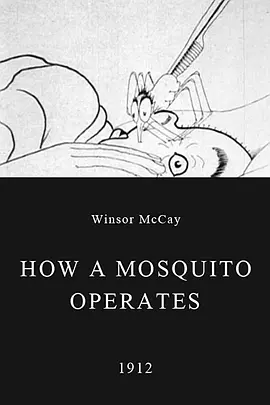
The Hungry Mosquito (1912) WikiData IMDb TMDB Douban
How a Mosquito Operates
★ 6.9 (11 ratings) director: 温瑟·麦凯
other title: 蚊子是怎么生活的 / How a Mosquito Operates …
Like all of Winsor McKay's cartoons, this little mosquito fable uses his incredible artistic talent to its fullest and contains a surprising amount of wit for such a simple, short subject. Like his newspaper cartoons, McKay's animated films are distinctive in their art and humor, but the animated films are especially interesting because they lie at the very root of cartoons. Gags that are still being used today appear in this little gem. The collected works that contains Mosquito provides an amazing insight into a brand new art form that had unbounded possibilities in the early 1900s, possibilities that arguably are still unfolding today

Movie

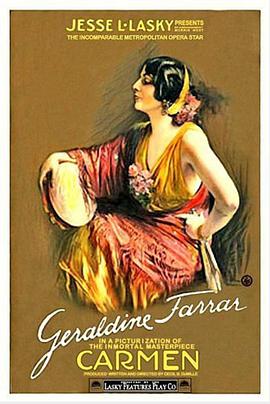
Carmen (1918) WikiData IMDb TMDB Douban
Carmen
director: 塞西尔·B·戴米尔 actor: 格拉汀·法拉 / 华莱士·里德 …
other title: 卡门 / Carmen (película de 1915 de Cecil B. DeMille) …
Hot-blooded gypsy Carmen attempts to seduce Don Jose, a lawman sent to thwart a gang of illegal smugglers in Spain. Carmen's plan backfires when Don Jose's passion for the gypsy girl escalates into a jealous rage as she spurns him for her bullfighter beau, Escamillo, with tragic results.

Movie

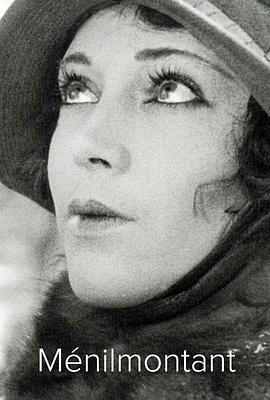
Ménilmontant (1928) WikiData IMDb TMDB Douban
Ménilmontant
★ 8.1 (7 ratings) director: 迪米特里·凯萨诺夫 actor: Nadia Sibirskaïa
other title: 迈尼蒙坦特
Dimitri Kirsanoff's film centers on two young country girls who flee to the city after their parents are brutally murdered (we are given very few details as to who did this or why). The film's narrative is very sketchy, as there are no intertitles, and the two girls have similar features and are dressed similarly throughout most of the film. One of the girls, played by the wonderful Nadia Sibirskaia (Kirsanoff's wife), goes off with a man while her sister stays home in their tenement. When she returns home she soon has a baby, and her sister goes off (presumably as a prostitute) with the man. Sibirskaia presumably becomes homeless until she is ultimately reunited with her sister. The man they went away with earlier shows up again, only to be killed by a random criminal.
The film's slim and fragmented plot does nothing to convey the extraordinary and evocative world Kirsanoff creates through a barrage of disparate techniques lifted from German expressionism, Soviet montage, Hollywood melodrama, and the French avant-garde. The opening massacre is shown through a rapid Eisenstein-inspired montage; the compression of time and dreamlike waywardness of the girls' journey is presented through a series of lap dissolves; and the wintry, desolate atmosphere of Menilmontant (a poor, working class district on the eastern edge of Paris) is conveyed by an impressionistic use of documentary footage.
The film's most celebrated sequence occurs while Sibirskaia is wandering destitute on the streets of Paris (after contemplating drowning herself and her baby). Alone at night on a park bench, the young mother is cold and hungry, when an old man with a cane sits down on the bench next to her. The old man quietly shares some of his bread with her (never looking at her, he only lays the scraps and pieces on the bench separating them). The desperate girl tearfully accepts the food, and smiles, though the man barely looks her way. It's an extraordinarily sad and moving sequence that has echoes of Chaplin, but without that comedian's maudlin approach to sentiment. Sibirskaia's performance here is wonderfully nuanced and naturalistic -- there's very little of the histrionics usually associated with much silent film acting -- and she possesses a face that rivals Lillian Gish. The only comparable sequence I can think of is in Ozu's great 1935 silent film, An Inn in Tokyo.

Movie

Sarah and Son (1930) WikiData IMDb TMDB Douban
Sarah and Son
director: 多萝西·艾玛·阿尔兹纳 actor: 鲁斯·查特顿
other title: 莎拉母子 / 사라와 아들 …
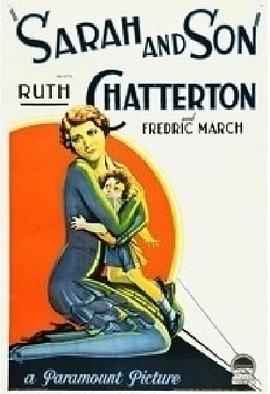
A ne'er-do-well husband, after years of abusing his wife, disappears with their son, and winds up selling him to a wealthy family. Years later, the wife, now a world-famous opera singer, finally has enough time and money to begin a search for him.

Movie

Scenes of City Life (1935) WikiData IMDb TMDB Douban
都市風光
★ 8.3 (13 ratings) director: 袁牧之 actor: 唐纳 / 周伯勋 …
other title: 都市风光 / 都市風光
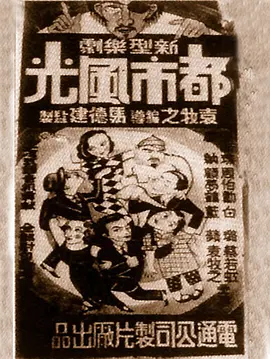
A novelist uses all his money to buy gifts for the woman he loves who in turn is also seeing a business man, using him for expensive presents. As a consequence the writer is unable to pay the rent, whilst the womans family goes hungry as her fathers business suffers. A joyful comedy that expresses the dangers of consumerism for the careless spender.

Movie

César (1936) WikiData IMDb TMDB Douban
César
director: 马塞尔·帕尼奥尔 actor: 雷姆 / 皮埃尔·弗雷奈 …
other title: 塞萨尔 / 세자르 …
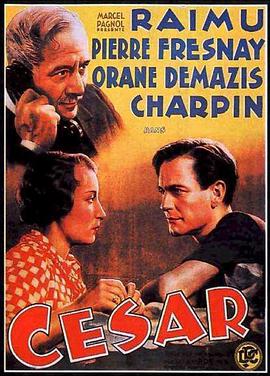
Honoré Panisse is dying, cheerfully, with friends, wife, and son at his side. He confesses to the priest in front of his friends; he insists that the doctor be truthful. But, he cannot bring himself to tell his son Cesariot that his real father is Marius, the absent son of César, Cesariot's godfather. Panisse leaves that to Fanny, the lad's mother. Dissembling that he's off to see a friend, Cesariot then seeks Marius, now a mechanic in Toulon. Posing as a journalist, Cesariot spends time with Marius and leaves believing tales he is a petty thief. Only after the truth comes out can Marius, Fanny, César, and Cesariot step beyond the falsehoods, benign though they may be.

Movie

Aniki-Bóbó (1942) WikiData IMDb TMDB Douban
Aniki Bóbó
director: Manoel de Oliveira actor: Nascimento Fernandes / Vital dos Santos …
other title: 点指兵兵 / Aniki Bóbó …
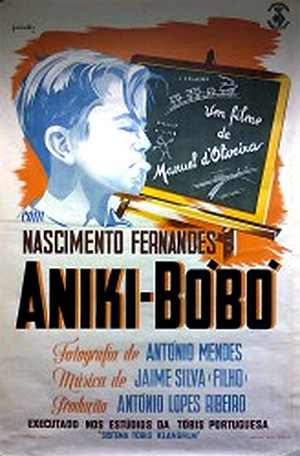
It is Manoel de Oliveira's first feature-length film. Mostly children, from Oliveira's hometown, Porto, play in its story. Aniki-Bóbó is a rhyme from a children's game, akin to Eeny, meeny, miny, moe.

多罗河岸的一帮孩子迎来了他们的新成员。这个害羞的男孩不得不偷一个玩偶以获得接纳。他爱上了帮派里唯一的女孩,但她同时也是“老大”的心头好。奥利维拉作为导演的第一部作品,受瓦尔特鲁特曼《柏林:城市交响曲》影响,用父亲购买的摄影相机拍摄而 成。本片受巴罗斯助理导演发掘而得到放 映,成为了这一时期葡萄牙电影的代表作。
  “点指兵兵”是意大利街头的儿童游戏,奥利维拉几乎完全任用非专业儿童演员,演绎了关于“愧疚与恐惧、欲望与越轨”的故事 ,超前地作出类新现实主义的实践,被认为是葡萄牙 20世纪40 年代最杰出的影片。

Movie

Desire Me (1947) WikiData IMDb TMDB Douban
Desire Me
other title: 旧情难却 / 横刀夺爱(港) …
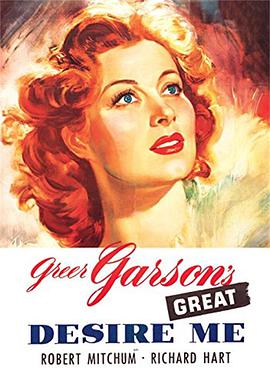
Shortly after WWII, flashbacks tell the story of Marise, her husband Paul, and Jean, who was imprisoned with Paul in a German camp. While attempting to escape from the camp Paul is shot, and Jean goes to see Marise, confirming the news she had gotten already about Paul's death. Jean has fallen in love with Marise through the stories Paul told him, and wants to stay with her in the seaside town in Brittany where Paul owned a small business.

Movie

Devil in the Flesh (1947) WikiData IMDb TMDB Douban
Le Diable au corps
director: 克洛德·奥当-拉哈 actor: 米切林内·普雷斯利 / 热拉尔·菲利普 …
other title: 肉体的恶魔 / Le Diable au corps …
In France during World War I, Marthe waits for her husband, Jacques, while he fights on the front lines. Marthe then begins a tempestuous affair with 17-year-old François, with whom she had a dalliance before marrying Jacques. Jealous François struggles with the fact that Marthe is married, while she tries to prove her devotion to her young, hotheaded lover. Things become even more complex when Marthe becomes pregnant with Jacques' baby.

Movie

Possessed (1947) WikiData IMDb TMDB Douban
Possessed
director: 柯蒂斯·伯恩哈特 actor: 琼·克劳馥 / 凡·赫夫林 …
other title: 作茧自缚 / 为卿倾倒 …
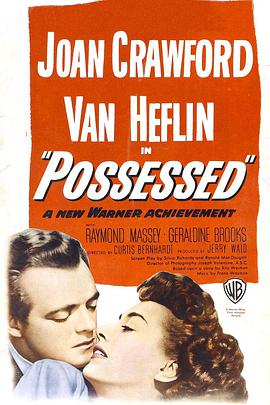
After being found wandering the streets of Los Angeles, a severely catatonic woman tells a doctor the complex story of how she wound up there.

Movie

Olivia (1951) WikiData IMDb TMDB Douban
Olivia
★ 6.0 (6 ratings) director: Jacqueline Audry actor: Marie-Claire Olivia / Yvonne de Bray
other title: 奥莉维娅 / The Pit of Loneliness …
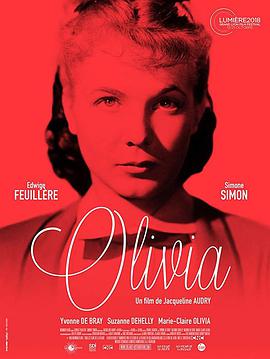
大概是法国第一部描写女同志的故事片吧。
Olivia (also known as Pit of Loneliness) is a 1951 French film directed by Jacqueline Audry. It is based on the 1950 semi-autobiographical novel by Dorothy Bussy. It has been called a "landmark of lesbian representation". Olivia arrives at a finishing school and falls in love with headmistress Mlle. Julie. Mlle. Julie feels the same, but tries to suppress her desire. For her part as Mlle. Julie, Edwige Feuillère was nominated for a BAFTA award for Best Foreign Actress in 1952.
French director Audry made 18 feature films from 1944 to 1972. Her earliest films are prime examples of the French 'tradition of quality.' She favored plots adapted from French literature. Audry is most distinguished from her peers in that her films were primarily focused upon female leads, whereas traditional French cinema is centered around the lives of men. Her most notorious film was 1951's Olivia, which dealt with lesbian relationships.

Movie

Wait Till the Sun Shines, Nellie (1952) WikiData IMDb TMDB Douban
Wait Till the Sun Shines, Nellie
director: 亨利 金 (Henry King (I)) actor: Jean Peters / David Wayne …
other title: 新潮试情 / Cabalgata de Pasiones …
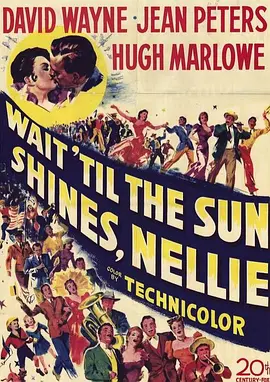
Ben Halpen sets up his barber's shop at the turn of the century in Sevillinois and watches the town grow around him. Thinking it is for the best, he tries to shield his wife Nellie from the worries of the world. She finally rebels while he is away at war and takes a fateful trip to Chicago. This turns out to be the first of a number of critical family crises for Ben.

Movie

Carrie (1952) WikiData IMDb TMDB Douban
Carrie
★ 8.3 (7 ratings) director: 威廉·惠勒 actor: 劳伦斯·奥利弗 / 珍妮弗·琼斯 …
other title: 캐리 / 黄昏 …
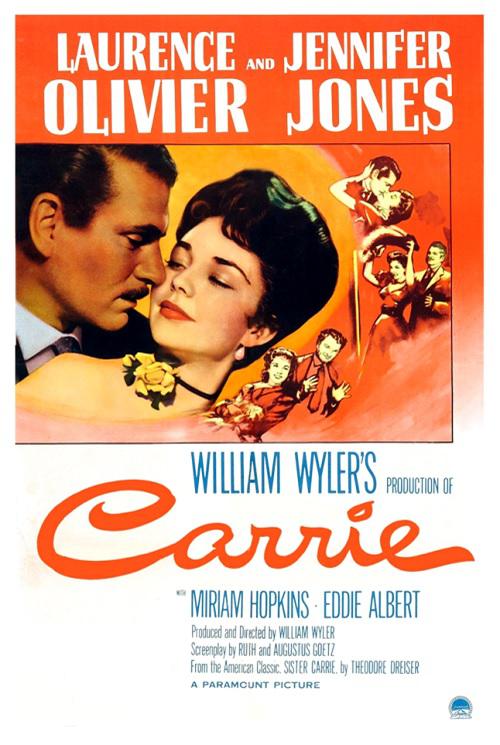
Carrie's dreams of adventure in the big city are quickly squashed as she discovers all that awaits her there is a bleak life of grueling and poorly paid factory work—that is, until a traveling salesman named Drouet steps into her life and changes her outlook.

Movie

Fear (1954) WikiData IMDb TMDB Douban
Non credo più all'amore (La paura)
★ 6.4 (8 ratings) director: 罗伯托·罗西里尼 actor: 英格丽·褒曼 / 马蒂亚斯·维曼 …
other title: 不安 / Non credo più all'amore (La paura) …
Whenever I see La Paura I think of it as a companion piece to Eyes Wide Shut, or maybe it is the other way around. Adultery makes both films tick but in different ways. I think Phillip French was right on the money when he pointed out a Wizard of Oz thing in Kubrick's last work. Like Dorothy, Tom and Nicole go through fantasies and nightmares and at the end Dorothy's reassuring childish motto "there's no place like home" is ironically updated to the adult circumstantial adage "there's no sex like marital sex". Kubrick's take is intellectual, he never leaves the world of ideas to touch the ground. He taunts the audience first with an erotic movie and then with a thriller and refuses to deliver either of them. He was married to his third wife for 40 years, until he died. Rossellini was still married to Ingrid Bergman when he directed La Paura; they had been adulterous lovers and their infidelity widely criticized La Paura is a tale, a noirish one. The noir intrigue is solved and the tale has a happy ending. The city is noir; the country is tale, the territory where childhood is possible. The transition is operated in the most regular way: by car, a long-held shot taken from the front of the car as it rides into the road, as if we were entering a different dimension. Irene (Bergman) starts the movie: we just see a dark city landscape but her voice-over narration tells us of her angst and informs us that the story is a flashback, hers. Bergman's been cheating on her husband. At first guilt is just psychological torture but soon expands into economic blackmail and then grows into something else. From beginning to end the movie focuses on what Bergman feels, every other character is there to make her feel something. Only when the director gives away the plot before the main character can find out does he want us to feel something Bergman still can't. When she finds out, we have already experienced the warped mechanics of the situation and we may focus once again on the emotional impact it has on Bergman's Irene. In La Paura treasons are not imagined but real, nightmares are deliberate and the couple's venom suppurates in bitter ways. Needless to say, Ingrid has another of her rough rides in the movies but Rossellini doesn't dare put her away as he did in Europa 51, nor does he abandon her to the inscrutable impassivity of nature (Stromboli). His gift is less transcendent and fragile than the conclusion of Viaggio in Italia. He just gives his wife as much of a fairy tale ending as a real woman can have, a human landscape where she can finally feel at home. Back to the country, a half lit interior scene where shadows suggest the comfort of sleep. After all, it's the "fairy godmother" who speaks the last words in the movie.
Reply Quote Sept. 26, 2026