Way

28 books  

Book

The Sublime Object of Ideology
Google Books Douban
Slavoj Zizek publishing house: Verso 2009 - 1
Slavoj Zizek, the maverick philosopher, author of over 30 books, acclaimed as the "Elvis of cultural theory," and today's most controversial public intellectual. His work traverses the fields of philosophy, psychoanalysis, theology, history and political theory, taking in film, popular culture, literature and jokes all to provide acute analyses of the complexities of contemporary ideology as well as a serious and sophisticated philosophy. His recent films The Pervert's Guide to the Cinema and Zizek! reveal a theorist at the peak of his powers and a skilled communicator. Now Verso is making his classic titles, each of which stand as a core of his ever-expanding life's work, available as new editions. Each is beautifully re-packaged, including new introductions from Zizek himself. Simply put, they are the essential texts for understanding Zizek's thought and thus cornerstones of contemporary philosophy.


Book

The Theory of Communicative Action, Volume 1
Theorie des kommunikativen Handelns Douban
Jürgen Habermas translator: Thomas McCarthy publishing house: Beacon Press 1985 - 3
A major contribution to contemporary social theory. Not only does it provide a compelling critique of some of the main perspectives in 20th century philosophy and social science, but it also presents a systematic synthesis of the many themse which have preoccupied Habermas for thirty years. --Times Literary Supplement

Book

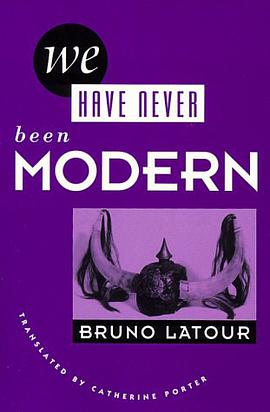
We Have Never Been Modern
Douban
★ 9.0 6 ratings
Bruno Latour translator: Catherine Porter publishing house: Harvard University Press 1993 - 10
With the rise of science, we moderns believe, the world changed irrevocably, separating us forever from our primitive, premodern ancestors. But if we were to let go of this fond conviction, Bruno Latour asks, what would the world look like? His book, an anthropology of science, shows us how much of modernity is actually a matter of faith. What does it mean to be modern? What difference does the scientific method make? The difference, Latour explains, is in our careful distinctions between nature and society, between human and thing, distinctions that our benighted ancestors, in their world of alchemy, astrology, and phrenology, never made. But alongside this purifying practice that defines modernity, there exists another seemingly contrary one: the construction of systems that mix politics, science, technology, and nature. The ozone debate is such a hybrid, in Latour's analysis, as are global warming, deforestation, even the idea of black holes. As these hybrids proliferate, the prospect of keeping nature and culture in their separate mental chambers becomes overwhelming--and rather than try, Latour suggests, we should rethink our distinctions, rethink the definition and constitution of modernity itself. His book offers a new explanation of science that finally recognizes the connections between nature and culture--and so, between our culture and others, past and present. Nothing short of a reworking of our mental landscape. "We Have Never Been Modern" blurs the boundaries among science, the humanities, and the social sciences to enhance understanding on all sides. A summation of the work of one of the most influential and provocative interpreters of science, it aims at saving what is good and valuable in modernity and replacing the rest with a broader, fairer, and finer sense of possibility.

Book

Social Systems (Writing Science)
Douban
Niklas Luhmann translator: Dirk Baecker publishing house: Stanford University Press 1996 - 1
A major challenge confronting contemporary theory is to overcome its fixation on written narratives and the culture of print. In this presentation of a general theory of systems, Germany's most prominent and controversial social thinker sets out a contribution to sociology that reworks our understanding of meaning and communication. Luhmann concedes that there is no longer a binding representation of society within society, but refuses to describe this situation as a loss of legitimation or a crisis of representation. Instead, he proposes that we search for new ways of coping with the enforced selectivity that marks any self-description under the conditions of functionally differentiated modern society. For Luhmann, the end of metanarratives does not mean the end of theory, but a challenge to theory, an invitation to open itself to theoretical developments in a number of disciplines that, for quite some time, have been successfully working with cybernetic models that no longer require the fiction of the external observer. Social Systems provides the foundation for a theory of modern society that would be congruent with this new understanding of the world. One of the most important contributions to social theory of recent decades, it has implications for many disciplines beyond sociology.

Book

社会学方法的准则
Les règles de la méthode sociologique Douban
★ 9.1 13 ratings
[法] E. 迪尔凯姆 translator: 狄玉明 publishing house: 商务印书馆 1995
19世纪30年代,孔德在其《实证哲学教程》一书中,首次提出了“社会学”这一名称,自那以后,社会学经历了最初的创立阶段、制度化发展阶段,第二次世界大战后又进入当代发展阶段。虽然其内容、流派已由单一走向多样化,但其中最基本的主要著作自始至今都有着重要的影响和作用。E.迪尔凯姆的《社会学方法的准则》一书就属此列。 本书最早出版于1895年。由于本书在社会学中的重要地位,1929年,上海商务印书馆就出版过著名社会学家许德珩先生的译本。我馆考虑到当前社会需要和中青年读者的阅读习惯,决定重译这本书。中译本依据的是法国巴黎费利克斯·阿尔冈出版社1919年的版本。
Nov. 10, 2026