Jørgen Leth — Director (20)

Movie
Composer Meets Quartet (1987)
Composer Meets Quartet WikiData IMDb TMDB
other title:
Danish Music at the Louisiana
An insight into the work by composer and pianist Herman D. Koppel with the American Cantilena Quartet before the first performance of his piano quartet 'opus 114' in 1986.
Movie
Step on Silence (1981)
Step on Silence WikiData IMDb TMDB
other title:
Step on silence
Step on Silence was made from raw material from Peter Martins - en danser but unlike the traditional way the Martins film communicates its material in this case we have a film that with its slightly dusty, scratchy appearance makes room for all the shots originally discarded for technical or narrative reasons.
Movie
Motion Picture (1970)
Motion Picture WikiData IMDb TMDB
other title:
Motion picture
The film may be viewed as a study of the nature of the medium and more specifically of the phenomena of framing, movement, and synchronicity of sound and picture.
Movie
Haiti. Untitled (1996)
Haïti. Uden titel WikiData IMDb TMDB
other title:
Haïti. Uden titel
Writer and cineast Jørgen Leth is the fascinated observer of a country where reality often seems surreal and resembles fiction. Haïti’s history is written in blood. Voodoo plays an important role in politics. Death and horror are part of Haïti’s everyday life. Over five years Leth and his small crew witnessed dramatic events, but he also captured moments of sensuality and beauty in his epic and very personal documentary.
Movie
Look Forward to a Time of Security (1964)
Se frem til en tryg tid WikiData IMDb TMDB
other title:
Se frem til en tryg tid
/
Look Forward to a Time of Security
A study of the basic elements of film, first and foremost framing and the relationship between image and sound. The film consists of shots of a Spanish barber at work, a man telling stories, and the musician Louis Hjulmand playing the vibraphone.
Movie
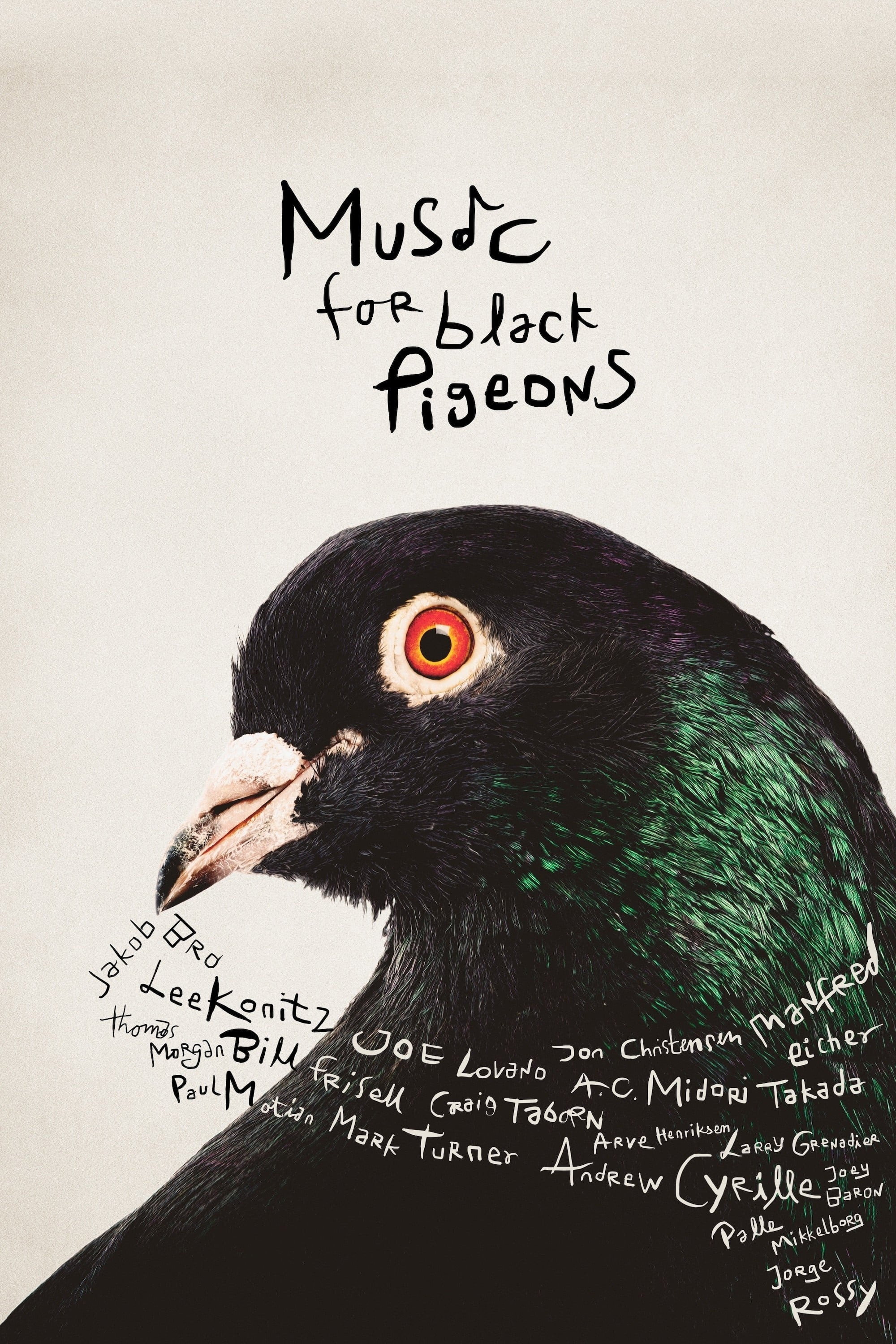
Music for Black Pigeons (2023)
Music for Black Pigeons WikiData IMDb TMDB
Andreas Koefoed
/
Jørgen Leth
actor:
Jakob Bro
/
Lee Konitz
…
other title:
검은 비둘기를 위한 노래
/
ミュージック・フォー・ブラック・ピジョン ―ジャズが生まれる瞬間―
…
2022 documentary film directed by Andreas Koefoed, Jørgen Leth

Movie
New Scenes from America (2003)
New Scenes from America WikiData IMDb TMDB Douban
约尔延·列斯
actor:
Henree Alyse
/
约翰·阿什伯里
…
other title:
美国新场景
/
Nye scener fra Amerika
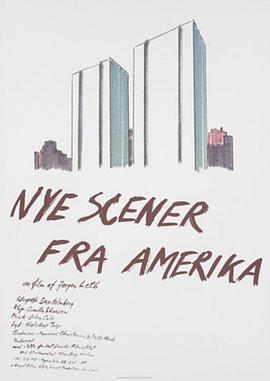
Danish documentarian Jørgen Leth revisits the theme and poetic style of his earlier film '66 Scenes from America' and finds in the faces, skylines, and roadside attractions of the United States a perfect post-September 11 salute to what makes the country great: not ideologies or flag waving, but eccentricity, idiosyncrasy, and individuality.
Movie
The Erotic Man (2010)
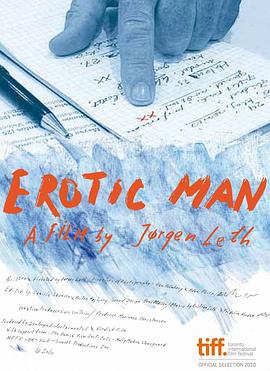
DoubanA collections of scenes based on documents, letters, pictures and poems that depict a man's erotic nature.
One of modern Danish cinema’s pioneers, Jorgen Leth has been making films since the late 1950s. The breadth of his work has been staggering, ranging from portrait films (usually focusing on artists like dancer Peter Martens or jazz great Bud Powell) to impressionistic, poetic notebooks on China, Haiti and the USA to suspenseful accounts of sporting events (including the Tour de France). But he’s best known for absurdist glimpses of contemporary life in Denmark, most notably The Perfect Human, which served as the spark for his collaboration with Lars von Trier, the widely celebrated The Five Obstructions. (Needless to say, he has had an enormous influence on the current crop of Danish filmmakers.)
Still nothing he’s done in the past to quite prepare anyone for the idiosyncratic and unique pleasures of The Erotic Human, in some ways his most radical and personal work, a powerful and sometimes shockingly honest essay about eros, aging and loss. The premise is deceptively simple. Leth travels to several countries (the locations include Haiti, the Philippines, Senegal, Brazil, Argentina, Panama) to cast one particular scene: a woman, usually naked, is sitting in a hotel room, lamenting the loss of her lover who has returned to Europe. But, with each new reenactment of the scene, one begins to questions its veracity. It’s a forlorn fantasy – a man’s need to re-experience a scene he could only ever have imagined, at best. (There are echoes of Alain Resnais’s early 1960s classics, Hiroshima mon amour and Last Year at Marienbad.)
These scenes are set against footage of Leth alone in hotel rooms, ruminating on the pitfalls and nature of his project; hilarious discussions of the casting sessions with his colleagues (he refuses to turn anyone down); highly aestheticized nude studies of female bodies; and, in one memorable moment, a boat trip up the Amazon.
The juxtaposition of age with youth and beauty creates an overly fecund atmosphere where fertility connotes decay ala Keats’ “To Autumn”. (The film’s palpable sense of resignation is heightened and made more painful by Leth’s own complicated outsider status in most of the areas he visits, a situation the film is aware of but never directly addresses.)
What emerges is an elegy for lost possibilities and a paean to sensuality and the female form – and possibly the most upfront and searing look at sexuality you will see in a long while. –TIFF.net
Movie
Notes From China (1986)
Notater Fra Kina WikiData IMDb TMDB Douban
other title:
Notater Fra Kina
/
中国笔记
…
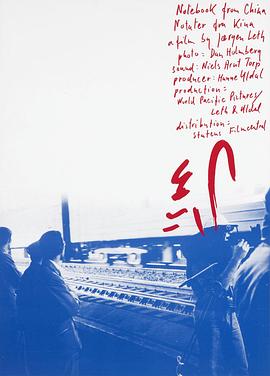
In 1984 Jørgen Leth, cinematographer Dan Holmberg and sound recordist Niels Torp travelled some 6,000 kilometres by train through China. The result is a very calm, beautifully perceived travelogue borne by unprejudiced curiosity and observational ability. A riverboat in a landscape of sugar-top mountains in Southern China and the many shots from the train journey are the visual leitmotifs of the film, in which we meet an acrobat, a painter in inks, some opera students from the Beijing conservatory, and a group of female racing cyclists. The camera falls in love with exquisite tai chi movements and the dexterity of the train kitchen staff, and the soundtrack gives a vivid sense of the noisy life on board, with music blaring from scratchy loudspeakers. The fact that the film should be viewed as a collection of notes on film, i.e. a kind of travel journal, is emphasised by the title and by Leth's only words on the soundtrack: "I take notes because I want to remember what I have seen. I am smoking a Chinese cigarette and I am travelling on board a train in China". (In an English version of the film, which is nineteen minutes shorter, a further three notes appear on the soundtrack).
Movie
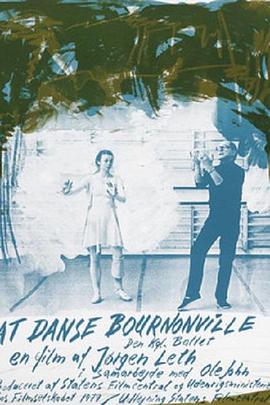
Dancing Bournonville (1979)
Douban
约尔延·列斯
actor:
Clive Barnes
/
Flemming Ryberg
…
A film about a living tradition at the Royal Theatre with The Royal Danish Ballet. Produced for Statens Filmcentral and the Danish Ministry of Foreign Affairs by The Film Company. Directed by Jørgen Leth. Research/manuscript: Ole John. Advisor: Ebbe Mørk. Lighting: Jan Weincke and Barney Fick. Sound: Niels Bokkenheuser. Production chief: Ole John. Narration: Clive Barnes. Choreography: Auguste Bournonville.
CONTENTS. --
Brief excerpt from a performance of Conservatoriet. Direction: Flemming Ryberg. Scenery and costumes: Ove C. Pedersen. Music: H.S. Paulli. --
Brief segments showing various teachers in class: children's class conducted by Flemming Ryberg; Fredbjørn Bjørnsson teaching a men's "Wednesday" class; Henning Kronstam teaching an adult class; Erik Bruhn, as guest director, teaching a women's class. --
Hans Brenaa teaching a mime sequence to Mette-Ida Kirk and Ib Andersen in preparation for restaging of Kermessen i Brügge. --
A week later, Brenaa rehearsing the same ballet with Kirk and Andersen. --
Another week later, Brenaa directing Kirk in the same ballet on stage. --
Backstage preparations before the premier of the same ballet shows dancers making up and warming up, and Brenaa giving a brief pre-performance talk to the dancers. --
Mette-Ida Kirk and Ib Andersen in the Pas de deux, Act I, from Kermessen i Brügge in performance. Direction: Hans Brenaa. Scenery and costumes: Lars Juhl. Music: H.S. Paulli. --
Performance of Tarentella from Act III of Napoli. Direction: Kirsten Ralov. Scenery and costumes: Søren Frandsen. Music: Paulli. --
Kirsten Ralov instructing Linda Hindberg and Arne Villumsen in a run-through of the Pas de deux from Flower Festival at Genzano.
Movie
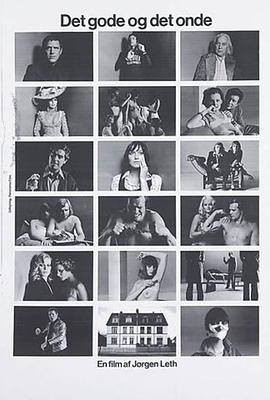
Good and Evil (1975)
Det gode og det onde Douban
other title:
Det gode og det onde
/
The Good and the Bad
…
An extension of The Perfect Human, Good and Evil is a longer, more expansive pseudo-documentary portrayal of life, no less. Using capacious titles or chapter headings that Leth's narrator's voice dwells upon and impresses upon us as he toys with the cliché "Faces", "Bodies", "Things", "Necessary actions", "Unnecessary actions", Good thoughts", "Bad thoughts", "Pleasant feelings", "Unpleasant feelings", and "Words" - the film consist of aesthetically titillating and contentually almost schematic scenes shot in the void of the film studio: faces, bodies and things. A man with a shoe. Another man with a hardboiled egg which he talks about and eats. A woman gives her husband a shirt. A couple who argue. A desperate woman. And so forth. There is no psychological shading of the characters, merely a series of sketches or examples that are as if plucked out of different everyday contexts. The thread leading back to Life in Denmark is thus also clear. The dialogue is sparse and phrases or fragments of phrases recur, spoken by different actors and in different roles, which may be viewed as an accentuation of the ordinariness of these little utterances and as an awareness of language as such. Besides the professional cast work the film uses several photographic models, the circus artiste Diana Benneweis, and the cyclist ole Ritter, who all pose in front of the camera in small tableaux. In addition to the craziness of the project the film also contains a series of zany comic acts with Claus Nissen to carry them. He bursts into song while washing his hands, dances in an empty room, plays rhythmic games with the statement "Bossa nova rhythms I have nothing against" and repeats his mysterious closing line from The Perfect Human: "Today, too, I had an experience ..." The framework for the scenes is made up of a couple of visual leitmotifs by way of house fronts and landscapes. In addition a beautiful travelling shot from an avenue at dramatically appropriate moments is accompanied by one of the two tunes by Gunner Møller Pedersen from the film, sung in a girlish voice by Sanne Salomonsen. In 1999 Lars von Trier chose the film to represent Danish cinema at a number of European film festivals over a period of three years .
Movie
Notes on Love (1989)
Notater om kærligheden Douban
Jørgen Leth
actor:
Claus Nissen
/
Stina Ekblad
…
other title:
Notater om kærligheden
/
爱的记录
Movie
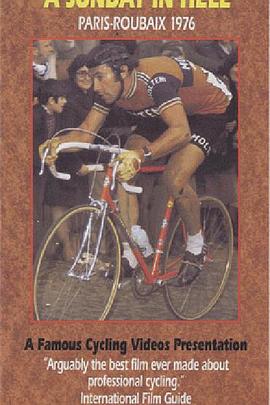
A Sunday in Hell (1977)
En forårsdag i Helvede WikiData IMDb TMDB Douban
Jørgen Leth
actor:
Roger De Vlaeminck
/
Marc Demeyer
…
other title:
En forårsdag i Helvede
/
地狱星期天
…
"The sunday is April 11th, 1976, when the classic and gruelling annual Paris-Roubaix bicycle race was held, and the Hell is the cobblestone field roads of northern France, where the champions of bicycle racing battle for victory. With an army of photographers, Jorgen Leth followed the race in all of its detail, and he has edited this 24 hours of footage into a mythic and documentary spectacular.
Jorgen Leth has made cycling films before, but A Sunday in Hell is his piece de resistance, over a hundred minutes of finely-calculated suspense that leaves the viewer limp from vicarious pain and excitement. It is a compassionate film, realistic, yet free of the excesses of poetic realism'". (Peter Cowie, 1978 International Film Guide)

Movie
Ophelia's Flowers (1968)
Douban
Jørgen Leth
actor:
Lene Adler Petersen
other title:
Ofelias blomster
Movie
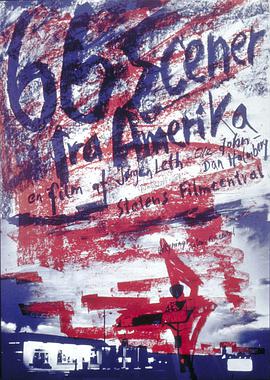
66 Scenes from America (1981)
66 scener fra Amerika WikiData IMDb TMDB Douban
约尔延·列斯
actor:
Kim Larsen
/
安迪·沃霍尔
other title:
美国的66幕
/
66 scener fra Amerika
…
As a visual narrative it is reminiscent of a pile of postcards from a journey, which indeed is what the film is. It consists of a series of lengthy shots of a tableau nature, each appearing to be a more or less random cross section of American reality, but which in total invoke a highly emblematic picture of the USA.
Movie
Life in Denmark (1971)
Livet I Danmark WikiData IMDb TMDB Douban
乔根·莱斯 Jørgen Leth
actor:
阿斯各·莱斯
/
Jørgen Ryg
other title:
丹麦生活
/
Livet I Danmark
…
The intention of the film is to give an impression of what small exotic Denmark looks like, what the strange Danes look like and how they are. Nearly 100 Danes are presented in the film, amongst them a racing cyclist, a Minister of Finance, a popular actor and 13 unmarried women from a provincial town. "There is too much fogginess and rain and melancholy in most of the pictures of Denmark," says Jørgen Leth. "But not in my film. I would like to show you some authentic, clear and beautiful pictures from this strange country."

Movie
The Perfect Human (1967)
Det perfekte menneske WikiData IMDb TMDB Douban
约尔延·列斯
actor:
克劳斯·尼森
/
Majken Algren Nielsen
…
other title:
完美的人
/
Det perfekte menneske
《完美的人》
丹麦电影约根列斯于1967年拍摄了这部12分钟长的关于人的行为方式的经典短片。该片与五道电影难题同时反映。
Jørgen Leth | 丹麦 | 1967 | 12 分钟 | 35毫米 | 丹麦语配中英文字幕
The Perfect Human
An elegant and humorous film – in the guise of a serious anthropological treatise – spotlights “The Perfect Human,” a model of the modern Dane created by our wishful thinking.
Jørgen Leth | Denmark | 1967 | 12 minutes | 35mm | Danish with Chinese and English subtitles

Movie
The Five Obstructions (2003)
De fem benspænd WikiData IMDb TMDB Douban
约尔延·列斯
/
拉斯·冯·提尔
actor:
Claus Nissen
/
Majken Algren Nielsen
…
other title:
五道障碍
/
De fem benspænd
…
Lars von Trier challenges his mentor, filmmaker Jørgen Leth, to remake Leth’s 1967 short film The Perfect Human five times, each with a different set of bizarre and challenging rules.