other title:
女人的哀愁
/
女人哀愁
…
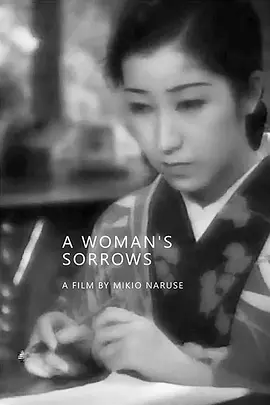
In his review of Feminine Melancholy in Kinema Junpo, critic Mizumachi Seiji praises Irie's performance as the best of her talkie career. However, he is very critical of the film itself, which he sees as a typical story of a woman in an unhappy marriage. He is not sympathetic toward the heroine's patient suffering and describes the nagging mother-in-law as a "hackneyed theme." Naruse's detailed "documentation" of Hiroko's role in the household is dismissed as a "manneristic obsession," and Mizumachi suggests that the director is hiding behind "the shadow of the materials." Most severely, he criticizes Naruse for "abandoning his authority as an auteur" by resorting to "shinpa-tragedy," which is seen as a capitulation to a form that has "wielded a powerful hold over the imagination of the masses." Although Mizumachi notes that Naruse has probed into "the deepest recess of the female psyche," he doesn't recognize this as the film's achievement, perhaps because he is looking for something else from the director. His review reveals the difficulties Naruse faced in maintaining his "auteur status" while moving with the tides of popular culture. For Mizumachi, the character of Yoko is the most typical Naruse heroine, perhaps because she is dragged down by her delinquent lover; however, in retrospect, it is evident that Hiroko's tenacious survival of adverse circumstances looks forward to Naruse's postwar heroines.