Francesca Bray — Author (2)

Book

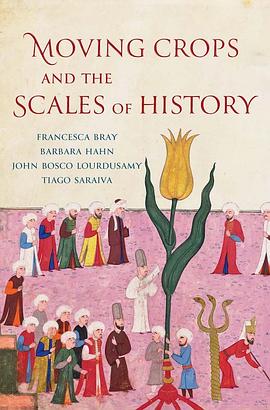
Moving Crops and the Scales of History
Douban Goodreads
Francesca Bray / Barbara Hahn … publishing house: Yale University Press 2023 - 2
A bold redefinition of historical inquiry based on the "cropscape"--the people, creatures, technologies, ideas, and places that surround a crop Human efforts to move crops from one place to another have been a key driving force in history. Crops have been on the move for millennia, from wildlands into fields, from wetlands to dry zones, from one imperial colony to another. This book is a bold but approachable attempt to redefine historical inquiry based on the "cropscape": the assemblage of people, places, creatures, technologies, and other elements that form around a crop. The cropscape is a method of reconnecting the global with the local, the longue durée with microhistory, and people, plants, and places with abstract concepts such as tastes, ideas, skills, politics, and economic forces. Through investigating a range of contrasting cropscapes spanning millennia and the globe, the authors break open traditional historical structures of period, geography, and direction to glean insight into previously invisible actors and forces.
Book

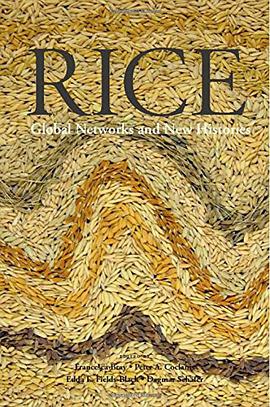
Rice
Douban Goodreads
Francesca Bray / Peter A. Coclanis … publishing house: 劍橋大學出版社 2015 - 3 other title: Rice: Global Networks and New Histories
Rice today is food to half the world's population. Its history is inextricably entangled with the emergence of colonialism, the global networks of industrial capitalism, and the modern world economy. The history of rice is currently a vital and innovative field of research attracting serious attention, but no attempt has yet been made to write a history of rice and its place in the rise of capitalism from a global and comparative perspective. Rice is a first step toward such a history. The fifteen chapters, written by specialists on Africa, the Americas, and several regions of Asia, are premised on the utility of a truly international approach to history. Each one brings a new approach that unsettles prevailing narratives and suggests new connections. Together they cast new light on the significant roles of rice as crop, food, and commodity and shape historical trajectories and interregional linkages in Africa, the Americas, Europe, and Asia.