Yoshie Ichige — Actor (6)

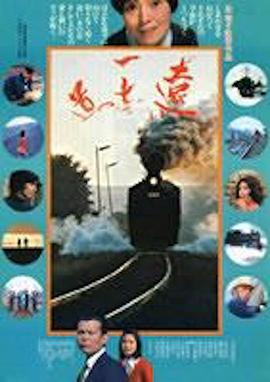
The Far Road (1977) [Movie] WikiData IMDb TMDB Douban
遠い一本の道
other title:
遥遥长路远
/
遠い一本の道
…
A first film as producer/director for the celebrated actress Sachiko Hidari, who plays a leading role herself and can also be seen in Double Suicide at Sonezaki in this year's Festival. Ms. Hidari was born in 1930, and worked as a teacher of music and gymnastics before signing with the independent Sogo Geijutsu company as an actress in 1952. Her first significant appearances were in two of Heinosuke Gosho's 1954 films. An Inn at Osaka and the The Cock Crows Again, and she has subsequently played the female lead in such films as Tomotaka Tosaka's The Maid's Kid, Sosumu Hani's She and He and Imamura's The Insect Woman. She founded her own production company to co-produce The Far Road with the Japanese National Railway Workers' Union with whom she shared a wish to bring to the screen for the first time something of the lives and problems of blue-collar workers in the Japanese Railways. The resulting film is large in ambition and scale; it was two years in production, and finally cost some 120 million yen.
The film begins on Railroad Day (14 October) 1975, with railway employee Ichizo Takinoue travelling to Sapporo with his wife Satoko to receive to Sapporo with his wife Satoko to receive his award for 30 years' service - a wristwatch. That evening, Ichizo's suppressed tensions and resentments come to the surface when for no rational reason he violently opposes his daughter Yuki's proposed marriage. Satoko (played by Ms.Hidari) thinks ruefully back to the day she married Ichizo and reflects on the changes that both they and the Japan National Railway have been through.
Through a series of flashbacks, the film identifes the crucial year of transition. In the early 60's, when the family had two young children and Satoko went out to work as well as Ichizo, the first wave of modernisation hit the railways: job security was threatened and Ichizo twice failed his promotion exams. By 1966, the introduction of new technology was resulting in lay-offs: Satoko, feeling that she should not have to work simply to earn enough for the family to live on, urged Ichizo to join the Union and support its fight or job security and better wages. In 1970, the Marusei (production improvement movement) took off, and a second Railway Workers' UNion was founded, this one secretly guided by the JNR management. Factionalism set in, and old friends found themselves divided.....Back in the present, Ichizo takes stock of his situation and realises that he has been taking out his feelings of uncertainty and impotence on his family. He gives his blessing to his daughter's marriage, and he and Satoko travel with their daughter and son-in-law to Nagasaki. The young couple inspire the old couple to reassess the 'far road' ahead of them.
(Tony Rayns 3rdHKIFF)
The film begins on Railroad Day (14 October) 1975, with railway employee Ichizo Takinoue travelling to Sapporo with his wife Satoko to receive to Sapporo with his wife Satoko to receive his award for 30 years' service - a wristwatch. That evening, Ichizo's suppressed tensions and resentments come to the surface when for no rational reason he violently opposes his daughter Yuki's proposed marriage. Satoko (played by Ms.Hidari) thinks ruefully back to the day she married Ichizo and reflects on the changes that both they and the Japan National Railway have been through.
Through a series of flashbacks, the film identifes the crucial year of transition. In the early 60's, when the family had two young children and Satoko went out to work as well as Ichizo, the first wave of modernisation hit the railways: job security was threatened and Ichizo twice failed his promotion exams. By 1966, the introduction of new technology was resulting in lay-offs: Satoko, feeling that she should not have to work simply to earn enough for the family to live on, urged Ichizo to join the Union and support its fight or job security and better wages. In 1970, the Marusei (production improvement movement) took off, and a second Railway Workers' UNion was founded, this one secretly guided by the JNR management. Factionalism set in, and old friends found themselves divided.....Back in the present, Ichizo takes stock of his situation and realises that he has been taking out his feelings of uncertainty and impotence on his family. He gives his blessing to his daughter's marriage, and he and Satoko travel with their daughter and son-in-law to Nagasaki. The young couple inspire the old couple to reassess the 'far road' ahead of them.
(Tony Rayns 3rdHKIFF)
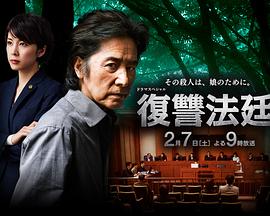
Revenge Court (2015) [Movie] IMDb TMDB Douban
復讐法廷
other title:
复仇法庭
/
復讐法廷
…
大学教授中原诚司(田村正和 饰)的爱女由纪子被岩崎健二(中尾明庆 饰)残忍奸杀,虽然岩崎认罪,但法庭却以警方审讯过程中涉嫌使用暴力而对嫌疑人的供词不予认同,最终导致岩崎无罪释放。这个判决令中原夫妇大受打击,不久由纪子的母亲郁郁而终,而中原无法按捺内心的仇恨,决心向杀害女儿的凶手和腐朽的日本司法展开控诉。经过令人难耐的沉寂后,中原终于在某个夜晚将岩崎射杀。在此之后,因不满检方的懦弱而转行做律师的绪方信子(竹内结子 饰)担任中原的辩护人,她重新梳理由纪子遇害一案,决心帮助早已有认罪伏法觉悟的中原重获自由。在此过程中,由纪子生前一个未解之谜也悄然解开……

Wish (2020) [Movie] IMDb TMDB Douban
望み
other title:
希望
/
望み
…
Kazuto Ishikawa is a first-class architect. He is married to Kiyomi. They have a son, Tadashi, who attends high school and a daughter, Miyabi, who attends middle school. They live together in a refined home, designed by Kazuto. An injury causes Tadashi to quit playing soccer. Since that time, Tadashi often stays out all night without permission. One evening, Tadashi leaves home and does not return. Kazuto and Kiyomi become worried about their son and consider going to the police. News then reveals the murder of Tadashi's classmate. The police suspect that Tadashi might be involved in the murder.