Werner Nekes — Director (13)

Movie

Multi-Thousand Picture Show (1996)
Media Magica IV - Vieltausendschau IMDb TMDB
other title: Media Magica IV - Vieltausendschau
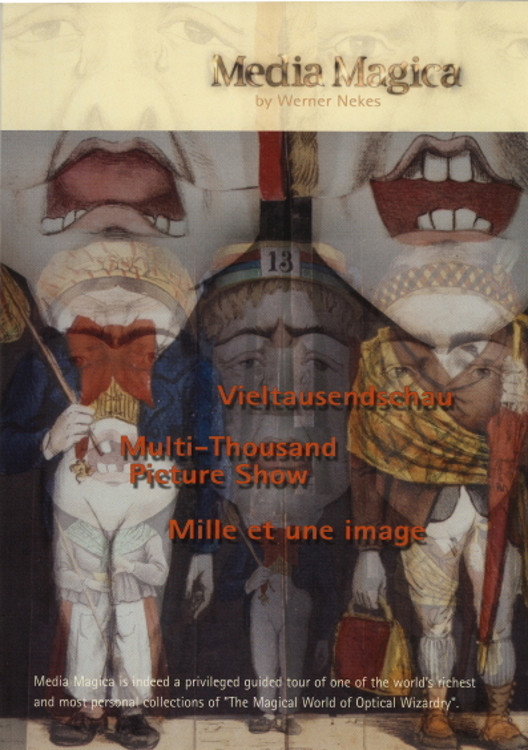
Picture montage was a central aspect in the early history of visual media. As early as the 16th century, techniques such as the folding picture montage anticipated those used in film today. Other examples of early forms of montage are transparencies, picture puzzles and blow books, which direct the gaze towards hidden information. In the myriorame, the multi-thousand picture-show, it is possible to assemble infinite landscapes.

Movie

Makimono (1974)
Makimono Douban
other title: 书画卷轴
“The title refers to Japanese landscape painting on rolls. Furthermore it indicates the film’s theme, the balance of colors (blurred tones of blue, green and grey) and the type of montage that gives priority to continuity of development rather than to disruption and contrast. This continuity is achieved by dissolvings and double exposures and by extremely long pans. The rhythm accelerates: a meditation on landscape, which unfolds before the eye or is visually paced out, gives way to fluidity and pure motion, to a feeling of dizziness, the result of two contrasting camera movements. The world resembles a reflection in the water; then, however, rapid montage creates a calligraphy consisting of the quick and sharp black strokes of a Hartung painting, until one finally arrives at the glittering simplicity of an early movie where each frame still retains the weight of its individual tracks, of earth and of the world. Anthony Moore’s Soundtrack strikingly agrees with the images presented and by means of three consecutive modulations bestows unto them the structure of a concerto.” Helmuth Fenster

Movie

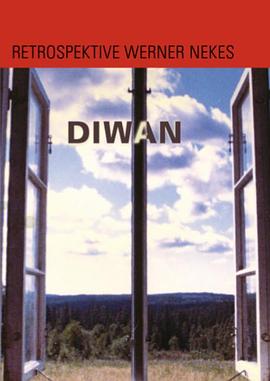
Diwan (1974)
Douban
Werner Nekes actor: Ludi Armbruster / Nikolaus Hof …
Diwan, a lyrical anthology, is an outdoor movie with people. With people who are neither more nor less than a part of the precious and exquisitely photographed nature surrounding them. What Nekes achieves with landscape as a cunning artist in a medium which proceeds in time -- how he vanquishes time that changes things by using it to change the landscape, how he disturbs or destroys the laws of chronology through the rewind mechanism of the camera -- is a captivating and highly aesthetic experimental undertaking (...).

Movie

Kelek (1968)
Douban
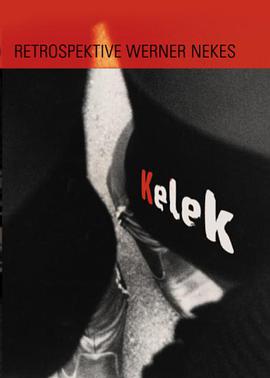
A long take from a basement window onto the street. Slow fading in and out of the Brüderstraße in Hamburg (where Nekes lives). A take looking from a girl's belly onto her legs and her dress. Then vagina and penis, how they complement each other. The 60 minute film is silent. The screen, as in earlier Nekes films, turns into the canvas of a painter. One is not looking into an imaginary room, one sees a flat surface which is divided, and replaced by another canvas with every cut. One impression is foremost: rigorous, cold calculation. The film stands like a monolith. Immovable. It is so very much image that it eludes adequate verbal description. One has to see it.

Movie

Lagado (1977)
Lagado Douban
维尔纳·内克斯 actor: Susanne Kelterborn / Anna Pfeiffer …
other title: 拉加多
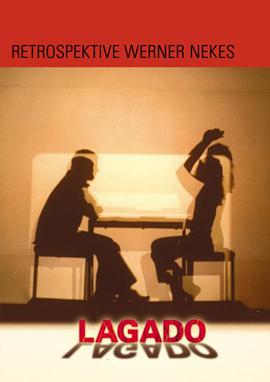
Ein experimenteller Spielfilm in der Behandlung des Verhältnisses der Funktionen von Bild zu Ton (0-Ton) über das Durchdringen der unterschiedlichsten Kommunikationsschichten. „. . . Was eher einschüchternd akademisch klingt, besitzt auf der Leinwand einen großen sinnlichen Reiz. In über zwanzig Sequenzen, denen zum Teil Texte von Stifter und Camus zugrundeliegen, veranstaltet der Hamburger Experimentalfilm-Regisseur zusammen mit Braunschweiger und Göttinger Studenten eine hohe Schule des Hörens und Sehens. Mit zum Teil sehr komplexen, mathematisch präzis kalkulierten Bild- und Tonmanipulationen demonstriert er das Spannungsverhältnis zwischen optischen und akustischen Elementen, erfindet immer neue Kombinationen, aus denen eine abstrakte Poesie entsteht. Nekes arbeitet mit Einzelbildschaltungen und Mehrfachkopierungen des Bildes und verfremdet entsprechend auch den Ton. Der Titel des Films bezieht sich auf Jonathan Swifts "Gulliver's Travels". Lagado heißt dort die Akademie, in der Forscher der verschiedensten Disziplinen an seltsamen Projekten arbeiten." (Hans C. Blumenberg, DIE ZEIT, 18.3.1977; Filmtip: "Hervorragend").

Movie

韵韵 (1970)
Jüm-Jüm TMDB Douban
other title: Jüm-Jüm
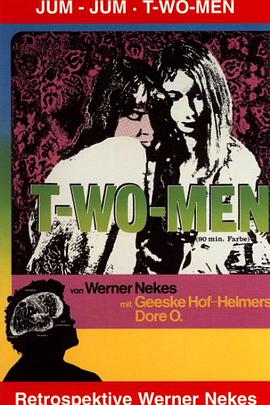
„Werner Nekes geht nicht von einer Musik aus, sondern schafft sich seinen Rhythmus selber, durch ein paar einfache, wenig variierte Klopftöne. Nach diesem Rhythmus montiert er die Aufnahme eines Mädchens, das vor einem Hintergrund in wohltuend grellen Hundertwasserfarben schaukelt. Er schneidet ohne Rücksicht auf den natürlichen, physikalischen Bewegungsablauf. Dadurch, dass er verschiedene Perspektiven, auch die der auf dem Kopf oder auf der Seite stehenden Kamera, ineinander schneidet, erreicht er einen neuen, völlig überzeugenden optischen Rhythmus.“

Movie

Beuys (1981)
Beuys IMDb TMDB Douban
Werner Nekes / Dore O. actor: 约瑟夫·博伊斯
other title: 博伊斯
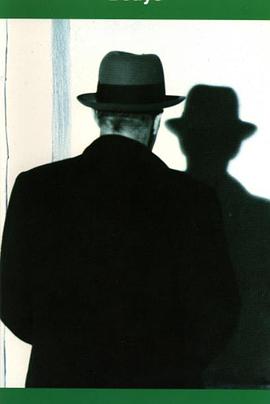
The first thing to strike you about this DVD release is its content: a single film, totalling only 10 minutes and 30 seconds, and absolutely no extras. Admittedly that film does come in two versions – with or without its burnt-in English subtitles – but this provides a choice present solely for language reasons; in all other respects both versions are completely identical. As such we’re not faced with the greatest of enticements – beyond the fact that this is already a disc which will sell only to niche audience – but then Beuys isn’t your typical offering. In spite of its barely there running time it manages to be a dense, playful and provocative work; it shouldn’t be gauged simply by the number of minutes it lasts for, but rather the number of repeat viewings it prompts. Indeed, once you’ve selected which version of the film you wish to watch the disc then happens to play on a continual loop – a fitting quality as you’ll wish to return to it immediately. Ostensibly, and as the title should hopefully have suggested, Beuys is a documentary on the German artist Joseph Beuys, a renowned figure in modern/contemporary art circles and one recently treated to a major retrospective at Tate Modern. This may put the film in the same category as, for example, Clouzot’s La Mystère Picasso, Rivers and Tides (on Andy Goldsworthy) or Right Out of History (on Judy Chicago), yet for each of their respective qualities these works offer essentially conventional records of their subjects. Beuys on the other hand takes a more conceptual approach and as a result perhaps shares a closer kinship with Gilbert and George’s contemporaneous feature The World of Gilbert and George. Here we find Beuys effectively given free rein – his is the only voice, indeed only sound, which we hear; he is the only person to appear onscreen, and in a single take at that; and even the opening credits seem unnaturally hasty in their efforts to move out of his way, having been written directly onto the celluloid and over in seconds – but crucially he doesn’t figure in the expected manner. Rather we find him facing a wall, with his back to the camera and placed in a spotlight so that he becomes almost a silhouette. Indeed, all we see are the hands behind his back and his equally stationary right ear, the rest of his body having been engulfed by a hat and sizeable coat. Under such circumstances he resembles nothing more than a big screen gangster, one in a firing line perhaps or an informant trapped in an intense spotlight. Moreover, the décor seem to match such an interpretation: the walls are painted white and are completely bare save for some electrical fittings which presumably no longer work; apart from Beuys himself the only other visible object is a radiator of standard persuasion. All told it appears that we’re in either a disused factory or some abandoned warehouse – either way it’s a stark environment, but also one teeming with atmosphere. So quite how do we take the film? Have directors Werner Nekes and Dore O. got Beuys in the firing line, forcing him to issue some “famous last words” as it were? And if so, are they this from a “friendly” perspective or perhaps something a little more aggressive? Certainly, he’s the star of the piece and gets his name in the title and even though we never see his face, would not a conventional ‘talking heads’ approach have been the more familiar, and therefore anonymous, approach? Indeed, in this instance he’s afforded a great deal of charisma, treating us to long pauses for maximum dramatic effect, sharing the attire, as said, of a movie star, positioned in such a way so that every movement becomes apparent, and, most importantly, able to command our attention from the very first syllable he utters. Of course, there’s a major possibility that Beuys’ conception would outweigh its content, but really this isn’t the case. Rather the film’s true heart lies in what its subject has to say for himself – his theory on art and perception, how this fits into his own artistic output, and the ramifications it will have in the future, during “the next cultural epoch”. The key question to ask ourselves is not whether the concept is more important than Beuys, but whether it has the desired effect. Had Beuys been a conventional documentary portrait would we be paying it so much attention? Would we return to it time and again? And would it still feel, even on the umpteenth viewing, as though it still had secrets to share?
Movie

What really happened between the pictures? (1986)
Was geschah wirklich zwischen den Bildern? Douban
维尔纳·内克斯 actor: 维尔纳·内克斯
other title: 电影之前的电影 / Was geschah wirklich zwischen den Bildern? …
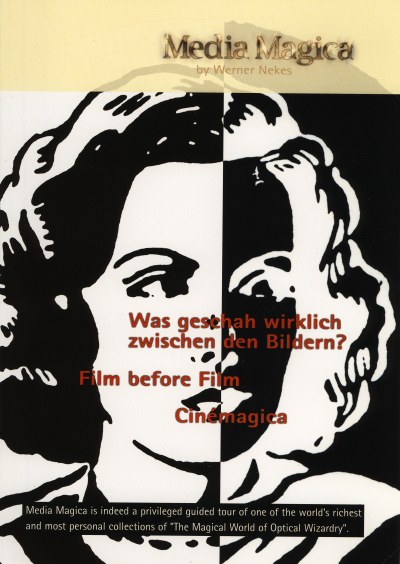
从对小孔成像、视觉暂留的利用和不计其数的光学仪器的发明,直到1895年卢米埃尔兄弟在巴黎首次公开放映,影片回顾电影近八个世纪史前史的重要成果,间歇旁白仅提供历史背景的简短解释,对导演本人珍藏的包括西洋镜、透景画箱、立体镜图和魔术画片等众多古董器械的实际演示则直接再现前人移动影像的尝试。(豆瓣电影字幕翻译2.0小组)