Alan Bates — Actor (52)

Movie

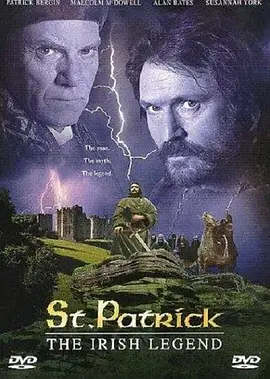
St. Patrick: The Irish Legend (2000)
St. Patrick: The Irish Legend IMDb Douban
Robert Hughes actor: 帕特里克·博金 / 阿兰·贝茨 …
other title: 圣帕特里克:爱尔兰传说
A young Christian boy attends a druid worship that is attacked by invading Irish tribes. Taken captive, he is taken back to Ireland to become a slave. Enduring many hardships, he finds comfort and eventually salvation in his faith. After several years, he escapes back to England, where he joins a convent to prove his faith. His greatest desire is to return to Ireland to convert the Irish to Christianity. Years later, he is given the opportunity. Upon setting foot on the Irish soil, all snakes are aitomatically driven from the land. He then overcomes many obstacles, including disagreements with the British Cardinal (Malcolm McDowell), to fulfill his destiny and ultimately being given Sainthood.

Movie

Lionpower from MGM (1967)
Lionpower from MGM IMDb TMDB
actor: Fred Foy / Karl Weber …
"Lionpower from MGM" (1967) is an exciting 60's promotional short subject, which showcases MGM's releases for the 1967-68 film season under a "five seasons" theme--fall, winter, spring, summer--plus a "fabulous fifth season". The main music is set to the rousing theme from "The Magnificent Yankee" composed by David Raksin in 1950. The promo is narrated by some of the best voice-over actors of the time, and is an excellent time capsule of a by-gone era.

Movie

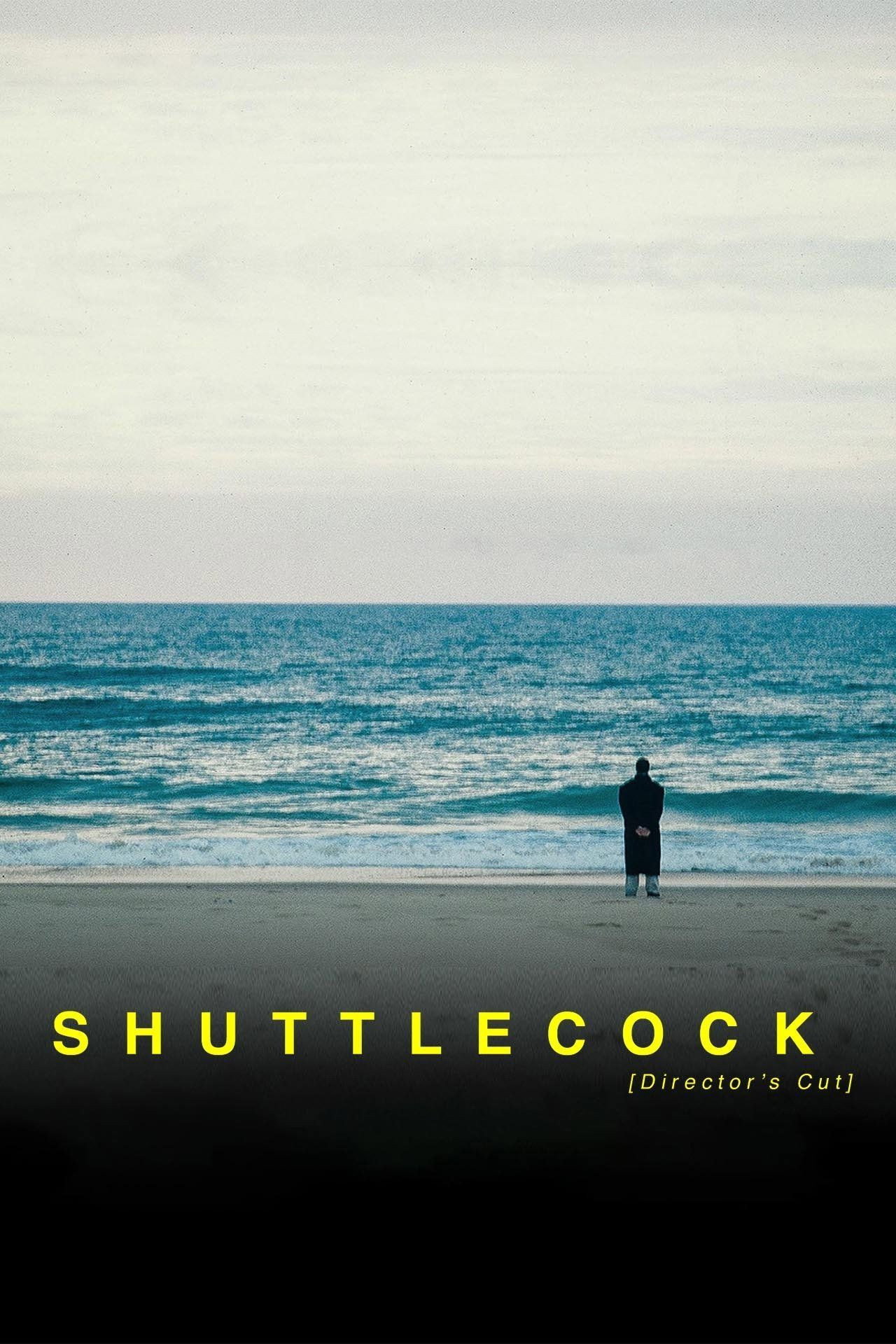
Shuttlecock (1993)
Shuttlecock WikiData IMDb TMDB
other title: Entre chien et loup / Federball
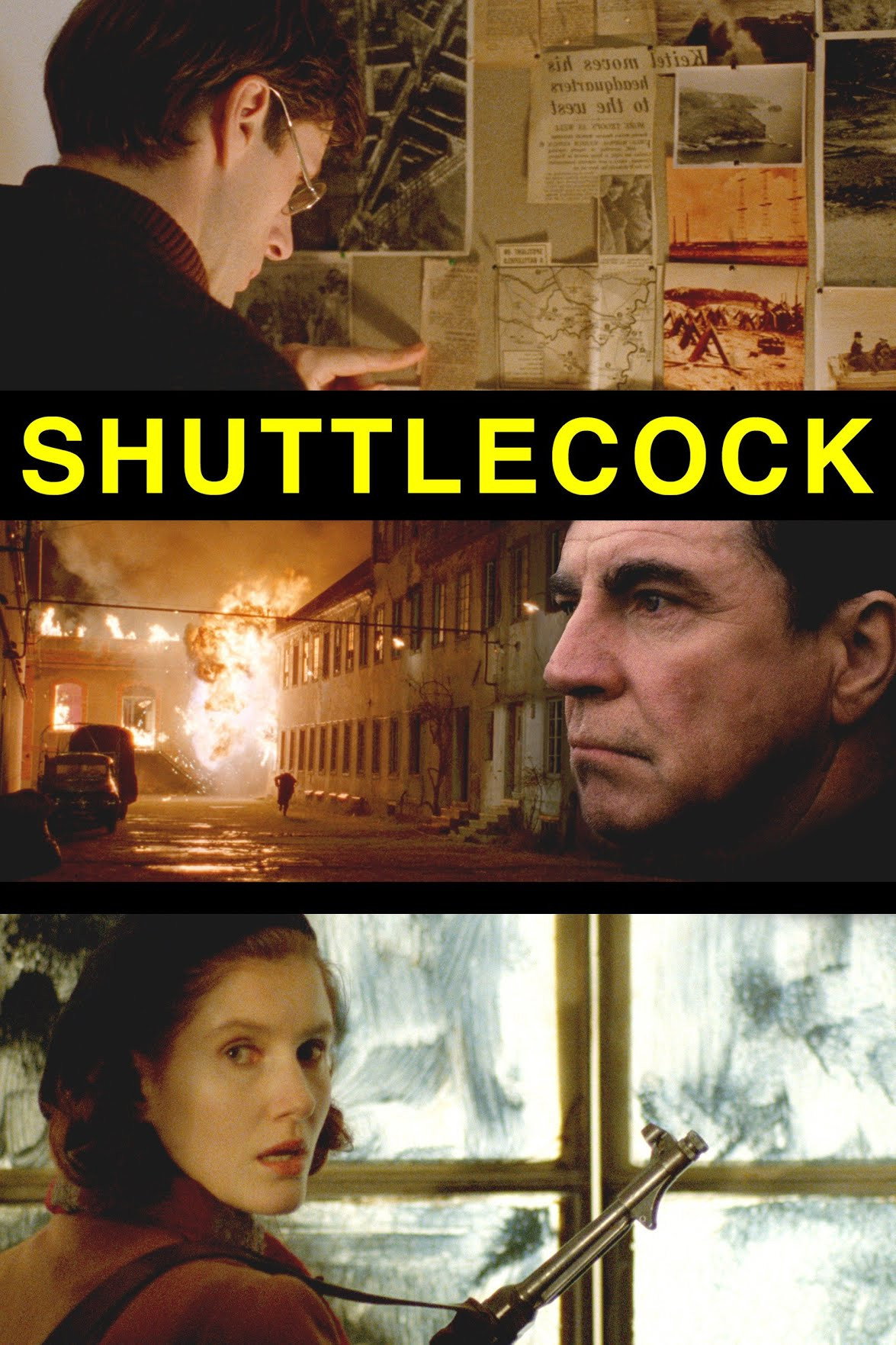
Major James Prentis VC is a British spy of World War II and war hero who goes under the code name of "Shuttlecock". Alienated from his family and children, he ends up in a mental institution in Lisbon, Portugal.

Movie

Shuttlecock: Sins of a Father (2020)
Shuttlecock: Sins of a Father IMDb TMDB
other title: Secretos de Espías
At the memorial for his father, WWII hero Major James Prentis (Alan Bates), John (Lambert Wilson) confesses a dark family secret to his own son Martin (David Oakes), something that he has harbored for over twenty years. A suspense drama, it explores the complex nature of heroism, betrayal, and father-son relationships. This is a reworking of the director's original 1993 film entitled simply, Shuttlecock.

Movie

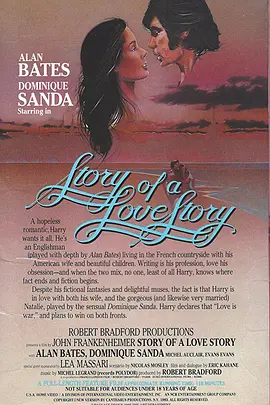
Impossible Object (1973)
Story of a Love Story IMDb Douban
other title: Story of a Love Story / 浪漫爱情 …
Harry is a married writer who has an affair with a woman whose husband knows that she is unfaithful. As a result of his work, Harry has trouble distinguishing between fantasy and reality leaving us to wonder whether the affair is real or just a figment of Harry's imagination.

TV

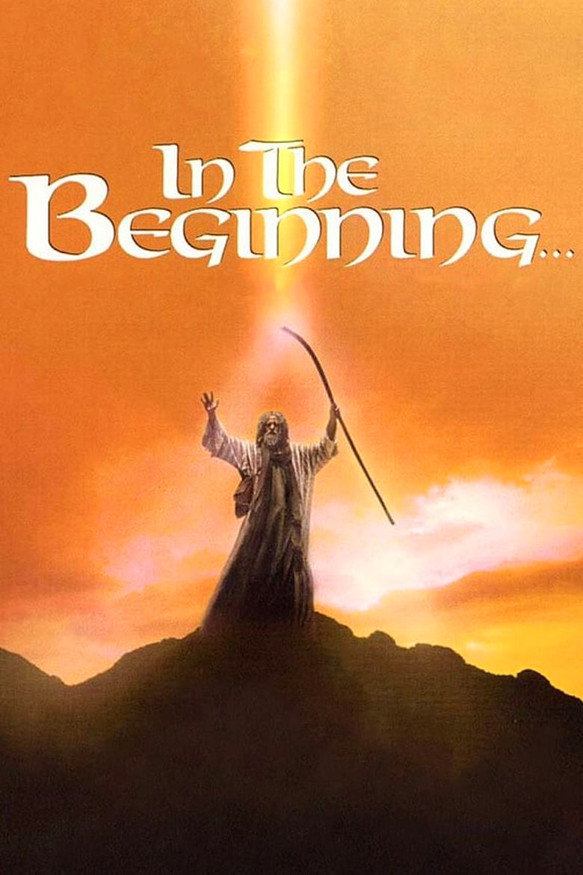
In the Beginning (2000)
In the Beginning IMDb TMDB
other title: Am Anfang / Au commencement, la terre promise …
In the Beginning is a 2-part biblical television miniseries directed by Kevin Connor. It stars Martin Landau and Jacqueline Bisset and it premiered on NBC on November 12, 2000.

Movie

The Grotesque (1995)
The Grotesque WikiData IMDb TMDB
other title: Perverso / Grotesque …
Sir Hugo is more interested in reconstructing dinosaur bones than in paying attention to his wife, Lady Harriet. He's not thrilled when daughter Cleo brings home her betrothed, Sidney, who aspires to be a poet. The new butler, Fledge, provides Lady Harriet with the attention she's been missing and then seduces Sidney. Did he have a role in Sidney's disappearance as well?

TV

Arabian Nights (2000)
Arabian Nights IMDb TMDB
other title: As Mil e Uma Noites / Arabian Nights - Abenteuer aus 1001 Nacht …
Targeted for assassination by his first wife and his evil brother, a young sultan must marry by the next full moon or he will lose his kingdom. His uncertainty over his newfound bride causes her to stall the sultan with a series of fantastic stories to ease the tension and stall her impending execution.

Movie

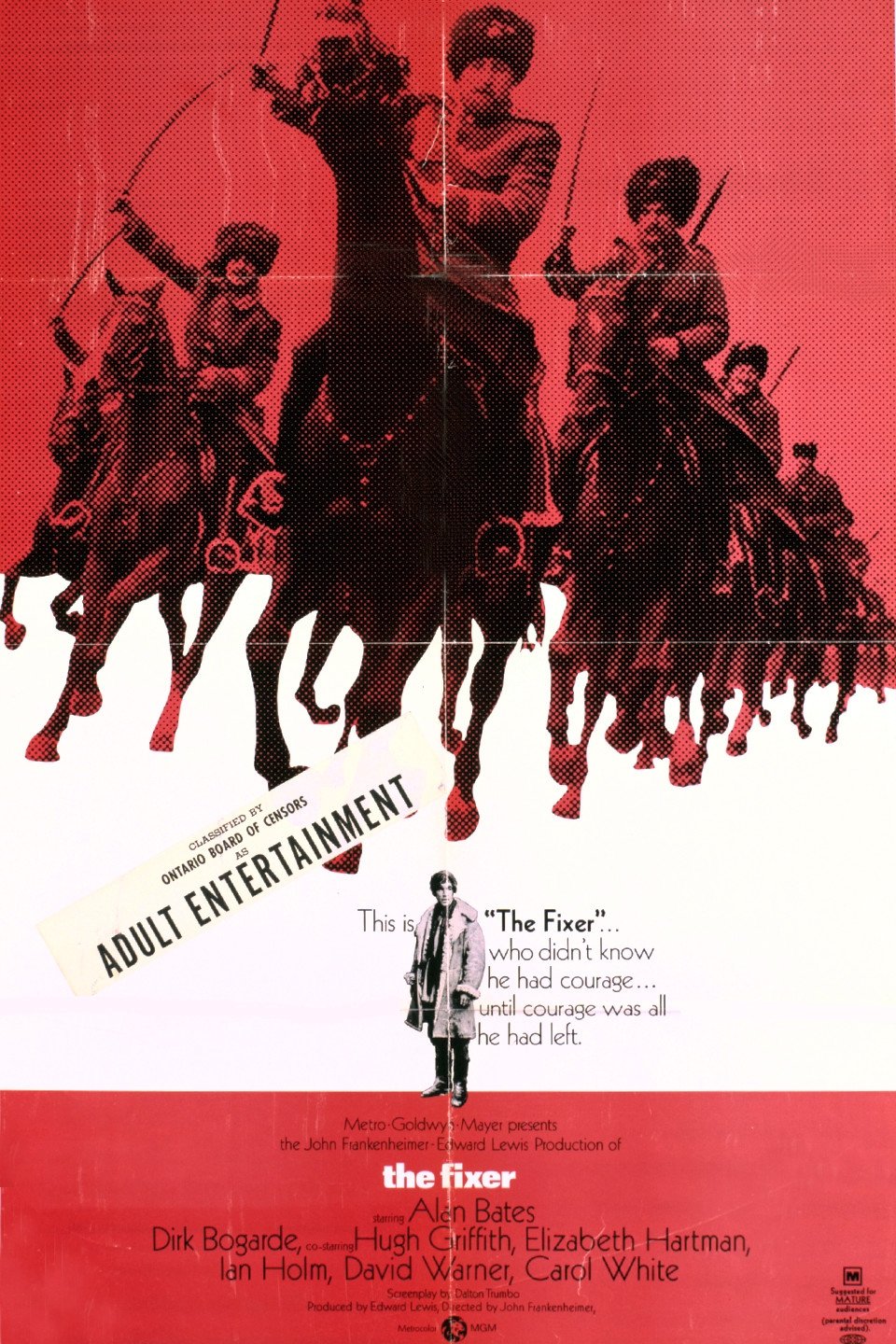
The Fixer (1968)
The Fixer WikiData IMDb TMDB Douban
other title: Ein Mann wie Hiob / L'Homme de Kiev …
Set in tsarist Russia around the turn of the century and based on a true story of a Russian Jewish peasant Yakov Bog who was wrongly imprisoned for a most unlikely crime - the “ritual murder” of a Gentile child in Kiev. We witness the unrelenting detail of the peasant handyman's life in prison and see him gain in dignity as the efforts to humiliate him and make him confess fail.

Movie

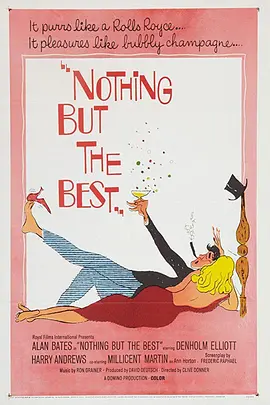
Nothing But the Best (1964)
Nothing But the Best WikiData IMDb TMDB Douban
other title: 伦敦奇案 / 无毒不丈夫 …
Success has James Brewster's name written all over it, and he also has his heart set on his boss's daughter. A con artist hires him to help out on a bank scheme, but then again, James will do anything to get rich and be the most successful businessman in Britain-even if it means murder!!!

Movie

We Think the World of You (1988)
We Think the World of You Douban
柯林·格雷格 actor: 阿兰·贝茨 / Max Wall …
other title: 心有灵犀
In post-war London, aimless young married bisexual, Johnny, is sent to prison forcing him to entrust his beloved Alsatian dog, Evie, to the reluctant care of his down-trodden parents and older, middle-class former-lover and best friend, Frank. After a series of visits to Johnny's parents' home, Frank bonds with the dog whose mischievous spirit reminds him of his incarcerated friend. As it becomes apparent to Frank that Johnny's father is beating the dog, who is left for days on end in a small yard, a class war erupts over Evie's welfare, exacerbated by Johnny's manipulative and antagonistic wife Megan, whose sole aim is to claim Johnny back from Frank on his forthcoming release. A set of tragi-comic relationships evolve with the dog coming to represent the hold they have over each other.

Performance

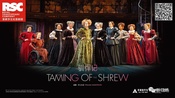
The Taming of the Shrew 1973年版
part of Performance: The Taming of the Shrew Douban
theater: Royal Shakespeare Theatre director: Clifford Williams
other title: 1973年版 playwright: 莎士比亚 William Shakespeare actor: Alan Bates / Susan Fleetwood
Prior to the first act, an induction frames the play as a "kind of history" played in front of a befuddled drunkard named Christopher Sly who is tricked into believing that he is a lord. In the play performed for Sly, the "Shrew" is Katherina Minola, the eldest daughter of Baptista Minola, a lord in Padua. Katherina's temper is notorious and it is thought no man would ever wish to marry her. On the other hand, two men – Hortensio and Gremio – are eager to marry her younger sister Bianca. However, Baptista has sworn not to allow his younger daughter to marry before Katherina is wed, much to the despair of her suitors, who agree that they will work together to marry off Katherina so that they will be free to compete for Bianca. The plot becomes more complex when Lucentio, who has recently come to Padua to attend university, sees Bianca and instantly falls in love with her. Lucentio overhears Baptista announce that he is on the lookout for tutors for his daughters, so he has his servant Tranio pretend to be him while he disguises himself as a Latin tutor named Cambio, so that he can woo Bianca behind Baptista's back. In the meantime, Petruchio arrives in Padua, accompanied by his servant, Grumio. Petruchio tells his old friend Hortensio that he has set out to enjoy life after the death of his father and that his main goal is to wed. Hearing this, Hortensio seizes the opportunity to recruit Petruchio as a suitor for Katherina. He also has Petruchio present to Baptista a music tutor named Litio (Hortensio himself in disguise). Thus, Lucentio and Hortensio, pretending to be the teachers Cambio and Litio, attempt to woo Bianca unbeknownst to her father, and to one another. Petruchio, to counter Katherina's shrewish nature, woos her with reverse psychology, pretending that every harsh thing she says or does is kind and gentle. Katherina allows herself to become engaged to Petruchio, and they are married in a farcical ceremony during which (amongst other things) he strikes the priest and drinks the communion wine, and then takes her home against her will. Once they are gone, Gremio and Tranio (disguised as Lucentio) formally bid for Bianca, with Tranio easily outbidding Gremio. However, in his zeal to win, he promises much more than the real Lucentio actually possesses, and Baptista determines that once Lucentio's father confirms the dowry, Bianca and Tranio can marry. Tranio thus decides that they will need someone to pretend to be Vincentio, Lucentio's father, at some point in the near future. Elsewhere, as part of their scheme, Tranio persuades Hortensio that Bianca is not worthy of his attentions, thus removing any problems he may cause. Meanwhile, in Petruchio's house, he begins the "taming" of his new wife. She is refused food and clothing because nothing – according to Petruchio – is good enough for her; he claims perfectly cooked meat is overcooked, a beautiful dress doesn't fit right, and a stylish hat is not fashionable. He also sets about disagreeing with everything she says, and forcing her to agree with everything he says, no matter how absurd; on their way back to Padua to attend Bianca's wedding, she agrees with Petruchio that the sun is the moon, and proclaims that "if you please to call it a rush-candle,/Henceforth I vow it shall be so for me" (4.5.14–15). Along the way, they meet Vincentio who is also on his way to Padua, and Katherina agrees with Petruchio when he declares that Vincentio is a woman and then apologises to Vincentio when Petruchio tells her he is a man. Meanwhile, back in Padua, Lucentio and Tranio convince a passing pedant to pretend to be Vincentio and confirm the dowry for Bianca. The man does so, and Baptista is happy for Bianca to wed Lucentio (actually Tranio in disguise). Bianca then secretly elopes with the real Lucentio. However, Vincentio arrives in Padua, and encounters the Pedant, who claims to be Lucentio's father. Tranio (still disguised as Lucentio) appears, and the Pedant acknowledges him to be his son Lucentio. There is much confusion about identities, and the real Vincentio is set to be arrested when the real Lucentio appears with his newly betrothed Bianca, and reveals all to a bewildered Baptista and Vincentio. Lucentio explains everything that has happened and all is forgiven by the two fathers. Meanwhile, Hortensio has married a rich widow, and so in the final scene of the play there are three newly married couples at Baptista's banquet; Bianca and Lucentio, the widow and Hortensio, and Katherina and Petruchio. Because of the general opinion that Petruchio is married to a shrew, a quarrel breaks out about whose wife is the most obedient. Petruchio proposes a wager whereby each will send a servant to call for their wives, and whichever comes most obediently will have won the wager for her husband. Katherina is the only one of the three who comes, winning the wager for Petruchio. At the end of the play, after the other two wives have been hauled into the room by Katherina, she gives a speech on the subject of why wives should always obey their husbands and the play ends with Baptista, Hortensio and Lucentio marvelling at how successfully Petruchio has tamed the shrew.

Performance

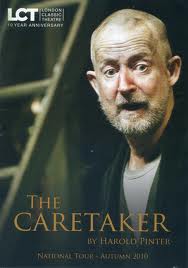
The Caretaker
Douban
Harold Pinter genre: theater
director: Donald McWhinnie / Kenneth Ives … actor: Donald Pleasence / Alan Bates / Peter Woodthorpe / Robert Shaw / Jonathan Pryce
Act I A night in winter [Scene 1] Aston has invited Davies, a homeless man, into his apartment after rescuing him from a bar fight (7–9). Davies comments on the apartment and criticizes the fact that it is cluttered and badly kept. Aston attempts to find a pair of shoes for Davies but Davies rejects all the offers. Once he turns down a pair that doesn’t fit well enough and another that has the wrong colour laces. Early on, Davies reveals to Aston that his real name is not "Bernard Jenkins", his "assumed name", but really "Mac Davies" (19–20, 25). He claims that his papers validating this fact are in Sidcup and that he must and will return there to retrieve them just as soon as he has a good pair of shoes. Aston and Davies discuss where he will sleep and the problem of the "bucket" attached to the ceiling to catch dripping rain water from the leaky roof (20–21) and Davies "gets into bed" while "ASTON sits, poking his [electrical] plug (21). [Scene 2] The LIGHTS FADE OUT. Darkness. LIGHTS UP. Morning. (21) As Aston dresses for the day, Davies awakes with a start, and Aston informs Davies that he was kept up all night by Davies muttering in his sleep. Davies denies that he made any noise and blames the racket on the neighbors, revealing his fear of foreigners: "I tell you what, maybe it were them Blacks" (23). Aston informs Davies that he is going out but invites him to stay if he likes, indicating that he trusts him (23–24), something unexpected by Davies; for, as soon as Aston does leave the room (27), Davies begins rummaging through Aston's "stuff" (27–28) but he is interrupted when Mick, Aston’s brother, unexpectedly arrives, "moves upstage, silently," "slides across the room" and then suddenly "seizes Davies' "arm and forces it up his back," in response to which "DAVIES screams," and they engage in a minutely-choreographed struggle, which Mick wins (28–29), ending Act One with the "Curtain" line, "What's the game?" (29). Act II [Scene 1] A few seconds later Mick demands to know Davies' name, which the latter gives as "Jenkins" (30), interrogates him about how well he slept the night before (30), wonders whether or not Davies is actually "a foreigner"—to which Davies retorts that he "was" indeed (in Mick's phrase) "Born and bred in the British Isles" (33)—going on to accuse Davies of being "an old robber […] an old skate" who is "stinking the place out" (35), and spinning a verbal web full of banking jargon designed to confuse Davies, while stating, hyperbolically, that his brother Aston is "a number one decorator" (36), either an outright lie or self-deceptive wishful thinking on his part. Just as Mick reaches the climactic line of his diatribe geared to put the old tramp off balance—"Who do you bank with?" (36), Aston enters with a "bag" ostensibly for Davies, and the brothers debate how to fix the leaking roof and Davies interrupts to inject the more practical question: "What do you do . . . when that bucket's full?" (37) and Aston simply says, "Empty it" (37). The three battle over the "bag" that Aston has brought Davies, one of the most comic and often-cited Beckettian routines in the play (38–39). After Mick leaves, and Davies recognises him to be "a real joker, that lad" (40), they discuss Mick's work in "the building trade" and Davies ultimately discloses that the bag they have fought over and that he was so determined to hold on to "ain't my bag" at all (41). Aston offers Davies the job of Caretaker, (42–43), leading to Davies' various assorted animadversions about the dangers that he faces for "going under an assumed name" and possibly being found out by anyone who might "ring the bell called Caretaker" (44). [Scene 2] THE LIGHTS FADE TO BLACKOUT. THEN UP TO DIM LIGHT THROUGH THE WINDOW. A door bangs. Sound of a key in the door of the room. DAVIES enters, closes the door, and tries the light switch, on, off, on, off. It appears to Davies that "the damn light's gone now," but, it becomes clear that Mick has sneaked back into the room in the dark and removed the bulb; he starts up "the electrolux" and scares Davies almost witless before claiming "I was just doing some spring cleaning" and returning the bulb to its socket (45). After a discussion with Davies about the place being his "responsibility" and his ambitions to fix it up, Mick also offers Davies the job of "caretaker" (46–50), but pushes his luck with Mick when he observes negative things about Aston, like the idea that he "doesn't like work" or is "a bit of a funny bloke" for "Not liking work" (Davies' camouflage of what he really is referring to), leading Mick to observe that Davies is "getting hypocritical" and "too glib" (50), and they turn to the absurd details of "a small financial agreement" relating to Davies' possibly doing "a bit of caretaking" or "looking after the place" for Mick (51), and then back to the inevitable call for "references" and the perpetually-necessary trip to Sidcup to get Davies' identity "papers" (51–52). [Scene 3] Morning Davies wakes up and complains to Aston about how badly he slept. He blames various aspects of the apartment's set up. Aston suggests adjustments but Davies proves to be callous and inflexible. Aston tells the story of how he was checked into a mental hospital and given electric shock therapy, but when he tried to escape from the hospital he was shocked while standing, leaving him with permanent brain damage; he ends by saying, "I've often thought of going back and trying to find the man who did that to me. But I want to do something first. I want to build that shed out in the garden" (54–57). Critics regard Aston's monologue, the longest of the play, as the "climax" of the plot.[3] In dramaturgical terms, what follows is part of the plot's "falling action". Act III [Scene 1] Two weeks later [… ]Afternoon. Davies and Mick discuss the apartment. Mick relates "(ruminatively)" in great detail what he would do to redecorate it (60). When asked who "would live there," Mick's response "My brother and me" leads Davies to complain about Aston's inability to be social and just about every other aspect of Aston's behaviour (61–63). Though initially invited to be a "caretaker," first by Aston and then by Mick, he begins to ingratiate himself with Mick, who acts as if he were an unwitting accomplice in Davies' eventual conspiracy to take over and fix up the apartment without Aston's involvement (64) an outright betrayal of the brother who actually took him in and attempted to find his "belongings"; but just then Aston enters and gives Davies yet another pair of shoes which he grudgingly accepts, speaking of "going down to Sidcup" in order "to get" his "papers" again (65–66). [Scene 2] That night Davies brings up his plan when talking to Aston, whom he insults by throwing back in his face the details of his treatment in the mental institution (66–67), leading Aston, in a vast understatement, to respond: "I . . . I think it's about time you found somewhere else. I don't think we're hitting it off" (68). When finally threatened by Davies pointing a knife at him, Aston tells Davies to leave: "Get your stuff" (69). Davies, outraged, claims that Mick will take his side and kick Aston out instead and leaves in a fury, concluding (mistakenly): "Now I know who I can trust" (69). [Scene 3] Later Davies reenters with Mick explaining the fight that occurred earlier and complaining still more bitterly about Mick's brother, Aston (70–71). Eventually, Mick takes Aston's side, beginning with the observation "You get a bit out of your depth sometimes, don't you?" (71). Mick forces Davies to disclose that his "real name" is Davies and his "assumed name" is "Jenkins" and, after Davies calls Aston "nutty", Mick appears to take offense at what he terms Davies' "impertinent thing to say," concludes, "I'm compelled to pay you off for your caretaking work. Here's half a dollar," and stresses his need to turn back to his own "business" affairs (74). When Aston comes back into the apartment, the brothers face each other," "They look at each other. Both are smiling, faintly" (75). Using the excuse of having returned for his "pipe" (given to him earlier through the generosity of Aston), Davies turns to beg Aston to let him stay (75–77). But Aston rebuffs each of Davies' rationalisations of his past complaints (75–76). The play ends with a "Long silence" as Aston, who "remains still, his back to him [Davies], at the window, apparently unrelenting as he gazes at his garden and makes no response at all to Davies' futile plea, which is sprinkled with many dots (". . .") of elliptical hesitations (77–78).

Movie

The Making of 'Gosford Park' (2001)
The Making of Gosford Park IMDb TMDB Douban
other title: The Making of Gosford Park
A documentary giving film fans a behind-the-scenes look at the making this Robert Altman film about a murder at an English country estate. Includes interviews with the cast and crew, who relate some of their experiences with making the film, as well as giving their views on all the work that went into it.