Werner Schroeter — Director (19)

Movie

White Journey (1980)
Weiße Reise IMDb TMDB
other title: Weiße Reise
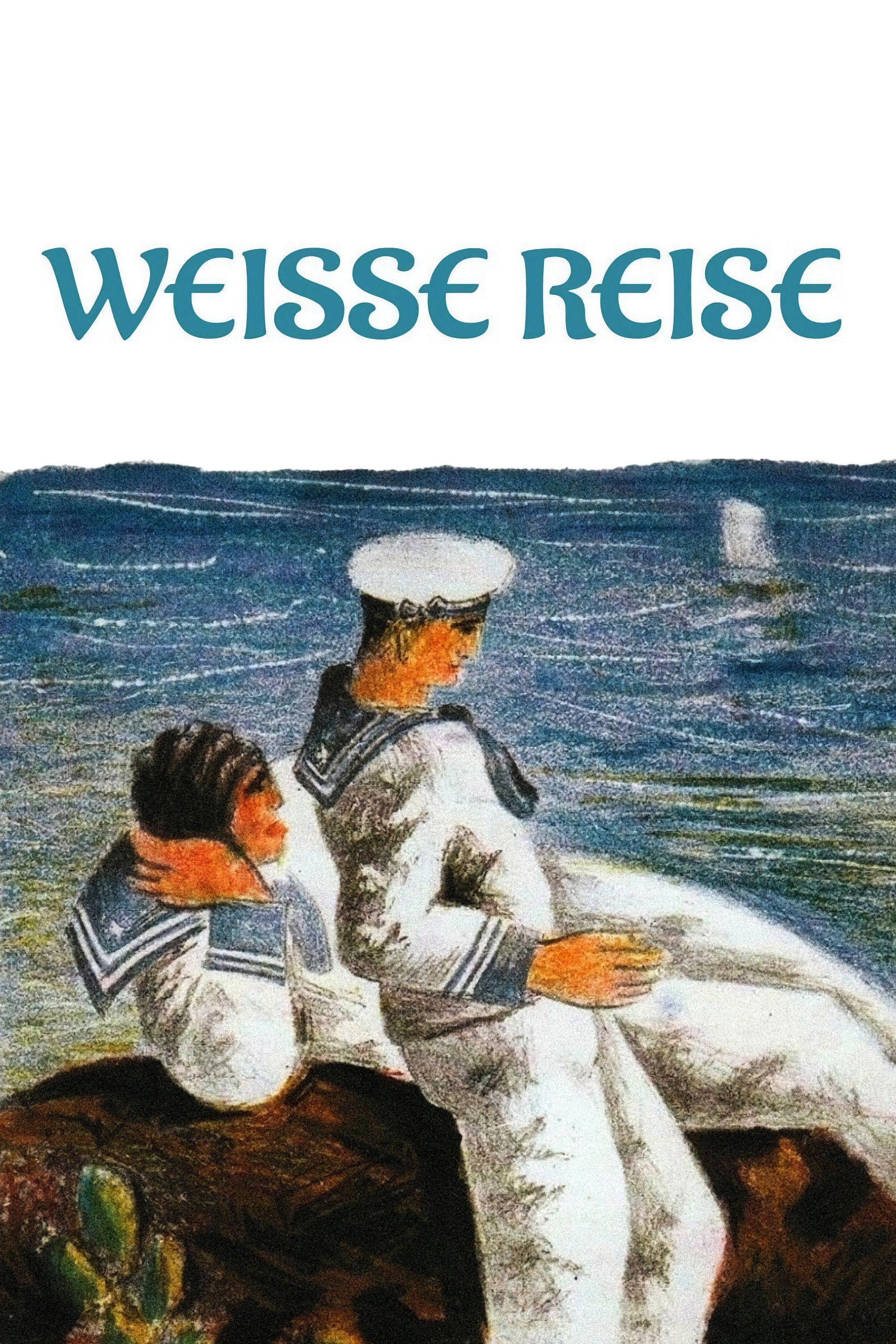
One of Werner Schroeter's most important and inventive works, this threadbare evocation of Jean Genet's notorious Querelle depicts the erotic adventures of two sailors through the world's seaports in the manner of a cut-rate silent movie.

Movie

The Kingdom of Naples (1978)
Nel regno di Napoli WikiData IMDb TMDB Douban
沃纳·施罗特 actor: 更多...
other title: Neapolitanische Geschichten / 那不勒斯王国 …
Nel Regno di Napoli, Schroeter's own voyage to Italy, has the appearance of something much more straightforward, hewing closely to a postwar timeline (actually marked and measured by emblematic intertitle cut-ins announcing the year, accompanied by radio bulletin-like narration updating us on the historical/social/political context) as it tells the story of little Vittoria (played as an adult by Cristina Donadino), born to a poor family in a rough neighborhood of Naples at the end of the war, whose fate, as she grows from impoverished girlhood to "success" as an airline stewardess in the 1970s, provides our dramatic compass through a living, clear-eyed history book, encompassing a whole microcosm of Neapolitan life in the turbulent, industrializing decades after the war: A brother, Massimo (Antonio Orlando) earnestly and diligently devoted to the promise of a better, fairer future for the oppressed workers held out by the Communist Party; a pretty, naïve, ill-fated French prostitute; the Spanish War veteran who becomes their local C.P. leader, and his wife, more pragmatic and lurking in the ideological gray area by buying rationed necessities on the ultra-capitalist black market; the turncoat bourgeois attorney who sells out his working-class neighbors for his tacky, impossible dreams of the good life; and the operatically evil heiress/factory boss lady (Ida Di Benedetto) whose clutches Massimo fights to neutralize, but whom Vittoria ultimately just wants to escape any ideologically-impure way she can.

Movie

玛丽亚·卡拉丝的肖像 (1968)
Maria Callas Porträt Douban
other title: Maria Callas Porträt / Maria Callas Portrait
Une succession vertigineuse d'images de Maria Callas, sur scène, pour la presse ou en privé, montées avec le texte d'une critique de l'opéra Lucia di Lammermoor, au rythme d'extraits lancinants du Bal masqué de Verdi et du Puritain de Bellini. Werner Schroeter joue du décalage entre culture élitiste et culture populaire.

Movie

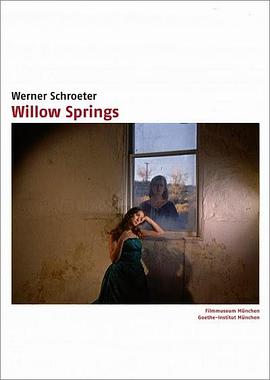
Willow Springs (1973)
Willow Springs WikiData IMDb TMDB Douban
other title: 加州柳泉 / 윌로우 스프링스 …
A feminist cult survives by robbing and killing passersby, at their remote desert ranch. The North Star Dhruva cult leader Magdalena refuses to work for the Yankee dollar. Consequently she subjugates her two followers, who are forced to listen to the music of German opera all the time, while Magdalena drinks rum and Coca Cola in the ranch's ornate bar. But the lesbian masochist's iron rule over the rundown California ranch is questioned when a mother-loving young male wanderer, Lord Invader, stops in and romances the cult's meek slave Ila, after his mother is turned away by Magdalena.

Movie

轰炸机飞行员 (1970)
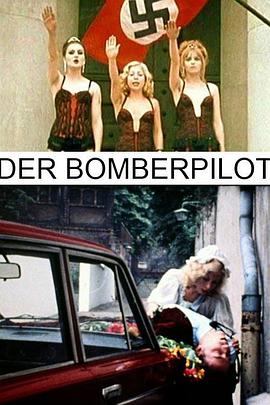
Der Bomberpilot IMDb TMDB Douban
other title: Der Bomberpilot
Carla (Carla Aulaulu), Mascha (Mascha Elm-Rabben), and Magdalena Munn (Magdalena Montezuma).[40] They perform as second-rate cabaret singers during the Nazi era, forced to disband when Carla takes a job with a Viennese theatre and Mascha has a nervous breakdown. Pilot haphazardly (and without much clarity) follows their individual activities; instead of depicting Carla's "show," for instance, we see her singing its main song while apparently working in a Viennese pastry shop. Magdalena attempts to find work for Mascha by posing as her aunt and appealing to a Nazi official; later Mascha rescues Magdalena from drowning herself. The two eventually find jobs as secretaries, after brief stints as "creative artists." Magdalena's voice-over then informs us that all three women meet again after the war at a Bruckner concert. They begin discussions about regrouping to go to the United States, this time as reformers rather than performers, to preach integration (apparently we are now in the late 1960s, the time of the film's production). Carla, nostalgic for their earlier Nazi stage career, is hard to persuade, but eventually they leave for the United States. Their rapid downfall as teachers there results from the publication of a Nazi-era photo of them; added to this is the controversy of Mascha's undepicted liaison with an American bomber pilot. We are told there is a trial (also undepicted), and the three go back to Germany where they perform for American troops. Carla has a miscarriage from the bomber pilot and suffers badly. The final image shows Magdalena supporting Carla as she walks around weakly in front of the same building we saw in the film's opening shot.

Movie

Love’s Debris (1996)
Poussières d'amour - Abfallprodukte der Liebe WikiData IMDb TMDB Douban
other title: 爱的残骸 / Poussières d'amour - Abfallprodukte der Liebe …
German director Werner Schroeter invited his favourite opera singers to a 13th century abbey near Paris. There was no pre-planned action. There was no script, no continuity. On the other hand, there were precise constraints that provided the rules of the game: the setting, the Abbey of Royaumont, and the chosen participants. Each singer came accompanied by a person of his or her choice, and worked on an aria chosen by the director.

Movie

This Night (2008)
Nuit de chien WikiData IMDb TMDB Douban
other title: 犬之夜 / Nuit de chien …
Werner Schroeter directed this dark and surreal tale of a man determined to save a lost lover from a grim fate at the hands of a violent mob. The city of Santa Maria is falling into chaos as an armed military faction is poised to take power in a coup d'etat. Ossorio used to call Santa Maria home, and he has returned in its darkest hour to find the woman he loves, hoping to rescue her from the violence that is lurks around the corner. As Ossorio searches for his love, he meets Victoria in a shabby hotel, who in turn introduces him to her father Barcala, who for the right price is willing to take Ossorio and another passenger away on his boat. While Ossorio is willing to pay Barcala what he wants, can he find the mysterious woman before the ship sets sail?

Movie

Deux (2003)
Deux Douban
other title: 飘零双燕 / Two
Magdalena and Maria are two twin sisters who were separated at birth and know nothing of the other’s existence. Maria runs away from the boarding school in which she was brought up and finds work as a cabaret performer in the cafés of Marseilles. Magdalena lives with her adopted parents and works in an art gallery. The two sisters are joined by an invisible bond which draws them towards the same tragic conclusion. Director Werner Schroeter has acquired a reputation as an experimentalist filmmaker, hailed by some as an underrated genius, reviled by others for being a peddler of self-indulgent kitsch. Deux is arguably Schroeter’s most ambitious, unsettling and repulsive work to date. The director certainly wastes no time in alienating his audience; from the first ten minutes of the film it is clear this is not going to be an easy ride. The narrative cuts haphazardly between seemingly unconnected events, alternating between realism and stylised fantasy dream sequences, periodically shocking the spectator with graphic images of lesbian sex and a woman being slowly disembowelled. Having several actors playing multiple parts only adds to the sense of artifice and utter confusion, which is a pity as there is manifestly a lot of great acting talent on show – not least of which is Isabelle Huppert. The film’s sheer relentless grotesqueness and self-indulgence is so extreme, so unbridled, so stomach-churningly provocative, that it is hard to take any of it seriously.

Movie

Palermo or Wolfsburg (1980)
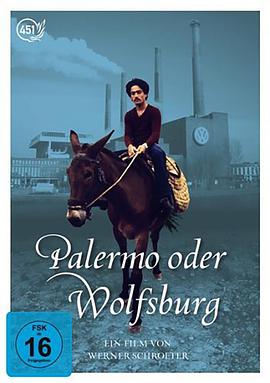
Palermo oder Wolfsburg WikiData IMDb TMDB Douban
other title: 巴勒摩或沃夫斯堡 / Palermo oder Wolfsburg …
This film begins in the town of Palermo, where the film's central figure, Nicola, is a young victim of Sicily's high rate of unemployment. He decides to leave Palermo for Wolfsburg in Germany in search of employment. Along with Fassbinder's Angst essen Seele auf (1973), Schroeter's film becomes one of a handful of films to broach the subject of the difficulties foreigners faced in their attempts to integrate into German society without the support of the family and community structures they had left behind in their home countries. Like Regno di Napoli, Palermo oder Wolfsburg follows a chronological structure, but Schroeter's innovation in this film is to divide the narrative into three distinct sections or acts, each having their own particular style. Palermo oder Wolfsburg won the prestigious Golden Bear at the Berlin Film Festival in 1980, notably the first Golden Bear ever awarded to a German director. Werner Schroeter has fashioned a compelling personal epic about an 18-year-old Sicilian, Nicola, who emigrates to Germany. There he works in a Volkswagen factory, falls in love, and painfully adjusts to a new and incomprehensible way of life. When he realizes his girlfriend is just using him, Nicola strikes out in violence at her two boyfriends. Like BREAD AND CHOCOLATE, the film is about the estrangement of the outsider in what is seen as an alien and hostile society. The only difference is that this not a comedy. It also bears some similarities to Visconti's ROCCO AND HIS BROTHERS, with its theme of the corrupting influence of modern industrial society. The film is neatly divided into two parts, the Sicilian half, with its sunny, warm photographic style and the German half, which becomes grayish and grim. Nicola Zarbo is fine in the lead role among a cast of mostly unknown performers. At three hours the film is a trifle too long but thoroughly involving.

Movie

The Death of Maria Malibran (1972)
Der Tod der Maria Malibran WikiData IMDb TMDB Douban
other title: 玛利亚·玛丽布罕之死 / Der Tod der Maria Malibran …
This bizarre film by one of the most original directors now working in Germany is hermetic, expressionist, oblique, and of a creative perversity that bespeaks the presence of a genius. Purporting to deal with a real-life 19th century diva 'whose popularity was such that over-exertion led to her death while singing,' the film is actually a grisly series of frozen or tortured tableaux (predominantly lesbian in implication) of heavily rouged, frequently ugly women who, pretending to sing heavy opera, go through contorted, icy attempts at communication that lead nowhere. The lip-sync is off; the singing is off-pitch; mouths are frequently open while no sound issues forth, or closed, with mellifluous arias or cheap popular songs heard on scratchy renditions of old records. Neither burlesque nor slapstick, the film's intent, at least in the beginning, is nevertheless ironical and subversive, though mysteriously so. However, it grows increasingly dark and more threatening, with screams, faces bathed in Vaseline, red, wet mouths, smeared eye shadows, and dehumanized figures. One cannot 'explain' Schroeter's work, other than recognize his debunking of opera as a metaphorical rejection of bourgeois society; but one trembles in recognition of a prospective major talent." Amos Vogel, Film as a Subversive Art

Movie

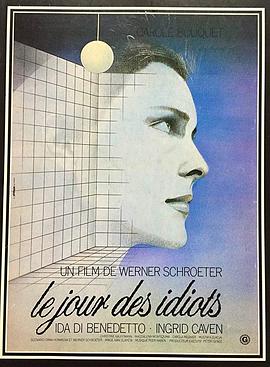
Day of the Idiots (1982)
Tag Der Idioten WikiData IMDb TMDB Douban
other title: 白痴之日 / Tag Der Idioten …
With Tag der Idioten (1982), Schroeter perhaps draws upon his brief studies of psychology. The film centres around a passionate woman, Carole (played by the well-known French actor Carole Bouquet) who feels alienated and repressed by the highly institutionalised public and private spheres of Western society. Unable to extract any kind of emotional response from her reserved boyfriend, Carole seeks attention by falsely denouncing her neighbours as terrorists. With this detail Schroeter briefly touches upon the panic and paranoia that was brought about by the German government crackdown on terrorism at its height during 1977 and Carole's subsequent institutionalisation in a mental asylum can be seen as an allegory for a society wishing to suppress radical activity of any sort. In Tag der Idioten Schroeter returns to a less linear narrative structure, more reminiscent of the episodic films of his second phase. He employs numerous hallucinatory sequences in order to convey the protagonist's state of mind. Furthermore, much of the film's meaning is delivered through Carole's body, facial expressions and gestures rather than through dialogue, and the film's montage serves to create spatial and temporal disorientation. Schroeter again won the German Film Prize for best direction for this film.