George Lakoff — Author (15)

Book

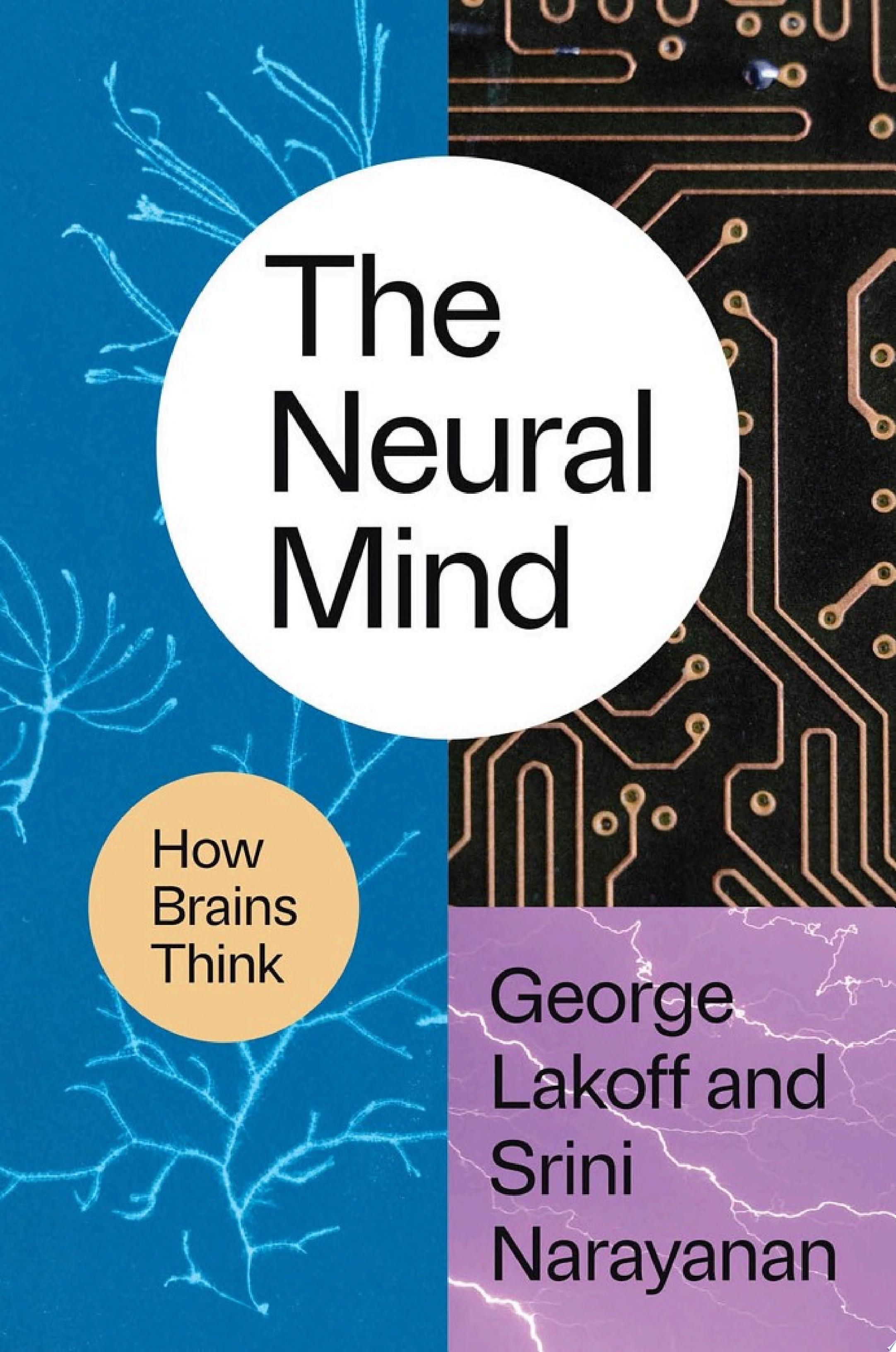
The Neural Mind
Google Books
George Lakoff / Srini Narayanan publishing house: University of Chicago Press 2025 - 06
Offers an expansive, unified theory of thought that brings together the vast resources of neuroscience, computation, and cognitive linguistics. What is an idea, and where does it come from? We experience thought as if it were abstract, but every thought is actually a physical thing, carried out by the neural systems of our brains. Thought does not occur neuron-by-neuron; it happens when neurons come together to form circuits and when simple circuits combine to form complex ones. Thoughts, then, derive their structures from the circuitry we also use for vision, touch, and hearing. This circuitry is what allows simple thoughts to come together into complex concepts, making meaning, creating metaphors, and framing our social and political ideas. With The Neural Mind, George Lakoff, a pioneering cognitive linguist, and computer scientist Srini Narayanan deftly combine insights from cognitive science, computational modeling, and linguistics to show how thoughts arise from the neural circuitry that runs throughout our bodies. They answer key questions about the ways we make meaning: How does neural circuitry create the conceptual “frames” through which we understand our social lives? What kind of neural circuitry characterizes metaphorical thought, in which ideas are understood in terms of other ideas with similar structures? Lively and accessible, the book shows convincingly that the “metaphors we live by”—to use Lakoff’s famous phrase—aren’t abstractions but deeply embodied neural constructs. The Neural Mind is the first book of its kind, bringing together the ideas of multiple disciplines to offer a unified, accessible theory of thought. A field-defining work, Lakoff and Narayanan’s book will be of interest not just to linguists and cognitive scientists but also to psychologists, philosophers, anthropologists, journalists, sociologists, and political scientists—and anyone who wants to understand how we really think.
Book

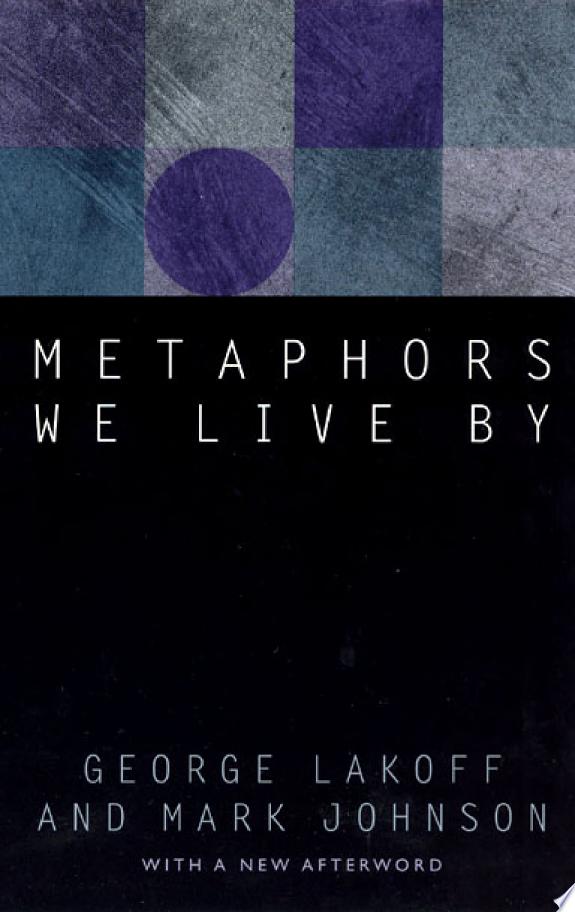
Metaphors We Live By
Google Books
George Lakoff / 马克·约翰逊 publishing house: University of Chicago Press 2008 - 12
The now-classic Metaphors We Live By changed our understanding of metaphor and its role in language and the mind. Metaphor, the authors explain, is a fundamental mechanism of mind, one that allows us to use what we know about our physical and social experience to provide understanding of countless other subjects. Because such metaphors structure our most basic understandings of our experience, they are "metaphors we live by"—metaphors that can shape our perceptions and actions without our ever noticing them. In this updated edition of Lakoff and Johnson's influential book, the authors supply an afterword surveying how their theory of metaphor has developed within the cognitive sciences to become central to the contemporary understanding of how we think and how we express our thoughts in language.

Book

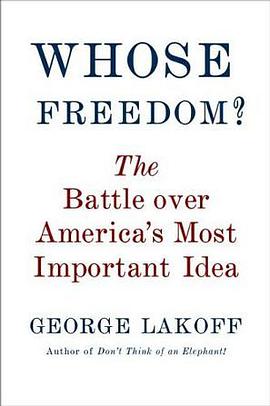
Whose Freedom?
Douban
George Lakoff publishing house: Farrar, Straus and Giroux 2006 - 6
Since September 11, 2001, the Bush administration has relentlessly invoked the word “freedom.” The United States can strike preemptively because “freedom is on the march.” Social security should be privatized in order to protect individual freedoms. In the 2005 presidential inaugural speech, the words “freedom,” “free,” and “liberty” were used forty-nine times. “Freedom” is one of the most contested words in American political discourse, the keystone to the domestic and foreign policy battles that are racking this polarized nation. For many Democrats, it seems that President Bush’s use of the word is meaningless and contradictory—deployed opportunistically to justify American military action abroad and the curtailing of civil liberties at home. But in Whose Freedom?, George Lakoff, an adviser to the Democratic party, shows that in fact the right has effected a devastatingly coherent and ideological redefinition of freedom. The conservative revolution has remade freedom in its own image and deployed it as a central weapon on the front lines of everything from the war on terror to the battles over religion in the classroom and abortion. In a deep and alarming analysis, Lakoff explains the mechanisms behind this hijacking of our most cherished political idea—and shows how progressives have not only failed to counter the right-wing attack on freedom but have failed to recognize its nature. Whose Freedom? argues forcefully what progressives must do to take back ground in this high-stakes war over the most central idea in American life.

Book

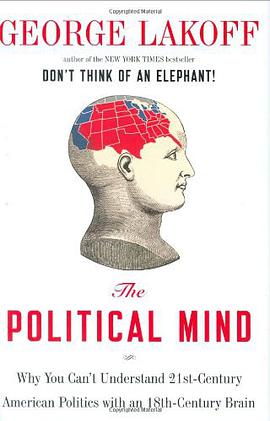
The Political Mind: Why You Can't Understand 21st-Century American Politics with an 18th-Century Brain
Douban Goodreads
George Lakoff publishing house: Viking Adult 2008 - 5 other title: The Political Mind
In What's the Matter with Kansas?, Thomas Frank pointed out that a great number of Americans actually vote against their own interests. In The Political Mind, George Lakoff explains why. As it turns out, human beings are not the rational creatures we've so long imagined ourselves to be. Ideas, morals, and values do not exist somewhere outside the body, ready to be examined and put to use. Instead, they exist quite literally inside the brain and they take physical shape there. For example, we form particular kinds of narratives in our minds just like we form specific muscle memories such as typing or dancing, and then we fit new information into those narratives. Getting that information out of one narrative type and into another or building a whole new narrative altogether can be as hard as learning to play the banjo. Changing your mind isn't like changing your body it's the same thing. But as long as progressive politicians and activists persist in believing that people use an objective system of reasoning to decide on their politics, the Democrats will continue to lose elections. They must wrest control of the terms of the debate from their opponents rather than accepting their frame and trying to argue within it. This passionate, erudite, and groundbreaking book will appeal to readers of Steven Pinker and Thomas Frank. It is a fascinating read for anyone interested in how the mind works, how society works, and how they work together.

Book

The Political Mind
Douban
George Lakoff publishing house: Penguin Books 2009 - 6
A groundbreaking scientific examination of the way our brains understand politics from a New York Times bestselling author One of the world 's best-known linguists and cognitive scientists, George Lakoff has a knack for making science make sense for general readers. In his new book, Lakoff spells out what cognitive science has discovered about reason, and reveals that human reason is far more interesting than we thought it was. Reason is physical, mostly unconscious, metaphorical, emotion-laden, and tied to empathy-and there are biological explanations behind our moral and political thought processes. His call for a New Enlightenment is a bold and striking challenge to the cherished beliefs not only of philosophers, but of pundits, pollsters, and political leaders. The Political Mind is a passionate, erudite, and groundbreaking book that will appeal to anyone interested in how the mind works and how we function socially and politically.

Book

More than Cool Reason
Douban
George Lakoff / Mark Turner publishing house: The University Of Chicago Press 1989
"The authors restore metaphor to our lives by showing us that it's never gone away. We've merely been taught to talk as if it had: as though weather maps were more 'real' than the breath of autumn; as though, for that matter, Reason was really 'cool.' What we're saying whenever we say is a theme this book illumines for anyone attentive." — Hugh Kenner, Johns Hopkins University "In this bold and powerful book, Lakoff and Turner continue their use of metaphor to show how our minds get hold of the world. They have achieved nothing less than a postmodern Understanding Poetry, a new way of reading and teaching that makes poetry again important." — Norman Holland, University of Florida

Book

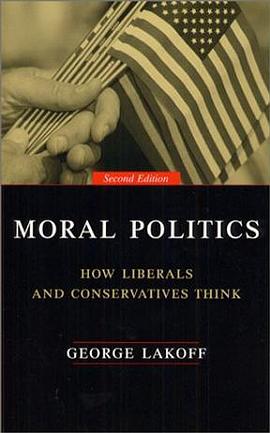
Moral Politics
Douban Goodreads
George Lakoff publishing house: University of Chicago Press 2002 - 5 other title: Moral Politics: How Liberals and Conservatives Think
In this classic text, the first full-scale application of cognitive science to politics, George Lakoff analyzes the unconscious and rhetorical worldviews of liberals and conservatives, discovering radically different but remarkably consistent conceptions of morality on both the left and right. For this new edition, Lakoff adds a preface and an afterword extending his observations to major ideological conflicts since the book's original publication, from the impeachment of Bill Clinton to the 2000 presidential election and its aftermath.

Book

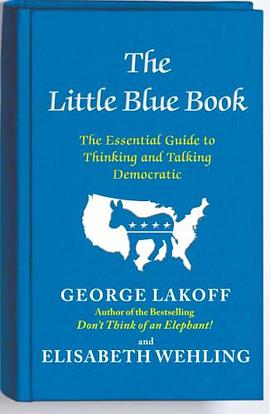
The Little Blue Book
Google Books Douban
George Lakoff / Elisabeth Wehling publishing house: Free Press 2012 - 6
The indispensable handbook for Democrats Voters cast their ballots for what they believe is right, for the things that make moral sense. Yet Democrats have too often failed to use language linking their moral values with their policies. The Little Blue Book demonstrates how to make that connection clearly and forcefully, with hands-on advice for discussing the most pressing issues of our time: the economy, health care, women’s issues, energy and environmental policy, education, food policy, and more. Dissecting the ways that extreme conservative positions have permeated political discourse, Lakoff and Wehling show how to fight back on moral grounds and in concrete terms. Revelatory, passionate, and deeply practical, The Little Blue Book will forever alter the way Democrats and progressives think and talk about politics.

Book

Philosophy in the Flesh
Philosophy in the Flesh : The Embodied Mind and its Challenge to Western Thought Douban Goodreads
George Lakoff / 马克·约翰逊 publishing house: Basic Books 1999 - 10 other title: Philosophy in the Flesh: The Embodied Mind and its Challenge to Western Thought
Two leading thinkers offer a blueprint for a new philosophy. "Their ambition is massive, their argument important.…The authors engage in a sort of metaphorical genome project, attempting to delineate the genetic code of human thought." -The New York Times Book Review "This book will be an instant academic best-seller." -Mark Turner, University of Maryland This is philosophy as it has never been seen before. Lakoff and Johnson show that a philosophy responsible to the science of the mind offers a radically new and detailed understandings of what a person is. After first describing the philosophical stance that must follow from taking cognitive science seriously, they re-examine the basic concepts of the mind, time, causation, morality, and the self; then they rethink a host of philosophical traditions, from the classical Greeks through Kantian morality through modern analytical philosophy.

Book

Women, Fire and Dangerous Things
Douban Goodreads
George Lakoff publishing house: University Of Chicago Press 1990 - 1 other title: Women, Fire, and Dangerous Things: What Categories Reveal About the Mind
"Its publication should be a major event for cognitive linguistics and should pose a major challenge for cognitive science. In addition, it should have repercussions in a variety of disciplines, ranging from anthropology and psychology to epistemology and the philosophy of science. . . . Lakoff asks: What do categories of language and thought reveal about the human mind? Offering both general theory and minute details, Lakoff shows that categories reveal a great deal."--David E. Leary, "American Scientist"

Book

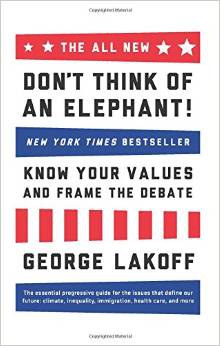
Don't Think of an Elephant!
Don't Think of an Elephant! Know Your Values and Frame the Debate: The Essential Guide for Progressives Douban Goodreads
George Lakoff / Howard Dean … publishing house: Chelsea Green Publishing 2004 - 9 other title: Don't Think of an Elephant! Know Your Values and Frame the Debate: The Essential Guide for Progressives
is the antidote to the last forty years of conservative strategizing and the right wing's stranglehold on political dialogue in the United States. Author George Lakoff explains how conservatives think, and how to counter their arguments. He outlines in detail the traditional American values that progressives hold, but are often unable to articulate. Lakoff also breaks down the ways in which conservatives have framed the issues, and provides examples of how progressives can reframe them. Lakoff’s years of research and work with leading activists and policy makers have been distilled into this essential guide, which shows progressives how to think in terms of values instead of programs, and why people support policies which align with their values and identities, but which often run counter to their best interests. is the definitive handbook for understanding and communicating effectively about key issues in the 2004 election, and beyond. Read it, take action—and help take America back.

Book

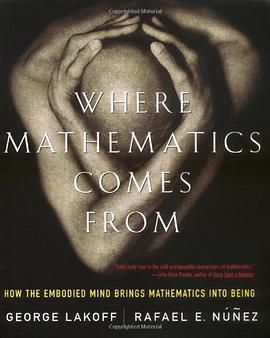
Where Mathematics Come From
Where Mathematics Comes From: How the Embodied Mind Brings Mathematics into Being Douban Goodreads
George Lakoff / Rafael Nuñez … publishing house: Basic Books 2001 - 8 other title: Where Mathematics Come From: How the Embodied Mind Brings Mathematics into Being
Renowned linguist George Lakoff pairs with psychologist Rafael Nuñez in the first book to provide a serious study of the cognitive science of mathematical ideas. This book is about mathematical ideas, about what mathematics means-and why. Abstract ideas, for the most part, arise via conceptual metaphor-metaphorical ideas projecting from the way we function in the everyday physical world. Where Mathematics Comes From argues that conceptual metaphor plays a central role in mathematical ideas within the cognitive unconscious-from arithmetic and algebra to sets and logic to infinity in all of its forms.

Book

Metaphors We Live By
Metaphors We Live By Douban Goodreads Goodreads Skybridge
★ 8.8 17 ratings
George Lakoff / Mark Johnson publishing house: University Of Chicago Press 2003 - 4
People use metaphors every time they speak. Some of those metaphors are literary - devices for making thoughts more vivid or entertaining. But most are much more basic than that - they're "metaphors we live by", metaphors we use without even realizing we're using them. In this book, George Lakoff and Mark Johnson suggest that these basic metaphors not only affect the way we communicate ideas, but actually structure our perceptions and understandings from the beginning. Bringing together the perspectives of linguistics and philosophy, Lakoff and Johnson offer an intriguing and surprising guide to some of the most common metaphors and what they can tell us about the human mind. And for this new edition, they supply an afterword both extending their arguments and offering a fascinating overview of the current state of thinking on the subject of the metaphor.