W.E.B. Du Bois — Author (5)

Book

Dark Matter: Reading the Bones
Goodreads
Sheree Renée Thomas / Ibi Zoboi … publishing house: Aspect/Warner Books 2005 - 2
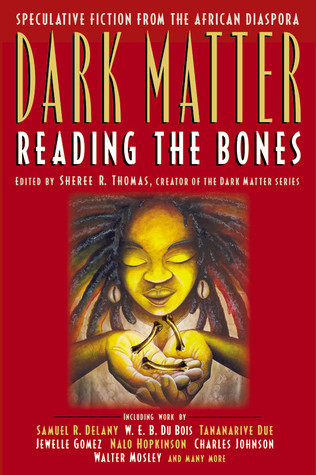
Dark Matter: Reading the Bones is a second diverse anthology of science fiction, fantasy, and speculative fiction by an array of African-American authors includes both original works and previously published short fiction. Dark Matter is the first and only series to bring together the works of black SF and fantasy writers. The first volume, Dark Matter: A Century of Speculative Fiction from the African Diaspora, was featured in the "New York Times", which named it a Notable Book of the Year. Contents Introduction (Dark Matter: Reading the Bones) • essay by Sheree Renée Thomas [as by Sheree R. Thomas] Ibo Landing (1998) / short story by Ihsan Bracy The Quality of Sand / short story by Cherene Sherrard Yahimba's Choice [Dossouye] / short story by Charles R. Saunders The Glass Bottle Trick (2000) / short story by Nalo Hopkinson Desire / short story by Kiini Ibura Salaam Recovery from a Fall / short story by David Findlay Anansi Meets Peter Parker at the Taco Bell on Lexington (2000) / short story by Douglas Kearney The Magical Negro / short story by Nnedi Okorafor [as by Nnedi Okorafor-Mbachu] Jesus Christ in Texas (1920) / short story by W. E. B. Du Bois Will the Circle Be Unbroken? (1974) / short story by Henry Dumas 'Cause Harlem Needs Heroes / short story by Kevin Brockenbrough Whipping Boy / short story by Pam Noles Old Flesh Song / short story by Ibi Zoboi [as by Ibi Aanu Zoboi] Whispers in the Dark (2001) / novelette by Walter Mosley Aftermoon / short story by Tananarive Due Voodoo Vincent and the Astrostoriograms / short story by Tyehimba Jess The Binary / short story by John Cooley BLACKout / short story by Jill Robinson Sweet Dreams / short story by Charles Johnson Buying Primo Time / short story by Wanda Coleman Corona (1967) / short story by Samuel R. Delany Maggies / short story by Nisi Shawl Excerpt from Mindscape / short story by Andrea Hairston Trance / short story by Kalamu ya Salaam The Second Law of Thermodynamics • essay by Jewelle Gomez Her Pen Could Fly: Remembering Virginia Hamilton • essay by Nnedi Okorafor [as by Nnedi Okorafor-Mbachu] Celebrating the Alien: The Politics of Race and Species in the Juveniles of Andre Norton • essay by Carol Cooper .
Book

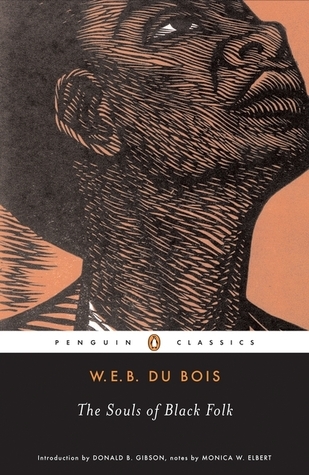
The Souls of Black Folk
Goodreads Skybridge
W.E.B. Du Bois / Donald B. Gibson … publishing house: Penguin Classics 1996 - 9
This landmark book is a founding work in the literature of black protest. W. E. B. Du Bois (1868–1963) played a key role in developing the strategy and program that dominated early 20th-century black protest in America. In this collection of essays, first published together in 1903, he eloquently affirms that it is beneath the dignity of a human being to beg for those rights that belong inherently to all mankind. He also charges that the strategy of accommodation to white supremacy advanced by Booker T. Washington, then the most influential black leader in America, would only serve to perpetuate black oppression. Publication of The Souls of Black Folk was a dramatic event that helped to polarize black leaders into two groups: the more conservative followers of Washington and the more radical supporters of aggressive protest. Its influence cannot be overstated. It is essential reading for everyone interested in African-American history and the struggle for civil rights in America.

Book

Dark Matter: A Century of Speculative Fiction from the African Diaspora
Goodreads Skybridge
Sheree Renée Thomas / W.E.B. Du Bois … publishing house: Aspect 2001 - 7
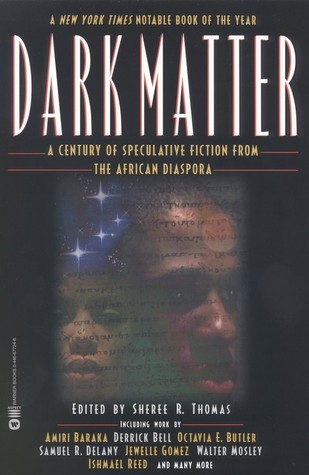
This volume introduces black science fiction, fantasy, and speculative fiction writers to the generations of readers who have not had the chance to explore the scope and diversity among African-American writers. Fiction. Sister Lilith - Honoree Fanonne Jeffers The Comet - W.E.B. Du Bois Chicage 1927 - Jewelle Gomez Black No More (novel excerpt) - George S. Schuyler separation anxiety - Evie Shockley Tasting Songs - Leone Ross Can You Wear My Eyes - Kalamu ya Salaam Like Daughter - Tananarive Due Greedy Choke Puppy - Nalo Hopkinson Rhythm Travel - Amiri Baraka Buddy Bolden - Kalamu ya Salaam Aye, and Gomorrah... - Samuel R. Delany Ganger (Ball Lightning) - Nalo Hopkinson The Becoming - Akua Lezli Hope The Goophered Grapevine - Charles W. Chestnutt The Evening and the Morning and the Night - Octavia E. Butler Twice, at Once, Separated - Linda Addison Gimmile's Songs - Charles R. Saunders At the Huts of Ajala - Nisi Shawl The Woman in the Wall - Steven Barnes Ark of Bones - Henry Dumas Butta's Backyard Barbecue - Tony Medina Future Christmas (novel excerpt) - Ishmael Reed At Life's Limits - Kiini Ibura Salaam The African Origins of UFOs (novel excerpt) - Anthony Joseph The Astral Visitor Delta Blues - Robert Fleming The Space Traders - Derrick Bell The Pretended - Darryl A. Smith Hussy Strutt - Ama Patterson Essays. Racism and Science Fiction - Samuel R. Delany Why Blacks Should Read (and Write) Science Fiction - Charles R. Saunders Black to the Future - Walter Mosley Yet Do I Wonder - Paul D. Miller The Monophobic Response - Octavia E. Butler

Book

The Souls of Black Folk
Douban
★ 8.7 6 ratings
W.E.B. Du Bois publishing house: Bantam Classics 1920 - 1
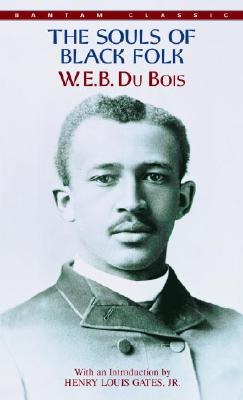
Book Description "The problem of the twentieth century is the problem of the color line." Thus speaks W.E.B. Du Bois in The Souls Of Black Folk, one of the most prophetic and influental works in American literature. In this eloquent collection of essays, first published in 1903, Du Bois dares as no one has before to describe the magnitude of American racism and demand an end to it. He draws on his own life for illustration, from his early experiences teaching in the hills of Tennessee to the death of his infant son and his historic break with the conciliatory position of Booker T. Washington. Far ahead of its time, The Souls Of Black Folk both anticipated and inspired much of the black conciousness and activism of the 1960's and is a classic in the literature of civil rights. The elegance of DuBois's prose and the passion of his message are as crucial today as they were upon the book's first publication. Amazon.com William Edward Burghardt Du Bois (1868-1963) is the greatest of African American intellectuals--a sociologist, historian, novelist, and activist whose astounding career spanned the nation's history from Reconstruction to the civil rights movement. Born in Massachusetts and educated at Fisk, Harvard, and the University of Berlin, Du Bois penned his epochal masterpiece, The Souls of Black Folk, in 1903. It remains his most studied and popular work; its insights into Negro life at the turn of the 20th century still ring true. With a dash of the Victorian and Enlightenment influences that peppered his impassioned yet formal prose, the book's largely autobiographical chapters take the reader through the momentous and moody maze of Afro-American life after the Emancipation Proclamation: from poverty, the neoslavery of the sharecropper, illiteracy, miseducation, and lynching, to the heights of humanity reached by the spiritual "sorrow songs" that birthed gospel and the blues. The most memorable passages are contained in "On Booker T. Washington and Others," where Du Bois criticizes his famous contemporary's rejection of higher education and accommodationist stance toward white racism: "Mr. Washington's programme practically accepts the alleged inferiority of the Negro races," he writes, further complaining that Washington's thinking "withdraws many of the high demands of Negroes as men and American citizens." The capstone of The Souls of Black Folk, though, is Du Bois' haunting, eloquent description of the concept of the black psyche's "double consciousness," which he described as "a peculiar sensation.... One ever feels this twoness--an American, a Negro; two souls, two thoughts, two unreconciled strivings; two warring ideals in one dark body, whose dogged strength alone keeps it from being torn asunder." Thanks to W.E.B. Du Bois' commitment and foresight--and the intellectual excellence expressed in this timeless literary gem--black Americans can today look in the mirror and rejoice in their beautiful black, brown, and beige reflections. --Eugene Holley Jr About Author W.E.B. Du Bois (1868–1963), writer, civil rights activist, scholar, and editor, is one of the most significant intellectuals in American history. A founding member of the NAACP, editor for many years of The Crisis and three other journals, and author of seventeen books, his writings, speeches, and public debates brought fundamental changes to American race relations. David Levering Lewis is Martin Luther King, Jr., University Professor in the department of history at Rutgers University. He won Pulitzer prizes for both volumes of his landmark biography of W.E.B. Du Bois, along with many other awards, including the Bancroft and Parkman prizes. He lives in Manhattan. Book Dimension: length: (cm)17.5                 width:(cm)10.8