Lia Borré — Actor (2)

Movie

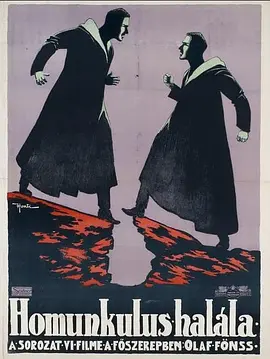
Homunculus - George Eastman House Digest Restoration (1916)
Homunculus, 1. Teil Douban
Otto Rippert actor: 奥拉夫·方斯 / Ernst Ludwig …
other title: 人造人 / Homunculus, 1. Teil …
Part of the artificial-creature series encompassing Der Golem (1914 and 1920), Alraune (1918, 1928, 1930) and Metropolis (1926), 'Homunculus' was the most popular serial in Germany during World War I even influencing the dress of the fashionableset in Berlin. Foenss, a Danish star, is the perfect creature manufactured in a laboratory by Kuehne. Having discovered his origins, that he has no 'soul' and is incapable of love, he revenges himself on mankind, instigating revolutions and becoming a monstruos but beautiful tyrant, relentlessly pursued by his creator-father who seeks to rectify his mistake. Man’s attempts to create artificial life have long been a staple of cinema science fiction. That plot device achieved a high level of sophistication with director Otto Rippert’s Homunculus series. No grotesque pastiche of human body parts like his notorious counterpart Frankenstein’s monster, Homunculus is the beloved “test-tube child” of a German scientist who lacks only one thing—the capacity to feel love. The film seen here is preserved from a decomposing 35mm nitrate print with tinting and toning that may be a condensed version of the original six-episode series. Structurally, the story (with Italian intertitles) is still intact, and the combination of decomposing nitrate with the remains of the original colors creates an otherworldly beauty that serves to heighten the drama. Homunculus was preserved with funding from The Louis B. Mayer Foundation.
Movie

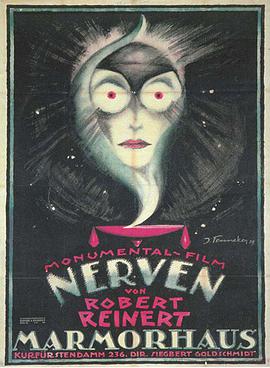
Nerven (1919)
Nerven Douban
罗伯特·莱纳特 actor: 爱德华·冯·温特施泰因 / Lia Borré …
other title: 神经质 / Nerves …
In Nerven, writer-director-producer Robert Reinert tried to capture the "nervous epidemic" caused by war and misery which "drives people mad". This unique portrait of the life in 1919 Germany, filmed on location in Munich, describes the cases of different people from all levels of society: Factory owner Roloff who looses his mind in view of catastrophies and social disturbances, teacher John who is the hero of the masses and Marja who turns into a radical revolutionary. Using different fragments the Munich Film Museum could reconstruct this forgotten German classic which is a historic document and anticipates already elements of the Expressionist cinema of the 1920s. Having a more complete version of Nerven available is a wonderful contribution to our understanding of film history. The standard version was known to very few students of cinema, and though it was impressive, it was somewhat incoherent. We are still lacking a lot of footage, but Stefan Droessler and his team have added what they could and arranged the sequences into a more intelligible order. The quality of the restoration, moreover, makes the film's visual style even more vivid and unsettling. Released shortly before The Cabinet of Dr. Caligari, Nerven ought to have entered the Expressionist canon. Its themes echo the movement's post-Romantic attack on capitalism and the modern conception of the anguished soul. Its narrative plays out the implications of such icons of Expressionist art as convulsive crowds and men's homicidal urges toward women. Just as important, the film's pictorial design finds an original way to convey the tale's emotional tenor, the sense of nervous anxiety strung ever tighter. Significantly, Reinert achieves a unique look without recourse to the painted sets of Caligari, but through a unique use of other cinematic resources.