Francelia Billington — Actor (12)

Movie

Desert Love (1920)
Desert Love WikiData IMDb TMDB
Murderous bandits shoot up a town and kill the sheriff. But before he dies, the lawman leaves behind a list of the men responsible for his murder. Twenty-five years later, his son, Buck Marston has grown up and followed in his father's footsteps by becoming a sheriff.

Movie

Sands of Sacrifice (1917)
Sands of Sacrifice IMDb TMDB
When the unruly drinking party at "Big Bill" Darcey's hunting lodge runs out of liquor, they move to the lodge of Darcey's agent, Enoch Foyle, and finding attractive Nora Farnes waiting alone, harass her. Bill, who previously was interested only in pleasure, with his consumptive friend Sammy Goode, protects Nora, who, armed with a revolver, intends to confront Foyle for swindling her mother.

Movie

Shackles of Truth (1917)
Shackles of Truth WikiData IMDb TMDB
other title: Jack l'indomabile
Law partners, Gerard Hale and Luther Snaith, vie for a vacant Senate seat as well as the governor's daughter Marion. When Tom Shores and his sister Mary appear at the firm with the news that her two-year-old is the illegitimate child of Gerard's late father, Gerard Hale, Sr., Snaith sees the opportunity to win both the Senate seat and Marion. Gerard, feeling an obligation, gives Mary a check for $50,000. Luther has Mary and Tom seized by detectives to force an open admission from Gerard of culpability. Meanwhile, Mrs. Hale and Marion have stopped in to visit and Gerard, fearing the truth will prove fatal to his mother's ailing heart, claims that the baby is his. Mrs. Hale is confined to bed and Snaith blackmails Gerard to withdraw from the race. Mrs. Hale asks Gerard to do his duty and wed Mary. Mary wants to be truthful, but Gerard fears that may prove fatal to his mother. However, when Mrs. Hale dies, Gerard is freed from the shackles of truth.

Movie

Hearts and Flowers (1915)
Hearts and Flowers IMDb TMDB
As violinist Alfred Wantez embarks on a concert tour leaving his wife Olga and son Billy at home he is attacked by a tramp on his way to the train. The tramp steals his clothes, knocks him unconscious then boards the train. When the train is wrecked the tramp is killed and buried as Wantez. Meanwhile Alfred is found and cared for but has no idea of his identity. Becoming an itinerant musician, he wanders to the seaside where by happenstance Olga and Billy are vacationing. Upon hearing him play “Hearts and Flowers” Olga is drawn to the street where she finds Alfred doesn’t recognize either, she or Billy. She turns to her friend Dr. Allen who performs an operation that restores the violinist’s memory.

Movie

Told in the Future (1913)
Told in the Future IMDb TMDB
actor: William Garwood / Anne Drew …
A young man, pressured by his father to choose a wealthy bride over his true love, dreams of marrying the rich girl. The dream vividly depicts the unhappiness and financial ruin that follow. Upon awakening, he resolves to marry the girl he loves. His father, seeing the dream's truth, relents, and the young man marries his beloved, leading to a happy ending.

Movie

The Boomerang (1913)
The Boomerang WikiData IMDb TMDB
Simon Watson, devoid of conscience, has become wealthy through the manufacture of "Watson's Remedy." One day he is stricken with terror when he finds a bottle of the medicine in the hands of his little child, Helen, and he warns her never to touch it. But the little one's curiosity is aroused and when her father has left for his office, she tastes the medicine and becomes violently ill. John Smith, a young workman, has a little daughter, Margaret, who is taken sick and the mother secures a bottle of the "remedy" at a drug store. Instead of relieving the child's pain, the medicine causes her to lose consciousness and when the horrified father learns the cause, he determines to seek Watson's life.

Movie

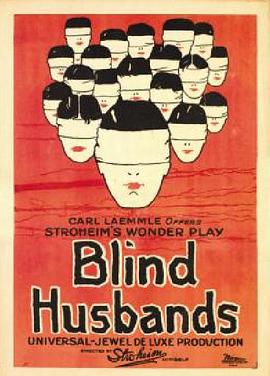
Blind Husbands (1919)
Blind Husbands WikiData IMDb TMDB Douban
埃里克·冯·施特罗海姆 actor: 萨姆·德·格拉斯 / Francelia Billington …
other title: 盲目的丈夫们 / Blinde Ehemänner …
Two differences between this Austrian version and the generally available American version are immediately obvious: they differ both in their length and in the language of the intertitles. The American version is only 1,883 metres long - at 18 frames per second a difference of some 7 minutes to the Austrian version with 2,045 metres. Whereas we originally presumed only a negligible difference, resulting from the varying length of the intertitles, a direct comparison has nevertheless shown that the Austrian version differs from the American version both in the montage and in the duration of individual scenes. Yet how could it happen that the later regional distribution of a canonical US silent film was longer than the "original version"? The prevalent American version of Blind Husbands does not correspond to the version shown at the premiere of 1919. This little-known fact was already published by Richard Koszarski in 1983. The film was re-released by Universal Pictures in 1924, in a version that was 1,365 feet (416 metres) shorter. At 18 frames per second, this amounts to a time difference of 20 minutes! "Titles were altered, snippets of action removed and at least one major scene taken out entirely, where von Steuben and Margaret visit a small local chapel." (Koszarski) From the present state of research we can assume that all the known American copies of the film derive from this shortened re-release version, a copy of which Universal donated to the Museum of Modern Art in 1941. According to Koszarski the original negative of the film was destroyed sometime between 1956 and 1961 and has therefore been irretrievably lost. This information casts an interesting light on the Austrian version, which can be dated to the period between the summer of 1921 and the winter of 1922. Furthermore, the copy is some 200 metres longer than the US version of 1924. If one follows the details given by Richard Koszarski and Arthur Lennig, this means that, as far as both its date and its length are concerned, the Austrian version lies almost exactly in the middle between the (lost) version shown at the premiere and the re-released one.A large part of the additional length of the film can be traced to cuts that were made to the 1924 version in almost every shot. Koszarski describes how the beginning and the end of scenes were trimmed, in order to "speed up" the film. However, more exciting was the discovery that the Austrian version contains shots that are missing in the American one - shots/countershots, intertitles - and furthermore shows differences in its montage (i.e. the placing of the individual shots within a sequence). All this indicates that Die Rache der Berge constitutes the oldest and most completely preserved material of the film.