Laikwan Pang — Author (4)
Book
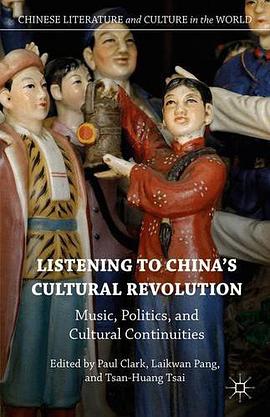
Listening to China's Cultural Revolution
DoubanThe first of its kind in English to explore the musical culture of China's Cultural Revolution, Listening to China's Cultural Revolution discusses the history, politics, and aesthetics of a full range of music and performances during this rich yet complicated time in Chinese history. Together, the chapters, grouped under the headings "Temporality,' 'Geography,' and 'Lineage and Legacies,' demonstrate how the era's soundscape was both political and personal, experienced by ordinary people, artists, as well as political leaders, and how the sensory was translated into political actions or even indifference. Finally, the book traces the impact of this musical and operatic culture back to its earlier roots through present-day reverberations still felt and heard today.
Book
Creativity and Its Discontents
Douban“Making strategic use of the antagonistic role often played by China in the new global economy, Laikwan Pang raises fundamental questions about the hegemonic discourse of creativity as anchored in EuroAmerican traditions of rights, authorship, private property ownership, and reproduction. An admirably ambitious—and creative—book!”—Rey Chow, author of Sentimental Fabulations, Contemporary Chinese Films
.
“Laikwan Pang’s thoroughly engaging study sets a new standard for analysis of the ‘creative economy,’ not just in China, but in every country where government officials have elevated the pursuit of creativity into industrial policy.”—Andrew Ross, author of Fast Boat to China
Book
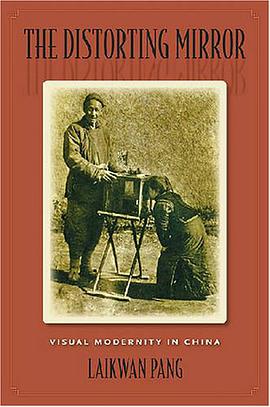
The Distorting Mirror
DoubanThe Distorting Mirror analyzes the multiple and complex ways in which urban Chinese subjects saw themselves interacting with the new visual culture that emerged during the turbulent period between the 1880s and the 1930s. The media and visual forms examined include lithography, photography, advertising, film, and theatrical performances. Urbanites actively engaged with and enjoyed this visual culture, which was largely driven by the subjective desire for the empty promises of modernity―promises comprised of such abstract and fleeting concepts as new, exciting, and fashionable.
Detailing and analyzing the trajectories of development of various visual representations, Laikwan Pang emphasizes their interactions. In doing so, she demonstrates that visual modernity was not only a combination of independent cultural phenomena, but also a partially coherent sociocultural discourse whose influences were seen in different and collective parts of the culture. The work begins with an overall historical account and theorization of a new lithographic pictorial culture developing at the end of the nineteenth century and an examination of modernity’s obsession with the investigation of the real. Subsequent chapters treat the fascination with the image of the female body in the new visual culture; entertainment venues in which this culture unfolded and was performed; how urbanites came to terms with and interacted with the new reality; and the production and reception of images, the dynamics between these two being a theme explored throughout the book.
Modernity, as the author shows, can be seen as spectacle. At the same time, she demonstrates that, although the excessiveness of this spectacle captivated the modern subject, it did not completely overwhelm or immobilize those who engaged with it. After all, she argues, they participated in and performed with this ephemeral visual culture in an attempt to come to terms with their own new, modern self.