Philip Scheffner — Director (4)

Movie

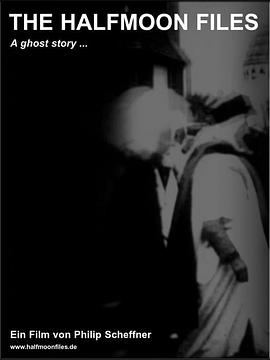
The Halfmoon Files (2007)
The Halfmoon Files Douban
other title: 半月营档案
The Halfmoon Files is an audio-visual research project on the entanglements of politics, colonialism, science and media technology. It investigates an elusive archive of audio and film recordings documenting Indian and North African prisoners who were interned in the Halbmondlager (or “Halfmoon camp”) near Berlin during World War I. It is a film about gaps, omissions and the construction of history. A film whose protagonists are not visible – but whose presence can be sensed. In short: a ghost story.
Movie

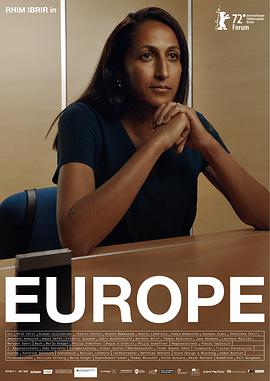
Europe (2022)
Europe Douban
菲利普·舍弗尼 actor: Rhim Ibrir / Didier Cuillierier …
other title: 欧罗巴
Previously acclaimed for his essayistic documentaries, Philip Scheffner has now ventured into fiction. Zohra, played by Rhim Ibrir, already featured in Scheffner’s Havarie (Berlinale Forum 2016), is living in a town in southwestern France. She has a severe case of scoliosis. Volker Sattel’s camerawork examines X-rays, follows Zohra to the hospital and to an indoor swimming pool for rehab and sits right next to her or behind her on the bus. The images are crisp and flooded with summer light, the sense of place and space is so precise that we know each of the bus stops along her way: first Poste, then Piscine, then Europe. When Zohra’s condition improves, her residence permit is not renewed, so she has to go back to Algeria. Her case worker shrugs his shoulders: it is out of his hands, he says, nothing he can do about it. A fade to black marks a turning point in the story after which the heroine disappears from view. Scheffner continues to vary this game of the visible and the invisible for a while until dream and everyday reality fuse in the summer heat and glaring sunlight to create a shimmering narrative in the subjunctive.

Movie

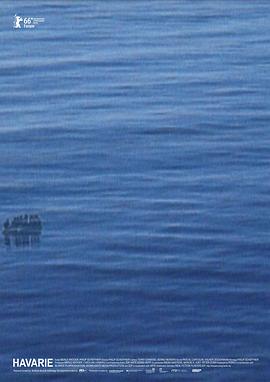
Havarie (2016)
Havarie Douban
菲利普·舍弗尼 actor: Rhim Ibrir / Abdallah Benhamou …
other title: 共同海损
37º 28.6´N 0º3.8´E. An inflatable dinghy full of people, one of them waving. The camera pans slowly to the right and shows tourists on a cruise ship looking out to sea. The camera moves back, touches upon the boat again and then pans to the left, to the other side of the ship. The refracted sunlight bathes it in colour and a vertical ray of light separates the ship from the boat, to which the camera now returns. At times the image blurs; ghostly reflections appear in the water. The following is heard at the same time: the rescue crew requesting via radio that one should wait until a helicopter arrives. A woman talking on the phone in France to her husband in Algeria. Later he speaks of a crossing. The Irish tourist holding the camera, ship employees, Russian and Ukrainian cargo workers talking of encounters with this refugee boat (or another). And of their world. During the work on this film, images overtook reality. Havarie responds to this by condensing sound and disassociating it from the image to create a space of perception that allows the viewer to experience their own position without ever losing sight of the subject at hand: a cinematic coup of true radicalism. berlinale 2016

Movie

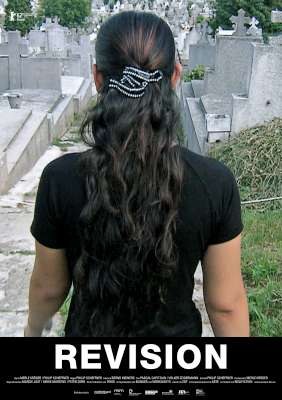
Revision (2012)
Revision WikiData IMDb TMDB Douban
other title: 玉米田杀人事件 / 玉米田殺人事件(台)
In 1992, two men were shot in a field near the German-Polish border. The circumstances which led to the death of Grigore Velcu and Eudache Calderar have not been clarified even today. Director Philip Scheffner investigates these strange deaths nearly 20 years later.