Oliver Sacks — Author (39)
Musicofilia [Book] Goodreads
author: Oliver Sacks / Isabella C. Blum publishing house: Adelphi 2008 - 4
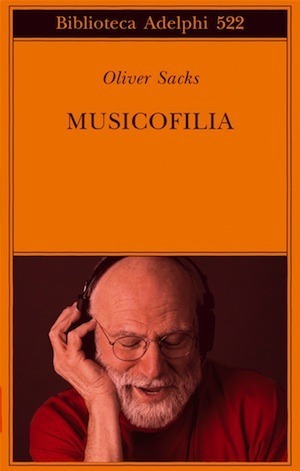
Un giorno, a New York, Oliver Sacks partecipa all’incontro organizzato da un batterista con una trentina di persone affette dalla sindrome di Tourette: tutti appaiono in preda a tic contagiosi, che si propagano «come onde». Poi il batterista inizia a suonare – e come per incanto il gruppo lo segue con i tamburi, fondendosi in una perfetta sincronia ritmica. Questo stupefacente esempio è solo una particolare variante del prodigio di «neurogamia» che si verifica ogniqualvolta il nostro sistema nervoso ‘si sposa’ a quello di chi ci sta accanto attraverso il medium della musica. Presentando questo e molti altri casi con la consueta capacità di immedesimazione, in Musicofilia Sacks esplora la straordinaria robustezza neurale della musica e i suoi nessi con le funzioni e disfunzioni del cervello. Allucinazioni sonore, amusia, disarmonia, epilessia musicogena: da quali inceppi nella connessione a due vie fra sensi e cervello sono causate? Come sempre l’indagine su ciò che è anomalo getta luce su fenomeni di segno opposto: l’orecchio assoluto, la memoria fonografica, l’intelligenza musicale e soprattutto l’amore per la musica – un amore che può divampare all’improvviso, come nel memorabile caso del medico che, colpito da un fulmine, viene assalito da un «insaziabile desiderio di ascoltare musica per pianoforte», suonare e persino comporre. Grazie alle testimonianze dei pazienti di Sacks ci troviamo così a riconsiderare in una nuova prospettiva appassionanti interrogativi, e assistiamo ai successi della musicoterapia su formidabili banchi di prova quali l’autismo, il Parkinson, la demenza. Dai misteriosi sogni musicali che ispirarono Berlioz, Wagner e Stravinskij, alla possibile amusia di Nabokov, alla riscoperta dell’«enorme importanza, spesso sottostimata, di avere due orecchie»: ogni storia cui Sacks dà voce illumina uno dei molti modi in cui musica, emozione, memoria e identità si intrecciano, e ci definiscono.
L'uomo che scambiò sua moglie per un cappello [Book] Goodreads
author: Oliver Sacks / Clara Morena publishing house: Adelphi 2021 - 1
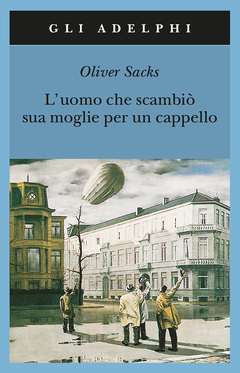
«Sono un appassionato lettore di storie cliniche ... ma non ho mai letto dei racconti psicologici così intensi come quelli narrati da Oliver Sacks nell’Uomo che scambiò sua moglie per un cappello ... È un libro che vorrei consigliare a tutti: medici e malati, lettori di romanzi e di poesia, cultori di psicologia e di metafisica, vagabondi e sedentari, realisti e fantastici. La prima musa di Sacks è la meraviglia per la molteplicità dell’universo»
PIETRO CITATI

Previously-published edition with same ISBN here:
https://www.goodreads.com/book/show/9...
Gratitude [Book] Goodreads
author: Oliver Sacks publishing house: Knopf Canada 2015 - 11
“My predominant feeling is one of gratitude. I have loved and been loved. I have been given much and I have given something in return. Above all, I have been a sentient being, a thinking animal, on this beautiful planet, and that in itself has been an enormous privilege and adventure.”
—Oliver Sacks

No writer has succeeded in capturing the medical and human drama of illness as honestly and as eloquently as Oliver Sacks.

During the last few months of his life, he wrote a set of essays in which he movingly explored his feelings about completing a life and coming to terms with his own death.

“It is the fate of every human being,” Sacks writes, “to be a unique individual, to find his own path, to live his own life, to die his own death.”

Together, these four essays form an ode to the uniqueness of each human being and to gratitude for the gift of life.
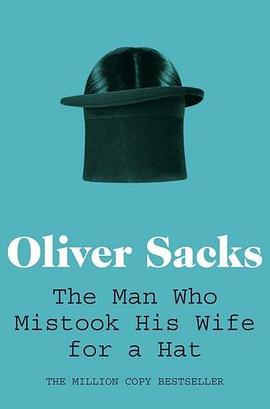
The Man Who Mistook His Wife for a Hat and Other Clinical Tales [Book] Goodreads
author: Oliver Sacks publishing house: Harper & Row 1986 - 1
In his most extraordinary book, Oliver Sacks recounts the stories of patients lost in the bizarre, apparently inescapable world of neurological disorders. These are case studies of people who have lost their memories and with them the greater part of their pasts; who are no longer able to recognize people or common objects; whose limbs have become alien; who are afflicted and yet are gifted with uncanny artistic or mathematical talents. In Dr Sacks' splendid and sympathetic telling, each tale is a unique and deeply human study of life struggling against incredible adversity.
The Man Who Mistook His Wife for a Hat: and Other Clinical Tales [Book] Goodreads
author: Oliver Sacks / Jonathan Davis publishing house: Audible Studios 2011 - 6
In his most extraordinary book, "one of the great clinical writers of the 20th century" (The New York Times) recounts the case histories of patients lost in the bizarre, apparently inescapable world of neurological disorders. Oliver Sacks' The Man Who Mistook His Wife for a Hat tells the stories of individuals afflicted with fantastic perceptual and intellectual patients who have lost their memories and with them the greater part of their pasts; who are no longer able to recognize people and common objects; who are stricken with violent tics and grimaces or who shout involuntary obscenities; whose limbs have become alien; who have been dismissed as retarded yet are gifted with uncanny artistic or mathematical talents.

If inconceivably strange, these brilliant tales remain, in Dr. Sacks' splendid and sympathetic telling, deeply human. They are studies of life struggling against incredible adversity, and they enable us to enter the world of the neurologically impaired, to imagine with our hearts what it must be to live and feel as they do. A great healer, Sacks never loses sight of medicine's ultimate "the suffering, afflicted, fighting human subject".

PLEASE Some changes have been made to the original manuscript with the permission of Oliver Sacks.

©1970, 1981, 1983, 1984, 1985 Oliver Sacks (P)2011 Audible, Inc.
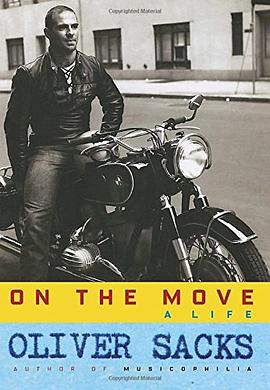
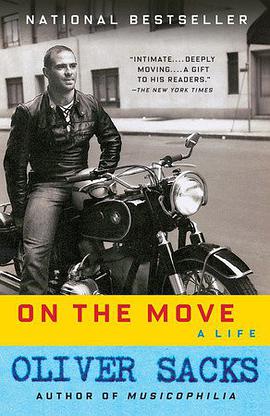
On the Move [Book] Douban Goodreads
author: Oliver Sacks publishing house: Knopf 2015 - 4
When Oliver Sacks was twelve years old, a perceptive schoolmaster wrote in his report: “Sacks will go far, if he does not go too far.” It is now abundantly clear that Sacks has never stopped going. From its opening pages on his youthful obsession with motorcycles and speed, On the Move is infused with his restless energy. As he recounts his experiences as a young neurologist in the early 1960s, first in California, where he struggled with drug addiction and then in New York, where he discovered a long forgotten illness in the back wards of a chronic hospital, we see how his engagement with patients comes to define his life.
With unbridled honesty and humor, Sacks shows us that the same energy that drives his physical passions — weightlifting and swimming—also drives his cerebral passions. He writes about his love affairs, both romantic and intellectual; his guilt over leaving his family to come to America; his bond with his schizophrenic brother; and the writers and scientists—Thom Gunn, A.R. Luria, W.H. Auden, Francis Crick — who influenced him. On the Move is the story of a brilliantly unconventional physician and writer — and of the man who illuminated the many ways that the brain makes us human.
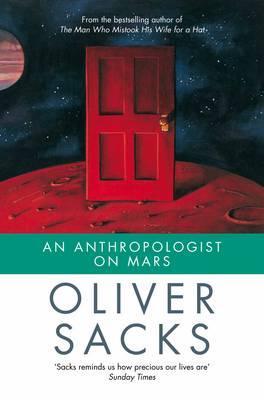
An Anthropologist on Mars: Seven Paradoxical Tales [Book]
An Anthropologist on Mars: Seven Paradoxical Tales
author: Oliver Sacks
Paradoxical portraits of seven neurological patients, including a surgeon consumed by the compulsive tics of Tourette's syndrome unless he is operating; an artist who loses all sense of color in a car accident, but finds new creative power in black & white; & others.
The Island of the Colourblind [Book] Douban
author: Oliver Sacks publishing house: Picador 1997 - 10
Oliver Sacks travels once again in search of human diversity, to the South Pacific atoll of Pingelap, where he finds that a high proportion of the population is colourblind and investigates the causes and effects of that condition. This book explores the islands, the people and their case studies.
The Man Who Mistook His Wife for a Hat [Book] Douban
author: Oliver Sacks publishing house: Picador 2011 - 9
"Oliver Sacks has become the world's best-known neurologist. His case studies of broken minds offer brilliant insight into the mysteries of consciousness". ("Guardian"). In his most extraordinary book, Oliver Sacks recounts the stories of patients lost in the bizarre, apparently inescapable world of neurological disorders. These are case studies of people who have lost their memories and with them the greater part of their pasts; who are no longer able to recognize people or common objects; whose limbs have become alien; and, who are afflicted and yet are gifted with uncanny artistic or mathematical talents. In Dr Sacks' splendid and sympathetic telling, each tale is a unique and deeply human study of life struggling against incredible adversity. "Populated by a cast as strange as that of the most fantastic fiction ...Dr Sacks shows the awesome powers of our mind and just how delicately balanced they have to be". ("Sunday Times"). "This book is for everybody who has felt from time to time that certain twinge of self-identity and sensed how easily, at any moment, one might lose it". ("The Times"). "A gripping journey into the recesses of the human mind". ("Daily Mail").
An Anthropologist on Mars [Book] Douban Goodreads
author: Oliver Sacks publishing house: MacMillan 1998 - 7
'An inexhaustible tourist at the farther reaches of the mind, Sacks presents, in sparse, unsentimental prose, the stories of seven of his patients. The result is as rich, vivid and compelling as any collection of short fictional stories' Independent on Sunday As with his previous bestseller, The Man Who Mistook His Wife for a Hat, Oliver Sacks uses case studies to illustrate the myriad ways in which neurological conditions can affect our sense of self, our experience of the world, and how we relate to those around us. Writing with his trademark blend of scientific rigour and human compassion, he describes patients such as the colour-blind painter or the surgeon with compulsive tics that disappear in the operating theatre; patients for whom disorientation and alienation but also adaptation are inescapable facts of life. 'Sacks' great gift is his capacity to place himself in the position of his subjects, to see the world the way they see it and to empathize with their condition with great compassion but without patronage or pity' Daily Telegraph 'Writing simply and beautifully, Sacks uses individual case histories to reveal the infinite complexities of the human mind' Daily Mail
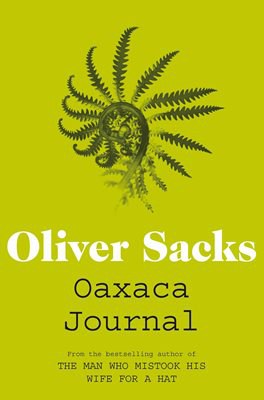
Oaxaca Journal [Book] Douban
author: Oliver Sacks publishing house: Picador 2012 - 7
‘Light and fast-moving, unburdened by library research but filled with erudition’ New Yorker
Oliver Sacks, the bestselling author of Awakenings and The Man Who Mistook His Wife for a Hat, is most famous for his studies of the human mind: insightful and beautifully characterized portraits of those experiencing complex neurological conditions. However, he has another scientific passion: the fern.
Since childhood Oliver has been fascinated by the ability of these primitive plants to survive and adapt in many climates. Oaxaca Journal is the enthralling account of his trip, alongside a group of fellow fern enthusiasts, to the beautiful province of Oaxaca, Mexico. Bringing together Oliver’s endless curiosity about natural history and the richness of human culture with his sharp eye for detail, this book is a captivating evocation of a place, its plants, its people, and its myriad wonders.
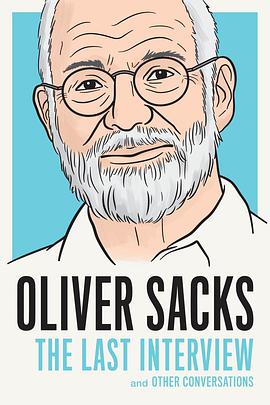
Oliver Sacks [Book] Douban
author: Oliver Sacks publishing house: Melville House 2016 - 11
An extraordinary collection of interviews with the beloved doctor and author, whose research and books inspired generations of readers.
Oliver Sacks—called "the poet laureate of medicine" by the New York Times—illuminated the mysteries of the brain for a wide audience in a series of richly acclaimed books, including Awakenings and The Man Who Mistook His Wife for a Hat, and numerous The New Yorker articles.
In this collection of interviews, Sacks is at his most candid and disarming, rich with insights about his life and work. Any reader of Oliver Sacks will find in this book an entirely new way of looking at a brilliant writer.
On the Move [Book] Douban Skybridge
author: Oliver Sacks publishing house: Alfred A. Knopf 2016 - 2 other title: On the Move: A Life
When Oliver Sacks was twelve years old, a perceptive schoolmaster wrote: “Sacks will go far, if he does not go too far.” It is now abundantly clear that Sacks has never stopped going. With unbridled honesty and humor, Sacks writes about the passions that have driven his life—from motorcycles and weight lifting to neurology and poetry. He writes about his love affairs, both romantic and intellectual; his guilt over leaving his family to come to America; his bond with his schizophrenic brother; and the writers and scientists—W. H. Auden, Gerald M. Edelman, Francis Crick—who have influenced his work. On the Move is the story of a brilliantly unconventional physician and writer, a man who has illuminated the many ways that the brain makes us human.
勇往直前 [Book] Douban
On the Move: A Life
author: 奧立佛‧薩克斯 / Oliver Sacks translator: 黃靜雅 publishing house: 天下文化 2016 - 1
奧立佛‧薩克斯醫師最誠懇的傳記,最瀟灑的人生
◎已譯成二十種語文版本的全球暢銷書
◎獲選亞馬遜網路書店當月最佳書選
◎《紐約時報》年度最值得注目的一百本書
他寫過十二本醫學人文暢銷書,獨樹一幟
他的成名作《睡人》搬上大銀幕,名噪一時
他在紐約成為流浪醫師,巡迴關懷弱勢精神病人
他曾以身試「藥」,親自體驗各種感官的幻覺
他不是「看病」而已,而是看病人、醫病人的病
他年輕時酷愛騎摩托車長途漂泊,經常一日雙城
他能蹲舉二百七十二公斤,一舉創下加州新紀錄
他是同性戀者,七十七歲才終於找到真愛
他酷愛游泳、爬山、思考、寫作、關懷病人
他與睿智機敏的羅賓.威廉斯成為好友
他一生多采多姿、喜歡冒險、勇往直前
他是絕無僅有的,奧立佛‧薩克斯醫師
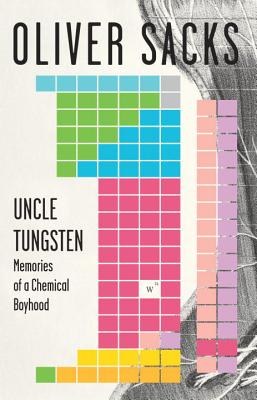
Uncle Tungsten [Book] Douban
author: Oliver Sacks publishing house: Vintage 2002 - 9
Long before Oliver Sacks became a distinguished neurologist and bestselling writer, he was a small English boy fascinated by metals–also by chemical reactions (the louder and smellier the better), photography, squids and cuttlefish, H.G. Wells, and the periodic table. In this endlessly charming and eloquent memoir, the author of The Man Who Mistook His Wife for a Hat and Awakenings chronicles his love affair with science and the magnificently odd and sometimes harrowing childhood in which that love affair unfolded.
In Uncle Tungsten we meet Sacks’ extraordinary family, from his surgeon mother (who introduces the fourteen-year-old Oliver to the art of human dissection) and his father, a family doctor who imbues in his son an early enthusiasm for housecalls, to his “Uncle Tungsten,” whose factory produces tungsten-filament lightbulbs. We follow the young Oliver as he is exiled at the age of six to a grim, sadistic boarding school to escape the London Blitz, and later watch as he sets about passionately reliving the exploits of his chemical heroes–in his own home laboratory. Uncle Tungsten is a crystalline view of a brilliant young mind springing to life, a story of growing up which is by turns elegiac, comic, and wistful, full of the electrifying joy of discovery.
Everything in its Place [Book] Douban
author: Oliver Sacks publishing house: Picador 2019 - 5
From the best-selling author of Gratitude and On the Move, a final volume of essays that showcase Sacks’s broad range of interests–from his passion for ferns, swimming, and horsetails, to his final case histories exploring schizophrenia, dementia, and Alzheimer’s.
Oliver Sacks, scientist and storyteller, is beloved by readers for his neurological case histories and his fascination and familiarity with human behavior at its most unexpected and unfamiliar. Everything in Its Place is a celebration of Sacks’s myriad interests, told with his characteristic compassion and erudition, and in his luminous prose.
The Island of the Colorblind [Book] Douban
author: Oliver Sacks publishing house: Vintage 1997
Oliver Sacks has always been fascinated by islands--their remoteness, their mystery, above all the unique forms of life they harbor. For him, islands conjure up equally the romance of Melville and Stevenson, the adventure of Magellan and Cook, and the scientific wonder of Darwin and Wallace.
Drawn to the tiny Pacific atoll of Pingelap by intriguing reports of an isolated community of islanders born totally color-blind, Sacks finds himself setting up a clinic in a one-room island dispensary, where he listens to these achromatopic islanders describe their colorless world in rich terms of pattern and tone, luminance and shadow. And on Guam, where he goes to investigate the puzzling neurodegenerative paralysis endemic there for a century, he becomes, for a brief time, an island neurologist, making house calls with his colleague John Steele, amid crowing cockerels, cycad jungles, and the remains of a colonial culture.
The islands reawaken Sacks' lifelong passion for botany--in particular, for the primitive cycad trees, whose existence dates back to the Paleozoic--and the cycads are the starting point for an intensely personal reflection on the meaning of islands, the dissemination of species, the genesis of disease, and the nature of deep geologic time. Out of an unexpected journey, Sacks has woven an unforgettable narrative which immerses us in the romance of island life, and shares his own compelling vision of the complexities of being human.
From the Hardcover edition.
Migraine [Book] Douban Goodreads
author: Oliver Sacks publishing house: Vintage 1999 - 10
Balanced, authoritative . . . brilliant. -- The London Times
"Written by one of the great clinical writers of the twentieth century, Migraine . . . should be read as much for its brilliant insights into the nature of our mental functioning as for its discussion of the migraine." -- The New York Times Book Review
The many manifestations of migraine can vary dramatically from one patient to another, even within the same patient at different times. Among the most compelling and perplexing of these symptoms are the strange visual hallucinations and distortions of space, time, and body image which migraineurs sometimes experience. Portrayals of these uncanny states have found their way into many works of art, from the heavenly visions of Hildegard von Bingen to Alice in Wonderland. Dr. Oliver Sacks argues that migraine cannot be understood simply as an illness, but must be viewed as a complex condition with a unique role to play in each individual's life.
"I am sure . . . that any layman who is interested in the relation between the body and mind . . . will find the book as fascinating as I have." --W. H. Auden, The New York Review of Books