other title:
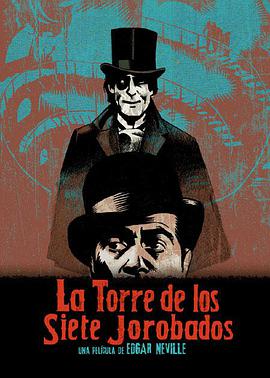
七个驼背人的塔
/
La Torre de los siete jorobados
…
本片是西班牙经典幻想片之一。当年美国演员查理-卓别林(Charlie Chaplin)看过此片后称西班牙导演Edgar Neville是“他所遇见过的最会讲故事的人”(“the best storyteller he ever met”),并对此片的评价甚高。《乡村之声》也对此片有过详尽的介绍。
La Torre de los Siete Jorobados is a 1944 Spanish mystery film directed by Edgar Neville. It is based on a novel by Emilio Carrere. In 19th century Madrid a young man plays roulette. A mysterious character helps him by pointing with his walking stick the next number where the ball is going to fall. The protagonist is the only one able to see him. The mysterious man turn out to be the ghost of an archaeologist and ask the young man to defend his daughter from a gang of hunchbacks.
Explore the labyrinthian depths and secret alleys of the Walter Reade's annual survey "Spanish Cinema Now" (December 8 through 26), and you'll find a mini retrospective devoted to Edgar Neville (1899–1967). The aristocratic Neville was a friend of Luis Bunuel and Charlie Chaplin (whom he met while in Hollywood directing Spanish-language talkies for MGM), with a reputation as a raconteur that's fully justified by the playful narratives of his best-known movies. Those showing include Life Hanging by a Thread (1945), a whimsical comedy of alternate destiny; two murder mysteries: the farcical Carnival Sunday (1945) and philosophical The Crime on Bordadores Street (1946); as well as a neorealist account of a demobilized cavalryman, The Last Horse (1950), and a color musical, Flamenco (1952).
The most fabulous of Neville's fantasies is The Tower of the Seven Hunchbacks (1944), a supernatural shaggy-dog story in which, egged on by a dignified one-eyed ghost, a handsome if clueless Madrid bon vivant stumbles into a lost subterranean world. This secret city, built by Jews escaping the Inquisition, is populated by a cabal of sinister, coin-counterfeiting kyphotics, as well as a number of cobwebbed mummies and a mad archaeologist. The movie was evidently based on a horror novel but Neville's attitude toward this fantastic material is beyond bemused. (Village Voice)