Book
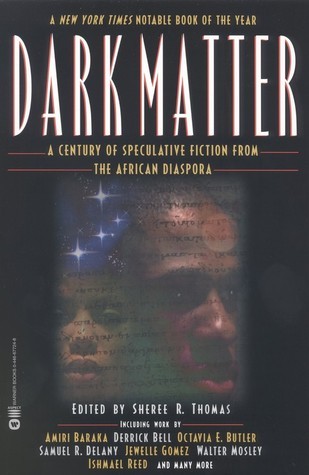
Dark Matter: A Century of Speculative Fiction from the African Diaspora
Goodreads SkybridgeThis volume introduces black science fiction, fantasy, and speculative fiction writers to the generations of readers who have not had the chance to explore the scope and diversity among African-American writers.
Fiction.
Sister Lilith - Honoree Fanonne Jeffers
The Comet - W.E.B. Du Bois
Chicage 1927 - Jewelle Gomez
Black No More (novel excerpt) - George S. Schuyler
separation anxiety - Evie Shockley
Tasting Songs - Leone Ross
Can You Wear My Eyes - Kalamu ya Salaam
Like Daughter - Tananarive Due
Greedy Choke Puppy - Nalo Hopkinson
Rhythm Travel - Amiri Baraka
Buddy Bolden - Kalamu ya Salaam
Aye, and Gomorrah... - Samuel R. Delany
Ganger (Ball Lightning) - Nalo Hopkinson
The Becoming - Akua Lezli Hope
The Goophered Grapevine - Charles W. Chestnutt
The Evening and the Morning and the Night - Octavia E. Butler
Twice, at Once, Separated - Linda Addison
Gimmile's Songs - Charles R. Saunders
At the Huts of Ajala - Nisi Shawl
The Woman in the Wall - Steven Barnes
Ark of Bones - Henry Dumas
Butta's Backyard Barbecue - Tony Medina
Future Christmas (novel excerpt) - Ishmael Reed
At Life's Limits - Kiini Ibura Salaam
The African Origins of UFOs (novel excerpt) - Anthony Joseph
The Astral Visitor Delta Blues - Robert Fleming
The Space Traders - Derrick Bell
The Pretended - Darryl A. Smith
Hussy Strutt - Ama Patterson
Essays.
Racism and Science Fiction - Samuel R. Delany
Why Blacks Should Read (and Write) Science Fiction - Charles R. Saunders
Black to the Future - Walter Mosley
Yet Do I Wonder - Paul D. Miller
The Monophobic Response - Octavia E. Butler