other title:
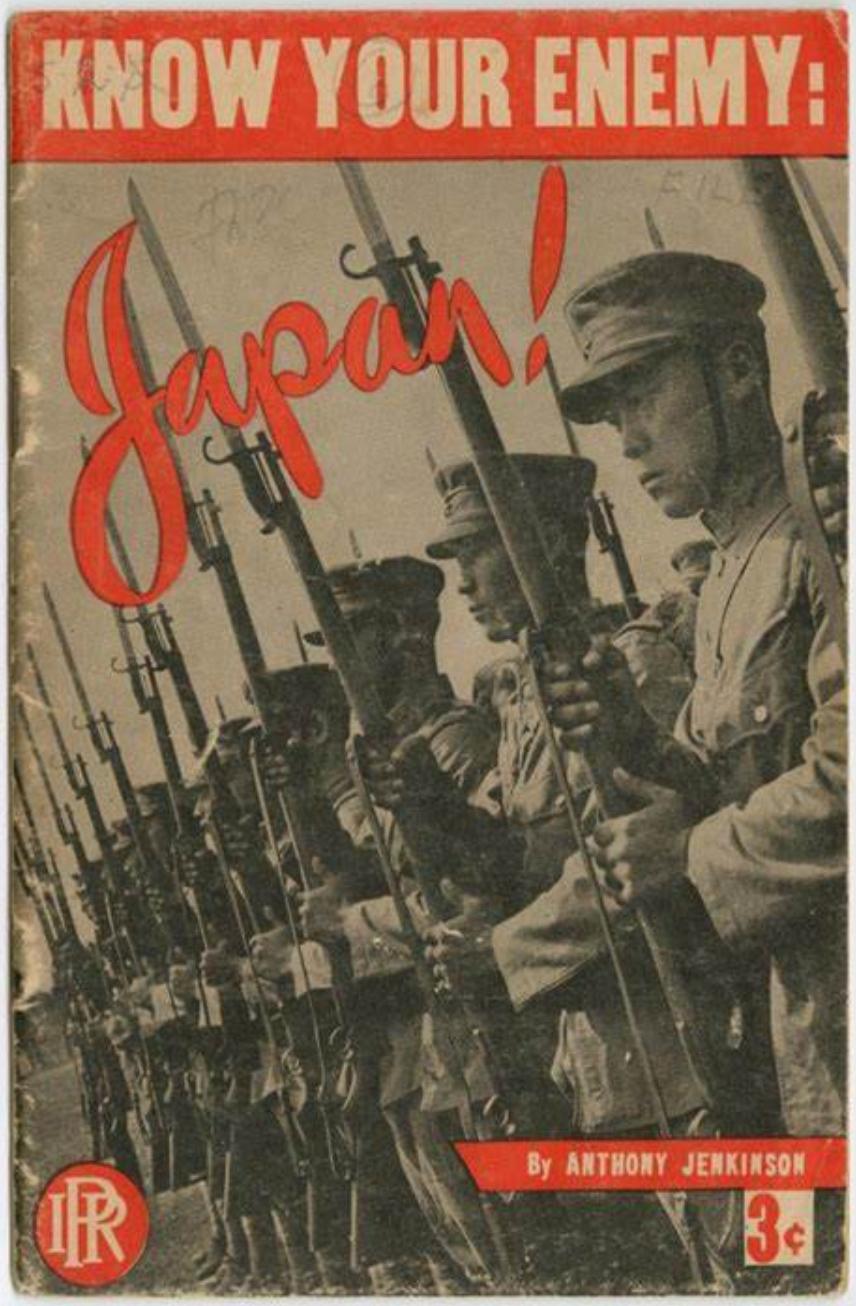
认识你的敌人日本
/
了解你的敌人—日本
…
Using diagrams, cartoons and film footage, the film examines Japan's social structure and presents a geographical and historical basis for understanding Japan's and the United States' involvement in the war. A written prologue to the documentary acknowledges the honorable and loyal service of the Nisei (Japanese-Americans) during World War II. Scenes of Japanese ceremonies, industry, city and rural life, military training and combat are shown. The narration traces Japanese ideological history beginning with Emperor Jimmu, the first God-Emperor, whose divine command was "Let us extend our capital and cover the eight corners of the world under one roof." As Emperor Hirohito is a direct descendant of Jimmu, he is recognized as a God-Emperor and idealized as a ruler who governs all areas of life and is revered without question. Shinto is Japan's main religion and affects every aspect of life. For believers, the ghosts of the dead exist on earth to guide the living, and those who died in battle are considered warrior gods. A history of the Japanese warlords and their samurai, whose code of honor sanctioned treachery, doublecross and ambush, is presented. Japan's first unsuccessful attempt at world conquest was made in 1592. The growth of Christianity in Japan around the same time was eventually halted, and the country remained isolated for 200 years until in 1853, when the U.S. extended trade opportunities. Since then, Japan has modernized its technology, reorganized the political structure, and inducted the common man into prestigious military service. Government controlled compulsory education and "thought police," are used to manage the Japanese people. On 18 Sep 1931, Japan launched its campaign and gained control of Manchuria. Since then, it has conquered Manila, Hong Kong, Singapore, Nanking and Corregidor, has attacked Pearl Harbor and has tortured and mistreated its American and Filipino prisoners. By the close of the film, however, the U.S. is launching a successful counteroffensive and is concentrating the full power of its Air Force, Army and Navy to destroy Japan's ability to wage war.