Jie Li — Author (5)

Book

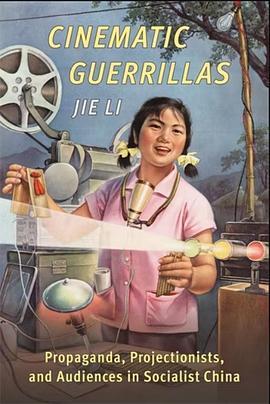
Cinematic Guerrillas
Douban Goodreads
Jie Li publishing house: Columbia University Press 2023 - 11
Cinematic Guerrillas considers cinema’s meanings for revolution and nation building; successive generations of projectionists; workers, peasants, and soldiers; women and ethnic minorities; and national leaders, local cadres, and cultural censors. By reading diverse, vivid, and often surprising accounts of moviegoing, Li excavates Chinese media theories that provide a critical new perspective on world cinema.

Book

Sovietology in Post-Mao China
Google Books
Jie Li publishing house: Brill 2023 - 2
The breakup of the Union of Soviet Socialist Republics (USSR) in 1991 had significant repercussions on Chinese politics, foreign policy, and other aspects. In this book, Jie Li examines the evolution of Chinese intellectual perceptions of the Soviet Union in the 1980s and 1990s, before and after the collapse. Relying on a larger body of updated Chinese sources, Li re-evaluates many key issues in post-Mao Chinese Sovietology, arguing that the Chinese views on the Soviet Union had been influenced and shaped by the ups-and-downs of Sino-Soviet (and later Sino-Russian) relations, China’s domestic political climate, and the political developments in Moscow. By researching the country of the Soviet Union, Chinese Soviet-watchers did not focus on the USSR alone, but mostly attempted to confirm and legitimize the Chinese state policies of reform and open door in both decades. By examining the Soviet past, Chinese scholars not only demonstrated concern for the survival of the CCP regime, but also attempted to envision the future direction and position of China in the post-communist world.

Book

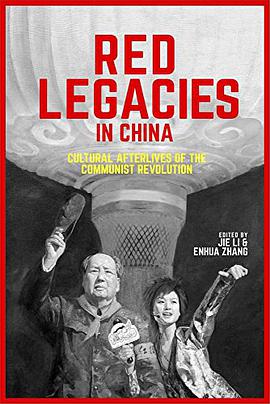
Red Legacies in China
Douban
Jie Li / Enhua Zhang (Editors) publishing house: Harvard University Asia Center 2016 - 5
What has contemporary China inherited from its revolutionary past? How do the realities and memories, aesthetics and practices of the Mao era still reverberate in the post-Mao cultural landscape? The essays in this volume propose red legacies as a new critical framework from which to examine the profusion of cultural productions and afterlives of the communist revolution in order to understand China’s continuities and transformations from socialism to postsocialism. Organized into five parts―red foundations, red icons, red classics, red bodies, and red shadows―the book’s interdisciplinary contributions focus on visual and performing arts, literature and film, language and thought, architecture, museums, and memorials. Mediating at once unfulfilled ideals and unmourned ghosts across generations, red cultural legacies suggest both inheritance and debt, and can be mobilized to support as well as to critique the status quo.

Book

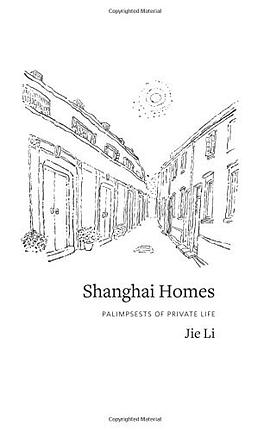
Shanghai Homes
Douban
Jie Li publishing house: Columbia University Press 2014 - 11
In the dazzling global metropolis of Shanghai, what has it meant to call this city home? In this account—part microhistory, part memoir—Jie Li salvages intimate recollections by successive generations of inhabitants of two vibrant, culturally mixed Shanghai alleyways from the Republican, Maoist, and post-Mao eras. Exploring three dimensions of private life—territories, artifacts, and gossip—Li re-creates the sounds, smells, look, and feel of home over a tumultuous century. First built by British and Japanese companies in 1915 and 1927, the two homes at the center of this narrative were located in an industrial part of the former “International Settlement.” Before their recent demolition, they were nestled in Shanghai’s labyrinthine alleyways, which housed more than half of the city’s population from the Sino-Japanese War to the Cultural Revolution. Through interviews with her own family members as well as their neighbors, classmates, and co-workers, Li weaves a complex social tapestry reflecting the lived experiences of ordinary people struggling to absorb and adapt to major historical change. These voices include workers, intellectuals, Communists, Nationalists, foreigners, compradors, wives, concubines, and children who all fought for a foothold and haven in this city, witnessing spectacles so full of farce and pathos they could only be whispered as secret histories.