Michael Levy — Record Label (10)

Music

The Ancient Egyptian Harp
Douban
Michael Levy genre: World Music
release date 2011-05-01 publisher: Michael Levy
This album is my attempt to recreate the lost sound of the archaic arched harp – the harp played over 4500 years ago in ancient Egypt, from the Old Kingdom’s basic bow harp to the beautifully ornate arched harps of the New Kingdom, 3500 years ago – some of which are miraculously preserved in museums around the world. Incredibly, an almost exact descendant of the ancient Egyptian arched harp is still played on the African continent today, in the form of the 9-string Adungu harp of Uganda (the instrument on which I recorded this album). Preserved in the Metropolitan Museum of Art in New York is an ancient Egyptian arched harp from the 18th Dynasty (1390–1295 B.C) whose similarity to the Ugandan Adungu arched harp is quite stunning! Here are some detailed explanatory notes about this exhibit, quoted from the Metropolitan Museum of Art’s website: “Egyptian arched harps from Dynasty 4 onward coexisted with a great variety of harps in different shapes and sizes. Two harp types were most common—the arched harp with a curved neck, like this one, and the angled harp with a neck sharply perpendicular to the body. Unlike most European versions, ancient Egyptian harps have no fore pillars to strengthen and support the neck. Older forms of arched harps had four or five strings, this harp has twelve strings. Skin once covered the open, slightly waisted sound box. Rope tuning rings under each string gave a buzzing sound to the soft-sounding tone produced. Topping the arched frame of the harp is a carved human head. This type of portable, boat-shaped arched harp was a favourite during the New Kingdom and is shown in the hands of processional female musicians performing alone or in ensembles with singers, wind instruments, sistrums, and rattles. Prior to the Middle Kingdom, depictions of harpists feature men as the chief musicians. Harps and other instruments were used for praise singing and entertainment at ritual, court, and military events. Today, arched harps derived from these ancient Egyptian forms are still used in parts of Africa and Asia” ( ) Like the Adungu arched harp, this preserved example of an ancient Egyptian arched harp, also had a soundboard of taut leather. Just as on the Adungu, the strings are attached to the body of the harp on a wooden pole beneath the leather soundboard – the tension of the strings pulling on this wooden bar keeps the skin soundboard above it taut. Many examples of the Adungu harp also have similar rings behind the strings to produce a buzz (although the Adungu harp I was lucky enough to find in order to create this album does not). My arched harp has 9 strings, made of some sort of natural fibre (possibly silk), which produces a very gently tone, quite different to the brighter, more resonant tone of modern high tension nylon harp strings. THE TRACKS 1. “Ancient Harps of Kemet” – an original composition based upon an actual ancient Egyptian scale. Although the ancient Egyptians did not have any form of written musical notation, they did have an ancient form of musical notation now known as chironomy, whereby specific hand gestures represented specific changes in the pitch of a melody. The minor pentatonic scale on which this composition is based, was deciphered from ancient Egyptian chironomy gestures, by the late Professor Hans Hickmann of the Museum in Cairo. Incredibly, along with remnants of the actual ancient Egyptian language, chironomy is still practiced today in the Coptic Church – an incredible musical legacy, maybe dating back some 5000 years! In the title of this track, “Kemet” is the transliteration (k.mt) of the actual ancient Egyptian word for the land of Egypt. “k.mt” actually translates as “Black Land” – which to the ancient Egyptians, meant fertility: referring to the colour of the fertile black soil deposited each season by the Nile floods. 2. “The Celestial Nile” – to the ancient Egyptians, the Celestial Nile was that pathway of stars through the Heavens, known to us today as the Milky Way. On this great star-spangled river, the soul of the Initiated, sailing in a Ship of Light, travelled through the Gateway of the Zodiac to the domain of Isis. 3. “Ode To Osiris” – Osiris was the ancient Egyptian god of the afterlife, the underworld and the dead. He was the oldest son of the Earth god Geb, and the sky goddess Nut, as well as being brother and husband of Isis, with Horus being his posthumously begotten son. 4. “My Hear Was Burnt By Love” – a traditional Egyptian folk melody from Port Said, arranged for archaic arched harp. A different arrangement of this tune, on replica 3000 year old lyre, can be heard on my album, “An Ancient Lyre” 5. “Awe of the Aten” – Aten was the ancient Egyptian name for the Sun disk, venerated during the Armana period of the 18th Dynasty, under the reign of the Pharaoh Akhenaten – the actual time when the ancient Egyptian arched harp preserved in the Metropolitan Museum of Art, may last have been played...

Music

The Ancient Biblical Lyre
Douban
Michael Levy genre: World Music
release date 2010-09-06 publisher: Michael Levy
Album Notes This unique album is dedicated to restoring once more, the mystical sound of one of the ancient Biblical Lyres, once played over 2000 years ago by my very own, very ancient Levite ancestors, to accompany the singing of the Levitical Choir. This particular Biblical Lyre referred to throughout the Biblical Text is the “Nevel” (in ancient Hebrew: נבל). It is mistranslated in the Old Testament as “harp” – however, there is absoutely no archeaological evidence that harp was used in ancient Israel after the end of the Copper Age, around 3200BCE. The harp as totally replaced by the more portable lyre during the Biblical Era (from about 1900BCE). This transition from the bulky harp to the portable lyre was no doubt brought about by the fact that the anciestors of the ancient Hebrews were nomadic... My other albums avaialble from cdbaby, "King David's Lyre; Echoes of Ancient Israel" & "Lyre of the Levites", are dedicated to restoring the sounds of the other type of Lyre which was also played in the Levitical Ensemble in the Temple of Jerusalem - the ancient Biblical "Kinnor." BIBLICAL REFERENCES TO THE ANCIENT "NEVEL" LYRE The Biblical "Nevel" is mentioned in 1 Samual 10:5, 2 Samual 6:5, Kings 10:12, Isiah 5:12, 14:11, Amos 5:23, 6:5, Psalm 33:2, 57:9, 71:22, 81:3, 92:4, 108:3, 144:9, Chronicles 13:8, 15:16, 20, 28; 16:5, 25:1, 6; 2 Chronicles 5:12; 9:11; 20:28; 29:25, Neh. 12:27. THE AMBIGUITY OF THE ACTUAL HEBREW MEANING OF "NEVEL" Unlike the Biblical Kinnor, the exact meaning of the word “Nevel” is ambiguous, as the Hebrew root “nvl” (נבל ) can be pronounced in two different ways – either “naval” or “nevel”. In the Hebrew language, only the consonants are written down - the vowels are added by the speaker...whih causes no end of problems once the original pronunciation of an ancient Hebrew word is lost in the mists of time! John Wheeler explains: "Nevel is such a difficult instrument to understand precisely because 1) leather was used for soundboards both for some harps and for some lyres; 2) the root word itself has several different meanings. The name could just as well refer to a wineskin used for a soundbox, and while we don't have anything that I know of earlier than bar Kokhba illustrating that for the Hebrews, it's certainly possible given how animals' stomachs were used for other instruments" THE TWO INTERPRETATIONS OF THE ORIGINAL MEANING OF THE HEBREW WORD "NVL" (נבל ) 1) If "NVL" is pronounced “Naval”, in Hebrew this can mean “carcass”, implying that the Biblical Nevel was a lyre with a skin membrane as a soundboard (similar to the ancient Greek “Lyra” – the lyre with a tortoise shell resonator, over which was stretched a soundboard of taut animal skin). 2) The alternative interpretation, if the word is pronounced “Nevel”, means “Skin bottle”. This could mean a lyre with a regular wooden soundboard, but shaped like a skin bottle. I believe that it is more likely that meaning (1) seems more likely from the available evidence, as discussed below - that the elusive Biblical Nevel may have been a skin-membrane lyre. The replica lyre upon which I am playing, as made by Mid East Ethnic Instruments is based on this interpretation. HOW WAS THE NEVEL CONSTRUCTED? The Nevel was made of the same materials as the Kinnor (the other Biblical Lyre played in the Temple of Jerusalem), namely Almug wood, (Kings 10:5), and was plucked by hand, as opposed to being plucked with a plectrum, as in the case of the Kinnor – we know this from the writings of Josephus Flavius (Antiquities vii 12.3) and the Biblical text (Amos 6:5). Josephus also describes the Nevel as having 12 strings, whereas the Kinnor had 10 strings. THE TRACKS ON THIS ALBUM 1) Kol Nidre (Aramaic: כָּל נִדְרֵי) - The haunting ancient melody of the Kol Nidre (All Vows) prayer, traditionally sang at Yom Kippur. This haunting song is in the ancient Jewish "Ahava Raba" Mode: EFG#ABCDE. This uniquely Jewish scale may even have its origins in the music of the Levitical Ensemble in the Temple of Jerusalem, as can be heard in Suzanne Haik-Vantoura's alleged reconstruction of the original melody of the Priestly Blessing. All details can be found in the extensve "Historical Details" section of my website: 2) Psalm 114 (Ancient Traditional Melody, c. 2nd century CE) - this traditional melody sang to Psalm 114, "When Israel Went Forth From Egypt" is of great antiquity., and was preserved by both Jews and Christians in the Middle Ages, as a Sephardic cantillation (B'tseth Isra'el) & in the Roman Catholic tradition, as a Latin plainchant (In Exitu Israel). The two chants are indentical, both musically and texturally - which could even suggest that there was an ancient common origin, before the Jewsh and Christian faiths split into separate entities..maybe even an aural memory of the orginal melody once sang by the Levitical Choir in the Temple of Jerusalem? A fascinating possibility... 3) Ma'oz Tzur (Hebrew: מעוז צור )- the traditional melody to the Hanukkah song, "Rock of Ages" - The melody for this Hanukkah hymn has been identified by Birnbaum as an adaptation from the old German folk-song "So weiss ich eins, dass mich erfreut, das pluemlein auff preiter heyde," given in Böhme's "Altdeutsches Liederbuch" (No. 635). This rousing melody was widely spread among German Jews as early as 1450. The traditional English translation is as follows: "Rock of Ages let our song Praise thy saving power; Thou amidst the raging foes; Wast our sheltering tower Furious they assailed us, But Thine arm availed us, And Thy word broke their sword, When our own strength failed us. Children of the martyr race Whether free or fettered Wake the echoes of the songs Where ye may be scattered Yours the message cheering That the time is nearing Which will see all men free And tyrants disappearing Kindling new the holy lamps, Priests approved in suffering. Purified the nation's shrine, Brought to God their offering. And His courts surrounding, Hear in joy abounding, Happy throngs, singing songs, With a mighty sounding" 4) Avinu Malkeinu, (Hebrew: אָבִינוּ מַלְכֵּנוּ) - This timeless Jewish hymn in the ancient "Ahava Raba" mode, is tradionally sang at between Rosh Hashanah & Yom Yippur. This beautiful melody is in the ancient Ahava Raba Mode. 5) Ma Tovu ( Hebrew: מה טבו )- "Oh How Good." The translation of this beautiful Shabbat hyms is as follows: "How goodly are your tents, O Jacob, your dwelling places, O Israel! And I, with Your great loving-kindness, shall enter Your House; I shall prostrate myself toward Your Holy Temple in the fear of You. O Lord, I love the dwelling of Your house and the place of the residence of Your glory. Come, let us prostrate ourselves and bow; let us kneel before the Lord, our Maker. But, as for me, may my prayer to You, O Lord, be in an acceptable time. O God, with Your abundant kindness, answer me with the truth of Your salvation" 6) V'Shamru ("And They Shall Keep the Sabbath.") - This beautiful Sabbath hymn is taken directly from Exodus 31:16. Here is the translation of this traditional Shabbat Hymn: "The children of Israel should keep the Sabbath Observing the Sabbath throughout their generations, as an everlasting covenant It is a sign between G-d and the children of Israel for all time That in six days G-d made the heavens and the earth And that on the sventh day He was finished and He rested" 7) Lecha Dodi (Hebrew: לכה דודי )- This Shabbat Hymn means "come my beloved," and is a request of a mysterious "beloved" that could mean either God or one's friend(s) to join together in welcoming Shabbat that is referred to as the "bride". During the singing of the last verse, the entire congregation rises and turns to the open door, to greet "Queen Shabbat" as she arrives. 8) Adon Olam (Hebrew: אֲדוֹן עוֹלָם; )- "Master of the Universe". This ancient Shabbat Hymn iwas alleged to be composed in the 11th century by Solomon ibn Gabirol. The word “Adon,” meaning master, was first spoken by Abraham in the Bible, referring to God. The timless text affirms God’s greatness, ominpotence and all-empowering existence: "The Lord of the Universe who reigned before anything was created. When all was made by his will He was acknowledged as King. And when all shall end He still all alone shall reign. He was, He is, and He shall be in glory. And He is one, and there's no other, to compare or join Him. Without beginning, without end and to Him belongs diminion and power. And He is my G-d, my living G-d. to Him I flee in time of grief, and He is my miracle and my refuge, who answers the day I shall call. To Him I commit my spirit, in the time of sleep and awakening, even if my spirit leaves, G-d is with me, I shall not fear" 9) Hava Nagila (Hebrew: הבה נגילה )- "Let Us Rejoice". 10) Ashir Shirim - This ancient Babylonian Jewish wedding song, "I Will Sing Songs To God," was preserved almost a century ago by the musicologist A.Z. Idelsohn: "Ashir shirim laél beviath hag-goél. Ayuma temima bathe ne‘ima — Hish geal na geal. Eliyahu yavo yighal, yighal." The translation of the song is: "I will sing songs to God at the coming of the redeemer.This terrified,innocent,& fair daughter - hurry to redeem her now. Elijah will come & she will be redeemed" The song is in the timeless "Ahava Raba" Mode. The traditional music of the Babylonian Jews is unique, as it may well be the "Invisible Baggage" of the Jews who were sent into exile there, after the destruction of the First Temple of Jerusalem by King Nebuchadrezzar II, in 586BC! These melodies therefore, may be representative of the very earliest aural memory of Jewish music...from the almost Legendary Era of the Ark of the Covenant, & King Solomon's Temple! In this song, the bride is depicted as a metaphor for Israel - just as the bridegroom "redeems" the bride by fulfilling his promise to her, so will God redeem Israel when the prophet Elijah returns to annonce the comig of the Messiah. 11) King David Danced - an exhilarating improvisation on the ancient "Ahava Raba" scale, in my attempt to evoke the Biblical account of how King David danced before the Ark of the Covenant.. For full details of all my albums of lyre music, and for further research, please see my website: May the reconstructed sounds of this ancient Biblical Lyre bring you everlasting peace...Shalom! Michael Levy

Music

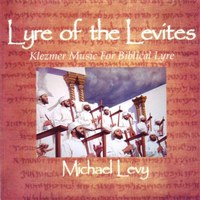
Lyre of the Levites : Klezmer Music for Biblical Lyre
Douban
Michael Levy genre: World Music
release date 2014-03-14 publisher: Michael Levy
Album Notes LYRE OF THE LEVITES: KLEZMER MUSIC FOR BIBLICAL LYRE "Lyre of the Levites: Klezmer Music for Biblical Lyre" is the sequel album to "King David's Lyre; Echoes of Ancient Israel". Both of these albums are dedicated to recreating again, for the first time in almost 2000 years, the mystical, ancient sounds of the "Kinnor"; the Hebrew Temple Lyre, once played by my very own, very ancient Levite ancestors in the Courtyard of the Temple of Jerusalem, to accompany the singing of the Levitical Choir (II Chronicles 5:12). THE CHOICE OF REPERTOIRE FOR THE ALBUM "Lyre of the Levites" uniquely features arrangements of primarily traditional melodies from the Jewish Klezmer repertoire arranged for solo Levitical Lyre - the concept of the musical performances on this album, are meant to be evocations, not reconstructions, of the sounds & playing techniques that were possible on the ten-stringed Kinnor of the Bible; there are sadly too few unambiguously notated melodies from antiquity to make an album of "note for note" reconstructions of ancient instrumental solo lyre music a feasible reality. However, the traditional Jewish scales/modes in which these pieces are actually written may well have roots which stretch deeply back to these distant, mystically remote Biblical times, according to the fascinating research of the late Suzanne Haik Vantoura, in attempting to reconstruct the original 3000 year old music of the Hebrew Bible. THE TWELVE TRACKS There are 12 tracks to the album - corresponding to the 12 Gems which once adorned the Breastplate of the Levitical Priests of the Temple of Jerusalem. These 12 Gems represented the 12 Tribes of Israel. These 12 tracks consist of my arrangements for solo Levitical Lyre, of many "Musical Gems" from the traditional Klezmer repertoire. Indeed, in this album, I have attempted to link the timeless connection Klezmer music once had at the traditional Jewish wedding in the lost Shtetls of old Eastern Europe and the ancient Biblical association of celebrating the arrival of the Sabbath as the Bride of the Jewish people , an association preserved to the present day in every Sabbath Service: “On Friday nights in the synagogue, we sing from the siddur, “Lecha dodi likras kallah…” “Come my Beloved to greet the bride…” Our Beloved is G-d and the kallah/bride is the Sabbath, the bride of the Jewish People. This idea is based on a Midrash that points out that all the days of the week were given “mates” (Sunday has Monday, Tuesday has Wednesday, Thursday has Friday), but the 7th day seemed like the odd one out. Therefore, it complained to God, who responded that the Jewish People would be its “groom”. (Based on Midrash Bereishis Rabbah 11:8; see also Talmud, Tractate Bava Kama 32a-b.)” ( ) For example, I have arranged for solo lyre, in the track 3, entitled "The Sabbath Bride", the famous timeless Jewish Wedding song "Chusen Kalah Mazeltov" (Congratulations, Bride & Groom) , track 4, “Firn Di Mekhutonim Aheym” (Escorting the Parents of the Bride & Bridegroom), track 5, ”Sherele” (Wedding Dance), track 7, “Dobriden” (Greeting the Wedding Guests) . I have also arranged for Biblical Lyre, a selection of sacred Jewish melodies which are associated with Jerusalem, for example track 6, "Artza Alinu" ("We Ascended to the Land") & track 12, Naomi Shemer's timeless song "Yerushalayim Shel Zahav" (Jerusalem of Gold). 1. Lyres of the Levites – this is my arrangement for solo Kinnor, of the dramatic Klezmer melody, traditionally known as “Unzer Toyrele” 2. The Temple of Jerusalem – this is my arrangement of an evocative Klezmer melody, usually known by the name “Noch Havdallah” 3. The Sabbath Bride – my arrangement for Biblical Kinnor, of the timeless Jewish wedding song, “Chusen Kalah Mazeltov” (Congratulations, Bride & Groom). 4. Firn Di Mekhutonim Aheym (Escorting the Parents of the Bride & Bridegroom) – this classic of the Klezmer repertoire, was made famous by the vintage recordings featuring the vibrant klezmer clarinet of Naftule Brandwein 5. Sherele (Wedding Dance) – as explained in Wikipedia, “The sherele or sher is a set dance in 4/4 march-like tempo. The set is made up of four couples in a square formation, similar to a quadrille or square dance formation. There are many figures used, such as couples advancing, retiring, changing places, couples visiting, circling, threading the needle, etc. The "sher" figure involves two opposite men advancing towards each other and then crossing past each other turning as the pass. "Sher" means "scissors" (and "sherele" is "small scissors") in Yiddish, and the name of the dance may come from the sher figure that is thought to imitate the cutting action of scissors” 6. Yikhes (Tradition) – my arrangement for solo lyre of a very early Klezmer recording of this melody, which I first heard on the album “Early Klezmer Recordings 1911-1939” from the collection of Prof. Martin Schwartz. 7. Dobriden (Greeting the Wedding Guests) – a beautiful Klezmer classic, in the timeless “Ahava Raba” Mode 8. Baym Rebin's Sude (At the Rabbi's Feast) – another Klezmer classic in the “Ahava Raba” mode, magically transformed by the sound of the Biblical Kinnor. 9. Ale Brider (We Are Brothers) – the words of this traditional song of the Klemer repertoire, arranged here for solo Biblical Lyre, are: “We are all brothers And sing happy songs We stick together Like nobody else does! We are all united Whether we are many or few And we love each other Like bride and groom! We're happy and cheerful Singing songs, tapping our feet And we are all sisters Like Rachel, Ruth, and Esther” 10. Artza Alinu (We Shall Ascend to the Land) - This song was a favourite of the Israeli pioneers who returned to live in the land of Israel. As they planted crops and brought the land back to cultivation, they sang and danced in the hope that the land of Israel would be rebuilt. 11. The Jew in Jerusalem – my arrangement for solo Biblical Kinnor, of the Klezmer classic, commonly known as “Der yid in Yerusholaim” 12. Yerushalayim Shel Zahav (Jerusalem of Gold) – this is my arrangement for Biblical lyre, of , Naomi Shemer's timeless song, made forever immortal, by the legendary singing of it by the late great Ofra Haza. This song has since become known as “Israel's Second National Anthem". Prepare to embark with me, on an actual "Musical Adventure in Time Travel"! On this incredible journey, I will take you back over 3500 years ago, to the mystically remote, Biblical times of the ancient Hebrews & to hear once more, the Lyre of the Levites...

Music

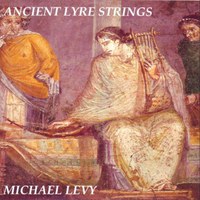
Ancient Lyre Strings
Douban
Michael Levy genre: World Music
release date 2013-03-14 publisher: Michael Levy
Album Notes INTRODUCTION This experimental extended length single is actually a practical "archaeo-musicological experiment", in discovering what techniques are possible to perform on a replica wooden Kithara-style lyre of antiquity, when strung with authentic natural fibre strings. The lyre is also tuned to the wonderfully pure-sounding just intonation of antiquity. Trying to find authentic sounding strings for my lyre has so far been the most difficult challenge - although gut was generally used in antiquity, the polished gut harp strings used today, bear little in common with the closely wound gut fibre strings of antiquity. String expert Peter Pringle (a regular contributor to the fascinating new Facebook Group "The Lyre") suggested that natural fibre silk strings would sound closest match to the unpolished gut used on the lyre strings of antiquity & kindly made some for my lyre... ANCIENT MUSICAL STRING TECHNOLOGY Peter explains some fascinating facts about the little discussed subject of ancient musical string technology: "Silk strings are traditionally made by twisting pure silk filaments together using binders and glues of various sorts to produce a stable cord with the appropriate hardness and density (which is similar to a dried gut string). The ancient string makers guarded their recipes and techniques with all the secrecy of modern industrialists. They added all sorts of things to their binders - powdered silver and gold, and minerals like rock crystal, jade, lapis, etc. - in order to impart certain sonic properties to the finished product. Much of that was, I believe, based on the rather romantic, folkloric notion that the music would ultimately take on the metaphysical qualities of the substance used in the string making process. For example, if you were to use powdered pearls in your silk binders, the string would manifest the characteristics of the sea, while a small amount of the dried and finely ground heart of tiger would make your music more powerful and compelling. There are equally fanciful ideas of this sort associated with Chinese traditional medicine. Interestingly, some of the substances they used (such as powdered metals) actually did change the acoustic properties of the string but they did so for physical, and not metaphysical, reasons. Putting silver into your string may give it a clear and incisive tone but that's because of the metal's specific gravity, not because it transmits the qualities of the moon! The entire output of the very best silk string makers in China was often bought up by the Imperial Palace, so the finest strings were usually not even available to the general public and could be heard only in the Forbidden City. This was the case with the so-called "ice string" which is a translucent pure white silk" Having now experimented with the sound of these silk strings on my lyre, I have discovered a whole new world of sound & have come one step closer to the actual sound of the lyres of antiquity. JUST INTONATION Just intonation, is to me, one of the little known wonders of the ancient world! First devised some 5000 years ago, during the development of the first fretted lutes in ancient Mesopotamia, in just intonation, the ratio of each interval of a musical scale is precisely calculated in rational numbers, so that each semitone is unique and very slightly different in proportion to the other semitones in the scale. The result is a wonderfully pure sound - intervals played in just intonation have an almost 3 dimensional depth, when contrasted with the same interval in modern equal temperament. In equal temperament, all the semitones are artificially made equal, so that it is possible to seamlessly transpose from one key to the next, without any change in the proportion of the intervals. However, this is at the expense of the purity of the sound of the musical intervals! For example, whenever a triad is played on a piano tuned in equal temperament, the 3 tones are always very slightly out of phase with each other, resulting in noticeable "wooowooowooo"-sounding beat waves. Music in just intonation, is, thanks to the purity of the intervals, magically at the same time more calming to the ear, yet also inspiring! In short, compared to just intonation, equal temperament is like a rose without it's scent... MY EXPERIENCE OF PLAYING MORE AUTHENTICALLY MADE LYRE STRINGS There are several conclusions I discovered about using these fascinating "practical archaeomusicological experiments" at playing more authentically manufactured lyre strings.... The basic tone of the lyre remained almost the same - this demonstrated that the most important component in the quality of the sound of a lyre, is the actual quality of the wooden soundboard upon which the strings vibrate.This is, of course, a common sense observation - even the most expensive hand-crafted gut violin strings will still sound like elastic bands, if strung on a cheap fiddle with a thick soundboard made from cheap, poorly seasoned wood with poor resonance! However, due to the harder nature of wound silk compared to nylon, there is a much more interesting & crisper attack when the strings are plucked. The tone of natural fibre strings is also much more colourful & individual, in comparison to nylon. This is due to the the production process of nylon musical strings, as Peter Pringle explained to me: "the nylon monofilament strings are made by the extrusion process (forcing the liquid synthetic through a small hole, like toothpaste or spaghetti, so that it makes a single strand of absolutely consistent diameter). In ancient time, strings were not made this way and they were not quite so even. Regardless of whether they were of gut, hair, or some other natural fiber, slight inconsistencies gave the strings certain sonic characteristics - a certain "personality" resulting from the added overtones and harmonics produced by minute variations in thickness and density - that you will not hear from extruded strings whose sound may be far more pure but decidedly less interesting, not to mention less authentic. Even modern factory made gut strings are polished on a centerless grinder (a technology the ancients did not possess) which makes them far more even than gut strings would have been in Greece or the Middle East 3000 years ago. The only gut strings made today that might be comparable to ancient gut strings would be those made by African and Indian artisans for indigenous instruments like the adungu, the begena, the sarangi, etc." A fascinating feature I discovered, was that this pleasant crispness of attack was most prominent in the bass strings of my lyre - the higher pitched treble strings were, in fact, almost indistinguishable from the tone of the nylon. The bass silk strings, though, sounded far richer in character & nuance than nylon & superior in tone. This is again a parallel phenomenon to violin strings - even if all the the strings are made of the finest gut, the top E string is almost always made of steel: yet it still manages to match the tone of the other gut strings almost seamlessly. The main drawback of any form of natural fibre or twisted gut musical string, though, is the lack of both tuning stability & durability compared to modern nylon harp strings - my lyre now only stays in tune for about 10 minutes at a time - I have a new-found empathy to the devotion to the constant retuning required by the lyre players of antiquity, in their efforts to attain "the Music of the Spheres"! Another fascinating observation, is that the variety of lyre playing techniques I have inferred from my study of ancient illustrations of lyre players & the styles of lyre playing still practised today in Africa & Egypt, work even better on the low tension, crisper-sounding silk strings - these include the "block & strum" technique still used by the Krar lyre players of Eritrea & the tremolo style of playing still practiced today by the Simsimiyya lyre players of Port Said in Egypt. The hypothetical "String Blocking" method proposed by he musicologist Curt Sachs (using a knuckle of the left hand as a fret on a lyre string to play accidentals on a diatonically strung lyre) also works beautifully on these low tension lyre strings. Harmonics can also be effortlessly played on silk lyre strings by lightly stopping the centre of the string. The combination of finger plucked & plectrum plucked tones on these strings is also virtually limitless - either finger plucked intervals to accompany a plectrum plucked melodic line, or a finger plucked melody with an accompaniment of single plectrum plucked notes. I now feel that any ancient lyre player from antiquity, with any sort of musical imagination, would surely have used these very same lyre playing techniques, in their efforts to extract, as I have strove to do, every conceivable possibility that the instrument is actually capable of. GUT STRINGS VERUS SILK? Peter explained to me more about the fascinating history of gut & silk musical strings, in relation to the music of the ancient Near East & Mediterranean: "King David did not string his harps with silk because the silk-making process was unknown in the Middle East until roughly 500 A.D. when it was introduced to the Byzantines via the so-called "Silk Road". Still, I do believe that the closest sound you will get to handmade (as opposed to machined) gut strings made from the intestines of sheep or goats, of the sort that David would have used on his instruments, is probably going to be silk. Like gut strings, silk is brittle once it has been subjected to the hardening process. With both silk and gut, one must be careful when putting a new string onto an instrument not to bend, crush or crack any part of the the vibrating length between the peg and the bridge. The same thing is true with wire. If you accidentally get a kink or a twist in brass or bronze wire it can never be perfectly straightened and you will compromise the purity of the tone of your string. A "filament" is the single strand of raw silk spun by the mulberry silkworm and in order to make a single .050" (roughly 1.25 mm) pure silk string, it takes nearly 11,000 filaments (the thickness of a human hair would be the equivalent of about 150 filaments). I know that sounds like it must be a humongous task but it isn't. Once you're set up and have all your materials on hand, it's actually quite fast. The most difficult and exacting task is done by the "bombyx mori" - the silkworm itself. Anyone can make a silk string but only the worm can make silk!" ANCIENT LYRE PLAYING TECHNIQUES PERFORMED ON NATURAL FIBRE LYRE STRINGS. The diverse range of ancient lyre playing techniques I use, are based on both an inference of playing styles depicted in ancient illustrations of lyre players, observation of lyre playing techniques still practised today in Africa, as well as an imaginative "process of elimination" - to see what is actually possible to play on the lyre, given a little musical imagination. These techniques include "block and strum" - a technique still practised by Krar lyre players today in Eritrea, whereby strings not required to be heard are dampened with the left hand, whilst the open strings can be strummed to form basic rhythmic chords. I also use tremolo - a technique used by Egyptian Simsimiyya lyre players today. I also experiment with an ancient Mesopotamian percussive lyre playing technique, whereby the strings are hit with a small wooden baton like a hammered dulcimer. This can clearly be seen in illustrations of lyre players found in the Bas Reliefs from the ruins of the Palace of Nineveh, c.700 BCE. The same playing style also can be seen 1000 years later, in illustrations of lyre players in the ruins of the Roman villas at Paphos, Cyprus. Other possible styles I experiment with, include a hypothetical ancient Greek lyre playing technique proposed by Curt Sachs, called "string stopping" - by using a knuckle of the left hand thumb as a fret on the strings, it is possible to play the accidentals clearly indicated in ancient Greek musical notation, on a diatonically strung lyre. Evidence of this same technique can also be found 1000 years before the rise of Classical Greece, in a depiction of an ancient Egyptian harpists, who can clearly be shown to be bending one specific string to presumably raise it's pitch by the required semitone or microtone - the illustration is of a relief from tomb 11 in the Ta-Apet (Thebes) area (New Kingdom 1520 BCE) which actually seems to illustrate this unique ancient harp-playing technique : a harper shortens the string with one hand,and plucks with the other - this is surely the first unambiguous pictorial evidence of the technique of string-stopping from the ancient world! The bent string is clearly shown. Other techniques I experiment with, include harmonics & creating heterophonic development in using a combination of guitar-like, plectrum plucked tones and harp-like, finger plucked tones.

Music

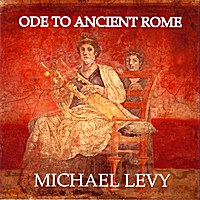
Ode to Ancient Rome
Douban
Michael Levy genre: World Music
release date 2012-03-14 publisher: Michael Levy
Album Notes This album is the sequel to my album “Echoes of Ancient Rome” – like the first album in this series, “Ode To Ancient Rome” comprises of a series of new compositions for an ancient lyre in authentic ancient musical modes, to evoke once more, the lost music of ancient Rome. These set of compositions for my replica Kithara-style lyre is my attempt to restore a precious remnant of the music of ancient Rome, which for the most part, is now forever lost... Unlike ancient Greece, tragically, virtually no surviving written music has survived from ancient Rome. These set of composition for my replica Kithara-style lyre is my attempt to restore a precious remnant of the music of ancient Rome, which is now forever lost - so far, all that has been discovered, is one pitiful fragment by Terence: TERENCIO, HECYRA 861 (Terence). Versus 861. Hecyra of Terence. Codex Victorianus Laurentianus XXXVIII-24, saec. X This piece can be heard track 19, on the recording "Musique de la Grece Antique". Here are some more details from the notes for this unIque album, about the only surviving fragment of written music ever found from ancient Rome: "We have added the only surviving musical fragment of Imperial Rome: four mutilated measures from a work by Terence. It is as if nothing were left of the Acropolis but a few scattered bits of columns and a pair of ruined capitals" All the various lyre-playing techniques heard in this album, are authentically based on lyre-playing styles which have remarkably survived from Antiquity & which still can be heard today in the amazing lyres still played throughout the continent of Africa, where unlike the rest of the Western world, a precious remnant of the cross-cultural influences from the around ancient world have miraculously survived. Some of these lyre-playing techniques include the “block & strum” method, still practiced today by the Krar Lyre players of Eritrea in East Africa – this technique allows the player to strum rhythm & basic chords on the lyre, similar to an acoustic guitar. This technique entails blocking strings with the left hand which are not required and leaving open only the strings which form the required intervals, which then can be strummed with a plectrum in the left hand. Ancient illustrations of Kithara players seem to infer that this technique was also prominent in Ancient Greece – many illustrations clearly depict the left of the lyre player blocking/dampening the strings with the left hand whilst strumming the open strings with a plectrum in their right hand. Other lyre playing techniques include the use of tremolo (based on the style of Egyptian Simsimiyya Lyre Players still heard today), alternating between harp-like finger plucked tones played with the left hand, and guitar-like plectrum-plucked tones with the right hand, using basic finger-plucked intervals/chords with the left hand to form a basic harmonic background for the melodic line being played with the plectrum in the right hand. I also explore the rare percussive hammered lyre playing technique, where the stings of the lyre are hit with small wooden baton (like on a hammered dulcimer), instead of being plucked with either the finges or a plectrum... THE ANCIENT MUSICAL MODES USED IN THIS ALBUM Due to the known prominent influence of Ancient Greek culture in the Roman world, in order to create an authentic-sounding evocation of what the solo lyre music of ancient Rome may have once sounded, I decided to base the compositions in a selection some of the original Ancient Greek modes, with melodies inspired mostly by a "Musical Adventure in Time Travel" of the gods of Ancient Rome. The names of musical modes in use today, (e.g. Dorian, Mixolydian etc) although having the same names as the original Greek musical modes, were actually misnamed during the Middle Ages! Apparently, the Greeks counted intervals from top to bottom. When medieval ecclesiastical scholars tried to interpret the ancient texts, they counted from bottom to top, jumbling the information. The misnamed medieval modes are only distinguished by the ancient Greek modes of the same name, by being labelled “Church Modes”. It was due to a misinterpretation of the Latin texts of Boethius, that medieval modes were given the wrong Greek names! According to an article on Greece in the New Grove Dictionary of Music and Musicians, the original ancient Greek names for species of the octave included the following (on white keys): B-B: Mixolydian E-E: Dorian A-A: Hypodorian D-D: Phrygian G-G: Hypophrygian C-C: Lydian F-F: Hypolydian For what Plato & Aristotle had this to say about these ancient musical modes, please see this fascinating link: THE TUNING OF ANTIQUITY In antiquity, lyres were tuned either cyclically, in perfect 5ths, the 3rds & 6ths then being fine-tuned by ear (Pythagorean tuning) or divisively (using exact mathematical ratios to precisely divide a musical string into specific pitch ratios) to achieve what is called "Just Intonation". The modern tuning system of equal temperament was devised to enable music to be performed in any of the 12 keys of the chromatic scale whilst keeping exactly the same equal ratio of pitch between each of the 12 notes of the chromatic scale...which sadly has sacrificed the essential purity of tone, which can only be heard in the just intonation once used in antiquity. Divisive tuning was the most natural way to tune the ancient lutes, or any fretted instrument, which uses frets to divide the vibrating portion of each string into the required precise ratio of pitches. Although more often cylically tuned when played solo, Lyres were also often divisively tuned in antiquity, as they were quite often played in ensemble with other instruments which were in turn, divisively tuned. Although described in the writings of Pythagoras in his experiments at dividing a musical monochord, the divisive tuning system predates Pythagoras by thousands of years and may have evolved along with the origin of the long-necked lute in ancient Babylonia some 5000 years ago, according to John Wheeler (editor of Suzanne Haik Vantoura’s book, “The Music of the Bible Revealed”): "The long-necked lute (according to Curt Sachs) was invented in Babylonia, and indeed thanks to that fact divisive tuning was invented there also. Cyclical tuning was also known there (and that got documented long after his death by the famous theory and hymn tablets from Babylon and Ugarit), but there is this curious fact: the Babylonians used divisive tuning as the basis for their symbolic correlation of the pillar degrees of the octave (e.g., C-F-G-C') with the four seasons, while the Chinese used cyclical tuning as the basis for the symbolic correlation of the same. This (wrote Sachs) is consistent as Babylon was the "home" of the lute and China the "home" of the harp (even though Babylon knew of harps and lyres too and China, if memory serves, also knew the lute from very early times). Divisive tuning is the "natural" tuning of the lute, as cyclical tuning is the "natural" tuning of the harp and lyre, according to Sachs. By that he meant that it's easiest and most natural to tune, and then to play, folk instruments of those genres that way - as I can vouch as a working musician" I have used divisive tuning throughout this album, in my attempt to recreate the purity of the just intonation used in antiquity, which like the music of ancient Rome, has now sadly been forgotten... THE TRACKS 1. Ode To Ancient Rome (Original Composition For Lyre in The Ancient Phrygian Mode) A requiem to the tragically lost music of ancient Rome, this piece is performed in the mournful ancient Geek Phrygian Mode. 2. The Wisdom of Minerva (Original Composition For Lyre in The Ancient Chromatic Phrgyian Mode) In this piece, I have experimented with a rare ancient lyre playing technique, whereby the strings are hit percussively, with a small wooden baton (like on a hammered dulcimer ) instead of being plucked with either the fingers of a plectrum. The first illustration of the hammered lye playing technique dates back to c.700BCE, in the illustrations of musicians on the Bas Reliefs found at the ruins of the Palace of Nineveh, in ancient Assyria. This playing technique seems to have spread from ancient Mesopotamia to the Mediterranean, and may there is indeed evidence that this technique could have also been practiced in ancient Rome, as can be seen in the depictions of lyre players discovered in the ruins of Roman Villas on the island of Cyprus, in the famous Paphos Mosaics. 3. The Flames of Vesta (Original Composition For Lyre in The Ancient Hypophrygian Mode) Vesta was the Roman goddess of the home, to whom the sacred fire of Vesta was perpetually kept burning by the Vestal Virgins... 4. Dark Realms of Pluto (Original Composition For Lyre in The Ancient Hypodorian Mode) - Pluto was the Roman god of the underworld... 5. On The Wings of Cupid (Original Composition For Lyre in The Ancient Hypolydian Mode) Cupid was the winged god of love, desire & erotic love... 6. The Flight of Mercury (Original Composition For Lyre in The Ancient Dorian Mode) – Mercury was the Roman god of travel, a messenger who wore winged sandels... 7. Libation to Laetitia (Original Composition For Lyre in The Ancient Lydian Mode) Laetitia was the Roman goddess of joy & gaiety...

Music

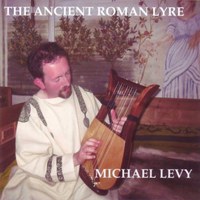
The Ancient Roman Lyre
Douban
Michael Levy genre: World Music
release date 2013-03-14 publisher: Michael Levy
Album Notes This album is the third in my series of ancient Roman-themed albums, the sequel to “Echoes of Ancient Rome” & "Ode To Ancient Rome". Like the first two albums in this series, "Art of the Lyre" comprises of a series of original compositions for an ancient lyre in authentic ancient musical modes, to evoke once more, the lost music of ancient Rome. These set of compositions for my replica Kithara-style lyre is my attempt to restore a precious remnant of the music of ancient Rome, which for the most part, is now forever lost... Unlike ancient Greece, tragically, virtually no surviving written music has survived from ancient Rome. These set of composition for my replica Kithara-style lyre is my attempt to restore a precious remnant of the music of ancient Rome, which is now forever lost - so far, all that has been discovered, is one pitiful fragment by Terence: TERENCIO, HECYRA 861 (Terence). Versus 861. Hecyra of Terence. Codex Victorianus Laurentianus XXXVIII-24, saec. X This piece can be heard track 19, on the recording "Musique de la Grece Antique". Here are some more details from the notes for this unIque album, about the only surviving fragment of written music ever found from ancient Rome: "We have added the only surviving musical fragment of Imperial Rome: four mutilated measures from a work by Terence. It is as if nothing were left of the Acropolis but a few scattered bits of columns and a pair of ruined capitals" Even this tiny fragment is no longer deemed to be authentic, according the musicologist Thomas J. Mathiesen). However, since Rome borrowed so much from the culture of ancient Greece, in attempting to recreate an evocation of the lost music of ancient Rome, it is most likely that the Roman composers of antiquity also used the ancient Greek musical modes... THE ANCIENT MUSICAL MODES USED IN THIS ALBUM Due to the known prominent influence of Ancient Greek culture in the Roman world, in order to create an authentic-sounding evocation of what the solo lyre music of ancient Rome may have once sounded, I decided to base the compositions in a selection some of the original Ancient Greek modes, with melodies inspired mostly by a "Musical Adventure in Time Travel" of the gods of Ancient Rome. The names of musical modes in use today, (e.g. Dorian, Mixolydian etc) although having the same names as the original Greek musical modes, were actually misnamed during the Middle Ages! Apparently, the Greeks counted intervals from top to bottom. When medieval ecclesiastical scholars tried to interpret the ancient texts, they counted from bottom to top, jumbling the information. The misnamed medieval modes are only distinguished by the ancient Greek modes of the same name, by being labelled “Church Modes”. It was due to a misinterpretation of the Latin texts of Boethius, that medieval modes were given the wrong Greek names! According to an article on Greece in the New Grove Dictionary of Music and Musicians, the original ancient Greek names for species of the octave included the following (on white keys): B-B: Mixolydian E-E: Dorian A-A: Hypodorian D-D: Phrygian G-G: Hypophrygian C-C: Lydian F-F: Hypolydian For what Plato & Aristotle had this to say about these ancient musical modes, please see this fascinating link: THE TUNING OF ANTIQUITY In antiquity, lyres were tuned either cyclically, in perfect 5ths, the 3rds & 6ths then being fine-tuned by ear (Pythagorean tuning) or divisively (using exact mathematical ratios to precisely divide a musical string into specific pitch ratios) to achieve what is called "Just Intonation". The modern tuning system of equal temperament was devised to enable music to be performed in any of the 12 keys of the chromatic scale whilst keeping exactly the same equal ratio of pitch between each of the 12 notes of the chromatic scale...which sadly has sacrificed the essential purity of tone, which can only be heard in the just intonation once used in antiquity. Divisive tuning was the most natural way to tune the ancient lutes, or any fretted instrument, which uses frets to divide the vibrating portion of each string into the required precise ratio of pitches. Although more often cylically tuned when played solo, Lyres were also often divisively tuned in antiquity, as they were quite often played in ensemble with other instruments which were in turn, divisively tuned. Although described in the writings of Pythagoras in his experiments at dividing a musical monochord, the divisive tuning system predates Pythagoras by thousands of years and may have evolved along with the origin of the long-necked lute in ancient Babylonia some 5000 years ago, according to John Wheeler (editor of Suzanne Haik Vantoura’s book, “The Music of the Bible Revealed”): "The long-necked lute (according to Curt Sachs) was invented in Babylonia, and indeed thanks to that fact divisive tuning was invented there also. Cyclical tuning was also known there (and that got documented long after his death by the famous theory and hymn tablets from Babylon and Ugarit), but there is this curious fact: the Babylonians used divisive tuning as the basis for their symbolic correlation of the pillar degrees of the octave (e.g., C-F-G-C') with the four seasons, while the Chinese used cyclical tuning as the basis for the symbolic correlation of the same. This (wrote Sachs) is consistent as Babylon was the "home" of the lute and China the "home" of the harp (even though Babylon knew of harps and lyres too and China, if memory serves, also knew the lute from very early times). Divisive tuning is the "natural" tuning of the lute, as cyclical tuning is the "natural" tuning of the harp and lyre, according to Sachs. By that he meant that it's easiest and most natural to tune, and then to play, folk instruments of those genres that way - as I can vouch as a working musician" I have used divisive tuning throughout this album, in my attempt to recreate the purity of the just intonation used in antiquity, which like the music of ancient Rome, has now sadly been forgotten... ANCIENT LYRE PLAYING TECHNIQUES All the various lyre-playing techniques heard in this album, are authentically based on lyre-playing styles which have remarkably survived from Antiquity & which still can be heard today in the amazing lyres still played throughout the continent of Africa, where unlike the rest of the Western world, a precious remnant of the cross-cultural influences from the around ancient world have miraculously survived. Some of these lyre-playing techniques include the “block & strum” method, still practised today by the Krar Lyre players of Eritrea in East Africa – this technique allows the player to strum rhythm & basic chords on the lyre, similar to an acoustic guitar. This technique entails blocking strings with the left hand which are not required and leaving open only the strings which form the required intervals, which then can be strummed with a plectrum in the left hand. Ancient illustrations of Kithara players seem to infer that this technique was also prominent in Ancient Greece – many illustrations clearly depict the left of the lyre player blocking/dampening the strings with the left hand whilst strumming the open strings with a plectrum in their right hand. Other lyre playing techniques include the use of tremolo (based on the style of Egyptian Simsimiyya Lyre Players still heard today), alternating between harp-like finger plucked tones played with the left hand, and guitar-like plectrum-plucked tones with the right hand, using basic finger-plucked intervals/chords with the left hand to form a basic harmonic background for the melodic line being played with the plectrum in the right hand. I also explore the rare percussive hammered lyre playing technique, where the stings of the lyre are hit with small wooden baton (like on a hammered dulcimer), instead of being plucked with either the fingers or a plectrum... THE TRACKS 1. Cogitatio (Reflections) - this piece uses the introspective ancient Greek Hypodorian Mode. 2. Amatores (Lovers) - this piece uses the wonderfully dream-like, feminine-sounding ancient Greek Hypolydian Mode 3. Tranquillitas (Serenity) - this piece features the ancient Greek Hypophrygian Mode. This mode, for me evokes feelings of inner contentment, serenity and tranquillity... 4. Contemplationis (Contemplation) - this piece is composed in the ancient Greek Dorian Mode - intensely introspective, this mode enhances the feeling of concentration in the listener. 5. Desiderantes (Yearning) - this composition features the ancient Greek Phrygian Mode - the Mode seems to create a sense of beautiful poignancy, longing & yearning... 6. Tristitia (Sorrow) - this piece explores the mournful quality, also inherent in the sound of the ancient Greek Hypodorian Mode. 7. Gloria Belli (Glory of Battle) - as well as the intense, concentration-increasing qualities of the ancient Greek Dorian Mode when played slowly and softly, (as explored in track 1 of this album), according to Plato & Aristotle, the ancient Greek Dorian Mode was also the most "manly" of all the musical modes - they even went so far as to suggest that it could inspire bravery in battle! In this piece, I attempt to explore the war-like quality of the the ancient Greek Dorian Mode, which is most evident when played in a vigorous piece such as this.

Music

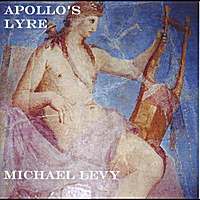
Apollo's Lyre
Douban
Michael Levy genre: World Music
release date 2010-03-14 publisher: Michael Levy
Album Notes According to ancient Greek tradition, Apollo was the god of music, and above all, a master of the lyre. Here is the fascinating background to this ancient Greek mythology... “Hermes was born on Mount Cyllene in Arcadia. The story is told in the Homeric Hymn to Hermes. His mother, Maia, had been secretly impregnated by Zeus. Maia wrapped the infant in blankets but Hermes escaped while she was asleep. Hermes ran to Thessaly, where Apollo was grazing his cattle. The infant Hermes stole a number of his cows and took them to a cave in the woods near Pylos, covering their tracks. In the cave, he found a tortoise and killed it, then removed the insides. He used one of the cow's intestines and the tortoise shell and made the first lyre. Apollo complained to Maia that her son had stolen his cattle, but Hermes had already replaced himself in the blankets she had wrapped him in, so Maia refused to believe Apollo's claim. Zeus intervened and, claiming to have seen the events, sided with Apollo. Hermes then began to play music on the lyre he had invented. Apollo, a god of music, fell in love with the instrument and offered to allow exchange of the cattle for the lyre. Hence, Apollo became a master of the lyre” (quoted from Wikipedia). The concept of this album is to restore the sound once more, the Lyres of Apollo – both the large wooden lyre, known in ancient Greece as the Kithara, once favoured by the professional musicians of ancient Greece, and the skin-membrane lyre, known in ancient Greece as the Lyra – the lyre made from a tortoise shell resonator, over which was stretched a soundboard of taut leather. THE ANCIENT GREEK MODES The names of musical modes in use today, (e.g. Dorian, Mixolydian etc) although having the same names as the original Greek musical modes, were actually misnamed during the Middle Ages! Apparently, the Greeks counted intervals from top to bottom. When medieval ecclesiastical scholars tried to interpret the ancient texts, they counted from bottom to top, jumbling the information. The misnamed medieval modes are only distinguished by the ancient Greek modes of the same name, by being labelled “Church Modes”. It was due to a misinterpretation of the Latin texts of Boethius, that medieval modes were given the wrong Greek names! According to an article on Greece in the New Grove Dictionary of Music and Musicians, the original ancient Greek names for species of the octave included the following (on white keys): B-B: Mixolydian E-E: Dorian A-A: Hypodorian D-D: Phrygian G-G: Hypophrygian C-C: Lydian F-F: Hypolydian For what Plato & Aristotle themselves had this to say about these ancient musical modes, please see this fascinating link: THE REPERTOIRE The repertoire in this unique album consists of a selection of original compositions based on ancient Greek scales. The album also features improvisations on an mystical Middle Eastern scale, Ancient Hebrew scales and an Ancient Egyptian scale... 1) “Apollo’s Lyre” – an original composition for replica Kithara-style lyre, in the Ancient Greek Hypophrygian Mode. 2) ”Ode To Orpheus” – an original composition on replica skin-membrane lyre, in the Ancient Greek Hypodorian Mode. 3) “Hymn To Zeus” – an original composition on replica Kithara-style lyre, in the Ancient Greek Dorian Mode. 4) “Magic of the Ancients” – an improvisation on a mystical Middle Eastern scale: EFG#ABCD#E This scale and its variants are known as “Hijaz” modes. 5) “Ode To Athena” – an original composition for replica skin-membrane lyre in the Ancient Greek in the Hypodorian mode. 6) “The Holy Tabernacle” – an improvisation on the Ancient Hebrew “Ahava Raba” mode: EFG#ABCDE The ancient 3000 year old Hebrew “Kinnor” was almost identical to the later Greek Kithara – coincidence or tantilizing evidence of an ancient cross-cultural musical exchange of ideas? A fascinating possibility! This lyre was the “harp” of King David, and it was later played by the Levitcal Ensemble in the Temple of Jerusalem to accompany the singing of the Levitical Choir... 7) “The Wisdom of Solomon” – an improvisation on the Ancient Hebrew “Misheberakh” scale: EF#GAA#BC#DE This same scale can be heard in an example of ancient Greek music, called “Tecmessa’s Lament” – coincidence, or yet more possible evidence of an ancient cross-cultural exchange of musical ideas? Below is a modern orchestral arrangement of this unique ancient Greek melody: 8) “Hymn To Horus” - this piece for solo kithara-style lyre, is based on a traditional Egyptian folk song. It is in the Natural Minor mode – which is very common in the Middle East, both now and in ancient times. During the New Kingdom of Ancient Egypt, over 3000 years ago, wooden lyres very similar to the later Kithara lyre of Ancient Greece were introduced to Egypt for the first time, most likely from the ancient Canaanites. 9) “Hymn To Hathor” – an improvisation on replica Kithara-style lyre, based on an ancient Egyptian minor pentatonic scale: CEF#GB The late Professor Hans Hickmann of the Museum of Cairo, deciphered this pentatonic scale from ancient Egyptian tomb illustrations, which represented an ancient system of musical notation called "Chironomy"; this is a system of hand gestures which were used, to denote both the pitch and ornamentation of a melody.

Music

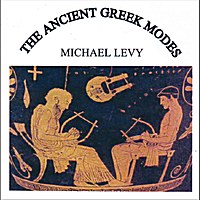
The Ancient Greek Modes
Douban
Michael Levy genre: World Music
release date 2010-03-14 publisher: Michael Levy
Album Notes INTRODUCTION The concept of this album, is to recreate the both the sounds of the musical modes once used in Ancient Greece (as described in the writings of Plato & Aristotle) & to restore the lost sounds of the ancient Greek Kithara - the large wooden lyre once favoured by the professional musicians of Ancient Greece... THE ANCIENT GREEK MODES The names of musical modes in use today, (e.g. Dorian, Mixolydian etc) although having the same names as the original Greek musical modes, were actually misnamed during the Middle Ages! Apparently, the Greeks counted intervals from top to bottom. When medieval ecclesiastical scholars tried to interpret the ancient texts, they counted from bottom to top, jumbling the information. The misnamed medieval modes are only distinguished by the ancient Greek modes of the same name, by being labelled “Church Modes”. It was due to a misinterpretation of the Latin texts of Boethius, that medieval modes were given the wrong Greek names! According to an article on Greece in the New Grove Dictionary of Music and Musicians, the original ancient Greek names for species of the octave included the following (on white keys): B-B: Mixolydian E-E: Dorian A-A: Hypodorian D-D: Phrygian G-G: Hypophrygian C-C: Lydian F-F: Hypolydian For what Plato & Aristotle themselves had this to say about these ancient musical modes, please see this fascinating link: More details can on the original Ancient Greek Modes can also be found here: THE REPERTOIRE The seven original compositions arranged for replica lyre which form the repertoire of this album, are each written in one of the seven Ancient Greek Modes. The lyre-playing techniques heard in this album, are authentically based on lyre-playing styles which have remarkably survived from Antiquity & which still can be heard today in the amazing lyres still played throughout the continent of Africa, where unlike the rest of the Western world, a precious remnant of the cross-cultural influences from the around ancient world have miraculously survived. For full details, please see the “Historical Details” section of my official website: THE LYRE PLAYING TECHNIQUES USED IN THIS ALBUM Some of these lyre-playing techniques include the “block & strum” method, still practiced today by the Krar Lyre players of Eritrea in East Africa – this technique allows the player to strum rhythm & basic chords on the lyre, similar to an acoustic guitar. This technique entails blocking strings with the left hand which are not required and leaving open only the strings which form the required intervals, which then can be strummed with a plectrum in the left hand. Ancient illustrations of Kithara players seem to infer that this technique was also prominent in Ancient Greece – many illustrations clearly depict the left of the lyre player blocking/dampening the strings with the left hand whilst strumming the open strings with a plectrum in their right hand. I also demonstrate all the possible styles available on the Kithara. These include the use of tremolo (based on the style of Egyptian Simsimiyya Lyre Players still heard today), alternating between harp-like finger plucked tones played with the left hand, and guitar-like plectrum-plucked tones with the right hand, using basic finger-plucked intervals/chords with the left hand to form a basic harmonic background for the melodic line being played with the plectrum in the right hand (the surviving fragments of Ancient Greek music clearly imply a basic harmonic tonality to these ancient melodies (as opposed to simple folk melodies which can simply be accompanied by a drone). To hear my arrangements for solo lyre, of some of these actual surviving melodies from Ancient Greece, please listen to my other albums, “An Ancient Lyre” & “The Ancient Greek Lyre” (also available from & iTunes). THE 7 TRACKS 1) “Spirit of the Kithara” (Composition For Lyre in the Ancient Greek Dorian Mode) 2) “Dancers of Dionysus” (Composition For Lyre in the Ancient Greek Hypolydian Mode) 3) “Hymn To Poseidon” (Composition For Lyre in the Ancient Greek Hypodorian Mode) 4) “Procession of the Olympians” (Composition For Lyre in the Ancient Greek Lydian Mode) 5) “The Sanctuary of Apollo” (Composition For Lyre in the Ancient Greek Hypophrygian Mode) 6) “The Oracles of Delphi” (Composition For Lyre in the Ancient Greek Mixolydian Mode) 7) “Glory of the Parthenon” (Composition For Lyre in the Ancient Greek Phrygian Mode)

Music

Musical Adventures in Time Travel...
Douban
release date 2013-03-13 publisher: Michael Levy
Album Notes A MUSICAL ADVENTURE IN TIME TRAVEL! This album is a unique compilation of some of the very best tracks from my many albums which attempt to evoke the lost sounds & playing techniques of the lyres of antiquity. On this “Musical Adventure in Time Travel”, I attempt to recreate a lost vista of ancient landscapes, transporting the listener to a distant, ancient past... ANCIENT MESOPOTAMIA Our voyage through ancient landscapes begins, with a journey back in time, almost 4000 years ago, to the cradle of civilization, to ancient Mesopotamia. The track featured on this album to transport us back to this ancient land, is my arrangement for solo lyre, of one of the oldest known written musical fragments so far discovered in History, in my performance of Dr Richard Dumbrill's interpretation of the 3400 year old Hurrian Hymn (Text H6) from ancient Ugarit in Mesopotamia. In January 2011, a video of my performance of this piece recently featured in "The Biblical Archaeological Review.” Hurrian Hymn (Text H6) was discovered in Ugarit in Syria in the early 1950s and was preserved for 3400 years on a clay tablet, written in the Cuneiform text of the ancient Hurrian language. Although 29 musical texts were discovered at Ugarit, only this text, (text H6), was in a sufficient state of preservation to allow for modern academic musical reconstruction. In short, the Cuneiform text clearly indicated specific names for lyre strings, and their respective musical intervals – a sort of “Guitar tablature”, for lyre! Although discovered in modern day Syria, the Hurrians were not Syrian – they came from modern-day Anatolia. The Hurrian Hymn actually dates to the very end of the Hurrian civilisation (c.1400BCE). Indeed, the ancient Hurrian civilization dated back to at least 3000 BCE. The evocation of the ancient Kinnor Lyre from neighbouring Israel, on which I perform the piece, is almost tonally identical to the wooden asymmetric-shaped lyres played throughout the Middle East at this amazingly distant time... The melody is an interpretation by Richard Dumbrill, from the ambiguous Cuneiform text of the Hurrian language in which it was written. Although many of the meanings of the Hurrian language are now lost in the mists of time, it can be established that the fragmentary Hurrian Hymn which has been found on these precious clay tablets are dedicated to Nikkal; the wife of the moon god. There are several such interpretations of this melody, but to me, the fabulous interpretation by Richard Dumbrill just somehow sounds the most "authentic". Dr Dumbrill explains the method by which he managed to decipher the melody from the Cuneiform text in his video here. Below is a link to the sheet music, as interpreted by Richard Dumbrill and arranged by Clint Goss: My first arrangement of the Hurrian Hymn originally featured in my album, “An Ancient Lyre”. In my new arrangement featured in this compilation, I play the melody on my new hand-made lyre, tuning my lyre as the ancients once did, using the pristine purity of the just intonation of antiquity. In just intonation, to achieve absolute purity of each musical interval in a scale, the ratio of every single musical interval is precisely calculated in rational numbers. As the ratio of each interval is very slightly different in just intonation, since the time of Bach, modern equal temperament eventually came to predominate - as all the intervals in equal temperament are artificially made equal, this enables the seamless transposition to different keys, without any change in the ratio of the intervals. However, although seamless transposition & modulation between keys is therefore possible in equal temperament, the terrible consequence of equal temperament is that apart from the octave, all the other intervals are all artificially made slightly out of tune! Indeed, out of tune “wooowooowoo” sounding beat waves can clearly be heard, whenever a triad is played on a piano. The effects of hearing music in the lost purity of just intonation, is a much more serene, yet at the same time, inspiring feeling, with much more intensity of the emotion. Music performed in poor compromise of equal temperament is, in comparison, like a rose without its scent... In this new arrangement of the melody, I also use much more authentic-sounding natural fibre strings on my lyre, for the finishing touches to the ancient timbre I wish to convey. The strings of my lyre were made of wound silk by ancient musical string technology expert, Peter Pringle – the nearest match in tone, to the unpolished wound gut strings once used in antiquity. In the repeat featured in my arrangement of the melody, I explore a heterophonic development of the 3400 year old melody deciphered by Dumbrill, featuring an ancient Mesopotamian percussive style of lyre playing, whereby the strings of the lyre, instead of being plucked with either the fingers or a plectrum, are hit with a wooden baton (similar to a modern hammered dulcimer). This technique can be seen on the famous Bas Reliefs of musicians from the ruins of the Palace at Nineveh - these reliefs date back to c.700BCE. In my arrangement of the Hurrian Hymn, I have attempted to illustrate an interesting diversity of ancient lyre playing techniques, ranging from the use of "block and strum" improvisation at the end, glissando's, trills & tremolos, and alternating between harp-like tones in the left hand produced by finger-plucked strings, and guitar-like tones in the right hand, produced by use of the plectrum. In all my solo lyre playing, I also experiment some basic homophony – contrary to the “urban myth” of the monotony of monophony in the ancient world... There is also a fascinating modern arrangement for piano & orchestra of Dumbrill’s interpretation of the melody of Hurrian Hymn Text H6, by the Syrian pianist & composer Malek Jandali, entitled “Echoes of Ugarit”. However, to my knowledge, my arrangement of the melody in this compilation is quite possibly, for the first time in 3400 years, that the Hurrian Hymn has been authentically performed on an actual lyre with natural fibre strings, in the pristine purity of the just intonation of antiquity... ANCIENT EGYPT In the next instalment of this “Musical Adventure in Time Travel”, I attempt to recreate the musical landscape of ancient Egypt. I explore an evocation of the music of ancient Egypt, in my arrangements for solo lyre & archaic arched harp, of both traditional Egyptian folk melodies & in my performance of an improvisation on one of the actual known ancient Egyptian scales, as deciphered by the late Professor Hans Hickmann of the Museum in Cairo, from chironomy gestures... Chironomy is an ancient form of musical notation dating back to the 4th Dynasty (c.2500 BCE) whereby specific hand gestures represented specific changes in the pitch of a melody: The improvisation on the minor pentatonic ancient Egyptian scale deciphered by Professor Hans Hickmann from ancient Egyptian chironomy, which features in this album, is my composition “Ancient Harps of Kemet” - from my album “The Ancient Egyptian Harp”. “Kemet” is a transliteration of the actual ancient Egyptian word “kmt”, describing the land of Egypt itself, literally meaning “black land” – describing the life-giving, dark fertile mud left behind each Spring after the annual flooding of the Nile. In my album “The Ancient Egyptian Harp”, I attempted to recreate the sound of the ancient Egyptian shoulder harp of the New Kingdom (c.1500 BCE) on an incredibly archaic 9–string African arched harp still played in Uganda today, known as the Adungu. Virtually identical to the ancient Egyptian arched harp, the Adungu also has a skin soundboard – like a surviving examples of an ancient Egyptian shoulder harp preserved in the Metropolitan Museum of Art in New York, the strings of the Adungu are also attached to the resonator via a horizontal wooded pole running directly below the skin soundboard. “Awe of the Aten” also originally featured in my EP, “The Ancient Egyptian Harp.” The Aten was the ancient Egyptian word for the Sun Disc – venerated in the new monotheistic worship of the Aten by the Pharaoh Akhenaten. ANCIENT ISRAEL I then explore the ancient landscape of Biblical times, with my evocation of the Music of Ancient Israel, featuring a selection of tracks (some renamed for this compilation), originally heard on from albums, "King David's Lyre; Echoes of Ancient Israel" & “King David’s Harp”. The track I have entitled “Exodus of the Israelites” in this compilation, is my arrangement for solo lyre of the traditional Klezmer melody “Odessa Bulgar” – first featured in track 10 of my album "King David's Lyre; Echoes of Ancient Israel". “The Tablets of Moses” (based on the traditional sacred Jewish melody “Noch Havdallah”) featured in my album “King David’s Harp”. These albums explore an evocation of the sound of the 10-string Biblical "Kinnor" - the 10-string lyre once played by my very own, very ancient Levite ancestors in the Temple of Jerusalem to accompany the singing of the Levitical Choir... ANCIENT GREECE We then move on our "Musical Adventure in Time Travel" to recreate the landscape of ancient Greece. The names of musical modes in use today, (e.g. Dorian, Mixolydian etc) although having the same names as the original Greek musical modes, were actually misnamed during the Middle Ages! Apparently, the Greeks counted intervals from top to bottom. When medieval ecclesiastical scholars tried to interpret the ancient texts, they counted from bottom to top, jumbling the information. The misnamed medieval modes are only distinguished by the ancient Greek modes of the same name, by being labelled “Church Modes”. It was due to a misinterpretation of the Latin texts of Boethius, that medieval modes were given the wrong Greek names. According to an article on Greece in the New Grove Dictionary of Music and Musicians, the original ancient Greek names for species of the octave included the following (on white keys): B-B: Mixolydian E-E: Dorian A-A: Hypodorian D-D: Phrygian G-G: Hypophrygian C-C: Lydian F-F: Hypolydian For what Plato & Aristotle had this to say about these ancient musical modes, please see this fascinating link: My composition “Orpheus’s Lyre: Lament for Solo Lyre in the Ancient Greek Phrygian Mode” (originally released as an extended length single) was inspired by the timeless ancient Greek myth of Orpheus and Eurydice: "Eurydice and Orpheus were young and in love. So deep was their love that they were practically inseparable. So dependent was their love that each felt they could not live without the other. These young lovers were very happy and spent their time frolicking through the meadows. One day Eurydice was gaily running through a meadow with Orpheus when she was bitten by a serpent. The poison of the sting killed her and she descended to Hades immediately. Orpheus was son of the great Olympian god Apollo. In many ways Apollo was the god of music and Orpheus was blessed with musical talents. Orpheus was so sad about the loss of his love that he composed music to express the terrible emptiness which pervaded his every breath and movement. He was so desperate and found so little else meaningful, that he decided address Hades. As the overseer of the underworld, Hades heart had to be hard as steel, and so it was. Many approached Hades to beg for loved ones back and as many times were refused. But Orpheus' music was so sweet and so moving that it softened the steel hearted heart of Hades himself. Hades gave permission to Orpheus to bring Eurydice back to the surface of the earth to enjoy the light of day. There was only one condition - Orpheus was not to look back as he ascended. He was to trust that Eurydice was immediately behind him. It was a long way back up and just as Orpheus had almost finished that last part of the trek, he looked behind him to make sure Eurydice was still with him. At that very moment, she was snatched back because he did not trust that she was there. When you hear music which mourns lost love, it is Orpheus' spirit who guides the hand of the musicians who play it” (Taken from Thomas Bulfinch and retold by Juliana Podd in Encyclopaedia Mythica) In this piece, I explore modulating between the incredibly poignant-sounding ancient Greek Phrygian mode (this was misnamed the ‘Dorian’ mode in the Middle Ages) to evoke the yearning of Orpheus for his forever lost love, and the dreamy, sensual & feminine-sounding ancient Greek Hypolydian mode (misnamed the ‘Lydian’ mode in the Middle Ages), to paint a picture of Eurydice - the lost love for which he forever yearns... I derive my ancient lyre playing techniques by both inferring the playing styles illustrated in ancient depictions of lyre players, studying the lyre playing techniques still practiced today throughout the continent Africa and also by a process of creative elimination, in my quest to discover just what was conceivably possible for the imaginative lyre player of antiquity to play on the instrument... Indeed, the lyre lends itself to almost limitless heterophonic possibilities in improvising around the texture of the melody – different combinations of gentle harp-like finger plucked tones contrasting with brighter guitar-like plectrum plucked tones, strumming rhythm by means of ‘string-blocking’ (blocking notes not required to sound with the left hand notes whilst strumming the open strings with a plectrum in the right hand – a technique still practised today, by the Krar lyre players of Eritrea), the use of plectrum-plucked tremolo effects (a technique used by Egyptian Simimiyya lyre players) and instead of just plucking the strings, it is also possible to hit the strings with a wooden baton, like a hammered dulcimer - a technique derived from illustrations of musicians found in bas reliefs from the ruins of the palace of Nineveh, c.700 BCE, where the lyre players are clearly depicted performing this percussive style of lyre playing. In this composition, I tune my lyre to the wonderfully pure just intonation of antiquity. “Ode to Aphrodite” (also composed in the Hypodorian Mode) featured in my album, “The Ancient Greek Lyre”. Aphrodite was the ancient Greek goddess of Love... "Spirit of the Kithara” (composition in the Dorian Mode) originally featured on my album "The Ancient Greek Modes" . The Kithara was the large 7-string wooden lyre, once favoured by the professional musicians of ancient Greece... A track on this compilation which originally featured in my album “Apollo’s Lyre” is “Ode to Athena” (original composition for lyre in the ancient Greek Hypodorian Mode). Athena was the ancient Greek goddess of Wisdom. The Parthenon in Athens was dedicated to the goddess Athena, in which once stood a magnificent statue of the goddess... “Vapours of Delphi" (composed in the ancient Greek Phrygian Mode) can be heard on track 3, from my album "A Well Tuned Lyre – The Just Intonation of Antiquity". Throughout antiquity, the Pythia (the Delphic Oracle) would breathe the sacred vapours of Delphi and enter a shamanic trance, in which she was said to then be able foretell the future... This compilation album also features my extended length single, “The Battle of Thermopylae: Paean For Solo Lyre” – a spontaneous improvisation for lyre in the ancient Greek Dorian Mode. According to the writings of Plato & Aristotle, the ancient Greek Dorian Mode was the manliest of all the ancient Greek Modes - when played with vigour, music played in the ancient Greek Dorian Mode could even inspire bravery in battle! In Classical antiquity, a Paean was a song of triumph. It comes from the Greek παιάν (also παιήων or παιών), meaning "song of triumph, any solemn song or chant." Typically the paean was in the ancient Greek Dorian mode (equivalent intervals as E – E on the white notes of the piano) and was accompanied by the kithara, which was the instrument of the ancient Greek god of music, Apollo. Paeans meant to be sung on the battlefield were accompanied by aulos and kithara. THE MUSIC OF ANCIENT ROME We then arrive in ancient Rome, with “Nero’s Lyre” - originally released as an extended length single of the same title. In this composition, featuring once more, the beautiful just intonation of antiquity, I attempted to recreate the famous fabled lament the notorious Emperor Nero was alleged to have played on his lyre as he sang “The Sack of Ilion”, whilst he witnessed the Great Fire of Rome in 64 CE... My exploration of the recreation of the lost music of ancient Rome continues with my composition “Ode to Ancient Rome”. This piece originally featured as track 1 of my album of the same title. My album “Ode To Ancient Rome” also features the beautifully pure just intonation of antiquity. “Sacred Flame of Vesta” is another track to have originally featured in this album. Vesta was the Roman goddess of the home & hearth. The sacred flame of Vesta burned in Vesta's circular temple, built in the Roman Forum below the Aventine Hill in pre-republican times. The Vestal Virgins formed the priesthood, specifically dedicated to serving the goddess... "The Temple of Mars", originally featured in my earlier album, "Echoes of Ancient Rome". This album features 7 original compositions for lyre in a selection of authentic ancient musical modes. The compositions on this album were mainly inspired by the Temples of Ancient Rome. Mars was the Roman god of war... MEDITATIVE MUSIC FOR SOLO LYRE This compilation closes with a selection of my more meditative, contemplative compositions for solo old Lyre... “Realm of the Ancestors” is a unique duet of lyre & harp, featuring harp accompaniment by the talented folk harpist, Rebecca Penkett. This piece featured on my album “Ancient Vibrations”. “Magic of the Ancients” originally featured in my album “Apollo’s Lyre” – an evocation of the ancient mystery & sacred rites of the Shaman. “Ancient Lyre Strings” was first released as an extended length single. In this piece, my lyre is tuned in just intonation, featuring my lyre strung with natural fibre strings of wound silk, for a unique ancient-sounding timbre. THE TRACKS 1. Echoes of Ancient Ugarit (Hurrian Hymn Text H6 c.1400 BCE Arranged For Solo Lyre in the Just Intonation of Antiquity) 2. Ancient Harps of Kemet (Original Composition for Archaic Arched Harp) 3. Awe of the Aten (Original Composition for Archaic Arched Harp) 4. The Tablets of Moses (Composition for Solo Lyre - Based on a Traditional Klezmer Melody) 5. Exodus of the Israelites (Composition for Solo Lyre - Based on a Traditional Klezmer Melody) 6. Orpheus’s Lyre: Lament For Solo Lyre in the Just Intonation of Antiquity 7. Ode to Aphrodite (Original Composition for Solo Lyre in the Ancient Greek Hypodorian Mode) 8. Spirit of the Kithara (Original Composition for Solo Lyre in the Ancient Greek Dorian Mode) 9. Ode to Athena (Original Composition for Solo Lyre in the Ancient Greek Hypodorian Mode) 10. Vapours of Delphi (Original Composition for Solo Lyre in the Just Intonation of Antiquity) 11. The Battle of Thermopylae (Original Composition for Solo Lyre in the Ancient Greek Dorian Mode) 12. Nero’s Lyre (Original Composition for Solo Lyre in the Just Intonation of Antiquity) 13. Ode to Ancient Rome (Original Composition for Solo Lyre in the Just Intonation of Antiquity) 14. The Temple of Mars (Original Composition for Solo Lyre) 15. Sacred Flame of Vesta (Original Composition for Solo Lyre in the Just Intonation of Antiquity) 16. Magic of the Ancients (Original Composition for Solo Lyre) 17. Realm of the Ancestors (Duet for Lyre & Harp Feat. Rebecca Penkett) 18. Ancient Lyre Strings (Original Composition for Solo Lyre in the Just Intonation of Antiquity) THE RELENTLESS QUEST OF SEEING MUSICAL PERFECTION! This compilation album is the main goal of my musical exploration of antiquity, which first began in 2006, when I discovered that over 2000 years ago, it was my very own, very ancient Levite ancestors who actually played the 10-string Biblical lyre (the “Kinnor”) in the Temple of Jersualem to accompany the singing of the Levitical Choir – my quest to revive the lost lyre playing techniques of antiquity, for me, has simply got to be the ultimate in roots music”! My musical quest was recently very well summed up in both an article in “The Sonic Inquirer” and “The American Harp Journal” The process of composing & arranging music for lyre has been one of progressive evolution. I was first inspired to start recording, following the suggestions of my Youtube fans, following my first tentative "Lo Fi" primitive, grainy webcam videos of my "Musical Experiments in Time Travel", first broadcast to the rest of the unsuspecting world back in August 2006! My first few releases were mostly arrangements for Biblical lyre of traditional Jewish Klezmer melodies which I was originally familiar with as a keen Klezmer fiddle player (hence the title of my Youtube Channel, “Klezfiddle1”). My first ever albums of 100% original compositions was not until the release “Apollo’s Lyre” & “The Ancient Greek Modes” in 2010. Several tracks in my albums appear in different forms during this evolutionary journey of refinement – for example, my first arrangement of Dr. Richard Dumbrill’s interpretation of the “Hurrian Hymn” featured in my now "virtually viral" Youtube video of 2008, entitled "The Oldest Written Music in History, c.1400 BC!" In 2009, I recorded a basic studio version of the same arrangement, in my experimental album “An Ancient Lyre” - the only album I have ever been bold enough to attempt to produce & mix myself, prior to discovering the awesome production skills of Dominik Johnson, who I had the pleasure of connecting with on Myspace in 2009. In 2011, Dominik's far superior, professionally mixed version of my original arrangement for lyre of the Hurrian Hymn featured in my first compilation album, “Ancient Landscapes”. Finally, my completely new arrangement heard on track 1 of this compilation, was recorded on my new hand-made lyre strung with natural fibre strings, in the authentic just intonation of antiquity, masterfully produced with Domink’s haunting reverb, sampled from actual Iranian caves - just one example, of my relentless quest of seeking "Musical Perfection"! CREDITS Special thanks, to John Wheeler, (expert on the work of the late Suzanne Haik Vantoura & the editor of her book, “The Music of the Bible Revealed”) for his invaluable input into the creation of my albums over the years, recommending the wonderful “Marini Made Davidic Harp” I now play & unlocking for me, the lost beauty of just intonation in the SCALA generated just intonation scales he so kindly provided me with to tune my lyre to. Thanks also, to ancient string technology expert, Peter Pringle, for kindly manufacturing the natural fibre wound silk strings for my lyre (the nearest tonal match, to the unpolished, wound gut strings once used in antiquity) Special thanks to the very talented folk harpist, Rebecca Penkett, for the wonderful accompaniment on her harp to my spontaneous improvisation on the lyre, for the track “Realms of the Ancestors” Finally, special thanks to the incredibly talented multi-instrumentalist Dominik Johnson for his masterful mixing of all of my later albums recorded since 2010. Once the Muse has inspired me again, I will continue in my new-found mission, as a “Musical Shaman”, in fulfilling my life’s passion - recreating the lost music of the ancient world...
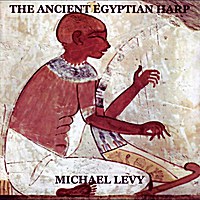
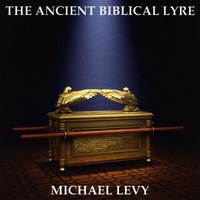
Music

The Ancient Greek Lyre
Douban
Michael Levy genre: World Music
release date 2010-09-06 publisher: Michael Levy
Album Notes This unique album features 6 examples of some of the actual music of ancient Greece & 6 original compositions for replica ancient Greek Kithara lyre, in some of the original ancient Greek Modes (as described in the writings of Plato & Aristotle, some 2400 years ago) The concept of this album & my previous album, "The Ancient Greek Modes", is to recreate the both the sounds of the musical modes once used in Ancient Greece & to restore the lost sounds of the ancient Greek Kithara - the large wooden lyre once favoured by the professional musicians of Ancient Greece... THE ANCIENT GREEK MODES The names of musical modes in use today, (e.g. Dorian, Mixolydian etc) although having the same names as the original Greek musical modes, were actually misnamed during the Middle Ages! Apparently, the Greeks counted intervals from top to bottom. When medieval ecclesiastical scholars tried to interpret the ancient texts, they counted from bottom to top, jumbling the information. The misnamed medieval modes are only distinguished by the ancient Greek modes of the same name, by being labelled “Church Modes”. It was due to a misinterpretation of the Latin texts of Boethius, that medieval modes were given the wrong Greek names! According to an article on Greece in the New Grove Dictionary of Music and Musicians, the original ancient Greek names for species of the octave included the following (on white keys): B-B: Mixolydian E-E: Dorian A-A: Hypodorian D-D: Phrygian G-G: Hypophrygian C-C: Lydian F-F: Hypolydian For what Plato & Aristotle themselves had this to say about these ancient musical modes, please see this fascinating link: More interesting reading can be found at : ANCIENT LYRE-PLAYING TECHNIQUES The lyre-playing techniques heard in this album, are authentically based on lyre-playing styles which have remarkably survived from Antiquity & which still can be heard today in the amazing lyres still played throughout the continent of Africa, where unlike the rest of the Western world, a precious remnant of the cross-cultural influences from the around ancient world have miraculously survived. For full details, please see the “Historical Details” section of my official website: Some of these lyre-playing techniques include the “block & strum” method, still practiced today by the Krar Lyre players of Eritrea in East Africa – this technique allows the player to strum rhythm & basic chords on the lyre, similar to an acoustic guitar. This technique entails blocking strings with the left hand which are not required and leaving open only the strings which form the required intervals, which then can be strummed with a plectrum in the left hand. Ancient illustrations of Kithara players seem to infer that this technique was also prominent in Ancient Greece – many illustrations clearly depict the left of the lyre player blocking/dampening the strings with the left hand whilst strumming the open strings with a plectrum in their right hand. I also demonstrate all the possible styles available on the Kithara. These include the use of tremolo (based on the style of Egyptian Simsimiyya Lyre Players still heard today), alternating between harp-like finger plucked tones played with the left hand, and guitar-like plectrum-plucked tones with the right hand, using basic finger-plucked intervals/chords with the left hand to form a basic harmonic background for the melodic line being played with the plectrum in the right hand (the surviving fragments of Ancient Greek music clearly imply a basic harmonic tonality to these ancient melodies (as opposed to simple folk melodies which can simply be accompanied by a drone). THE 12 TRACKS 1) Lament of Simonides (Ancient Greek Musical Fragment - Arranged For Replica Kithara) This lovely melody, written in the ancient Greek Hypophrygian Mode, can possibly be attributed to the ancient Greek poet & musician, Simonedes of Keo .Simonides of Ceos (ca. 556 BC-469 BC) was one of the 9 great Greek lyric poets. He was born at Loulis on Kea. During his youth he taught poetry and music, and composed paeans for the festivals of Apollo. He was included, along with Sappho and Pindar, in the canonical list of nine lyric poets by the scholars of Hellenistic Alexandria. Further details can be found at: Although initially the piece sounds as if it is in the Ancient Greek Mixolydian Mode (the equivalent B-B on the white notes of the piano - not to be confused with the Medieval "Mixolydian" Mode, which is G-G!), the tonality of the melody actually implies the Ancient Greek Hypophrygian Mode (G-G). Maybe it is this ambiguity of tonality which creates the haunting, mystical feel of this beautiful ancient melody? The lyrics: Ἄνθρωπος ἐὼν μήποτε φάσηις ὅ,τι γίνεται αὔριον, μηδ᾿ ἄνδρα ἰδὼν ὄλβιον, ὅσον χρόνον ἔσσεται· ὠκεῖα γὰρ οὐδὲ τανυπτερύγου μυίας οὕτως ἁ μετάστασις In English: "You are a human, therefore seek not to foretell what tomorrow may bring, nor how long ones happiness may last. For not even the flutter of the fly's wing is as fast as change" 2) Ancient Greek Musical Fragment (Anonymi Bellerman 97 - Arranged For Replica Kithara) This beauiful melody, written in the haunting ancient Greek Hypolydian Mode, was preserved in several Byzantine manuscripts - Conspectus Codicum: V. Venetus Marcianus appl. cl. VI, saec. XIII-XIV N. Neapolitanus graecus III. C4, saec. XV F. Florentius Ricc. 41, saec. XVI 3) Ancient Greek Musical Fragment (POEM, MOR 1, 11f MIGNE 37, 523 - Arranged For Replica Kithara) This brief fragment of ancient Greek melody, written in the ancient Greek Hypodorian Mode, was preserved in several Byzantine manuscripts - Athanasius Kircher (+1680), Musurgia Universalis 1650. Schema Musicae Antiquae. "Bibl. S. Salvatore, Messina, Silicia", "Bibliothecam Graecis Manuscriptus", 17th century. 4) Epitaph of Seikilos (Complete Ancient Greek Melody Composed by Seikilos, Son of Euterpe, 1st c. CE - Arranged For Replica Kithara) Engraved on an ancient Burial Stele at Tralles, Asia Minor, this beautiful melody was discovered and published by Ramsay, 1883. Musical signs deciphered by Wessley, 1891. The stone itself, long preserved in the collection of Young at Doudja, disappeared after the burning of Smyrna (September 1923). It is now in the Copenhagen Museum, Inv. No. 14897. This song, written in the ancient Greek Hypophrygian Mode, is so far, the oldest complete piece of music ever found - unlike the other precious shards of ancient Greek music which have survived, this piece is unique, as it survived in its entirety. The ancient Greek burial stele on which it was found, , bore the following epitaph: "I am a portrait in stone. I was put here by Seikilos, where I remain forever, the symbol of timeless remembrance". The timeless words of the song are: "Hoson zes, phainou Meden holos su lupou; Pros oligon esti to zen To telos ho chronos apaitei" Translation - "While you live, shine Don't suffer anything at all; Life exists only a short while And time demands its toll" 5) The First Delphic Hymn To Apollo (Ancient Greek Melody c.138BCE - Arranged For Replica Kithara) This substantial fragment of ancient Greek music was composed ca. 138 B.C. by an Athenian composer. It was discovered inscribed on a slab of marble in May 1893, in the ruins of the Treasury of the Athenians at Delphi. Now preserved in the Museum of Delphi: Delphi Inv. No. 517, 494, 499. There are two Delphic Hymns that have been discovered, and they were dedicated to the god Apollo. The two Delphic Hymns have sadly not survived in their complete form. However, they do survive in substantial fragments...giving just a tantalizing taste of the glory of the tragically lost, magnificent musical culture of ancient Greece. The two Delphic Hymns are dated c.138 BC and 128 BC. Recent musilogical research may indicate that both Hymns were actually written in 128 BCE: " They were long regarded as being dated circa 138 BCE and 128 BCE, respectively, but recent scholarship has shown it likely they were both written for performance at the Athenian Pythaides in 128 BCE (Pöhlmann and West 2001, 71–72). If indeed it dates from ten years before the second, the First Delphic Hymn is the earliest unambiguous surviving example of notated music from anywhere in the western world whose composer is known by name." ( ) My rendition here, is of the First Delphic Hymn. It is written in the unambiguous alphabetical musical notation system used in ancient Greece, whereby alphabetical notation describing the pitch of the melody, is written above the text of the song, as can be clearly seen in this image of the actual Delphic Hymn, as it was found, inscribed in marble: The rhythm can easily be inferred from the syllables of the text. I have based my arrangement for solo replica Kithara, on the first half of the fragment, which is based around the ancient Greek Hypodorian Mode. The second half of the Hymn is highly chromatic, (the piece was written for vocal perfomance) and not really suitable for performance on solo enharmonically tuned lyre with limited number of strings. In order to play chromatic accidentals on a lyre, it is necessary to stop the string with the left hand to shorten it's length to achieve the required pitch - this technique can be heard towards the end of the melody, where one of the notes of the melody is required to be lowered a semitone. The translation of the fragment of text which has survived of the this, the First Delphic Hymn to Apollo, is as follows: "Hear me, you who posses deep-wooded Helicon, fair-armed daughters of Zeus the magnificent! Fly to beguile with your accents your brother, golden-tressed Phoebus who, on the twin peak of this rock of Parnassus, escorted by illustrious maidens of Delphi, sets out for the limpid streams of Castalia, traversing, on the Delphic promontory, the prophetic pinnacle. Behold glorious Attica, nation of the great city which, thanks to the prayers of the Tritonid warrior, occupies a hillside sheltered from all harm. On the holy alters Hephaestos consumes the thighs of young bullocks, mingled with the flames, the Arabian vapor rises towards Olympos. The shrill rustling lotus murmurs its swelling song, and the golden kithara, the sweet-sounding kithara, answers the voice of men. And all the host of poets, dwellers in Attica, sing your glory, God, famed for playing the kithara, son of great Zeus, beside this snow-crowned peak, oh you who reveal to all mortals the eternal and infallible oracles. They sing how you conquered the prophetic tripod guarded by a fierce dragon when, with your darts you pierced the gaudy, tortuously coiling monster, so that, uttering many fearful hisses, the beast expired. They sing too, . . . ." 6) Invocation To The Muse ( Mesomedes of Crete, c.130 CE - Arranged For Replica Kithara) This haunting ancient Greek melody in the ancient Greek Dorian Mode, was preserved in diverse Byzantine Manuscripts: First printed edition by Vincenzo Galilei, 1581. Mesomedes -- Conspectus Codium: V. Venetus Marcianus app. cl. VI, 10, saec. XIII-XIV C. Parisinus Coislinianus graecus 173, saec. XIV N. Neapolitanus graecus III C4, saec. XV Ve. Venetus Marcianus graecus 994, saec. XIV O. Ottobonianus graecus 59, saec. XIII-XIV 7) Hymn To Hermes (Original Composition For Replica Kithara in the Ancient Greek Lydian Mode) 8) Mount Olympus (Original Composition For Replica Kithara in the Ancient Greek Hypophrygian Mode) 9) Ode To Aion (Original Composition For Replica Kithara in the Ancient Greek Phrygian Mode) 10) Ode To Aphrodite (Original Composition For Replica Kithara in the Ancient Greek Hypodorian Mode) 11) Paean (Original Composition For Replica Kithara in the Ancient Greek Dorian Mode) 12) Song of Syrinx (Original Composition For Replica Kithara in the Ancient Greek Hypolydian Mode)