Movie
Friedrich Schiller (1923) WikiData IMDb TMDB Douban
Friedrich Schiller - Eine Dichterjugend
director:
Curt Goetz
actor:
Theodor Loos
/
Hermann Vallentin
…
other title:
弗里德里克·席勒:年轻诗人
/
Friedrich Schiller - Eine Dichterjugend
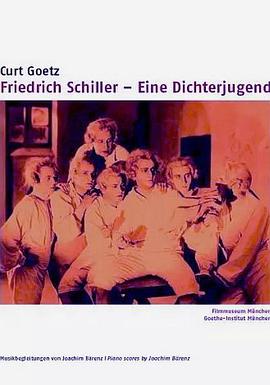
After 16 years' experience on stage, the actor and playwright Curt Goetz (1888-1960) made his debut as a film director and producer with the silent movie Friedrich Schiller - Eine Dichterjugend (1923). Writing razor sharp dialogue was his profession; acting comic parts in the theatre - without having to renounce speech - was his craft. And that is why the silent cinema presented such a special artistic challenge to Goetz, a task whose accomplishment was prompted by a difficult subject: the poet Friedrich Schiller's adolescence. An enthusiast of the spoken word makes a movie about the early life of a powerfully eloquent poet, but has to eschew the cadence of poetry. Under such circumstances, the artistic potential of a film director must prove itself.
In his film version, Curt Goetz shifts the focus away from the poetic output towards the young Friedrich Schiller himself: on the misery of his soul whilst a pupil of the ducal military academy, his opposition to the strict physical drill and the narrow intellectual confines of the "Karlsschule", his juvenile passion for the works of Shakespeare, Klopstock and Lessing, his anger at unjust authorities, his devotion to women, and finally his inability to cope with financial matters. Curt Goetz presumes that these facets of the artist's life are the source of all anger and distress. It is the same affection with which the lead actors in Schiller's debut "The Robbers" confronted the audience at the 1782 Mannheim premiere. The audience acclaimed the play, but in his homeland the young Schiller was banned from writing and was forced to flee.
The director Curt Goetz allows the actors to perform almost without pathos, which turns out to be a suitable cinematic device. The leading roles of the opponents are taken by Theodor Loos (Friedrich Schiller) and Hermann Vallentin (Duke Karl Eugen von Württemberg). The intertitles and Schiller's occasionally colourful behaviour leave no doubt about his Swabian origins. Such characterisation is sometimes achieved by the director's habit of using puns in the intertitles, the kind of jokes audiences enjoyed in subsequent talkies such as the comedies Napoleon ist an allem schuld, Das Haus in Montevideo, or Hokuspokus.
In his film version, Curt Goetz shifts the focus away from the poetic output towards the young Friedrich Schiller himself: on the misery of his soul whilst a pupil of the ducal military academy, his opposition to the strict physical drill and the narrow intellectual confines of the "Karlsschule", his juvenile passion for the works of Shakespeare, Klopstock and Lessing, his anger at unjust authorities, his devotion to women, and finally his inability to cope with financial matters. Curt Goetz presumes that these facets of the artist's life are the source of all anger and distress. It is the same affection with which the lead actors in Schiller's debut "The Robbers" confronted the audience at the 1782 Mannheim premiere. The audience acclaimed the play, but in his homeland the young Schiller was banned from writing and was forced to flee.
The director Curt Goetz allows the actors to perform almost without pathos, which turns out to be a suitable cinematic device. The leading roles of the opponents are taken by Theodor Loos (Friedrich Schiller) and Hermann Vallentin (Duke Karl Eugen von Württemberg). The intertitles and Schiller's occasionally colourful behaviour leave no doubt about his Swabian origins. Such characterisation is sometimes achieved by the director's habit of using puns in the intertitles, the kind of jokes audiences enjoyed in subsequent talkies such as the comedies Napoleon ist an allem schuld, Das Haus in Montevideo, or Hokuspokus.