Albert Florath — Actor (17)
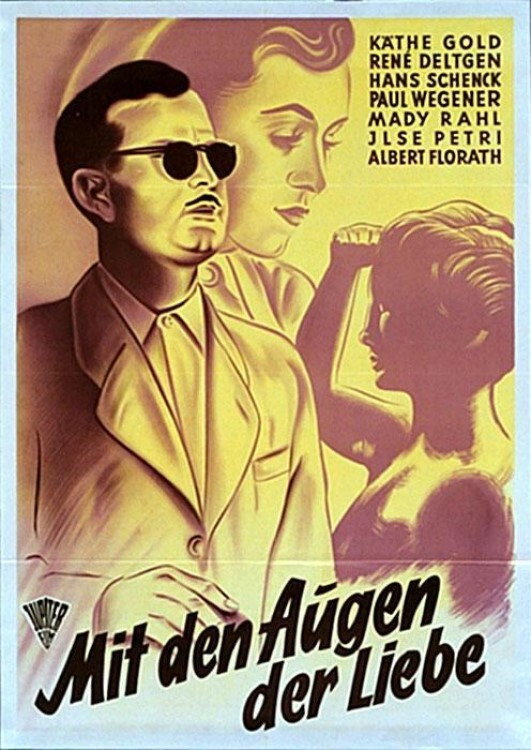
Eyes of Love (1951) [Movie] WikiData IMDb TMDB
Augen der Liebe
director: Alfred Braun actor: Käthe Gold / René Deltgen
other title: Augen der Liebe
A terrible accident robs the successful artist Imhoff of his sight—a jet of flame shoots out of the kiln where he hardens his sculptures, and his career seems over. An attempt to surgically restore his sight fails. While he lies in his sickbed, the sensitive nurse Agnes tenderly cares for her patient. She gives him courage when he is on the verge of despair. Thus, a tender love slowly develops between patient and nurse. Eventually, Imhoff and Agnes marry, and his first attempt at sculpture, even in his blindness, is to be a sculpture of his wife's face. However, since Imhoff has never seen Agnes, she fears he will create an idealized image of her that she cannot live up to. Therefore, after a second operation, he initially conceals the fact that he can see again. He wants to "get used to" his wife first... But how long can he maintain the charade?
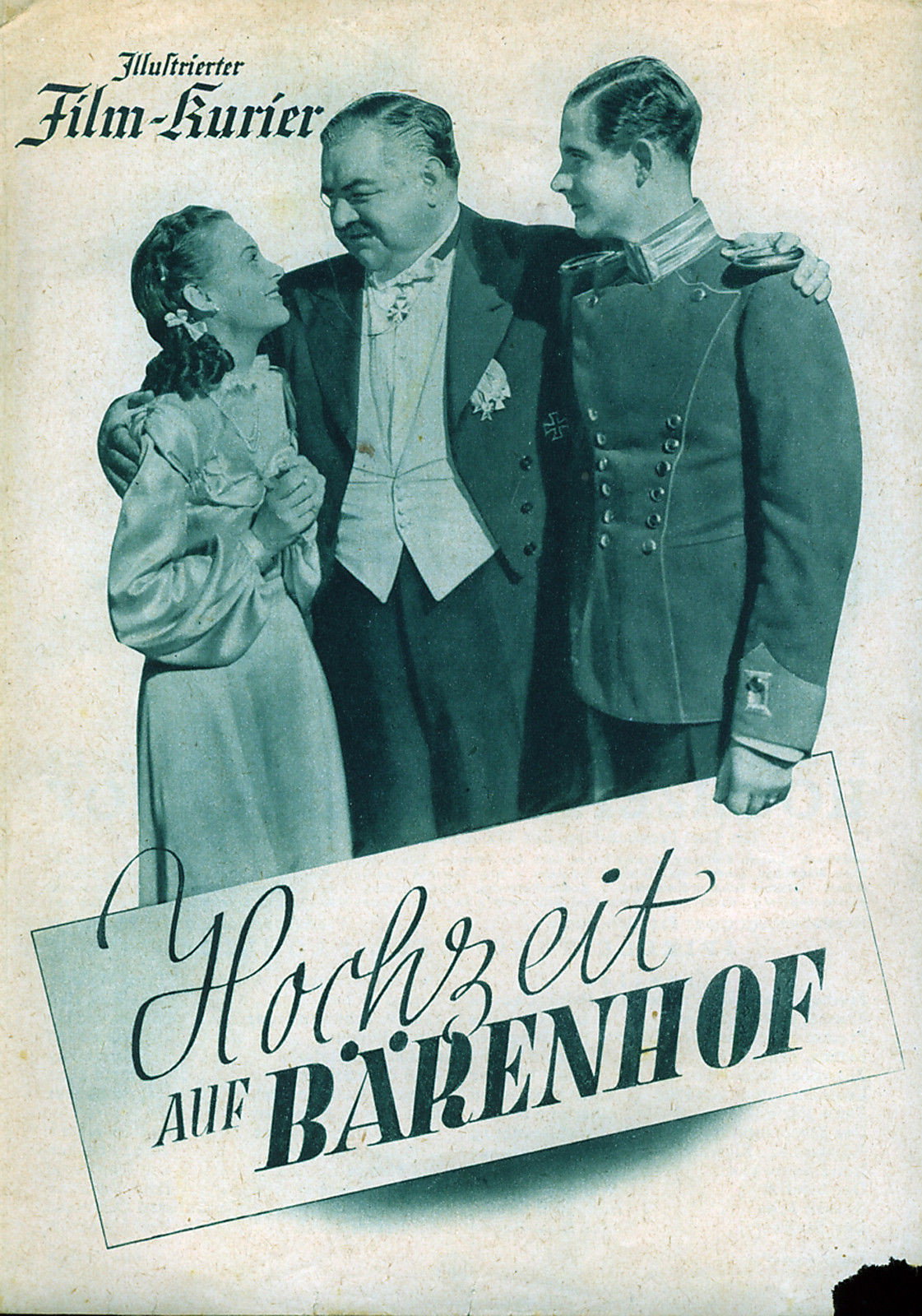
Wedding in Barenhof (1942) [Movie] WikiData IMDb TMDB
Hochzeit auf Bärenhof
director: Carl Froelich actor: Heinrich George / Paul Wegener
other title: Hochzeit auf Bärenhof
Lothar von Pütz and Roswitha von Krakow fall in love and only then discover that their fathers are bitter enemies. When Lothar's father dies, a close friend of his father's, Baron Maximilian von Hanckel, takes the boy under his wing and tries to make peace between the families. He visits Roswitha's father, who begins to hope that he can marry his daughter to the older, but wealthy, baron, who is still a bachelor. When an argument breaks out between Lothar and Roswitha, she agrees to marry Maximilian. It is only at the pre-wedding party that Roswitha and Lothar have a real conversation. Maximilian overhears everything, releases Roswitha from her vows, and brings the two young people together.
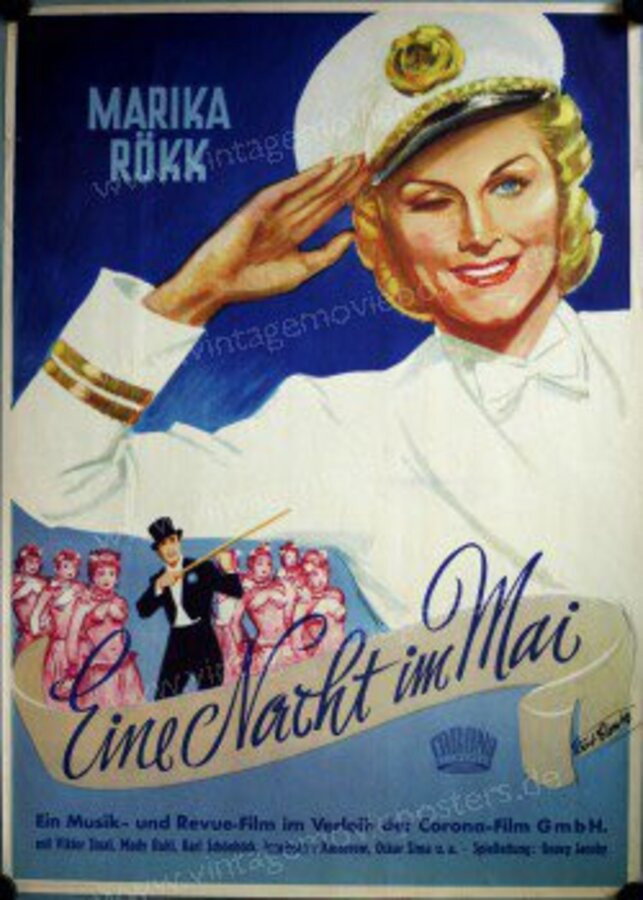
A Night in May (1938) [Movie] WikiData IMDb TMDB
Eine Nacht im Mai
director: Georg Jacoby actor: Marika Rökk / Viktor Staal
other title: Eine Nacht im Mai
A reckless young woman has her driving license withdrawn, drives home anyway and gets involved in a traffic accident. Realizing this was a little over the top she decides that she has to flee the country. As fate has it, she misses her train and instead meets a handsom young man who imidiately falls in love with her. This marks the beginning of a long night of misunderstandings, chases and courting.
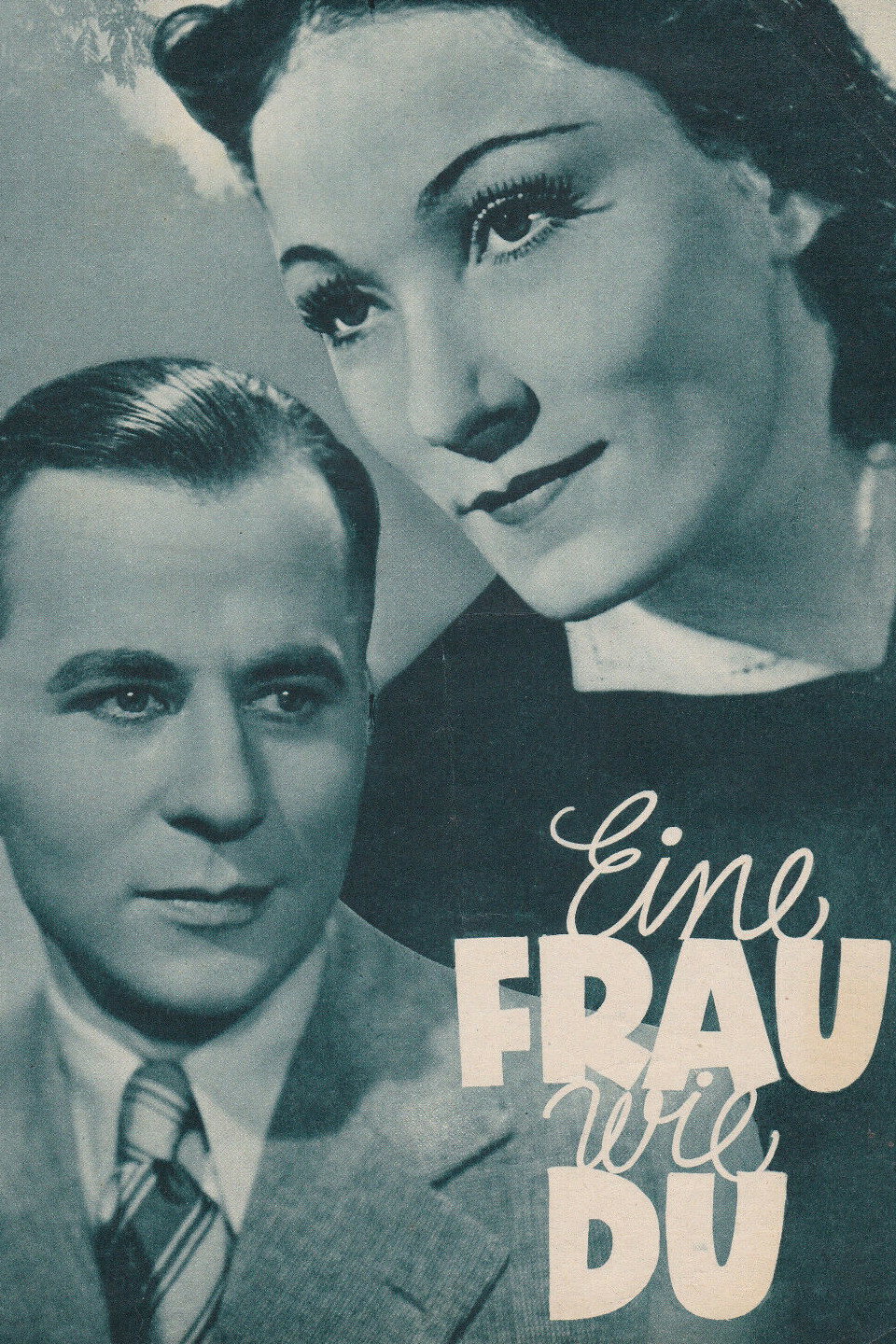
A Woman Like You (1939) [Movie] WikiData IMDb TMDB
Eine Frau wie Du
other title: Eine Frau wie Du
Maria Pretorius is the leader of a counseling office in a large factory. She is completely engrossed by her career and so gives the cold shoulder to her colleague Wallrodt, who wants to marry her. Only the young Manfred Thiele is successful in winning her sympathy through his perseverence. That, however, pisses off Lyda Lehmann, who has long had the hots for him.
Hearts Are Trumps (1934) [Movie] WikiData IMDb TMDB
Herz ist Trumpf
director: Carl Boese actor: Jenny Jugo / Paul Hörbiger
other title: Herz ist Trumpf / Hearts are Trumps
Hotel tycoon Paulsen re-meets an old flame who mistakes him for a waiter. Paulsen's daughter Toni likes hotelier Reno and accepts to work for him as a waitress and chambermaid because she wants to be loved for herself, not her money.
The Rothschilds' Shares in Waterloo (1940) [Movie] Douban
Die Rothschilds - Aktien auf Waterloo
director: Erich Waschneck actor: Carl Kuhlmann / Herbert Hübner
other title: 霍特希尔德家族的滑铁卢股份 / Die Rothschilds - Aktien auf Waterloo
The Rothschilds was the first of three stridently antisemitic movies made in 1940 under the Nazi regime. A purportedly "historical" account of the Rothschild family's rise to fortune, set mostly in Great Britain during the Napoleonic wars, the movie reflected a wildly ambitious racial-political agenda. Beyond its indictment of "Jewish" intrigue and avarice, The Rothschilds aimed to show the "Judafication" of British society at Rothschild hands, and thus demonstrate why, in Joseph Goebbels' words, Britons had become "the Jews among Aryans." Yet the film's dramatic conventions did not always mesh with its racial politics, and when the film was released in July 1940, German audiences were left unclear as to just who they were mainly supposed to hate. Goebbels had it pulled from distribution; a year later, a much-revised version, purged of any conceivable sympathies for its British characters, was released. The revamped movie was renamed The Rothschilds: Shares in Waterloo; this is the version presented on this DVD. But by the time of its re-release, the movie's moment had passed. Germany's air war with Britain was winding down to an inglorious end, while at home, a new, wildly popular film, Jud Süss, had become the regime's preferred vehicle for whipping up antisemitic feeling.
If, in the end, The Rothschilds proved a less effective incitement to hate, it wasn't for lack of trying. With its striking juxtaposition of Nazi social criticism and racial theory, its twin assaults upon Jewish and British character, and its deft recycling of many key myths surrounding the House of Rothschild, this film deserves far more notoriety than has been its due. Directed by Erich Waschneck; Music by Johannes Müller; featuring Carl Kulmann, Hilde Weissner and Giesela Uhlen.
Friedemann Bach (1941) [Movie] WikiData IMDb TMDB Douban
Friedemann Bach
director: Traugott Müller / 格林德根斯·古斯塔法 actor: 格林德根斯·古斯塔法 / 莱尼·马伦巴赫
other title: 威廉·弗里德曼·巴赫 / Le Musicien errant
During a house concert, the Bach family gets a visit by their son Wilhelm Friedemann, who has just given up his position in Dresden because he no longer could endure the reprisals of his superiors.
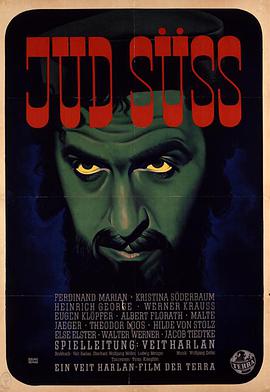
Süss, the Jew (1940) [Movie] WikiData IMDb TMDB Douban
Jud Süß
director: 威特·哈尔兰 actor: Ferdinand Marian / Kristina Söderbaum
other title: 犹太人苏斯 / Jud Süß
In this notorious Nazi propaganda historical costume melodrama, a conniving, ambitious Jewish businessman, Suess Oppenheimer, snares a post as treasurer to the Duke of Wurttemburg by showering the corrupt duke with treasure and promises of even greater riches. As the Jew's schemes grow more elaborate and his actions more brazen, the dukedom nearly erupts into civil war. Persuaded by the Jew, the Duke all but scuttles the constitution and alienates the assembly by lifting the local ban on Jews in Stuttgart. In a final outrage, the Jew rapes a wholesome German girl and tortures her father and fiancee. When the Duke succumbs to a sudden heart attack, the assembly of Elders try the Jew and sentence him to death for having "carnal knowledge of a Christian woman."

Summary written by Kevin Rayburn