Melvyn C. Goldstein — Author (10)
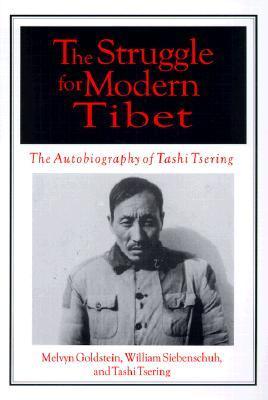
The Struggle for Modern Tibet: The Autobiography of Tashi Tsering [Book] Goodreads
author: Tashi Tsering / Melvyn C. Goldstein publishing house: Routledge 1997 - 2
This captivating autobiography by a Tibetan educator and former political prisoner is full of twists and turns. Born in 1929 in a Tibetan village, Tsering developed a strong dislike of his country's theocratic ruling elite. As a 13-year-old member of the Dalai Lama's personal dance troupe, he was frequently whipped or beaten by teachers for minor infractions. A heterosexual, he escaped by becoming a drombo, or homosexual passive partner and sex-toy, for a well-connected monk. After studying at the University of Washington, he returned to Chinese-occupied Tibet in 1964, convinced that Tibet could become a modernized society based on socialist, egalitarian principles only through cooperation with the Chinese. Denounced as a 'counterrevolutionary' during Mao's Cultural Revolution, he was arrested in 1967 and spent six years in prison or doing forced labor in China. Officially exonerated in 1978, Tsering became a professor of English at Tibet University in Lhasa. He now raises funds to build schools in Tibet's villages, emphasizing Tibetan language and culture.
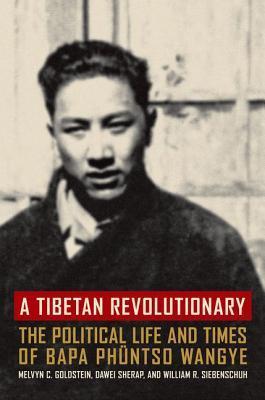
A Tibetan Revolutionary: The Political Life and Times of Bapa Phüntso Wangye [Book] Goodreads
author: Melvyn C. Goldstein / Dawei Sherap publishing house: University of California Press 2004 - 6
This is the as-told-to political autobiography of Phüntso Wangye (Phünwang), one of the most important Tibetan revolutionary figures of the twentieth century. Phünwang began his activism in school, where he founded a secret Tibetan Communist Party. He was expelled in 1940, and for the next nine years he worked to organize a guerrilla uprising against the Chinese who controlled his homeland. In 1949, he merged his Tibetan Communist Party with Mao's Chinese Communist Party. He played an important role in the party's administrative organization in Lhasa and was the translator for the young Dalai Lama during his famous 1954-55 meetings with Mao Zedong. In the 1950s, Phünwang was the highest-ranking Tibetan official within the Communist Party in Tibet. Though he was fluent in Chinese, comfortable with Chinese culture, and devoted to socialism and the Communist Party, Phünwang's deep commitment to the welfare of Tibetans made him suspect to powerful Han colleagues. In 1958 he was secretly detained; three years later, he was imprisoned in solitary confinement in Beijing's equivalent of the Bastille for the next eighteen years.

Informed by vivid firsthand accounts of the relations between the Dalai Lama, the Nationalist Chinese government, and the People's Republic of China, this absorbing chronicle illuminates one of the world's most tragic and dangerous ethnic conflicts at the same time that it relates the fascinating details of a stormy life spent in the quest for a new Tibet.
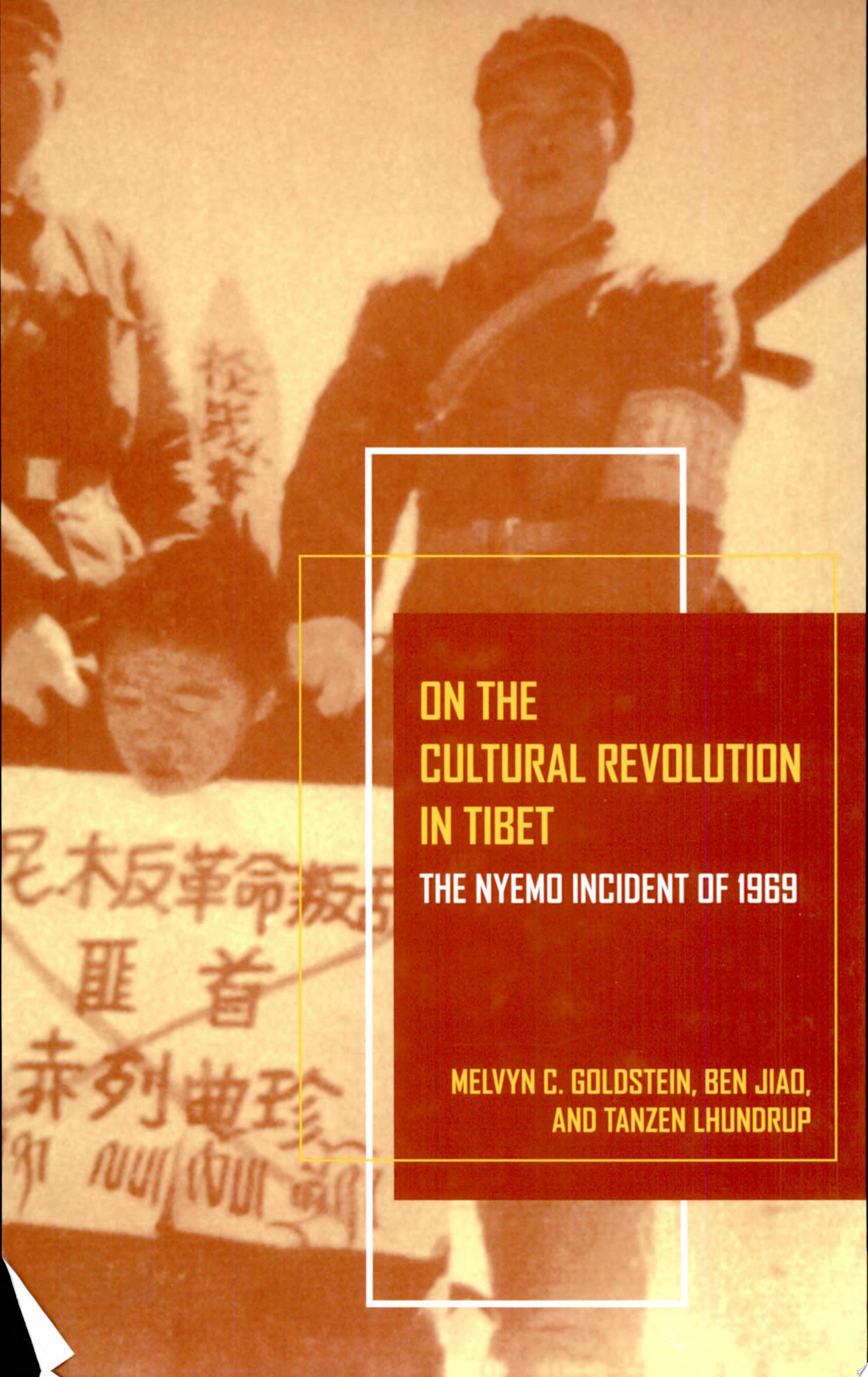
On the Cultural Revolution in Tibet [Book] Google Books
author: Melvyn C. Goldstein / Ben Jiao publishing house: University of California Press 2009 - 01
Among the conflicts to break out during the Cultural Revolution in Tibet, the most famous took place in the summer of 1969 in Nyemo, a county to the south and west of Lhasa. In this incident, hundreds of villagers formed a mob led by a young nun who was said to be possessed by a deity associated with the famous warrior-king Gesar. In their rampage the mob attacked, mutilated, and killed county officials and local villagers as well as People's Liberation Army troops. This groundbreaking book, the first on the Cultural Revolution in Tibet, revisits the Nyemo Incident, which has long been romanticized as the epitome of Tibetan nationalist resistance against China. Melvyn C. Goldstein, Ben Jiao, and Tanzen Lhundrup demonstrate that far from being a spontaneous battle for independence, this violent event was actually part of a struggle between rival revolutionary groups and was not ethnically based. On the Cultural Revolution in Tibet proffers a sober assessment of human malleability and challenges the tendency to view every sign of unrest in Tibet in ethno-nationalist terms.
On the Cultural Revolution in Tibet [Book] Google Books
author: Melvyn C. Goldstein / Ben Jiao publishing house: Univ of California Press 2010 - 10
Among the conflicts to break out during the Cultural Revolution in Tibet, the most famous took place in the summer of 1969 in Nyemo, a county to the south and west of Lhasa. In this incident, hundreds of villagers formed a mob led by a young nun who was said to be possessed by a deity associated with the famous warrior-king Gesar. In their rampage the mob attacked, mutilated, and killed county officials and local villagers as well as People's Liberation Army troops. This groundbreaking book, the first on the Cultural Revolution in Tibet, revisits the Nyemo Incident, which has long been romanticized as the epitome of Tibetan nationalist resistance against China. Melvyn C. Goldstein, Ben Jiao, and Tanzen Lhundrup demonstrate that far from being a spontaneous battle for independence, this violent event was actually part of a struggle between rival revolutionary groups and was not ethnically based. On the Cultural Revolution in Tibet proffers a sober assessment of human malleability and challenges the tendency to view every sign of unrest in Tibet in ethno-nationalist terms.
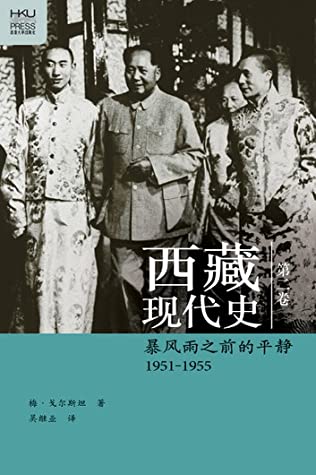
西藏现代史:暴风雨之前的平静 1951-1955 [Book] Goodreads
A History of Modern Tibet, volume 2: The Calm before the Storm: 1951-1955
author: Melvyn C. Goldstein / 梅·戈尔斯坦 translator: 吴继业 publishing house: 香港大學出版社 2014 - 7
如果不详细阐述1950年代所发生的事件的来龙去脉,则无法全面地了解中国与达赖喇嘛之间的政治纠葛。戈尔斯坦在本书中对1951年后的西藏历史进行探讨,让我们重新思考这段历史,这将在很大程度上改变我们对该段历史的解读。本书的研究材料包括一些新近公开的史料,以及对包括达赖喇嘛和一些中国官员在内的历史亲历者的深入访谈。戈尔斯坦以朝鲜战争、中苏关系紧张、美国冷战政策等一系列事件为背景,来解读宿命性的中藏政治纠葛,其对关键人物的刻画往往出其不意,却又令人回味无穷。
A History of Modern Tibet, 1913-1951 [Book] Google Books
author: Melvyn C. Goldstein publishing house: University of California Press 1991 - 6
The "Tibetan Question," the nature of Tibet's political status vis-à-vis China, has been the subject of often bitterly competing views while the facts of the issue have not been fully accessible to interested observers. While one faction has argued that Tibet was, in the main, historically independent until it was conquered by the Chinese Communists in 1951 and incorporated into the new Chinese state, the other faction views Tibet as a traditional part of China that split away at the instigation of the British after the fall of the Manchu Dynasty and was later dutifully reunited with "New China" in 1951. In contrast, this comprehensive study of modern Tibetan history presents a detailed, non-partisan account of the demise of the Lamaist state.

Drawing on a wealth of British, American, and Indian diplomatic records; first-hand-historical accounts written by Tibetan participants; and extensive interviews with former Tibetan officials, monastic leaders, soldiers, and traders, Goldstein meticulously examines what happened and why. He balances the traditional focus on international relations with an innovative emphasis on the intricate web of internal affairs and events that produced the fall of Tibet. Scholars and students of Asian history will find this work an invaluable resource and interested readers will appreciate the clear explanation of highly polemicized, and often confusing, historical events.
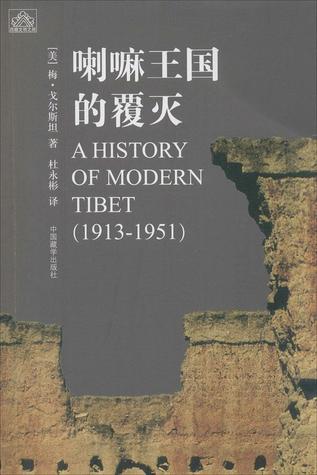
喇嘛王国的覆灭 [Book] Goodreads Douban
A History of Modern Tibet, 1913-1951: The Demise of the Lamaist State
author: Melvyn C. Goldstein translator: 杜永彬 publishing house: 中国藏学出版社 2015 - 9
《喇嘛王国的覆灭(1913-1951)》是西藏现代史研究的著作,作者通过翔实的材料、新颖的方法以及生动有趣的描述,向我们展示了西藏这个喇嘛王国近40年逐渐走向覆灭的历史。《喇嘛王国的覆灭(1913-1951)》刚一问世即得到了国内外学术界的好评,肯定其鲜明的学术见解和较高的学术价值,《喇嘛王国的覆灭(1913-1951)》不仅受到学术界的关注,同时也受到广大读者的喜爱。