Želimir Žilnik — Director (17)

Movie

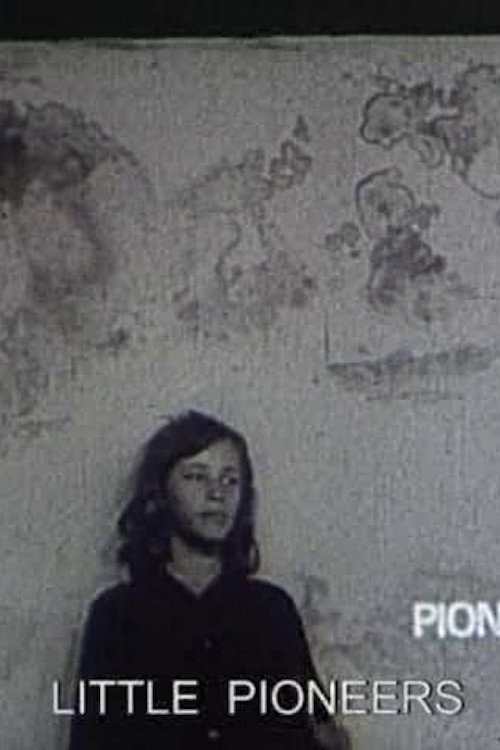
Little Pioneers (1968)
Pioniri maleni, mi samo vojska prava, svakog dana nicemo ko zelena trava IMDb TMDB
other title: Pioniri maleni, mi samo vojska prava, svakog dana nicemo ko zelena trava
Filmed in 1968, "Little Pioneers" examines the gap between socialist rhetoric and social reality by focusing on children excluded from state protection. Through close, unembellished observation, Želimir Žilnik documents young people living in slum conditions and surviving through informal and illegal means, using the film’s ironic title to underscore the contrast between official ideology and everyday life.

Movie

Kenedi, Lost and Found (2005)
Gde je bio Kenedi 2 godine IMDb TMDB
other title: Gde je bio Kenedi 2 godine
After his participation in filming of “Kenedi Goes Back Home," Kenedi Hasani decided to illegally go to EU countries where his father, mother, brothers and sisters still are. The documentary recounts Kenedi's experience of his two-year refugee status.

Movie

Newsreel – Showing the Life of Village Youth (1967)
Žurnal o omladini na selu, zimi IMDb TMDB
other title: Žurnal o omladini na selu, zimi
Story follows a weekend in a village where young adults after a hard working week let there steam off in taverns eating, drinking, singing, breaking glasses and occasionally other things every Sunday.

Movie

Kenedi Is Getting Married (2007)
Kenedi se ženi IMDb Douban
other title: Kenedi se zeni / Kenedi se ženi
Kenedi is in a huge debt after building a house for his family. He finds himself searching for any kind of work to support himself, for as little as 10 EUR per day, a scarce amount to help him relief his debt. Ultimately, Kenedi decides to look for money in sex business. Initially offering his services to older ladies and widows, he expands his 'business' to offer sex to wealthy men. When he finds out about new liberal European laws on gay marriages, Kenedi sees prospects in looking for a "marriage material", to renew his search for a legal status in EU. The opportunity arises during EXIT Music Festival, when he meets Max, a guy from Munich. But will their promising relationship bring the solution to Kenedi's problems?

Movie

Eighty Plus (2025)
Restitucija, ili, San i java stare garde IMDb Douban
热利米尔·日利尼克 actor: Milan Kovacevic / Milivoj Kiždobranski …
other title: 斯特万归乡记 / Restitucija, ili, San i java stare garde
In Žilnik’s hilarious and sneakily charming docu-fiction, post-socialist restitution returns his childhood home to Serbian jazz musician Stevan. After six decades in Germany, he returns to his homeland where a series of reunions sheds light on his life.

Movie

Placmajstori (1977)
Placmajstori IMDb Douban
other title: Market People
Žilnik takes his camera to Šabac Fair, one of the largest flea markets and festivals in the Balkans, to meet with the people who run it. Cutting between tradespeople, performers, musicians, and fair employees, Žilnik highlights its chaotic and cooperative community.

Movie

Inventory (1975)
Inventur - Metzstraße 11 IMDb Douban
other title: Inventur - Metzstrasse 11 / Inventur - Metzstraße 11 …
Tenants of one old building in the centre of Münich are featured in this film: most of them are foreigners who work in Germany as "guest workers" (Yugoslavs, Italians, Turks, Greeks etc.). In their mother tongue, each of them tells who he or she is, and briefly talks about their major worries, new hopes and plans for the future.

Movie

Marble Ass (1995)
Dupe od mramora WikiData IMDb TMDB Douban
热利米尔·日利尼克 actor: Vjeran Miladinović Merlinka / Aleksandar Brujic …
other title: Dupe od mramora / 大理石臀部
A transvestite couple from 1990s Belgrade beholds their profession as a pacifistic mission, curbing the urges of rapists, gamblers and horny young men during turbulent periods in war-torn country.

Movie

六月动荡 (1968)
Lipanjska gibanja Douban
other title: Lipanjska gibanja / June Turmoil
The film speaks of student demonstrations in Belgrade, 1969 and of the critical quality, enthusiasm and discipline of this form of protest. It was the most powerful public criticism of "red bourgeoisie" - members of communist apparatus, who suppressed creativity and affirmation of new generations throughout Eastern block.

Movie

Kenedi Goes Back Home (2003)
Douban
other title: Kenedi se vraća kući
This film is about people who emigrated to European countries during the war years of the nineties. They have lived there for years, had children and took them to schools. In 2002 they were in the “process of readmission” – in a severe and inhumane police actions they were collected from work, from schools and their homes and returned to Serbia. This is the story of two friends (Kenedi and Denis) and Ibinci family from Kostolac during the first couple of days after they were returned at the Belgrade airport. We see them trying to find accommodation, searching for friends and other family members. Kenedi goes to Kosovska Mitrovica where his family used to have a house, to which he now does not have access. The focus of the film is on the position of the Roma people as the most endangered part of the returned population.

Movie

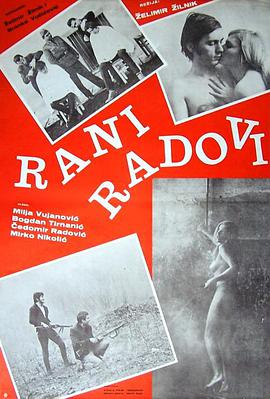
Early Works (1970)
Rani radovi Douban
other title: 第一份工作 / Rani radovi
This film took the top honor at the 1969 Berlin Film Festival. After a series of documentaries, this marks the directorial debut for Zelimir Zilnik. It takes a decidedly anti-Stalinist view in the wake of the 1968 Russian invasion of Czechoslovakia and raises important political questions. He states that although the world has experienced untold wars, there have only been a handful of revolutions with any lasting significance that lead to political change.

Movie

The Old School of Capitalism (2009)
Stara škola kapitalizma Douban
other title: 老旧的资本主义 / Stara škola kapitalizma …
The Old School of Capitalism is rooted in the first wave of workers revolts to hit Serbia since the advent of capitalism. Desperate workers bulldoze through factory gates and are devastated to discover the site looted by the bosses. Eccentrically escalating confrontations, including a melee with workers in football shoulder-pads and helmets and boss and his security force in bulletproof vests, prove fruitless. Committed young anarchists offer solidarity, take the bosses hostage. A Russian tycoon, a Wall Street trader and US VP Biden’s visit to Belgrade unexpectedly complicate events that lead toward a final shock. Along the way, the film produces an increasingly complex and yet unfailingly lively account of present-day, in fact, up-to-the-minute struggles under the misery-inducing effects of both local and global capital. From the director's website: link Serbia, 2009, 122 min, dv + hdv written and directed by: Želimir Žilnik camera: Miodrag Milošević edited by: Vuk Vukmirović producer: Sarita Matijevic In a playful, often hilarious mixture of documentary and fiction, the film maker Zelimir Zilnik traces sanctifying capitalism, sold to the Serbians after the disappearance of state socialism as the great new god. As a background for his story, Zilnik uses a number of strikes that took place in Belgrade in recent years and introduces us to several people involved who are allowed to 'play' themselves. That leads to explosive situations. Employees dressed in American football kits come to settle up with their employers with gangs of heavies in bullet-proof vests. But the factories have already been emptied. From: Programme notes, International Film Festival Rotterdam 2010 In the film a group of Belgrade anarchists from the group ASI-MUR play themselves. On 3 September 2009, six members of the ASI-MUR, including IWA General Secretary Ratibor Trivunac, were arrested on suspicion of international terrorism, a charge which was heavily disputed by the international and other anarchist groups. Statement of Anarcho-Syndicalist Initiative on Arrests of their Members

Movie

黑色电影 (1971)
Crni film Douban
other title: Crni film / Black Film
Žilnik invites six homeless men to his flat for a few days (surprising his wife). He asks officials and people on the street if someone can help them, this being SFRJ, a state officially without those left on their own. At the end, the six men come to the conclusion that no one can help them.

Movie

The Unemployed (1968)
Nezaposleni ljudi WikiData IMDb TMDB Douban
other title: Nezaposleni ljudi
SFRJ (Socialist Federative Republic of Yugoslavia) was officially a place where everyone has a job and a house. The story follows hard labored workers who can't find a job, who bathe in public bathrooms and sleep in homeless centers.

Movie

Before the War (1973)
Ustanak u Jasku IMDb TMDB Douban
other title: Ustanak u Jasku / Uprising in Jazak
People of the Jasak village, near mountain Fruška Gora (Yugoslavia/Serbia), show how they undertook operations against the Axis forces during WWII. They tell about the dramatic events, how they helped hide partizan troops and how younger villagers joined partizan troops in Bosnia.We listen to recolections of the Nazi imprisonments, persecutions and torture. In the last quarter of the movie people talk of the events from 1944. when the village was freed and the Russians went through their village. They remember the joy and great hope for the arrival of freedom and socialism.

Movie

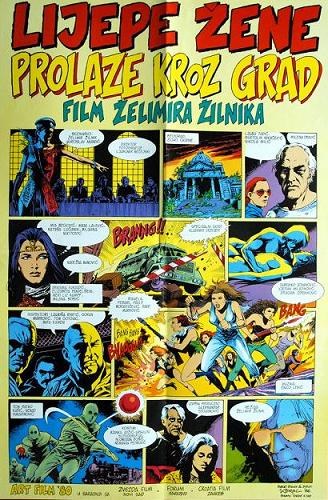
Pretty Women Walking Through The City (1986)
Lijepe zene prolaze kroz grad WikiData IMDb TMDB Douban
other title: 美女游城 / Lijepe zene prolaze kroz grad …
Politics issues dominate this sci-fi story set in 2041 in the former Yugoslavia. Most of Europe is now controlled by "thought police," but a former politician and an ex-cop are running a girls' boarding school in defiance of the current regime, modeled on the more idyllic 1980s. These partners want to revamp the ruins of Belgrade so electricity and water can be restored and the buildings made habitable again. The citizens are currently scattered across the countryside, and the film follows them, as well as the boarding school directors and a female reporter, as they all work together to confront the system. Belgrade in 2041. is a deserted and ruined town full of garbage. A few old men live in it: ex-reporter and his daughter, ex-politician and his wife, and ex-policeman who guards boarding school with eight girls. Old men are raising girls in the spirit of former Yugoslav people tradition, which is a risky job, because southern Europe is haunted by a gang which does not allow any recollections of the past. The story begins in the moment when ex-reporter starts the action for revitalization of Belgrade, wanting to celebrate 100 years of the revolution. Zilnik is still employing the creative and provactive style that brought him to prominence in the late 1960s. Zilnik is the director that in 1969 beat Midnight Cowboy in Berlin with his first feature film, Rani radovi (Early Works, 1969) and won the Golden Bear. Attacked many times by the grey eminences of the establishment, he remained faithful to his own creative poetry and continued to be very productive, despite the historical changes that occured around him. He was once very popular among Yugoslav liberal audience and directed hits such as Lijepe zene prolaze kroz grad (Pretty Women Walking Through the City, 1985) or Tako se kalio celik (How Steel Was Tempered, 1988). He caught the eye of the critics with his very provocative Dupe od mramora (Marble Ass, 1995) and Kud plovi ovaj brod (Wanderlust, 1998), while films such as Bruklin-Gusinje (Brooklyn-Gusinje, 1988) were an exercise in style. He also made many excellent documentaries and short films, among which are Sedam madarskih balada (Seven Hungarian Ballads, 1978) and Tvrdava Evropa (Fortress Europe, 2000).