Mikio Naruse — Director (69)

Movie

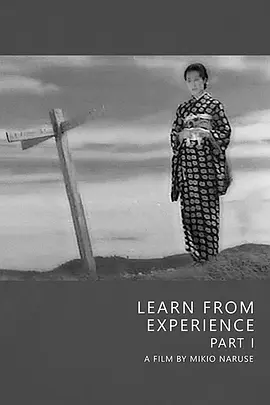
Learn from Experience, Part I (1937)
禍福 前篇 WikiData IMDb TMDB Douban
other title: 祸福:前篇 / 禍福 前篇 …
Wealthy young Toyomi and Shintaro are in love. However, Shintaro’s father is arranging for him to marry Yurie, the scion of an even wealthier family. The two lovers flee to Tokyo, but when Shintaro returns to proclaim his intent to marry Toyomi, his father browbeats him into attending the marriage meeting with Yurie. Part one of a two-part romance based on a story by noted author Kikuchi Kan.
Movie

Learn from Experience, Part II (1937)
禍福 後篇 WikiData IMDb TMDB Douban
other title: 祸福:后篇 / 禍福 後篇 …
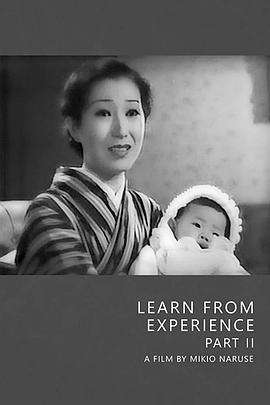
Toyomi is pregnant -- and while Shintaro and Yurie are on their extended honeymoon, she bears his child, a girl named Kiyoko. She is supported in adversity by close friend Michiko and her mother but also, surprisingly, Shintaro's mother and siblings. Even moreso, Toyomi and Yurie become friends. Part two of a two-part romance based on a story by noted author Kikuchi Kan.
Movie

The Whole Family Works (1939)
はたらく一家 WikiData IMDb TMDB Douban
成瀬巳喜男 actor: 徳川夢声 / 本間敦子 …
other title: 工作家庭 / はたらく一家 …
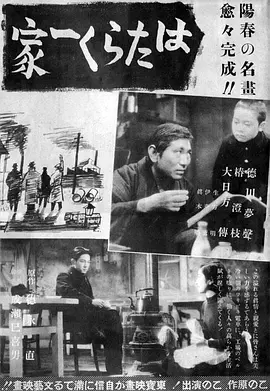
Father of nine children cannot find a job. Despite their aspirations, the children are encouraged by both parents to hold down menial jobs and contribute to the family expenses. Eventually ...@

Movie

Arakure (1957)
あらくれ WikiData IMDb TMDB Douban
★ 7.8 12 ratings
other title: 野性的女人 / あらくれ …
A woman marries, gives birth to a stillborn child, and divorces, falls in love with a hotel-keeper, only to find herself subordinated to his drive for success, takes up with a tailor who cannot console himself with her strong personality.

Movie

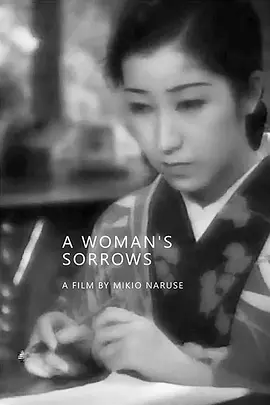
A Woman's Sorrows (1937)
女人哀愁 WikiData IMDb TMDB Douban
other title: 女人的哀愁 / 女人哀愁 …
In his review of Feminine Melancholy in Kinema Junpo, critic Mizumachi Seiji praises Irie's performance as the best of her talkie career. However, he is very critical of the film itself, which he sees as a typical story of a woman in an unhappy marriage. He is not sympathetic toward the heroine's patient suffering and describes the nagging mother-in-law as a "hackneyed theme." Naruse's detailed "documentation" of Hiroko's role in the household is dismissed as a "manneristic obsession," and Mizumachi suggests that the director is hiding behind "the shadow of the materials." Most severely, he criticizes Naruse for "abandoning his authority as an auteur" by resorting to "shinpa-tragedy," which is seen as a capitulation to a form that has "wielded a powerful hold over the imagination of the masses." Although Mizumachi notes that Naruse has probed into "the deepest recess of the female psyche," he doesn't recognize this as the film's achievement, perhaps because he is looking for something else from the director. His review reveals the difficulties Naruse faced in maintaining his "auteur status" while moving with the tides of popular culture. For Mizumachi, the character of Yoko is the most typical Naruse heroine, perhaps because she is dragged down by her delinquent lover; however, in retrospect, it is evident that Hiroko's tenacious survival of adverse circumstances looks forward to Naruse's postwar heroines.

Movie

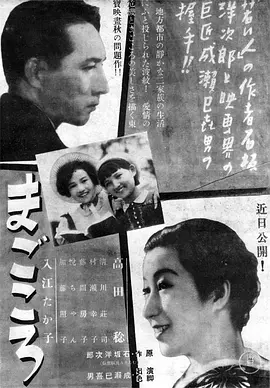
Sincerity (1939)
まごころ WikiData IMDb TMDB Douban
成濑巳喜男 actor: 高田稔 / 村濑幸子 …
other title: 真心 / まごころ …
The Kinema Junpo critics were, of course, mistaken to think that Naruse had abandoned his emphasis on women. His next film, Sincerity, features two strong female characters, played by Irie Takako and Murase Sachiko, each of whom have a daughter. The girls are schoolmates, but one (Nobuko) is from a middle-class home and the other (Tomiko) is from a poor family. Tomiko's mother Tsutako (Irie) is a single mother who works from home as a seamstress, while Nobuko's mother lives in an elegant home with her husband, Kei. Eventually, it is revealed that Kei had a romantic relationship with Tsutako, and may be Tomiko's father as well, but he is conscripted shortly after this revelation and goes off to war. This is very much a home front film, in which the women are involved in supporting activities, and the whole town cheers on the new recruits. As Kei is a banker, he is conscripted as an officer. He is introduced brandishing a magnificent sword, indicating his readiness for his call-up, for which everyone congratulates him when it comes. The wartime context is little more than a backdrop to the story of paternity and former love. The complex emotions among the women are conveyed through cutting on eye movements and eye lines, and through the use of the pastoral location.

Movie

Wife! Be Like a Rose! (1935)
妻よ薔薇のやうに
★ 7.5 33 ratings
成濑巳喜男 actor: 千叶早智子 / 丸山定夫 …
other title: 愿妻如蔷薇 / 妻よ薔薇のやうに …
Kimiko, a Tokyo white-collar working girl, lives with her serious, intellectual, haiku-writing mother. Kimiko seeks to marry her boyfriend but needs her absent father to act as the go-between and negotiate the marriage. Kimiko travels and finds her father living with a second family.

Movie

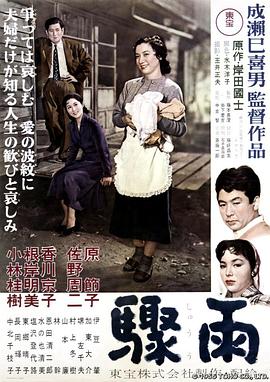
Sudden Rain (1956)
驟雨 WikiData IMDb TMDB Douban
★ 7.8 8 ratings
other title: 骤雨 / 驟雨 …
Fumiko and Ryōtarō Namiki's marriage has gone stale, with both constantly arguing over what to do on a day off, or about her cutting out recipes from the newspaper before he finishes reading it. Their animosities are witnessed by Fumiko's niece Ayako, who visits to complain about her own husband's inattentiveness, and their new neighbours, the Imasatos.

Movie

Inazuma (1952)
稲妻 WikiData IMDb TMDB Douban
★ 8.0 24 ratings
other title: 稻妻 / 稲妻 …
The story of Kiyoko, a young woman who has successfully managed to make a break with her dysfunctional family who have been trying to arrange a marriage for her with a disagreeable man whom she has rejected.