other title:
黑盒子
/
Caja negra
…
Fribourg International Film Festival
Year Result Award Category/Recipient(s)
2003 Won Don Quixote Award
Luis Ortega
E-Changer Award
Luis Ortega
Special Jury Award
Luis Ortega
Mannheim-Heidelberg International Filmfestival
Year Result Award Category/Recipient(s)
2002 Won Special Mention
Luis Ortega
Mar del Plata Film Festival
Year Result Award Category/Recipient(s)
2002 Won SIGNIS Award - Special Mention
Luis Ortega
Special Jury Award
Luis Ortega
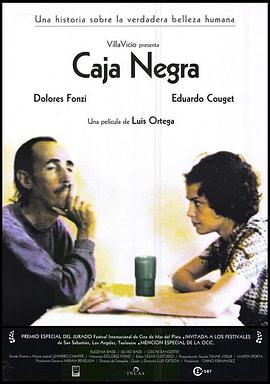
Caja negra (English: Black Box) (2002) is an Argentine film, written and directed by Luis Ortega. The picture stars Dolores Fonzi, Eugenia Bassi, and others. The film was first presented at the Buenos Aires International Independent Film Festival on April 27, 2002 in Buenos Aires. It opened wide in Argentina on August 15, 2002.
The film was screened at many film festivals, including: the Donostia-San Sebastián International Film Festival, Spain; the International Filmfest Mannheim-Heidelberg, Germany; the Philadelphia International Film Festival, USA; the Karlovy Vary Film Festival, Czech Republic; and others.
Caja Negra, the debut film of Luis Ortega, son of filmmaker Palito Ortega, portrays the relationships among a dysfunctional family. Dorotea, a girl in her teens, works in a laundry and takes care of the aged grandmother with whom she lives. Her father, Eduardo, is released from prison. Indigent and stricken with Parkinsons, he lives in a Salvation Army shelter and panhandles from passing motorists. Dorotea becomes his caregiver as well. Caja Negra is Ortega's stated attempt at minimalist cinema: less is more. Dialogue is limited. The narrative can be recapitulated in a single sentence. The film is only 81 minutes long. The obvious does not merit examination, so Ortega tries to create images that suggest more than they show. The problem, however, is that unless an artist has great technical skill and a talent for nuance, minimalism is not for the neophyte. Ortega misses the emotional target by failing to choose the truly telling details, the subtly eloquent visual language with which a masterful director engages the viewer emotionally. His numerous, lingering shots of decrepitude, coupled with his rather cliched camera technique, ultimately make Caja Negra an exercise in less is less.