FrankZappa
Boulez Conducts Zappa The Perfect Stranger & Other Chamber Works Douban
Pierre Boulez / Ensemble Intercontemporain genre: Classical
release date 1984-01-01 publisher: Rykodisc
Frank Zappa often complained about how difficult it was to find a classical orchestra that would actually take the time to learn the scores it is presented and try its best to do a honorable job when it comes to contemporary composition. Late in his career, he found such a group of musicians, the Ensemble Modern (which recorded The Yellow Shark), but in the mid-'80s Pierre Boulez' Ensemble InterContemporain recorded a worthy session of material, released in August 1984 on EMI's classical imprint, Angel, as The Perfect Stranger. The title track was commissioned by Boulez, and sees the composer coming back to the days of 200 Motels, both in terms of style (the music is very programmatic) and references (at the center of the piece is the vacuum cleaner found in the aforementioned movie and in the cover artwork of the album Chunga's Revenge). "Naval Aviation in Art?" and "Dupree's Paradise," the latter an old rock piece from 1973 rearranged for orchestra, are also performed by Boulez' ensemble. The remaining four tracks are credited to "The Barking Pumpkin Digital Gratification Consort" — i.e., Zappa's Synclavier, a keyboard computer. "Outside Now, Again" and "Jonestown" are among the darkest, moodiest pieces of computer music the man has written. The composer remixed the album in 1992 and a moved a couple of tracks around. Compared to the London Symphony Orchestra sessions, The Perfect Stranger is a much stronger album with a better, rehearsed ensemble. Still, those not interested in the man's so-called serious music should steer clear of it.
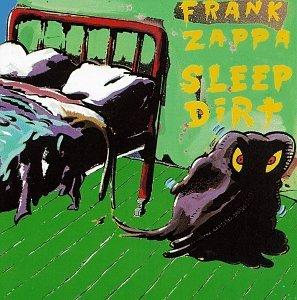
Over-Nite Sensation Douban
★ 7.7 (6 ratings) Frank Zappa genre: Rock
release date 1973-09-07 publisher: DiscReet
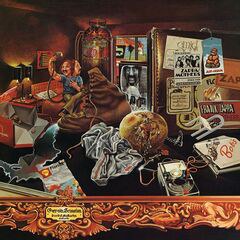
Over-Nite Sensation is the seventeenth studio album by Frank Zappa and The Mothers of Invention. Released on September 7, 1973, it was subsequently followed by Zappa's solo album, Apostrophe ('), which derived from the same recording sessions.
We're Only In It For The Money Douban Discogs
★ 8.2 (21 ratings) The Mothers Of Invention genre: Rock
release date 1968-03-04 publisher: Verve Records
We're Only in It for the Money is the third album by American rock band the Mothers of Invention, released on March 4, 1968, by Verve Records. As with the band's first two LP's, it is a concept album, written and composed by bandleader and guitarist Frank Zappa. The album satirizes left- and right-wing politics, the 1960s counterculture, the corporatization of rock music and youth culture, particularly the hippie subculture. It was conceived as part of a project called No Commercial Potential, which produced three other albums: Lumpy Gravy, Cruising with Ruben & the Jets, and Uncle Meat.
Absolutely Free Douban Discogs
★ 9.2 (12 ratings) Frank Zappa & The Mothers of Invention genre: Rock
release date 1967-05-26 publisher: Verve Records / Ryko
July 29, 2018 listened
是要比《freak out》“混乱”一些,但正因如此,也有趣得多,好玩
Rock FrankZappa
Hot Rats Douban Discogs Eggplant.place
★ 9.4 (62 ratings) Frank Zappa genre: Jazz
release date 1969-05-02 publisher: Zappa Records
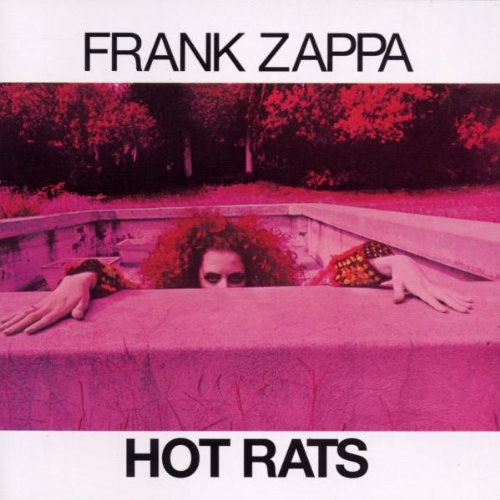
Frank Vincent Zappa was an American composer, singer-songwriter, electric guitarist, record producer, and film director. In a career spanning more than 30 years, Zappa wrote rock, jazz, electronic, orchestral, and musique concrète works. He also directed feature-length films and music videos, and designed album covers. Zappa produced almost all of the more than 60 albums he released with the band The Mothers of Invention and as a solo artist.
Freak Out Douban
★ 8.8 (24 ratings) Frank Zappa & The Mothers of Invention genre: Rock
release date 1995-05-02 publisher: Rykodisc
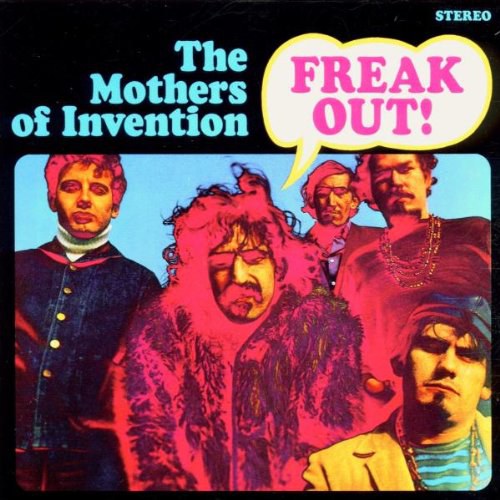
One of the most ambitious debuts in rock history, Freak Out! was a seminal concept album that somehow foreshadowed both art rock and punk at the same time. Its four LP sides deconstruct rock conventions right and left, eventually pushing into territory inspired by avant-garde classical composers. Yet the album is sequenced in an accessibly logical progression; the first half is dedicated to catchy, satirical pop/rock songs that question assumptions about pop music, setting the tone for the radical new directions of the second half. Opening with the nonconformist call to arms &Hungry Freaks, Daddy,& Freak Out! quickly posits the Mothers of Invention
as the antithesis of teen-idol bands, often with sneering mockeries of the teen-romance songs that had long been rock's commercial stock-in-trade. Despite his genuine emotional alienation and dissatisfaction with pop conventions, though,
Frank Zappa was actually a skilled pop composer; even with the raw performances and his stinging guitar work, there's a subtle sophistication apparent in his unorthodox arrangements and tight, unpredictable melodicism. After returning to social criticism on the first song of the second half, the perceptive Watts riot protest &Trouble Every Day, & Zappa exchanges pop song structure for experiments with musique concrète, amelodic dissonance, shifting time signatures, and studio effects. It's the first salvo in his career-long project of synthesizing popular and art music, high and low culture; while these pieces can meander, they virtually explode the limits of what can appear on a rock album, and effectively illustrate Freak Out!'s underlying principles: acceptance of differences and free individual expression.
Zappa would spend much of his career developing and exploring ideas -- both musical and conceptual -- first put forth here; while his myriad directions often produced more sophisticated work, Freak Out! contains at least the rudiments of almost everything that followed, and few of Zappa's records can match its excitement over its own sense of possibility.