Company (2006 Broadway Revival Cast)
Douban
Raul Esparza
genre:
Soundtrack
release date 2008-01-01
publisher:
Nonesuch
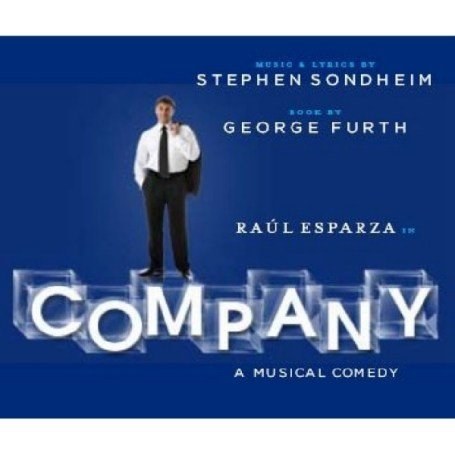
Maverick British director John Doyle, a 2006 Tony Award winner, enjoyed a surprise Broadway hit last year with his radical reworking of Sweeney Todd. He dispensed with the pit orchestra and handed all the instruments over to his on-stage performers, who doubled as musicians in between their turns acting and singing. Doyle has taken a similarly unorthodox approach to his revival of another Stephen Sondheim classic, the revered yet notoriously difficult to stage Company. As with Sweeney Todd, the results of this theatre-as-concert have entranced both critics and audiences. Linda Winer of Newsday called it "the very best revival that Broadway has ever seen of Stephen Sondheim's landmark 1970 musical."Variety described it as "striking, revelatory and thoroughly compelling." For Sondheim fans, the recorded score to Company has long been as much an object of adoration as the six-time Tony-winning play itself. Company on disc functions as a deeply moving song cycle, even apart from George Furth's libretto, about the vicissitudes of marriage and the joys and trials of the single life, seen through the eyes of the coolly dispassionate Manhattan bachelor Bobby on the occasion of his 35th birthday. This is truly the stuff of sex and the city - wry, sophisticated, painfully honest and deeply melancholy, even in a comic seducing-the-stewardess duet like "Barcelona." As with Sweeney Todd, which featured a bravura performance from lead actor Michael Cerveris, Doyle has found in rising star Raúl Esparza (Cabaret, Taboo, The Normal Heart) an extraordinary singer and actor who, in the words of the New York Times' Ben Brantley, gives Company "the most compelling center it has probably ever had." "Mr. Doyle and his invaluable music supervisor and orchestrator, Mary-Mitchell Campbell, have shaped Company into a sort of oratorio for the church of the lonely," says Brantley. He also praises the work of the entire ensemble - playing five married couples, three single women and one deeply ambivalent, unmarried man: "It's their work as a team that sounds new depths in Company in ways that get under your skin without your knowing it." Variety's David Rooney concurs: "Angel Desai's `Another Hundred People' nails that quintessential New York song; Heather Laws lands every laugh in the mile-a-minute `Getting Married Today' with amazing speed and clarity; and Barbara Walsh is bone-dry as brittle, world-weary Joanne. She reveals the emotional hunger beneath the character's hard shell and adds fresh nuances to `The Ladies Who Lunch,' a song indelibly associated with Elaine Stritch." As Time Out New York put it, "Sondheim's expert musical etchings, his acid craftsmanship, remain unmatched." Sondheim fans will note that this new version of Company, to be released by Nonesuch and PS Classics, restores the original act one closer, "Marry Me A Little," which was dropped from the show before its 1970 Broadway debut; the song has since taken on a life of its own as an orphaned Sondheim gem. The Company cast album is produced by PS Classics co-founder Tommy Krasker (Sondheim's The Frogs, Saturday Night, Assassins, and Sweeney Todd, among others). Along with Company, Nonesuch has also released the original cast album to Doyle's 2006 production of Sweeney Todd and the Tony-nominated A Light in the Piazza, which features a score by Nonesuch artist Adam Guettel.