Y刘别谦
Trouble in Paradise (1932) WikiData IMDb TMDB Douban
Trouble in Paradise
other title:
천국의 말썽
/
極楽特急
…
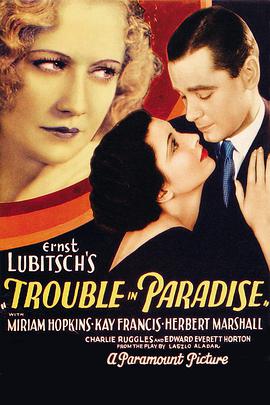
Thief Gaston Monescu and pickpocket Lily are partners in crime and love. Working for perfume company executive Mariette Colet, the two crooks decide to combine their criminal talents to rob their employer. Under the alias of Monsieur Laval, Gaston uses his position as Mariette's personal secretary to become closer to her. However, he takes things too far when he actually falls in love with Mariette, and has to choose between her and Lily.
The Man I Killed (1932) WikiData IMDb TMDB Douban
Broken Lullaby
other title:
我杀的那位
/
Broken Lullaby
…
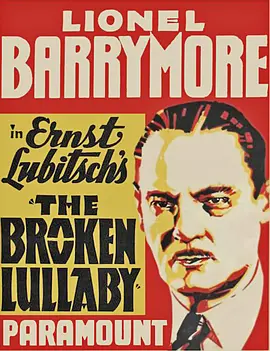
Haunted by the memory of Walter Holderlin, a soldier he killed during World War I, French musician Paul Renard (Phillips Holmes) confesses to a priest (Frank Sheridan), who grants him absolution. Using the address on a letter he found on the dead man's body, Paul then travels to Germany to find his family.
As anti-French sentiment continues to permeate Germany, Dr. Holderlin (Lionel Barrymore) initially refuses to welcome Paul into his home, but changes his mind when his son's fiancée Elsa identifies him as the man who has been leaving flowers on Walter's grave. Rather than reveal the real connection between them, Paul tells the Holderlin family he was a friend of their son, who attended the same musical conservatory he did.
Although the hostile townspeople and local gossips disapprove, the Holderlins befriend Paul, who finds himself falling in love with Elsa (Nancy Carroll). When she shows Paul her former fiancé's bedroom, he becomes distraught and tells her the truth. She convinces him not to confess to Walter's parents, who have embraced him as their second son, and Paul agrees to forego easing his conscience and stays with his adopted family. Dr. Holderlin presents Walter's violin to Paul, who plays it while Elsa accompanies him on the piano.
The film's original title, The Man I Killed, was changed to The Fifth Commandment to avoid giving "wrong impressions in the minds of the public about the character of the story." It ultimately was released as Broken Lullaby.
As anti-French sentiment continues to permeate Germany, Dr. Holderlin (Lionel Barrymore) initially refuses to welcome Paul into his home, but changes his mind when his son's fiancée Elsa identifies him as the man who has been leaving flowers on Walter's grave. Rather than reveal the real connection between them, Paul tells the Holderlin family he was a friend of their son, who attended the same musical conservatory he did.
Although the hostile townspeople and local gossips disapprove, the Holderlins befriend Paul, who finds himself falling in love with Elsa (Nancy Carroll). When she shows Paul her former fiancé's bedroom, he becomes distraught and tells her the truth. She convinces him not to confess to Walter's parents, who have embraced him as their second son, and Paul agrees to forego easing his conscience and stays with his adopted family. Dr. Holderlin presents Walter's violin to Paul, who plays it while Elsa accompanies him on the piano.
The film's original title, The Man I Killed, was changed to The Fifth Commandment to avoid giving "wrong impressions in the minds of the public about the character of the story." It ultimately was released as Broken Lullaby.
The Doll (1919) WikiData IMDb TMDB Douban
Die Puppe
other title:
真人玩偶
/
Die Puppe
…
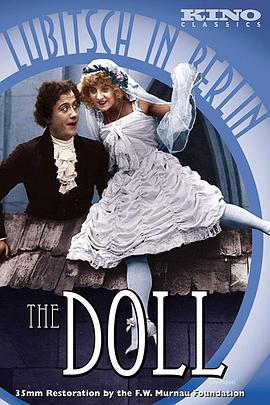
一部給低估了的傑作,鑑於前作被指離經叛道,劉別謙改拍童話式故事,拍出令德國人瞠目結舌的格調與清新幽默感,論者認為它比《卡里加里醫生的密室》更應名垂青史(兩片其實是雙生兒,只是主角一個作惡一個行善)。不肯成長的男孩被叔父強迫娶妻,玩具大王借女兒的模樣造出機械公仔,演出一幕騙婚記,但竟弄假成真。幕開只見我們的導演跑出來,用紙板砌出人與物,接着疊現真實畫面。戲演下去,所有場景透視詭異,道具有時索性繪在牆上。全片優美且自由奔放,活像頑童開心炮製的藝術品。值得一看的還有德國默片女星奧茜奧華黛的傳奇身影。
Proceeding The Cabinet of Dr Caligari by one year, this is both vintage early Lubitsch with its sly slapstick and Rabelaisian humour, and the only work that shares the subliminal, hallucinatory style of German expressionism. He exhibits a blinding array of camera effects, like an astounding shot of a dozen images of mouths in one frame. Also ahead of his time is an opening scene with Lubitsch himself constructing a miniature stage contraption that becomes the film set. A Pirandelloesque concept of art and artifice informs the Hoffman-inspired story about a man who purchases a life-sized doll to stand in for a bride. He gets more than he bargained for - the owner's daughter pretending to be doll!
Source: 28th HKIFF
Proceeding The Cabinet of Dr Caligari by one year, this is both vintage early Lubitsch with its sly slapstick and Rabelaisian humour, and the only work that shares the subliminal, hallucinatory style of German expressionism. He exhibits a blinding array of camera effects, like an astounding shot of a dozen images of mouths in one frame. Also ahead of his time is an opening scene with Lubitsch himself constructing a miniature stage contraption that becomes the film set. A Pirandelloesque concept of art and artifice informs the Hoffman-inspired story about a man who purchases a life-sized doll to stand in for a bride. He gets more than he bargained for - the owner's daughter pretending to be doll!
Source: 28th HKIFF