歷史
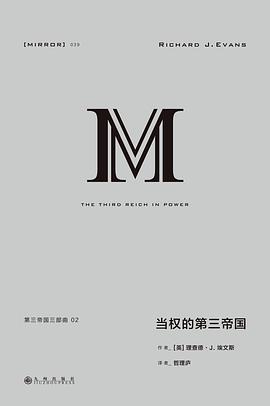
当权的第三帝国 Douban Goodreads
The Third Reich in Power
★ 9.5 (35 ratings) author: [英] 理查德·J. 埃文斯 translator: 哲理庐 publishing house: 九州出版社 2020 - 2
和平的纳粹德国是一个怎样的国家?在纳粹党当权之初,没有人认为它会掀起又一场战争浩劫。在短短的六年间,它实行了一系列铁腕政策,镇压政治运动,整顿就业市场,刺激经济复苏,整合民间机构,打造民族共同体。正当德国人适应着新秩序带来的急剧变化,因繁荣稳定的假象而沉浸在喜悦之中时,却不知不觉地被绑在纳粹的战车上,高速驶向滚滚硝烟之中。原来,和平的纳粹德国是为发动战争而服务的。
在这部包罗万象、扣人心弦的历史巨著中,理查德·J. 埃文斯通过爬梳二战前纳粹德国在经济、文化、艺术、教育等领域的政策和影响,以海量的数据分析与官方档案描绘了第三帝国极权统治的狰狞面貌,以生动的私人材料与亲历记录勾勒出普通德国人在这段历史中的鲜活命运,揭露了纳粹党如何以残暴血腥的独裁手段将德国改造成一架全力冲刺的战争机器。
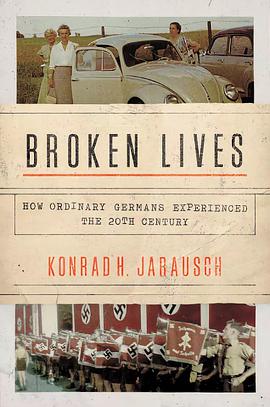
Broken Lives Douban
author: Konrad H. Jarausch publishing house: Princeton University Press 2018 - 6
Broken Lives is a gripping account of the twentieth century as seen through the eyes of ordinary Germans who came of age under Hitler and whose lives were scarred and sometimes destroyed by what they saw and did.
Drawing on six dozen memoirs by the generation of Germans born in the 1920s, Konrad Jarausch chronicles the unforgettable stories of people who not only lived through the Third Reich, World War II, the Holocaust, and Cold War partition, but also participated in Germany's astonishing postwar recovery, reunification, and rehabilitation. Written decades after the events, these testimonies, many of them unpublished, look back on the mistakes of young people caught up in the Nazi movement. In many, early enthusiasm turns to deep disillusionment as the price of complicity with a brutal dictatorship--fighting at the front, aerial bombardment at home, murder in the concentration camps--becomes clear.
Bringing together the voices of men and women, perpetrators and victims, Broken Lives reveals the intimate human details of historical events and offers new insights about persistent questions. Why did so many Germans support Hitler through years of wartime sacrifice and Nazi inhumanity? How did they finally distance themselves from this racist dictatorship and come to embrace human rights? Jarausch argues that this generation's focus on its own suffering, often maligned by historians, ultimately led to a more critical understanding of national identity--one that helped transform Germany from a military aggressor into a pillar of European democracy.
The result is a powerful account of the everyday experiences and troubling memories of average Germans who journeyed into, through, and out of the abyss of a dark century.
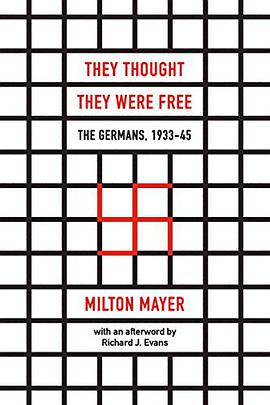
They Thought They Were Free Douban
author: Milton Mayer publishing house: University Of Chicago Press 2017 - 11
“When this book was first published it received some attention from the critics but none at all from the public. Nazism was finished in the bunker in Berlin and its death warrant signed on the bench at Nuremberg.”
That’s Milton Mayer, writing in a foreword to the 1966 edition of They Thought They Were Free. He’s right about the critics: the book was a finalist for the National Book Award in 1956. General readers may have been slower to take notice, but over time they did—what we’ve seen over decades is that any time people, across the political spectrum, start to feel that freedom is threatened, the book experiences a ripple of word-of-mouth interest. And that interest has never been more prominent or potent than what we’ve seen in the past year.
They Thought They Were Free is an eloquent and provocative examination of the development of fascism in Germany. Mayer’s book is a study of ten Germans and their lives from 1933-45, based on interviews he conducted after the war when he lived in Germany. Mayer had a position as a research professor at the University of Frankfurt and lived in a nearby small Hessian town which he disguised with the name “Kronenberg.” “These ten men were not men of distinction,” Mayer noted, but they had been members of the Nazi Party; Mayer wanted to discover what had made them Nazis. His discussions with them of Nazism, the rise of the Reich, and mass complicity with evil became the backbone of this book, an indictment of the ordinary German that is all the more powerful for its refusal to let the rest of us pretend that our moment, our society, our country are fundamentally immune.
A new foreword to this edition by eminent historian of the Reich Richard J. Evans puts the book in historical and contemporary context. We live in an age of fervid politics and hyperbolic rhetoric. They Thought They Were Free cuts through that, revealing instead the slow, quiet accretions of change, complicity, and abdication of moral authority that quietly mark the rise of evil.