Documentary
The Renaissance Unchained (2016) Douban
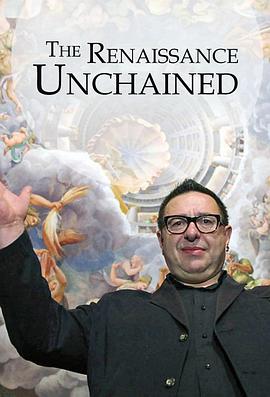
The Renaissance Unchained
★ 9.6 (10 ratings) director: Waldemar Januszczak actor: Waldemar Januszczak
According to Giorgio Vasari, the first art historian, the Renaissance was centred on a revival of interest in classical art that began and flourished in Italy. Waldemar disagrees, and accuses Vasari of errant jingoism. In fact, the most significant early developments in Renaissance art took place not in Italy, but in the ‘barbarian’ lands of Flanders and Germany. Instead of understanding the Renaissance as a return to classical models, we should see it as a climax of medieval values - an epoch of huge religious passions and powerful human emotions.
The series will celebrate material that is new to television. Waldemar will include art that is not usually thought of as Renaissance art. This will involve 're-classifying' what is sometimes called Late Gothic, and showing it off as a marvellous and native artistic tradition, particularly in the remarkable field of polychrome sculpture. On top of all the new art to be introduced, Waldemar will also look from fresh and intriguing angles at many of the established Renaissance giants, including Michelangelo in the Vatican, Leonardo in the Louvre, Botticelli in the Uffizi and Van Eyck in Ghent.
Midnight Traveler (2019) Douban
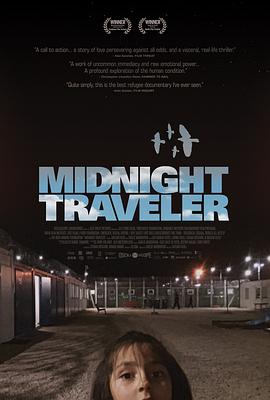
Midnight Traveler
★ 8.4 (14 ratings) director: 哈桑·法利 actor: Nargis Fazili / Zahra Fazili …
other title: 午夜行者 / 从阿富汗到德国
阿富汗导演 Hassan Fazili拍摄的作品,全片由三台手机拍摄完成,记录下镜头中一家人在3年多的时间里跨越3500英里却仍未完成的神奇旅程。
The Art of Gothic: Britain's Midnight Hour (2014) TMDB Douban
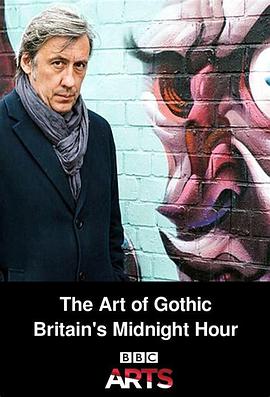
The Art of Gothic: Britain's Midnight Hour Season 1 part of TV Series: The Art of Gothic: Britain's Midnight Hour
★ 8.2 (9 ratings) actor: Andrew Graham-Dixon
In a three-part series, Andrew Graham-Dixon looks back at 19th century Britain and its obsession with all things Gothic. The series explores how an inspired group of architects and artists spurned the modern age, turning to Britain’s medieval past to create some of Britain’s most iconic works and buildings.
Inspired by the tumultuous Industrial Revolution, John Ruskin was among those who created architectural wonders, using the cutting edge of technology to create a brand-new British style of architecture. While in art and literature, the Gothic allowed Horace Walpole, Bram Stoker and Dickens to capture the terror, weirdness and social ills that plagued Victorian Britain.
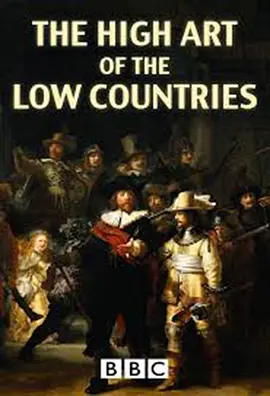
The High Art of the Low Countries (2013) Douban
The High Art of the Low Countries
★ 9.1 (10 ratings) director: Ian Leese actor: 安德鲁·格雷厄姆-迪克森
With this new series Andrew Graham-Dixon returns to Europe taking us on a journey into the captivating watery world of the Low Countries and its art. This small myriad of regions we now know as Holland and Belgium produced some of the most celebrated names in art: Van Eyck, Bosch, Rembrandt, Rubens, Vermeer, Van Gogh, Mondrian and Magritte.
As he travels by canal boat and of course by bicycle Andrew reveals just how important the Low Countries were in key moments in the development of western culture - the birth of oil painting in the late medieval ages, the triumph of the Dutch golden age, and the onset of polarizing modern art movements surrealism and abstraction.
This is not the story of one nation, but of fluid, ever-shifting boundaries and the search for identity in an area that has always been politically contested.
EPISODE ONE:
The first episode will be about how the art of Renaissance Flanders evolved from the craft of precious tapestries within the Duchy of Burgundy into a leading painting school in its own right. Starting his journey at the magnificent altarpiece of Ghent Cathedral created by the Van Eyck brothers Andrew explains their ground breaking innovation in oil painting and marvels how the colours they obtained can still remain so vibrant today. Andrew will describe how in the early Renaissance the most urgent preoccupation was not the advancement of learning, humanist or otherwise, but the Last Judgment. People believed they were living in the end of days; a subject popular with preachers and artists and intensely realized in swarming microscopic detail by Hieronymus Bosch.
EPISODE TWO:
In the second episode Andrew explores how the seemingly peaceful countries of Holland and Belgium – famous for their tulips and windmills, mussels and chips - were in fact forged in a crucible of conflict and division. He will examine how a period of economic boom driven for the first time by a burgeoning and secular middle class led to the Dutch Golden Age of the 17th Century. Andrew travels to Delft and Amsterdam to demonstrate the striking contrast between two of its greatest proponents, Rembrandt and Vermeer (one famed for his breathtakingly realistic domestic street scenes, the other for explosive rapid brushstrokes and raw colours, best exemplified in his contentious magnum opus – The Nightwatch.) Radically different in style, both men were united by the realization that they must become innovators in business as well as masters of their craft. Yet boom also meant bust - and in a story with very modern echoes they ultimately shared the same fate, financial destitution.
EPISODE THREE:
Following a brief period of decline, the third episode will look at how the entrepreneurial and industrious region of the Low Countries rose again to become a cultural leader in the modern age; how despite its small and apparent insignificance when stood up against the powerhouses of Europe it produced important forward thinking artists like Van Gogh, Mondrian, Magritte and Delvaux who changed the face of art forever. In this episode Andrew’s exhilarating journey takes us to a remote beach in North West Holland which inspired Mondrian’s transition to his now renowned abstract grid paintings.
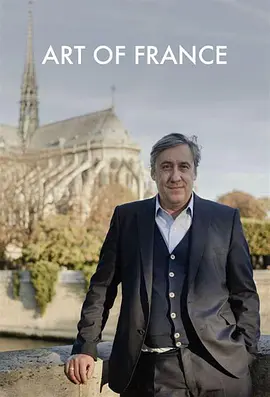
Art of France (2017) TMDB Douban
Art of France Season 1 part of TV Series: Art of France
★ 9.0 (13 ratings) actor: 安德鲁·格雷厄姆-迪克森
Andrew Graham Dixon presents the 3 x 60 Art of France for BBC Four, taking viewers on a stunning visual journey through French Art history; from French gothic and Enlightenment via Versailles, to French Revolution and national collapse in 1870 and 1871, and finally, in episode three, to the rise of impressionism and existentialism.
The Men Who Made Us Spend (2014) Douban
The Men Who Made Us Spend Season 1 part of TV Series: The Men Who Made Us Spend
★ 8.7 (151 ratings) director: 迈克尔·莱德福 actor: Jacques Peretti
我们为什么要买东西?谁让这个世界变得无节制消费?他们如何做到这一点?调查记者雅克•佩雷蒂审视了无节制消费潮流背后的机制,得出了答案。原来,使这个世界变得无节制消费的元凶,并不是人们普遍认为的广告员和市场推广员,而是这诸多因素背后那些首先改变产品然后改变我们的人们。纪录片表明,长久以来,制造商都梦想着在消费者大脑中植入“升级”观念,从而让无限消费成为现实。他们首先瞄准未被开发的儿童市场,学习应用向儿童销售的方法,从而增加向成年人的销售。但是,那头最肥的能够带来现金的奶牛却来自恐惧——通过挖掘消费者的恐惧,制造商发现了一个对健康和安全产品有巨大需求的世界。