化学
环境化学
Douban
戴树桂
1997
- 1
本书共七章,包括绪论、大气环境化学、水环境化学、土壤环境化学、生物体内污染物质的运动过程及毒性、典型污染物在环境各圈层中的转归与效应、有害废物及放射性固体废物等,以阐述污染物在大气、水、岩石、生物各圈层环境介质中迁移转化过程所涉及的污染化学问题及其效应为主线,较全面、深入地阐明其基本原理、环境化学和相关交叉学科的知识,讨论密切结合我国乃至全球关注的环境问题,在介绍基本和主要内容的基础上,注意适当反映本领域的最新研究成果和进展。
为了提高使用本书的教学效果和效益,每章正文开始前编有“内容提要及重点要求”,每章后列出一定数量的“思考题与习题”、计算题答案及主要“参考文献”。此外,为便于读者查阅有兴趣的问题,特编有中英文关键词对照索引。为适应不同要求的读者需要,基本内容以大号字排印,附加内容则以小号字排印。
本书可作为高等院校环境科学有关专业的教材或参考书,也适于从事环境保护和环境科学研究工作的专业人员阅读。

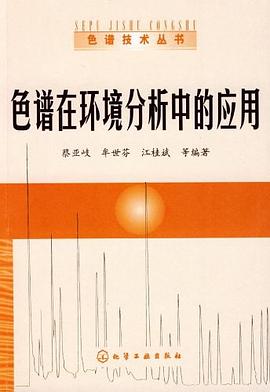
色谱在环境分析中的应用
Douban
2009
- 8
《色谱在环境分析中的应用》比较系统地介绍了色谱技术在各种环境污染物分析特别是持久性有机污染物分析中的应用,以求为从事环境样品分析方法研究、环境监测和其他有关人员提供参考。全书共分为九章:第一章介绍了目前受国际组织和学术界关注的二英类(PCDDs/ PCDFs)和多氯联苯(PCBs)的色谱分析,在第二章特意选择介绍了多溴联苯醚(PBDEs)的色谱分析方法,第三章专门介绍了多环芳烃(PAHs)化合物的分析方法,第四章专门介绍了另一类著名的持久性有机污染物有机氯农药的色谱分析方法,第五章介绍了目前关注的另外一类化合物即挥发性有机污染物(VOCs)及室内空气污染物的色谱分析方法,第六章介绍了难挥发性表面活性剂特别是全氟辛烷磺酸盐类化合物(PFOS等)的色谱分析方法,第七章和第八章分别对无机阴离子、金属和胺类的色谱分析方法作了全面介绍,最后一章对近年来颇受关注的与重要污染事件相关的污染物如硝基苯、有机锡、丙烯酰胺、甲醛、三聚氰胺等污染物的色谱分离与测定方法进行了介绍。
《色谱在环境分析中的应用》可作为相关专业及从事分析工作的科技人员参考。

痕量有机污染物的监测
Douban
孙宗光
2001
本书提出环境激素类污染物的概念,介绍环境激素类污染物对人和其他动物的危害。详述环境中包括环境激素类污染物在内的痕量、超良量有机污染物如有机锡化合物、各类残留农约、烷基苯酚、双酚A、氧代苯酚等。
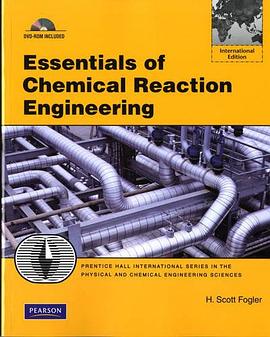
Essentials of Chemical Reaction Engineering
Douban
H. Scott Fogler
publishing house:
Pearson Educacion
2011
- 8
Learn Chemical Reaction Engineering through Reasoning, Not Memorization Essentials of Chemical Reaction Engineering is the complete, modern introduction to chemical reaction engineering for today's undergraduate students. Starting from the strengths of his classic Elements of Chemical Reaction Engineering, Fourth Edition, in this volume H. Scott Fogler added new material and distilled the essentials for undergraduate students. Fogler's unique way of presenting the material helps students gain a deep, intuitive understanding of the field's essentials through reasoning, using a CRE algorithm, not memorization. He especially focuses on important new energy and safety issues, ranging from solar and biomass applications to the avoidance of runaway reactions. Thoroughly classroom tested, this text reflects feedback from hundreds of students at the University of Michigan and other leading universities. It also provides new resources to help students discover how reactors behave in diverse situations--including many realistic, interactive simulations on DVD-ROM. New Coverage Includes * Greater emphasis on safety: following the recommendations of the* Chemical Safety Board (CSB), discussion of crucial safety topics, including ammonium nitrate CSTR explosions, case studies of the nitroaniline explosion, and the T2 Laboratories batch reactor runaway* Solar energy conversions: chemical, thermal, and catalytic water spilling* Algae production for biomass* Steady-state nonisothermal reactor design: flow reactors with heat exchange* Unsteady-state nonisothermal reactor design with case studies of reactor explosions About the DVD-ROM The DVD contains six additional, graduate-level chapters covering catalyst decay, external diffusion effects on heterogeneous reactions, diffusion and reaction, distribution of residence times for reactors, models for non-ideal reactors, and radial and axial temperature variations in tubular reactions. Extensive additional DVD resources include * Summary notes, Web modules, additional examples, derivations, audio commentary, and self-tests* Interactive computer games that review and apply important chapter concepts* Innovative "Living Example Problems" with Polymath code that can be loaded directly from the DVD so students can play with the solution to get an innate feeling of how reactors operate* A 15-day trial of Polymatha is included, along with a link to the Fogler Polymath site* A complete, new AspenTech tutorial, and four complete example problems* Visual Encyclopedia of Equipment, Reactor Lab, and other intuitive tools* More than 500 PowerPoint slides of lecture notes Additional updates, applications, and information are available at www.umich.edu/~essen and www.essentialsofcre.com.
无机化学(第三版)上册
Douban
武汉大学
/
吉林大学
publishing house:
高等教育出版社
1994
本书第三版是在原无机化学编写组编写的《无机化学》第二版基础上修订的,第三版共24章,分上下两册出版。这次修订保持了该书第二版的编排体系与特点,对部分章节的内容进行了调整或改写,新增了生物无机化学简介一章,更换了近50%的习题。书中理论部分充分注意与中学教材的衔接及与后续课程的联系;元素与化合物叙述部分力求发挥理论的指导作用,对基本无机反应和元素与化合物性质内容介绍增加了推理性,以提高学生综合分析和触类旁通的能力。 本书可作为综合性大学化学系普通化学和无机化学课程的教材,亦可供其他各类高等院校化学、应用化学及化工专业在教学中参考。
无机化学(第三版)下册
Douban
武汉大学
/
吉林大学
publishing house:
高等教育出版社
2005
- 1
《无机化学》(下)(高等学校教材)共24章,分上下两册出版。新增了生的无机化学简介一章,更换了近50%的习题。书中理论部分充分注意与中学教材的衔接及后续课程的联系:元素与化合物叙述部分力求发挥理论的指导作用,对基本无机反应和元素与化合物性质内容介绍增加了推理性,以提高学生综合分析和触类旁通的能力。
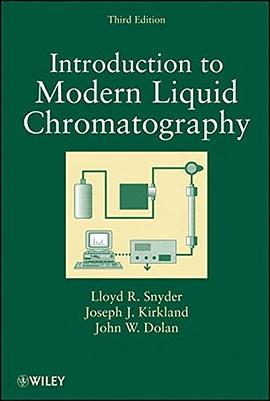
Introduction to Modern Liquid Chromatography
DoubanThe latest edition of the authoritative reference to HPLC High-performance liquid chromatography (HPLC) is today the leading technique for chemical analysis and related applications, with an ability to separate, analyze, and/or purify virtually any sample. Snyder and Kirkland's Introduction to Modern Liquid Chromatography has long represented the premier reference to HPLC. This Third Edition , with John Dolan as added coauthor, addresses important improvements in columns and equipment, as well as major advances in our understanding of HPLC separation, our ability to solve problems that were troublesome in the past, and the application of HPLC for new kinds of samples. This carefully considered Third Edition maintains the strengths of the previous edition while significantly modifying its organization in light of recent research and experience. The text begins by introducing the reader to HPLC, its use in relation to other modern separation techniques, and its history, then leads into such specific topics as: The basis of HPLC separation and the general effects of different experimental conditions Equipment and detection The column—the "heart" of the HPLC system Reversed-phase separation, normal-phase chromatography, gradient elution, two-dimensional separation, and other techniques Computer simulation, qualitative and quantitative analysis, and method validation and quality control The separation of large molecules, including both biological and synthetic polymers Chiral separations, preparative separations, and sample preparation Systematic development of HPLC separations—new to this edition Troubleshooting tricks, techniques, and case studies for both equipment and chromatograms Designed to fulfill the needs of the full range of HPLC users, from novices to experts, Introduction to Modern Liquid Chromatography, Third Edition offers the most up-to-date, comprehensive, and accessible survey of HPLC methods and applications available.
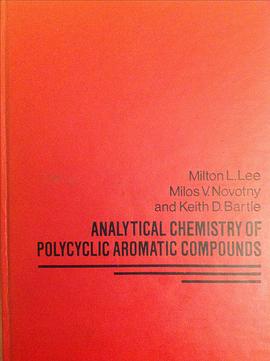
Analytical Chemistry of Polycyclic Aromatic Compounds
Douban
Milton L. Lee
/
Milos V. Novotny
…
publishing house:
Academic Press
1981
Introduction of properties and analytical technologies for polycyclic aromatic compounds.
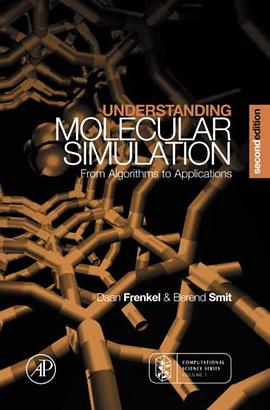
Understanding Molecular Simulation
Douban
Daan Frenkel
/
Berend Smit Professor
publishing house:
Academic Press
2001
- 10
Understanding Molecular Simulation: From Algorithms to Applications explains the physics behind the "recipes" of molecular simulation for materials science. Computer simulators are continuously confronted with questions concerning the choice of a particular technique for a given application. A wide variety of tools exist, so the choice of technique requires a good understanding of the basic principles. More importantly, such understanding may greatly improve the efficiency of a simulation program. The implementation of simulation methods is illustrated in pseudocodes and their practical use in the case studies used in the text.
Since the first edition only five years ago, the simulation world has changed significantly -- current techniques have matured and new ones have appeared. This new edition deals with these new developments; in particular, there are sections on:
· Transition path sampling and diffusive barrier crossing to simulaterare events
· Dissipative particle dynamic as a course-grained simulation technique
· Novel schemes to compute the long-ranged forces
· Hamiltonian and non-Hamiltonian dynamics in the context constant-temperature and constant-pressure molecular dynamics simulations
· Multiple-time step algorithms as an alternative for constraints
· Defects in solids
· The pruned-enriched Rosenbluth sampling, recoil-growth, and concerted rotations for complex molecules
· Parallel tempering for glassy Hamiltonians
Examples are included that highlight current applications and the codes of case studies are available on the World Wide Web. Several new examples have been added since the first edition to illustrate recent applications. Questions are included in this new edition. No prior knowledge of computer simulation is assumed.