统计
纳博科夫最喜欢的词 Douban
Nabokov’s Favorite Word Is Mauve: What the Numbers Reveal About the Classics, Bestsellers, and Our Own Writing
★ 7.2 (12 ratings) author: [美]本·布拉特 translator: 杜森 publishing house: 低音·北京联合出版公司 2019 - 4
★★★
继《写作课》之后,用大数据分析文学、探究黄金写作法则的写作指导图书
……………………
◎ 编辑推荐
★ 马尔克斯、海明威、乔伊斯、纳博科夫、马克·吐温、福克纳、简·奥斯汀、斯蒂芬·金……这些伟大作家有怎样的创作偏好?
★ 布克奖、普利策奖作品、《纽约时报》畅销作品有何规律?
★《百年孤独》《老人与海》《尤利西斯》《洛丽塔》《傲慢与偏见》《动物农场》《哈利·波特》《五十度灰》的创作背后有怎样的趣味冷知识?
用大数据分析1500部文学作品,数百名伟大作者,数百万个奇妙单词,探求真相数字与文字的奇妙游戏。用理科生思维观测写作的隐秘模式,探索经典中的隐藏规律,发现难以忘怀的辞藻应用,继而优化自身,提高写作认知。
……………………
◎ 媒体推荐
一本由数字写成的关于文字的书
极具启发性和趣味性的阅读体验……是一部基于数据的文学评论。
——《科克斯书评》
太有趣了!本·布拉特这本书充满魅力,利用数学技巧解答文学风格的问题,梳理了诸如悬念、副词、美国人比英国人“写作嗓门”更大等观点。(没错!我们就是嗓门大!)
——《数学教你不犯错》作者乔丹·埃伦贝格
与其说是文学史研究,不如说是统计学著作。这本书只用了点儿纸和笔,便揭开了困扰世人几个世纪的《联邦党人文集》谜案。本·布拉特以专注的调查精神、令人意想不到的揭示能力和洞察力探索了文学的标准,最终出版了这样一本书:有节奏感的、发人深省的、有趣的文学侦探故事。
——《生存算法》(Algorithms to Live by)合著者布莱恩·克里斯蒂安
本·布拉特这本可爱的书给了我们一个研究伟大作家作品的新颖视角——大数据。它的幽默、洞见和对数据的应用十分迷人,甚至能够鼓励我们开始自己的写作生涯。
——哈佛大学统计学系荣誉教授卡尔·N. 莫里斯
……………………
◎ 内容简介
将文学大数据视为文学标准,探究出隐藏在世界上伟大作家作品里的有趣之处。作者收集了数千本书籍的数据库,和数百万个单词,并提出一些重要的问题来启发爱书人和怀有好奇心的人:我们最喜欢的作家最喜欢用的是什么词?男性与女性的写作会有不同吗?畅销书会变不畅销吗?当代哪位作家喜欢用“陈词滥调”?最棒的开篇第一个句子有何特征?如何从封面判断一本书?哪些写作建议值得遵守,哪些可以一笑置之?
作者运用现有的统计技巧,加上自己设计的适用方法,所有调查与实验都原创亲自执行,读者不需特殊数学知识也可以轻松理解得出的结果。作者将发现以清晰幽默的语言、充满说服力的视觉呈现,提供了一个认识经典作家作品——不论是其中隐含的模式结构,或者令人难以忘怀的词藻——的全新观点,对写作者而言也能有所启发。
The Joy of Stats (2010) Douban
The Joy of Stats
★ 8.5 (16 ratings) director: 丹·希尔曼 actor: Hans Rosling
other title: 统计的乐趣 / 乐在统计学
看到“统计学”,你首先想到什么?是让人眼花缭乱的表格,还是各种晦涩难懂的术语?其实,统计学并不遥远,从日常生活到科学研究,到处都有它的踪影;统计学也并不枯燥,在本片中,明星教授Hans Rosling将用新奇的方式、先进的技术和幽默的语言,带我们走进妙趣横生的统计学世界。
Aug. 29, 2020 watched
赞同弹幕里的一句话,这个教授很有梗~
统计
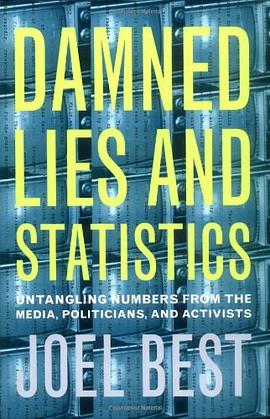
Damned Lies and Statistics Douban
author: Joel Best publishing house: University of California Press 2001 - 5
Does the number of children gunned down double each year? Does anorexia kill 150,000 young women annually? Do white males account for only a sixth of new workers? Startling statistics shape our thinking about social issues. But all too often, these numbers are wrong. This book is a lively guide to spotting bad statistics and learning to think critically about these influential numbers. "Damned Lies and Statistics" is essential reading for everyone who reads or listens to the news, for students, and for anyone who relies on statistical information to understand social problems. Joel Best bases his discussion on a wide assortment of intriguing contemporary issues that have garnered much recent media attention, including abortion, cyberporn, homelessness, the Million Man March, teen suicide, the U.S. census, and much more. Using examples from the "New York Times", the "Washington Post", and other major newspapers and television programs, he unravels many fascinating examples of the use, misuse, and abuse of statistical information. In this book Best shows us exactly how and why bad statistics emerge, spread, and come to shape policy debates. He recommends specific ways to detect bad statistics, and shows how to think more critically about 'stat wars', or disputes over social statistics among various experts. Understanding this book does not require sophisticated mathematical knowledge; Best discusses the most basic and most easily understood forms of statistics, such as percentages, averages, and rates. This accessible book provides an alternative to either naively accepting the statistics we hear or cynically assuming that all numbers are meaningless. It shows how anyone can become a more intelligent, critical, and empowered consumer of the statistics that inundate both the social sciences and our media-saturated lives.