MachineLearning


Deep Learning with Python
Douban
Francois Chollet
publishing house:
Manning Publications
2017
- 10
Deep Learning with Python introduces the field of deep learning using the Python language and the powerful Keras library. Written by Keras creator and Google AI researcher François Chollet, this book builds your understanding through intuitive explanations and practical examples. You'll explore challenging concepts and practice with applications in computer vision, natural-language processing, and generative models. By the time you finish, you'll have the knowledge and hands-on skills to apply deep learning in your own projects.

机器学习
Douban
周志华
publishing house:
清华大学出版社
2016
- 1
机器学习是计算机科学与人工智能的重要分支领域. 本书作为该领域的入门教材,在内容上尽可能涵盖机器学习基础知识的各方面。 为了使尽可能多的读者通过本书对机器学习有所了解, 作者试图尽可能少地使用数学知识. 然而, 少量的概率、统计、代数、优化、逻辑知识似乎不可避免. 因此, 本书更适合大学三年级以上的理工科本科生和研究生, 以及具有类似背景的对机器学 习感兴趣的人士. 为方便读者, 本书附录给出了一些相关数学基础知识简介.
全书共16 章,大致分为3 个部分:第1 部分(第1~3 章)介绍机器学习的基础知识;第2 部分(第4~10 章)讨论一些经典而常用的机器学习方法(决策树、神经网络、支持向量机、贝叶斯分类器、集成学习、聚类、降维与度量学习);第3 部分(第11~16 章)为进阶知识,内容涉及特征选择与稀疏学习、计算学习理论、半监督学习、概率图模型、规则学习以及强化学习等.前3章之外的后续各章均相对独立, 读者可根据自己的兴趣和时间情况选择使用. 根据课时情况, 一个学期的本科生课程可考虑讲授前9章或前10章; 研究生课程则不妨使用全书.
书中除第1章外, 每章都给出了十道习题. 有的习题是帮助读者巩固本章学习, 有的是为了引导读者扩展相关知识. 一学期的一般课程可使用这些习题, 再辅以两到三个针对具体数据集的大作业. 带星号的习题则有相当难度, 有些并无现成答案, 谨供富有进取心的读者启发思考.
本书可作为高等院校计算机、自动化及相关专业的本科生或研究生教材,也可供对机器学习感兴趣的研究人员和工程技术人员阅读参考。

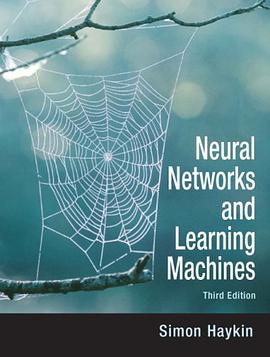
Neural Networks and Learning Machines
Neural Networks: A Comprehensive Foundation Douban
Simon O. Haykin
publishing house:
Pearson
2008
- 11
For graduate-level neural network courses offered in the departments of Computer Engineering, Electrical Engineering, and Computer Science. Renowned for its thoroughness and readability, this well-organized and completely up-to-date text remains the most comprehensive treatment of neural networks from an engineering perspective. Refocused, revised and renamed to reflect the duality of neural networks and learning machines, this edition recognizes that the subject matter is richer when these topics are studied together. Ideas drawn from neural networks and machine learning are hybridized to perform improved learning tasks beyond the capability of either independently.

Learning From Data
Douban
Yaser S. Abu-Mostafa
/
Malik Magdon-Ismail
…
publishing house:
AMLBook
2012
- 3
Machine learning allows computational systems to adaptively improve their performance with experience accumulated from the observed data. Its techniques are widely applied in engineering, science, finance, and commerce. This book is designed for a short course on machine learning. It is a short course, not a hurried course. From over a decade of teaching this material, we have distilled what we believe to be the core topics that every student of the subject should know. We chose the title `learning from data' that faithfully describes what the subject is about, and made it a point to cover the topics in a story-like fashion. Our hope is that the reader can learn all the fundamentals of the subject by reading the book cover to cover. ---- Learning from data has distinct theoretical and practical tracks. In this book, we balance the theoretical and the practical, the mathematical and the heuristic. Our criterion for inclusion is relevance. Theory that establishes the conceptual framework for learning is included, and so are heuristics that impact the performance of real learning systems. ---- Learning from data is a very dynamic field. Some of the hot techniques and theories at times become just fads, and others gain traction and become part of the field. What we have emphasized in this book are the necessary fundamentals that give any student of learning from data a solid foundation, and enable him or her to venture out and explore further techniques and theories, or perhaps to contribute their own. ---- The authors are professors at California Institute of Technology (Caltech), Rensselaer Polytechnic Institute (RPI), and National Taiwan University (NTU), where this book is the main text for their popular courses on machine learning. The authors also consult extensively with financial and commercial companies on machine learning applications, and have led winning teams in machine learning competitions.