economics
21世纪资本论
Le capital au XXIe siècle Douban
★ 8.4 21 ratings
[法] 托马斯·皮凯蒂(Thomas Piketty) translator: 巴曙松 publishing house: 中信出版社 2014 - 9
《二十一世纪资本论》对自18世纪工业革命至今的财富分配数据进行分析,认为不加制约的资本主义导致了财富不平等的加剧,自由市场经济并不能完全解决财富分配不平等的问题。皮克迪建议通过民主制度制约资本主义,这样才能有效降低财富不平等现象。 皮克迪将世界经济分成两个基本要素:资本和劳动力,两者都被用于生产并分享产出的收益。资本与劳动力的区别在于,资本可买入、卖出、拥有,而且从理论上讲可无限累积,劳动力是个人能力的使用,可获得酬劳,但不能被别人所拥有。皮克迪认为,由于资本回报率总是倾向于高于经济增长率,所以贫富差距是资本主义固有现象。他由此预测,发达国家贫富差距将会继续扩大,建议征收全球性财富税。 皮克迪在中,对过去300年来的工资财富做了详尽探究,并列出有关多国的大量收入分配数据,旨在证明近几十年来,不平等现象已经扩大,很快会变得更加严重。在可以观察到的300来年左右的数据中,投资回报平均维持在每年4%–5%,而GDP平均每年增长1%–2%。5%的投资回报意味着每14年财富就能翻番,而2%的经济增长意味着财富翻番要35年。在一百年的时间里,有资本的人的财富翻了7番,是开始的128倍,而整体经济规模只会比100年前大8倍。虽然有资本和没有资本的人都变得更加富有,但是贫富差距变得非常大。 促进增长并不是皮克迪所关注的,他没把它视为经济事件,也不认为它能解决更广阔的分配公平问题。他认为经济是静态的零和游戏;如果一个群体的收入增加,另一个群体就会不可避免地变穷。他把结果的平等性视为最终目的和唯一原因。而以下备选却很少提及—例如,最大化社会总体财富,或是增强经济自由,亦或是寻找最有可能的机会平等,又或按约翰·罗尔斯(John Rawls)的观点,保证最贫困人群的福利得到最大化。 在书里提出了一系列简单的建议:征收15%的资本税(财富总额),把最高收入人群的所得税提到80%左右,强迫银行提高透明度,提高通货膨胀等等。但皮克迪也指出,他觉得这些措施是不太可能实现的,因为控制资本主义社会的精英可能宁可看到这个系统崩溃,也不会愿意让步。
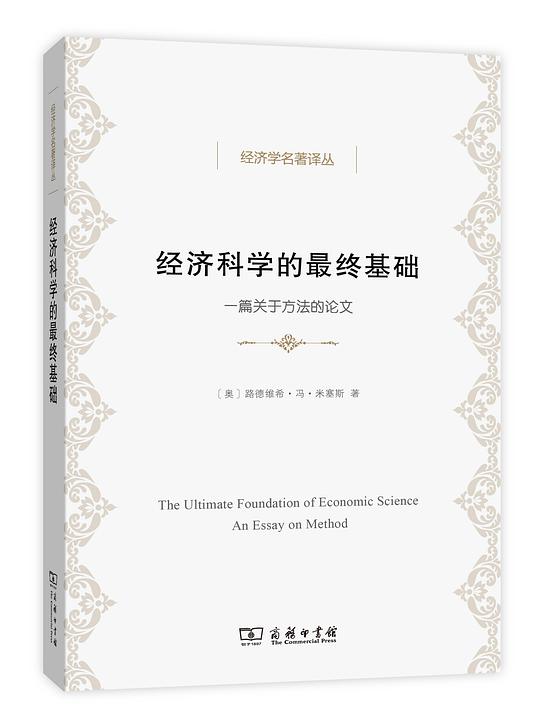
经济科学的最终基础
The Ultimate Foundation of Economic Science: An Essay on Method Douban
路德维希·冯·米塞斯 translator: 朱泱 publishing house: 商务印书馆 2015 - 7
本书是米塞斯最后一本论著。书中论证了这样一个命题:经济学是一门以人类行为作为基础的科学。米塞斯认为,自从他的《人类行为》出版以后,经济学家和科学家都误解了他提出的经济学是科学的主张,因为他们把经济学视为认识论上的实证主义,认为经济学这门“科学”的基础仍然更多地植根于哲学,而不是实际的科学。在本书中,米塞斯认为,经济学之所以是科学,是因为人类行为是生活的自然秩序,恰恰是人类行为决定了市场和资本决策。米塞斯认为,这些联系可以在科学上加以证明,他由此而断定,既然经济学的基础是人类行为,经济学本身无疑就是一门科学,而不是一种意识形态,不是一种形而上学的学说。本书一向被誉为米塞斯最富于激情的著作,综合阐述了他此前著述中所有相关的主题。
经济增长理论史
Douban
[美]罗斯托 translator: 陈春良 / 茹玉骢 … publishing house: 浙江大学出版社 2016 - 3
本书首先介绍了1870年之前研究经济增长的经济学者,作者比较了休谟与亚当•斯密,马尔萨斯与李嘉图,约翰•穆勒与马克思。接着作者介绍了1870年至1939年的经济学理论家,包括熊彼特、科林•克拉克、库兹涅茨和哈洛德,并且分析了战后经济增长的三种模式。作者以权威的论点阐释了 经济增长领域中未解决的几大问题,并描述了未来几十年中可能出现的五种经济领域的任务。本书提出的问题和任务至今仍构成对当代经济学家的挑战,很有前瞻性 。
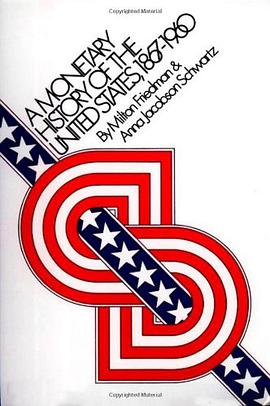
A Monetary History of the United States, 1867-1960
Douban
Milton Friedman / Anna Jacobson Schwartz publishing house: Princeton University Press 1971 - 11
Writing in the June 1965 issue of the "Economic Journal", Harry G. Johnson begins with a sentence seemingly calibrated to the scale of the book he set himself to review: 'The long-awaited "Monetary History of the United States" by Friedman and Schwartz is in every sense of the term a monumental scholarly achievement - monumental in its sheer bulk, monumental in the definitiveness of its treatment of innumerable issues, large and small ...monumental, above all, in the theoretical and statistical effort and ingenuity that have been brought to bear on the solution of complex and subtle economic issues'.Friedman and Schwartz marshaled massive historical data and sharp analytics to support the claim that monetary policy - steady control of the money supply - matters profoundly in the management of the nation's economy, especially in navigating serious economic fluctuations. In their influential chapter 7, "The Great Contraction" - which Princeton published in 1965 as a separate paperback - they address the central economic event of the century, the Depression. According to Hugh Rockoff, writing in January 1965: 'If Great Depressions could be prevented through timely actions by the monetary authority (or by a monetary rule), as Friedman and Schwartz had contended, then the case for market economies was measurably stronger.' Milton Friedman won the Nobel Prize in Economics in 2000 for work related to "A Monetary History " as well as to his other Princeton University Press book, "A Theory of the Consumption Function" (1957).
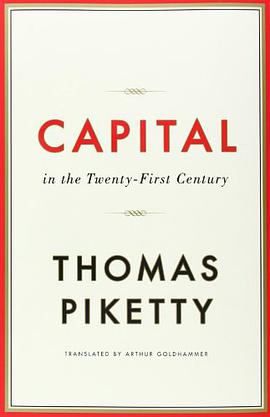
Capital in the Twenty First Century
Le capital au XXIe siècle Douban Goodreads Skybridge
Thomas Piketty translator: Arthur Goldhammer publishing house: Belknap Press: An Imprint of Harvard University Press 2014 - 4
What are the grand dynamics that drive the accumulation and distribution of capital? Questions about the long-term evolution of inequality, the concentration of wealth, and the prospects for economic growth lie at the heart of political economy. But satisfactory answers have been hard to find for lack of adequate data and clear guiding theories. In Capital in the Twenty-First Century, Thomas Piketty analyzes a unique collection of data from twenty countries, ranging as far back as the eighteenth century, to uncover key economic and social patterns. His findings will transform debate and set the agenda for the next generation of thought about wealth and inequality. Piketty shows that modern economic growth and the diffusion of knowledge have allowed us to avoid inequalities on the apocalyptic scale predicted by Karl Marx. But we have not modified the deep structures of capital and inequality as much as we thought in the optimistic decades following World War II. The main driver of inequality—the tendency of returns on capital to exceed the rate of economic growth—today threatens to generate extreme inequalities that stir discontent and undermine democratic values. But economic trends are not acts of God. Political action has curbed dangerous inequalities in the past, Piketty says, and may do so again. A work of extraordinary ambition, originality, and rigor, Capital in the Twenty-First Century reorients our understanding of economic history and confronts us with sobering lessons for today.