电影理论
Illusions in Motion
Douban
Erkki Huhtamo publishing house: The MIT Press 2013 - 2
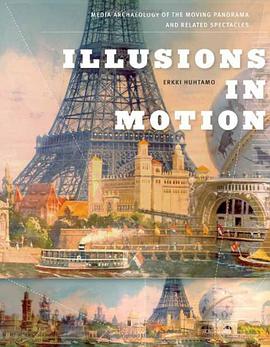
Beginning in the late eighteenth century, huge circular panoramas presented their audiences with resplendent representations that ranged from historic battles to exotic locations. Such panoramas were immersive but static. There were other panoramas that moved--hundreds, and probably thousands of them. Their history has been largely forgotten. In Illusions in Motion, Erkki Huhtamo excavates this neglected early manifestation of media culture in the making. The moving panorama was a long painting that unscrolled behind a "window" by means of a mechanical cranking system, accompanied by a lecture, music, and sometimes sound and light effects. Showmen exhibited such panoramas in venues that ranged from opera houses to church halls, creating a market for mediated realities in both city and country. In the first history of this phenomenon, Huhtamo analyzes the moving panorama in all its complexity, investigating its relationship to other media and its role in the culture of its time. In his telling, the panorama becomes a window for observing media in operation. Huhtamo explores such topics as cultural forms that anticipated the moving panorama; theatrical panoramas; the diorama; the "panoramania" of the 1850s and the career of Albert Smith, the most successful showman of that era; competition with magic lantern shows; the final flowering of the panorama in the late nineteenth century; and the panorama's afterlife as a topos, traced through its evocation in literature, journalism, science, philosophy, and propaganda.
The Lumière Galaxy
Douban
Francesco Casetti publishing house: Columbia University Press 2015 - 3
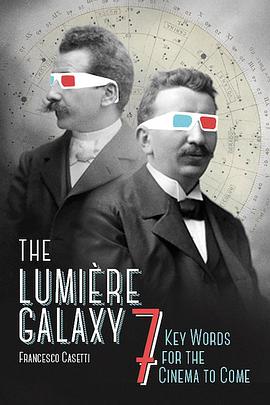
Francesco Casetti believes new media technologies are producing an exciting new era in cinema aesthetics. Whether we experience film in the theater, on our hand-held devices, in galleries and museums, onboard and in flight, or up in the clouds in the bits we download, cinema continues to alter our habits and excite our imaginations. Casetti travels from the remote corners of film history and theory to the most surprising sites on the internet and in our cities to prove the ongoing relevance of cinema. He does away with traditional notions of canon, repetition, apparatus, and spectatorship in favor of new keywords, including expansion, relocation, assemblage, and performance. The result is an innovative understanding of cinema's place in our lives and culture, along with a critical sea-change in the study of the art. The more the nature of cinema transforms, the more it discovers its own identity, and Casetti helps readers realize the galaxy of possibilities embedded in the medium.
Reading Feb. 7, 2022
其实卡塞蒂的这个思路可以推而广之 变成The Media Galaxy
媒介 电影理论
电影或想象的人
Douban
★ 8.0 6 ratings
[法] 埃德加·莫兰 translator: 马胜利 publishing house: 广西师范大学出版社 2012 - 4
本书试图从人类学的视角来研究电影,或者说,通过电影研究来探索人类的精神和社会,这种研究思路最终将电影学研究推向了一个更广阔的领域,即人类的精神和外部客观现实的问题,从而使本书的价值并不局限于电影领域,为人类学的研究开拓了全新的方向。 题解: “只有电影艺术出现后,想象过程才得以原原本本和完全彻底地显露出来。我们终于能用形象表现我们的梦幻了,因为这些梦幻已附着在实际的材料之上。这种梦幻还会反过来塑造我们清醒状态的生活,它们教我们如何生活或如何拒绝生活。” “电影艺术和电影工业只是浮现在我们意识中的局部现象,而我们的责任是要把握这一现象的全部。然而,这一现象既显著又晦涩的潜在部分与我们自身的本质融合在一起。而我们的本质同样既显著又晦涩,例如我们心脏的跳动和我们心灵的激荡。深入探讨电影,从其全部人类性去思考电影,这便是本书的目的。” ——埃德加•莫兰