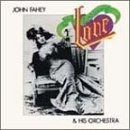
If anyone doubts the degree to which John Fahey was stereotyped as a folk guitarist, the reception of this album should be instructive. Old Fashioned Love is a wonderful release, a celebration of early 20th century musical styles. Every track is played with charm and wit, from the solo guitar pieces to the full orchestral works. Indeed, on the first half of the CD we hear not just John Fahey the guitarist, but also John Fahey the arranger and orchestra leader. The delicate guitar solos on the classical "In a Persian Market" are framed by lively ensemble work by Fahey's ten-person "orchestra," a group which proves adept at ragtime and blues styles. This was Fahey's second album with this band, and the chemistry is obvious -- he later remarked that this was the most sympathetic and understanding group of musicians he had ever worked with. Nevertheless, this is not a complete break with the solo guitar albums, as the last three cuts on the album are 100% pure Fahey. They are, however, not folkie pieces. Two are firmly in the old-time style, and one is a guitar transcription of a Hindu chant. All three are fine, delicately contemplative works that equal anything he was doing in the previous decade. Alas, most of the people who bought John Fahey albums wanted pretty folk guitar tracks, and they weren't interested in anything else regardless of how excellent it sounded. Old Fashioned Love was acclaimed by many critics but was rejected by the folk crowd that Fahey himself was coming to detest.