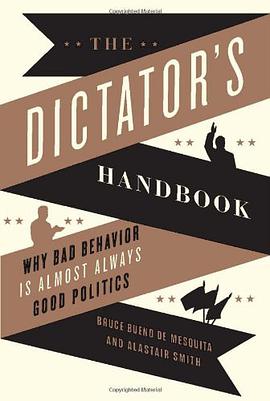
In this title, two renowned political scientists make the contrarian, research-based case that - regardless of any other factors political scientists or historians may find relevant - the calculations and actions of rulers are the driving force of all politics, and the primary goal of rulers is to maintain power as long as possible. In this clever and accessible book, Bueno de Mesquita and Smith introduce us to their perspective of the political world. They bare the logic of politics, starting from the simple premise that leaders pursue their own ends, and that populations either have, or more often don't have, the power to constrain them to a significant degree. The book is organized by a series interconnected questions, among them: Why do leaders who wreck their countries keep their jobs for so long? Why do autocracies have dismal economic policies? How are there so many suffering people in resource-rich lands? Why do 'natural disasters' disproportionately strike poor nations? Why do 'evil-doers' so often collect loads of foreign aid? Why are democracies so good at war? In answering these questions, the authors look at politics, the choices of public policies, and even decisions about war and peace as lying outside of conventional thinking about culture and history. They set aside ideas of civic virtue and psychopathology. Such notions simply are not central to understanding what leaders do and why they do it. Instead, Bueno de Mesquita and Smith see politicians as self-interested louts, just the sort of people you wouldn't want to have over for dinner, but without whom you might not have dinner at all. And from this perspective, they are able to answer some perplexing mysteries of politics, shed light on what we read in the newspapers every single day, and offer realistic ways of improving human governance.