科技
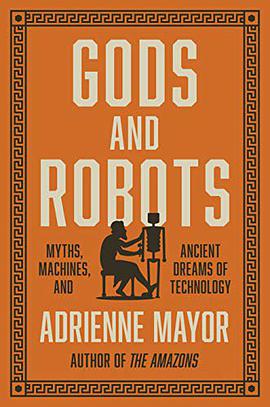
Gods and Robots
Douban
Adrienne Mayor publishing house: Princeton University Press 2018 - 10
The fascinating untold story of how the ancients imagined robots and other forms of artificial life--and even invented real automated machines The first robot to walk the earth was a bronze giant called Talos. This wondrous machine was created not by MIT Robotics Lab, but by Hephaestus, the Greek god of invention. More than 2,500 years ago, long before medieval automata, and centuries before technology made self-moving devices possible, Greek mythology was exploring ideas about creating artificial life--and grappling with still-unresolved ethical concerns about biotechne, "life through craft." In this compelling, richly illustrated book, Adrienne Mayor tells the fascinating story of how ancient Greek, Roman, Indian, and Chinese myths envisioned artificial life, automata, self-moving devices, and human enhancements--and how these visions relate to and reflect the ancient invention of real animated machines. As early as Homer, Greeks were imagining robotic servants, animated statues, and even ancient versions of Artificial Intelligence, while in Indian legend, Buddha's precious relics were defended by robot warriors copied from Greco-Roman designs for real automata. Mythic automata appear in tales about Jason and the Argonauts, Medea, Daedalus, Prometheus, and Pandora, and many of these machines are described as being built with the same materials and methods that human artisans used to make tools and statues. And, indeed, many sophisticated animated devices were actually built in antiquity, reaching a climax with the creation of a host of automata in the ancient city of learning, Alexandria, the original Silicon Valley. A groundbreaking account of the earliest expressions of the timeless impulse to create artificial life, Gods and Robots reveals how some of today's most advanced innovations in robotics and AI were foreshadowed in ancient myth--and how science has always been driven by imagination. This is mythology for the age of AI.
Read
Dec. 16, 2018
Mayor阿姨如数家珍地跟你讲古希腊文献和艺术里那些被诸神和人类工匠制造出来的生命和自动器械,偶尔还穿插一下远至中国的记录。前八章是神话传说里的造物,它们在古希腊世界引起的思考和在当今世界的回响,尽管其中一些耳熟能详,但从biothecne的角度来看又是一番新的惊奇。最后一章侧重6世纪BC到AD10世纪的历史记载,有暴君们的诡异刑具也有美妙如阿蒙霍特普三世的唱歌石像。想借个tardis看一眼品达笔下的机械之国罗德岛和托勒密二世的酒神游行!
古希腊 科技 神话传说
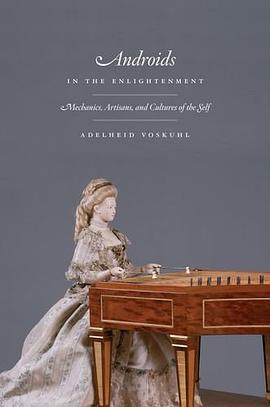
Androids in the Enlightenment
Douban
Adelheid Voskuhl publishing house: University Of Chicago Press 2013 - 5
The eighteenth century saw the creation of a number of remarkable mechanical androids: at least ten prominent automata were built between 1735 and 1810 by clockmakers, court mechanics, and other artisans from France, Switzerland, Austria, and the German lands. Designed to perform sophisticated activities such as writing, drawing, or music making, these “Enlightenment automata” have attracted continuous critical attention from the time they were made to the present, often as harbingers of the modern industrial age, an era during which human bodies and souls supposedly became mechanized. In Androids in the Enlightenment, Adelheid Voskuhl investigates two such automata—both depicting piano-playing women. These automata not only play music, but also move their heads, eyes, and torsos to mimic a sentimental body technique of the eighteenth century: musicians were expected to generate sentiments in themselves while playing, then communicate them to the audience through bodily motions. Voskuhl argues, contrary to much of the subsequent scholarly conversation, that these automata were unique masterpieces that illustrated the sentimental culture of a civil society rather than expressions of anxiety about the mechanization of humans by industrial technology. She demonstrates that only in a later age of industrial factory production did mechanical androids instill the fear that modern selves and societies had become indistinguishable from machines.
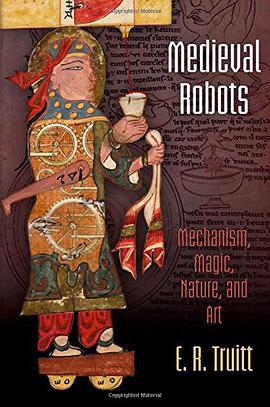
Medieval Robots
Douban
E. R. Truitt publishing house: University of Pennsylvania Press 2015 - 5
A thousand years before Isaac Asimov set down his Three Laws of Robotics, real and imagined automata appeared in European courts, liturgies, and literary texts. Medieval robots took such forms as talking statues, mechanical animals, and silent metal guardians; some served to entertain or instruct while others performed disciplinary or surveillance functions. Variously ascribed to artisanal genius, inexplicable cosmic forces, or demonic powers, these marvelous fabrications raised fundamental questions about knowledge, nature, and divine purpose in the Middle Ages. Medieval Robots recovers the forgotten history of fantastical, aspirational, and terrifying machines that captivated Europe in imagination and reality between the ninth and fourteenth centuries. E. R. Truitt traces the different forms of self-moving or self-sustaining manufactured objects from their earliest appearances in the Latin West through centuries of mechanical and literary invention. Chronicled in romances and song as well as histories and encyclopedias, medieval automata were powerful cultural objects that probed the limits of natural philosophy, illuminated and challenged definitions of life and death, and epitomized the transformative and threatening potential of foreign knowledge and culture. This original and wide-ranging study reveals the convergence of science, technology, and imagination in medieval culture and demonstrates the striking similarities between medieval and modern robotic and cybernetic visions.
Read
Nov. 2, 2018
奇妙。标题用的robots但书里全是automata“自动的、模仿自然的人造装置”。拜占庭和伊斯兰世界继承了古希腊和亚历山大学派的机械制造术,9世纪巴格达哈里发送给查理曼一座带有活动人形的水钟,拉丁基督教世界从此开始对automata进行虚实交织的文本记录:异己的地理和自然环境助力下的跨文化奇观;掌握隐秘知识的学者在魔鬼帮助下创造的法宝;城堡和陵墓的守卫;恋人的栩栩如生的机械副本或插满管子的古代英雄的防腐尸体,它们总是在生死真伪,自然和人造的边际上,关乎道德,参杂政治和宗教角力,让人惊奇和焦虑。随着知识和科技进步,西方权贵让艺术家和工匠制造各种automata用于嬉戏或彰显权力。15世纪时它们已化身为点缀钟表的圣经典故,演示天体运行规律,完全脱离了东方影响,展现着宏观宇宙在微观上的精准映射。
中世纪 历史 科技