
艺术

稍息
Douban
[意大利] 老安
publishing house:
上海文艺出版社
2021
- 11
意大利摄影家老安在华40年首部摄影集。
190张照片,记录在改革开放之初的“稍息年代”,
普通中国人如何小心翼翼走向真正意义上的生活。
在这些照片中,我们将目击自己的记忆,也将看见我们的遗忘,
并重新发现有待省察的生活。
陈丹青、余华、刘小东、顾铮、彭磊、李静、冯梦波等推荐
————
本书收录了意大利摄影家老安(Andrea Cavazzuti)1981到1984年在中国拍摄的190余帧照片,记录下了那个“稍息年代”里中国人的一些日常生活场景。
照片里的中国,刚刚走出动荡不安的岁月,尚未来得及拥抱传真手机网络等工具。那是一段罕见的、短暂的沉静时刻,人们在喘一口气,准备跃入即将来临的狂热。
老安的摄影,聚焦于普通中国人的日常生活。在端正的构图里,在有限的画幅中,捕捉无穷无尽的细节。它们无意于报道与解释,却留存下一个时代的气氛。我们将在这些照片中目击自己的记忆,也将看见我们的遗忘,并重新发现有待省察的生活。
本书还收录了陈丹青、刘小东、顾铮的评论文章,老安与奥利沃·巴尔别里、彭磊、冯梦波的对谈,以及老安用中文撰写的风趣幽默的散文作品:《气呼呼的小词典》。
————
这些照片极其珍贵,它们干净,有内涵。既不首肯,又不否认,而是设身处地。
——奥利沃·巴尔别里 [摄影家]
你有过瞢忪发呆的时刻吗——忽然忆及很久前的一幕,陷入深深的、长久的发呆,没有思绪,不带情感,只是呆呆“看见”了自己的记忆——这时刻,就是老安的摄影。太动人了。他成功地使观看者忽略,以至不发觉他的照片如何动人,就像照片中的人没发觉他。
——陈丹青 [画家,作家]
老安的照片,对于我们这一代中国人是弥足珍贵的记忆。在这一张张或安静或活跃的黑白照片里,我们看到过去的自己如何挣脱束缚,小心翼翼走向真正意义上的生活。
——余华 [作家]
老安从来不骚扰他眼前景观,从来不把镜头推得更近,从不把自己的欲望表现在前。老安总是保持和物象间礼貌的距离,摈弃滥情、摈弃抱怨、摈弃明辨是非,像个过来人,不愤怒、不嘲讽……
——刘小东 [画家]
老安用照相机插入现实的瞬间,可能是一个相当暧昧的瞬间,是一个并不说明什么的瞬间,但就是这个瞬间,可能抽出、保留了某个时代的某个时刻的气氛,观者可以据此确认时代。
——顾铮 [摄影评论家]
老安的摄影,宛如契诃夫式的戏剧:散漫,无中心,在一个意义稀薄的日常空间里,重要性大致相当的主人公们微弱地行动着,无所事事,波澜不惊,却在剧终,一切富有韵律、貌似熟悉的细节蓦地发生核聚变,轰然达成一个诗意而陌生的象征。
——李静 [作家]
看老安的照片,给我那种小时候在中国到处转悠的感觉,每个地方完全都不一样……这么素、这么平淡的照片,现在看起来反倒有些不一样的感觉,比较时髦的感觉。
——彭磊 [导演,音乐人]
老安的照片几乎没有碰出来的东西,里面都有看头。
——冯梦波 [艺术家]

Flâneuse
Douban
Lauren Elkin
publishing house:
Farrar, Straus and Giroux
2017
- 2
A flâneuse is, in Lauren Elkin’s words, “a determined resourceful woman keenly attuned to the creative potential of the city, and the liberating possibilities of a good walk.” Virginia Woolf called it “streethaunting,” Holly Golightly epitomized it in Breakfast at Tiffany’s, and Patti Smith did it in her own inimitable style in 1960s New York.
Part cultural meander, part memoir, Flâneuse traces the relationship between singular women and their cities as a way to map her own life―a journey that begins in New York and takes us to Paris, via Venice, Tokyo, and London―including the paths beaten by such flâneuses as the cross-dressing, nineteenth-century novelist George Sand, the Parisian artist Sophie Calle, the journalist Martha Gellhorn, and the writer Jean Rhys. With tenacity and insight, Elkin creates a mosaic of what urban settings have meant to women, charting through literature, art, history, and film women’s sometimes liberating, sometimes fraught relationship to the metropolis.

Helvetica (2007)
Helvetica WikiData IMDb TMDB Douban
加利·哈斯特维特
actor:
Michael Bierut
/
Neville Brody
…
other title:
传奇字体
/
海维提卡
…
2007 documentary film directed by Gary Hustwit

Hokusai: Old Man Crazy to Paint (2017)
Hokusai: Old Man Crazy to Paint WikiData IMDb TMDB Douban
Patricia Wheatley
actor:
蒂姆·克拉克
/
罗杰·凯斯
other title:
葛饰北斋:为画痴狂
/
葛飾北齋:畫狂老人(台)
…
The first UK film biography of the world-renowned Japanese artist Katsushika Hokusai (1760-1849), whose print The Great Wave is as globally famous as Leonardo's Mona Lisa. With Andy Serkis reading the voice of Hokusai, the film features artists David Hockney and Maggi Hambling, and passionate scholars who study, admire and venerate this great Japanese master.
The film focuses on Hokusai's work, life and times in the great, bustling metropolis of Edo, now modern Tokyo. Using extraordinary close-ups and pioneering 8K Ultra HD video technology, Hokusai's prints and paintings are examined by world experts. In the process they reveal new interpretations of famous works and convey the full extent of Hokusai's extraordinary achievement as a great world artist.
Hokusai spent his life studying and celebrating our common humanity as well as deeply exploring the natural and spiritual worlds, using the famous volcano Mount Fuji as a protective presence and potential source of immortality. He knew much personal tragedy, was struck by lightning and lived for years in poverty, but never gave up his constant striving for perfection in his art. Hokusai influenced Monet, Van Gogh and other Impressionists, is the father of manga and has his own Great Wave emoji.

旅行的艺术
The Art of Travel Douban
[英] 阿兰·德波顿
translator:
南治国
/
彭俊豪
…
publishing house:
上海译文出版社
2004
- 4
这部书就像一场完美的旅程,教我们如何好奇、思考和观察,让我们重新对生命充满热情。旅行是什么,德波顿并不想急于提供答案,旅行为什么,德波顿似乎也不热心去考求。但释卷之后,相信每个读者都会得到一种答案——这答案,既是思辩的,也是感性的,既酣畅淋漓,又难以言说,因为,它更像是一种情绪 ,令人沉醉而不自知翻开这本书,你踏上的将是一次异乎寻常的阅读旅程。深信德波顿无处不在的智慧和机智将影响甚至改变你对旅行的看法,并有可能改变你日后的旅行心态和旅行方式。德波顿是一个知识渊厚且富有逻辑思辨能力的作者。他曾经是大学的哲学讲师,有着深厚的哲学素养,从苏格拉底、洪堡,到爱默生、尼采,他都有过系统的阅读。此外,对西方文学和艺术作品,他也有广泛的涉猎。因此,在论及“旅行”这一近平陈词滥调的题材时,他不仅时时表现出理性的悟觉,而且还能结合福楼拜、波德莱尔等文学家的创作,参照凡·高等画家的作品,多方位地观照“旅行”、剖析“旅行”。


How to Read Chinese Paintings
Douban GoodreadsThe Chinese often use the expression du hua, “to read a painting,” in connection with their study and appreciation of such works. This volume closely “reads” thirty-six masterpieces of Chinese painting from the encyclopedic collection of The Metropolitan Museum of Art in order to reveal the major characteristics and themes of this rich pictorial tradition. The book examines multiple layers of meaning—style, technique, symbolism, past traditions, and the artist’s personal circumstances—through accessible texts and numerous large color details. A dynastic chronology, map, and list of further readings supplement the text.
Spanning a thousand years of Chinese art, these landscapes, flowers, birds, figures, religious subjects, and calligraphies illuminate the main goal of every Chinese artist: to capture not only the outer appearance of a subject but also its inner essence.


Treasures of the Louvre (2013)
Treasures of the Louvre Douban
Alastair Laurence
actor:
Andrew Hussey
other title:
卢浮宫的珍宝
Paris-based writer Andrew Hussey travels through the glorious art and surprising history of an extraordinary French institution to show that the story of the Louvre is the story of France. As well as exploring the masterpieces of painters such as Veronese, Rubens, David, Chardin, Gericault and Delacroix, he examines the changing face of the Louvre itself through its architecture and design. Medieval fortress, Renaissance palace, luxurious home to kings, emperors and more recently civil servants, today it attracts eight million visitors a year. The documentary also reflects the very latest transformation of the Louvre - the museum's recently-opened Islamic Gallery.
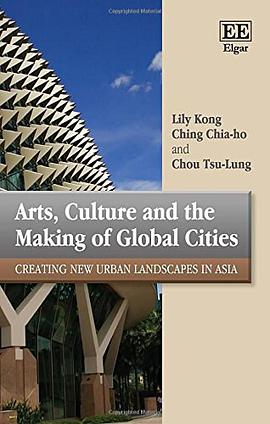
Arts, Culture and the Making of Global Cities
Lily Kong, Ching Chia-ho, Chou Tsu-Lung Douban
Lily Kong
/
C. H. Ching
…
publishing house:
Edward Elgar Pub
2015
- 1
While global cities have mostly been characterized as sites of intensive and extensive economic activity, the quest for global city status also increasingly rests on the creative production and consumption of culture and the arts. Arts, Culture and the Making of Global Cities examines such ambitions and projects undertaken in five major cities in Asia: Beijing, Shanghai, Hong Kong, Taipei and Singapore.
Providing a thorough comparison of their urban imaging strategies and attempts to harness arts and culture, as well as more organically evolved arts activities and spaces, this book analyses the relative successes and failures of these cities. Offering rich ethnographic detail drawn from extensive fieldwork, the authors challenge city strategies and existing urban theories about cultural and creative clusters and reveal the many complexities in the art of city-making.
This noteworthy study will appeal to undergraduate and graduate students, as well as academics from a variety of disciplines ranging from urban and cultural geography to Asian studies. Arts and cultural policy makers and artists will also find this a fascinating read.


The Architecture of Happiness
Douban
Alain De Botton
publishing house:
Pantheon
2006
- 3
From Publishers Weekly
With this entertaining and stimulating book, de Botton (How Proust Can Change Your Life) examines the ways architecture speaks to us, evoking associations that, if we are alive to them, can put us in touch with our true selves and influence how we conduct our lives. Because of this, he contends, it's the architect's task to design buildings that contribute to happiness by embodying ennobling values. While he makes no claim to be able to define true beauty in architecture, he suggests some of the virtues a building should have (illustrated by pictures on almost every spread): order combined with complexity; balance between contrasting elements; elegance that appears effortless; a coherent relationship among the parts; and self-knowledge, which entails an understanding of human psychology, something that architects all too often overlook. To underscore his argument, de Botton includes many apt examples of buildings that either incorporate or ignore these qualities, discussing them in ways that make obvious their virtues or failings. The strength of his book is that it encourages us to open our eyes and really look at the buildings in which we live and work. A three-part series of the same title will air on PBS this fall. (Oct. 3)
Copyright © Reed Business Information, a division of Reed Elsevier Inc. All rights reserved.
From The Washington Post's Book World/washingtonpost.com
While happily reading Alain de Botton's graceful musings about architectural beauty, I was suddenly struck by the photograph of the Edgar J. Kaufmann House in Palm Springs, Calif., designed by Richard Neutra in 1946. I turned the page to see what de Botton had to say about it:
"The bourgeois couples who lived in Richard Neutra's mid-twentieth-century steel and glass pavilions in California may at times have drunk too much, squabbled, been insincere and overwhelmed by anxiety, but at least their buildings spoke to them of honesty and ease, of a lack of inhibition and a faith in the future."
That was all. Odd, I thought. De Botton never points out that this same Edgar J. Kaufmann commissioned the most beautiful private home in America, Fallingwater. He was. Nor, I discovered after checking the index, does he mention its architect, a certain Frank Lloyd Wright. Not once.
There's no obvious reason why the author of How Proust Can Save Your Life and The Consolation of Philosophy should leave out Wright. Perhaps he simply decided to challenge himself, to see if he could manage the trick, just as the French novelist Georges Perec once published a perfectly readable novel in which none of the words contain the letter E. Certainly, de Botton otherwise reveals his usual wide learning, lyrically deployed. He discusses the neoclassical influence of Palladio, the impact of Horace Walpole's Gothic extravaganza Strawberry Hill on 19th-century building in Britain, the austere concrete housing of Le Corbusier (who once dubbed his sterile tenements "machines for living"). But mysteriously, almost tantalizingly, he avoids the vastly influential, world-famous Wright, whose houses are so serenely beautiful to look at and yet almost impossible to live in comfortably -- at least if you slouch, have children or collect anything. Not surprisingly, The Architecture of Happiness is itself a carefully designed book, tightly constructed around the photographs that appear on virtually every other page. (Another mystery: Which came first, the images or the text?) There are pictures of castles, cathedrals, office buildings, private homes, bridges, hallways, windows, chairs, ironwork. De Botton visits a theme park in Japan built to resemble 17th-century Amsterdam, shows us a 30-foot-high obelisk memorializing a beloved pig, interprets the monumental elegance of the Royal Crescent in Bath, and discusses both the early modern pursuit of functionality and the ancient Japanese esthetic of wabi, which "identified beauty with unpretentious, simple, unfinished, transient things."
Throughout, de Botton argues that the buildings we walk by, work in or come home to affect how we feel. They influence our mood, our sensibility, our very character. No one is likely to disagree with this, especially those of us who dispiritedly sink down into our windowless office cubicles day after day or vainly yearn for just one room, let alone an entire house, like those in Architectural Digest. Alas, much of the time we must simply accept what we are given or settle for what we can afford. For at no point does de Botton seriously address the economics of architecture and interior design. Even if you do it yourself, construction of any kind, especially the highly individualized, is almost prohibitively expensive.
This reality, however, doesn't undercut de Botton's essential point: "Buildings speak -- and on topics which can readily be discerned. They speak of democracy or aristocracy, openness or arrogance, welcome or threat, a sympathy for the future or a hankering for the past." In short, "they speak of visions of happiness." De Botton attempts to understand aspects of that happiness by touching on the achievements or failures of particular styles and constructions. He offers us, in effect, a handsome photo album printed on coated stock, augmented by thoughtful, highly polished paragraphs and pensées. Time after time, his descriptions neatly capture the distinctiveness and character of even the most unusual buildings. Admittedly, those who prefer their sentences strictly functional may sometimes judge de Botton's a tad lyrical, just as his mini-essays risk sounding a little gushy. For the most part, though, he keeps his balance, largely through his quiet intelligence, passionate conviction and the charm of a personality lightly tinged with melancholy:
"The failure of architects to create congenial environments mirrors our inability to find happiness in other areas of our lives. Bad architecture is in the end as much a failure of psychology as of design. It is an example expressed through materials of the same tendency which in other domains will lead us to marry the wrong people, choose inappropriate jobs and book unsuccessful holidays: the tendency not to understand who we are and what will satisfy us.
"In architecture, as in so much else, we cast around for explanations to our troubles and fix on platitudinous targets. We get angry when we should realize we are sad and tear down ancient streets when we ought instead to introduce proper sanitation and street lights. We learn the wrong lessons from our griefs while grasping in vain for the origins of contentment.
"The places we call beautiful are, by contrast, the work of those rare architects with the humility to interrogate themselves adequately about their desires and the tenacity to translate their fleeting apprehensions of joy into logical plans -- a combination that enables them to create environments that satisfy needs we never consciously knew we even had."
De Botton concludes his book with an even more heartfelt plea: We must strive to build in a manner worthy of the meadows and woods we are destroying. "We owe it to the fields that our houses will not be inferiors of the virgin land they have replaced. We owe it to the worms and the trees that the buildings we cover them with will stand as promises of the highest and most intelligent kind of happiness."
Copyright 2006, The Washington Post. All Rights Reserved.
From Bookmarks Magazine
Alain De Botton, author of How Proust Can Change Your Life, The Art of Travel, and Status Anxiety, among other books, takes a humanistic approach in Architecture of Happiness and explores the ways in which our built environment affects us. He occasionally overindulges in florid prose, but critics agree that his more general observations of architecture are sound and interesting, if not entirely novel. The average reader will find much of interest in the broad range of eras, places, and styles that de Botton discusses. Well-placed photographs illustrate each point in the text. The book is so visual, in fact, that the BBC is making a three-part television series based on it, to air on PBS this fall.
Copyright © 2004 Phillips & Nelson Media, Inc.
Review
"De Botton is a lively guide, and his eclectic choices of buildings and locations evince his conclusion, that “we should be as unintimidated by architectural mediocrity as we are by unjust laws.”
—The New Yorker
The next time I'm at a party, and the conversation turns to "serious topics," like what the stock market did today, I think I'll suggest we talk about something more important: architecture. I'll ask the investment banker why he bought the house he did and insist he answer the question. And then I'll start quoting Alain de Botton.
—The National Post
If this book were a building, it would be a contemporary reading room, I think, with big windows, and clean, built-in bookshelves with a fold-out step ladder just right for fetching slim volumes from the top shelf. The elegant clarity and brisk humour of his style, accompanied by pages of photos, opens your eyes to the rich possibility of thinking about your home, and your city, in a new way.
—The Toronto Star
"De Botton's books are the literary equivalent of the Slow Food movement. They demand to be lingered over, not because the concepts are difficult but because they are rich and deep. Be prepared to put down your book frequently and turn his last few sentences over in your mind, testing his theses against the rooms and buildings you know well."
—The Globe and Mail
"In this simple, entertaining and brilliant book, Alain de Botton explores how architecture speaks to us and why it affects all aspects of human life. His great strength is to explain things we always knew but never understood."
—Christopher Hume, Architecture Critic, Toronto Star
“How did we ever manage without de Botton?”
— Sunday Times (U.K.)
“[de Botton] deals with questions of style, ideas of beauty, notions about why certain structures appeal to us. The author argues that we love beautiful buildings because they solidify ideas we have about ourselves and our world. They put into concrete form our aspirations; they compensate for our human weaknesses; in short, they make us happy. Virtually every page contains a sentence any essayist would be proud to have written. A lyrical and generously illustrated monograph about the intimate relationship between our buildings and ourselves.”
— Kirkus Reviews
“Singlehandedly, de Botton has taken philosophy back to its simplest and most important purpose: helping us live our lives.”
— Independent
Product Description
One of the great but often unmentioned causes of both happiness and misery is the quality of our environment: the kinds of walls, chairs, buildings and streets that surround us.
And yet a concern for architecture and design is too often described as frivolous, even self-indulgent. The Architecture of Happiness starts from the idea that where we are heavily influences who we can be, and it argues that it is architecture’s task to stand as an eloquent reminder of our full potential.
Whereas many architects are wary of openly discussing the word beauty, this book has at its center the large and naïve question: What is a beautiful building? It is a tour through the philosophy and psychology of architecture that aims to change the way we think about our homes, our streets and ourselves.

画布上的声音
Douban
聂作平
publishing house:
新疆人民出版社
2004
- 7
这是一本关于油画的小书,不过300多页,但却融合了作者的深度思考。
作者聂作平,这个生于天府之国的汉子,以难以抑制的心情,用文字记录下这些划过夜空的璀璨星辰,创作了这部力作————《画布上的声音》。
全书几乎对所有的油画大师和他们的名画都用心的进行了“刻画” ,如果说大师们是在用画笔诉说,那么作者便是文字的最佳阐释者。聂先生不仅是在传示画布上的声音,更是自己对生活的思考。文中处处可见肺腑之言,
我摘一段对莫奈的感想----任何时代的评论家几乎都可笑的落后于他们的时代,更落后于那些富有创新精神的作家和艺术家。如果尖锐一些的话,我认为评论家事实上都是一些吸着艺术家血液的虱子,他们从不雪中送炭,只会锦上添花。他们的全部努力既无助于新的艺术手法的诞生,反而是一种有害的垃圾。中国如此,西方亦如此;画坛如此,文坛也不例外。