
心理

艺术与恐惧
Art & Fear: Observations on the Perils (and Rewards) of Artmaking Douban
[美]大卫•贝尔斯(David Bayles)
/
[美] 特德•奥兰德(Ted Orland)
translator:
刘绯
publishing house:
中信出版集团
2019
- 4
◆内容提要◆
艺术作品是如何创作出来的?
为什么有些创作和作品会半途而废?
对创作失败的恐惧必然导致创作的失败吗?
导致创作者放弃创作的那些困难的本质是什么?
从麦尔维尔到纳博科夫,从维米尔到怀斯,从巴赫到斯特拉文斯基……这些问题困扰着历代需要跳出盒子思考的创作者。本书作者——两名摄影家——从创造性工作内部讲起,详述如何一步步突破前人成就,如何规避一个个思维和心理陷阱,如何独辟蹊径,开创属于自己的风格,以完成世上最艰难的创意性活动——艺术创作。
◆编辑推荐◆
★拆解“伟大艺术”阴影下的巨大焦虑
★艺术家版的《黑客与画家》,对欧美艺术界、互联网等需要创造性思维的行业影响巨大
★1994年出版至今,再版22次,畅销25年,售出30万册,数万读者口碑推荐
★稳居美国亚马逊艺术教育类图书销量前十,排名、销量、口碑远超 《五天 学会绘画》
★美国的豆瓣网Goodread 超过60,000条读者评论
★从艺术类网红书籍变身关于创作的励志经典
★每一位创作者书架上的常读之书
★資深摄影家开辟的成功创作之路
★才华是一种天赋,但创作永远是一种努力
★世界的意义是被创造的,而不是被发现的
★创作同样是一项平凡的工作,并不是世界上不存在的琓美
★在创意性活动中,不确定性、失败与焦虑是一种常态,而非凡的创意也肇始于此
★写作容易至极,只须坐在那里目不转睛地盯着一张白纸,直至鲜血在你的额头凝结。——美国作家吉恩• 福勒
★当不创作的痛苦超过了创作的痛苦,艺术家才会开始创作。——美国雕塑家史蒂芬• 德斯塔布勒

自卑与超越
What Life Should Mean to You Douban
阿尔弗雷德·阿德勒
translator:
曹晚红
/
魏雪萍
publishing house:
汕头大学出版社
2010
- 6
《自卑与超越(修订版)》内容简介:阿尔弗雷德·阿德勒是与弗洛伊德齐名的心理学大师,他的心理学观点不仅适用于父母和子女间的关系,而且也可以涵盖师生关系。在维也纳,阿德勒有众多的追随者。1927年,他受聘为哥伦比亚大学讲座教授。1932年,他又受聘为日本长岛医学院教授。1935年,他创办了国际个体心理学学刊。1937年,阿德勒受聘赴欧洲讲学。由于四处争聘,他有时甚至一天之内要分赴两个城市演讲。由于过分劳累,他终于因为心脏病发作,猝死在苏格兰亚伯丁市的街道上。

Little Tickles (2018)
Les chatouilles WikiData IMDb TMDB Douban
安德丽·贝斯孔
/
埃里克·梅泰耶
actor:
安德丽·贝斯孔
/
嘉莲·维雅
…
other title:
不能说的游戏
/
Les chatouilles
…
Odette is a 8-yr-old girl who loves to dance and draw. Once she has become an adult, Odette realizes she was abused, and immerses herself body and soul in her career as a dancer while trying to deal with her past.
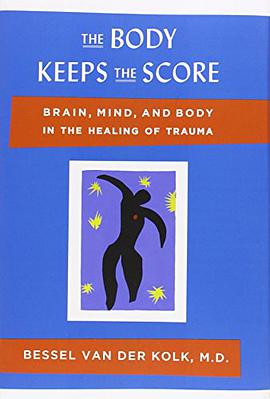
The Body Keeps the Score
The Body Keeps the Score: Brain, Mind, and Body in the Healing of Trauma Google Books Douban Goodreads Goodreads Skybridge Skybridge +3
Bessel van der Kolk, MD
publishing house:
Viking Adult
2014
- 9
other title:
The Body Keeps the Score Brain, Mind, and Body in the Healing of Trauma
/
The Body Keeps the Score: Brain, Mind, and Body in the Healing of Trauma
A pioneering researcher and one of the world's foremost experts on traumatic stress offers a bold new paradigm for healing
Trauma is a fact of life. Veterans and their families deal with the painful aftermath of combat; one in five Americans has been molested; one in four grew up with alcoholics; one in three couples have engaged in physical violence. Such experiences inevitably leave traces on minds, emotions, and even on biology. Sadly, trauma sufferers frequently pass on their stress to their partners and children.
Renowned trauma expert Bessel van der Kolk has spent over three decades working with survivors. In The Body Keeps the Score, he transforms our understanding of traumatic stress, revealing how it literally rearranges the brain's wiring-specifically areas dedicated to pleasure, engagement, control, and trust. He shows how these areas can be reactivated through innovative treatments including neurofeedback, mindfulness techniques, play, yoga, and other therapies. Based on Dr. van der Kolk's own research and that of other leading specialists, The Body Keeps the Score offers proven alternatives to drugs and talk therapy-and a way to reclaim lives.

Nymphomaniac: Volume I (2013)
Nymphomaniac: Volume I WikiData IMDb TMDB Douban Min reol kinkyreviews.site +3
Lars von Trier
actor:
Charlotte Gainsbourg
/
Stellan Skarsgård
…
other title:
女性瘾者:第一部
/
性上瘾:前篇(港)
…
A man named Seligman finds a fainted wounded woman in an alley and he brings her home. She tells him that her name is Joe and that she is nymphomaniac. Joe tells her life and sexual experiences with hundreds of men since she was a young teenager while Seligman tells about his hobbies, such as fly fishing, reading about Fibonacci numbers or listening to organ music.

The Master (2012)
The Master WikiData IMDb TMDB Douban Min reol Skybridge +3
other title:
大师
/
世纪教主(台)
…
Freddie, a volatile, heavy-drinking veteran who suffers from post-traumatic stress disorder, finds some semblance of a family when he stumbles onto the ship of Lancaster Dodd, the charismatic leader of a new "religion" he forms after World War II.

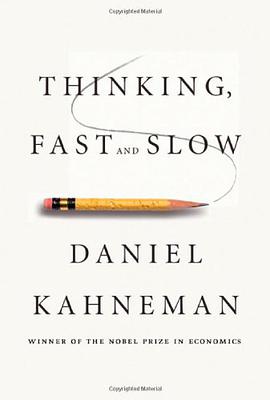
Thinking, Fast and Slow
Thinking, Fast and Slow Douban Goodreads Skybridge
Daniel Kahneman
publishing house:
Farrar, Straus and Giroux
2011
- 10
Major New York Times bestseller
Winner of the National Academy of Sciences Best Book Award in 2012
Selected by the New York Times Book Review as one of the best books of 2011
A Globe and Mail Best Books of the Year 2011 Title
One of The Economist’s 2011 Books of the Year
One of The Wall Street Journal's Best Nonfiction Books of the Year 2011
In the international bestseller, Thinking, Fast and Slow, Daniel Kahneman, the renowned psychologist and winner of the Nobel Prize in Economics, takes us on a groundbreaking tour of the mind and explains the two systems that drive the way we think. System 1 is fast, intuitive, and emotional; System 2 is slower, more deliberative, and more logical. The impact of overconfidence on corporate strategies, the difficulties of predicting what will make us happy in the future, the profound effect of cognitive biases on everything from playing the stock market to planning our next vacation—each of these can be understood only by knowing how the two systems shape our judgments and decisions.
Engaging the reader in a lively conversation about how we think, Kahneman reveals where we can and cannot trust our intuitions and how we can tap into the benefits of slow thinking. He offers practical and enlightening insights into how choices are made in both our business and our personal lives—and how we can use different techniques to guard against the mental glitches that often get us into trouble. Winner of the National Academy of Sciences Best Book Award and the Los Angeles Times Book Prize and selected by The New York Times Book Review as one of the ten best books of 2011, Thinking, Fast and Slow is destined to be a classic.
One of the New York Times Book Review's Top 10 Books of 2011
Editorial Reviews
Amazon.com Review
Amazon Best Books of the Month, November 2011: Drawing on decades of research in psychology that resulted in a Nobel Prize in Economic Sciences, Daniel Kahneman takes readers on an exploration of what influences thought example by example, sometimes with unlikely word pairs like "vomit and banana." System 1 and System 2, the fast and slow types of thinking, become characters that illustrate the psychology behind things we think we understand but really don't, such as intuition. Kahneman's transparent and careful treatment of his subject has the potential to change how we think, not just about thinking, but about how we live our lives. Thinking, Fast and Slow gives deep--and sometimes frightening--insight about what goes on inside our heads: the psychological basis for reactions, judgments, recognition, choices, conclusions, and much more. --JoVon Sotak
Review
“A tour de force. . . Kahneman’s book is a must read for anyone interested in either human behavior or investing. He clearly shows that while we like to think of ourselves as rational in our decision making, the truth is we are subject to many biases. At least being aware of them will give you a better chance of avoiding them, or at least making fewer of them.”—Larry Swedroe, CBS News
“Daniel Kahneman demonstrates forcefully in his new book, Thinking, Fast and Slow, how easy it is for humans to swerve away from rationality.”—Christopher Shea, The Washington Post
“An outstanding book, distinguished by beauty and clarity of detail, precision of presentation and gentleness of manner. Its truths are open to all those whose System 2 is not completely defunct. I have hardly touched on its richness.”— Galen Strawson, The Guardian
“Brilliant . . . It is impossible to exaggerate the importance of Daniel Kahneman’s contribution to the understanding of the way we think and choose. He stands among the giants, a weaver of the threads of Charles Darwin, Adam Smith and Sigmund Freud. Arguably the most important psychologist in history, Kahneman has reshaped cognitive psychology, the analysis of rationality and reason, the understanding of risk and the study of happiness and well-being . . . A magisterial work, stunning in its ambition, infused with knowledge, laced with wisdom, informed by modesty and deeply humane. If you can read only one book this year, read this one.”— Janice Gross Stein, The Globe and Mail
“A sweeping, compelling tale of just how easily our brains are bamboozled, bringing in both his own research and that of numerous psychologists, economists, and other experts...Kahneman has a remarkable ability to take decades worth of research and distill from it what would be important and interesting for a lay audience...Thinking, Fast and Slow is an immensely important book. Many science books are uneven, with a useful or interesting chapter too often followed by a dull one. Not so here. With rare exceptions, the entire span of this weighty book is fascinating and applicable to day-to-day life. Everyone should read Thinking, Fast and Slow.” —Jesse Singal, Boston Globe
“We must be grateful to Kahneman for giving us in this book a joyful understanding of the practical side of our personalities.” —Freeman Dyson, The New York Review of Books
“Brilliant . . . It is impossible to exaggerate the importance of Daniel Kahneman’s contribution to the understanding of the way we think and choose. He stands among the giants, a weaver of the threads of Charles Darwin, Adam Smith and Sigmund Freud. Arguably the most important psychologist in history, Kahneman has reshaped cognitive psychology, the analysis of rationality and reason, the understanding of risk and the study of happiness and well-being . . . A magisterial work, stunning in its ambition, infused with knowledge, laced with wisdom, informed by modesty and deeply humane. If you can read only one book this year, read this one.” — Janice Gross Stein, The Globe and Mail
“It is an astonishingly rich book: lucid, profound, full of intellectual surprises and self-help value. It is consistently entertaining and frequently touching, especially when Kahneman is recounting his collaboration with Tversky . . . So impressive is its vision of flawed human reason that the New York Times columnist David Brooks recently declared that Kahneman and Tversky’s work ‘will be remembered hundreds of years from now,’ and that it is ‘a crucial pivot point in the way we see ourselves.’ They are, Brooks said, ‘like the Lewis and Clark of the mind’ . . . By the time I got to the end of Thinking, Fast and Slow, my skeptical frown had long since given way to a grin of intellectual satisfaction. Appraising the book by the peak-end rule, I overconfidently urge everyone to buy and read it. But for those who are merely interested in Kahenman’s takeaway on the Malcolm Gladwell question it is this: If you've had 10,000 hours of training in a predictable, rapid-feedback environment—chess, firefighting, anesthesiology—then blink. In all other cases, think.”—The New York Times Book Review
“Ask around and you hear pretty much the same thing. 'Kahneman is the most influential psychologist since Sigmund Freud,' says Christopher Chabris, a professor of psychology at Union College, in New York. 'No one else has had such a broad impact on so many fields' . . . It now seems inevitable that Kahneman, who made his reputation by ignoring or defying conventional wisdom, is about to be anointed the intellectual guru of our economically irrational times.”— Evan R. Goldstein, The Chronicle of Higher Education
“There have been many good books on human rationality and irrationality, but only one masterpiece. That masterpiece is Daniel Kahneman’s Thinking, Fast and Slow . . . This is one of the greatest and most engaging collections of insights into the human mind I have read.”—William Easterly, Financial Times
“[Thinking, Fast and Slow] is wonderful, of course. To anyone with the slightest interest in the workings of his own mind, it is so rich and fascinating that any summary would seem absurd.”— Michael Lewis, Vanity Fair
“Absorbingly articulate and infinitely intelligent . . . What's most enjoyable and compelling about Thinking, Fast and Slow is that it's so utterly, refreshingly anti-Gladwellian. There is nothing pop about Kahneman's psychology, no formulaic story arc, no beating you over the head with an artificial, buzzword-encrusted Big Idea. It's just the wisdom that comes from five decades of honest, rigorous scientific work, delivered humbly yet brilliantly, in a way that will forever change the way you think about thinking.”—Maria Popova, The Atlantic
“I will never think about thinking quite the same. [Thinking, Fast and Slow] is a monumental achievement.”—Roger Lowenstein, Bloomberg/Businessweek
“Profound . . . As Copernicus removed the Earth from the centre of the universe and Darwin knocked humans off their biological perch, Mr. Kahneman has shown that we are not the paragons of reason we assume ourselves to be.” —The Economist
“[Kahneman’s] disarmingly simple experiments have profoundly changed the way that we think about thinking . . . We like to see ourselves as a Promethean species, uniquely endowed with the gift of reason. But Mr. Kahneman’s simple experiments reveal a very different mind, stuffed full of habits that, in most situations, lead us astray.” —Jonah Lehrer, The Wall Street Journal
“[A] tour de force of psychological insight, research explication and compelling narrative that brings together in one volume the high points of Mr. Kahneman's notable contributions, over five decades, to the study of human judgment, decision-making and choice . . . Thanks to the elegance and force of his ideas, and the robustness of the evidence he offers for them, he has helped us to a new understanding of our divided minds—and our whole selves.” —Christoper F. Chabris, The Wall Street Journal
“The ramifications of Kahenman’s work are wide, extending into education, business, marketing, politics . . . and even happiness research. Call his field “psychonomics,” the hidden reasoning behind our choices. Thinking, Fast and Slow is essential reading for anyone with a mind.” —Kyle Smith, The New York Post
“A major intellectual event . . . The work of Kahneman and Tversky was a crucial pivot point in the way we see ourselves.” —David Brooks, The New York Times
“Kahneman provides a detailed, yet accessible, description of the psychological mechanisms involved in making decisions.” —Jacek Debiec, Nature
“With Kahneman’s expert help, readers may understand this mix of psychology and economics better than most accountants, therapists, or elected representatives. VERDICT A stellar accomplishment, a book for everyone who likes to think and wants to do it better.” —Library Journal
“The mind is a hilariously muddled compromise between incompatible modes of thought in this fascinating treatise by a giant in the field of decision research. Nobel-winning psychologist Kahneman (Attention and Effort) posits a brain governed by two clashing decision-making processes. The largely unconscious System 1, he contends, makes intuitive snap judgments based on emotion, memory, and hard-wired rules of thumb; the painfully conscious System 2 laboriously checks the facts and does the math, but is so "lazy" and distractible that it usually defers to System 1. Kahneman uses this scheme to frame a scintillating discussion of his findings in cognitive psychology and behavioral economics, and of the ingenious experiments that tease out the irrational, self-contradictory logics that underlie our choices. We learn why we mistake statistical noise for cohere...
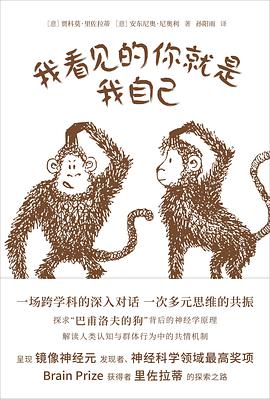
我看见的你就是我自己
Douban
[意] 贾科莫 • 里佐拉蒂
/
[意] 安东尼奥 • 尼奥利
translator:
孙阳雨
2018
- 10
★★★
一场跨学科的深入对话,一次多元思维的共振;
呈现镜像神经元发现者、神经科学领域最高奖项Brain Prize获得者里佐拉蒂的探索之路;
探求“巴甫洛夫的狗”背后的神经学原理;
解读人类认知与群体行为中的共情机制。
……………………
◎ 编辑推荐
★ 作者为世界上 最知名的神经心理学家之一、镜像神经元的发现者里佐拉蒂,作者从青少年时期的求学经历谈到学术研究生涯以及镜像神经元的发现过程与未来发展,内容丰富,逻辑性、可读性强;
★ 本书以访谈录形式展开,提问者的提问能够代表普通读者对神经心理学的疑问和兴趣点,科学家的解释也相对通俗,平易近人,包罗万象,涵盖了神经科学、哲学、心理学、社会学、文化艺术等多方面领域。
…………………………
◎ 内容简介
本书是意大利知名记者与镜像神经元的发现者里佐拉蒂的谈话录。内容涉及神经科学、心理学、哲学、社会学、语言学等,让读者从神经科学的角度窥见人与人、人与社会的方方面面。
镜像神经元是存在于人类大脑的一种细胞,是“共情”这一生物机制的基础。这一发现解释了人类个体与群体行为的原因,包括我们的认识方式是如何做出改变的以及我们的感知、行为和语言的变化等。后来的研究还发现,这一机制对社交障碍的治疗也有极大帮助。
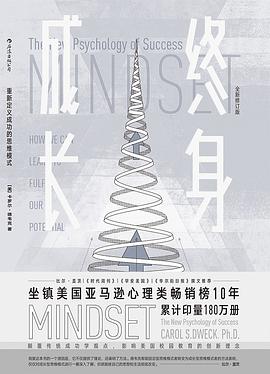
终身成长
MINDSET: THE NEW PSYCHOLOGY OF SUCCESS Douban Eggplant.place
[美] 卡罗尔·德韦克
translator:
楚祎楠
publishing house:
后浪丨江西人民出版社
2017
- 11
坐镇美国亚马逊心理类畅销榜10年,累计印量180万册,比尔·盖茨撰文推荐
颠覆传统成功学观点,影响美国校园教育的创新理念
...................
※编辑推荐※
◎ 影响美国一代人的心理励志之作,被无数次引用的成功学观点。美国亚马逊心理畅销书在榜10年,《 时代周刊》《早安美国》《华尔街日报》热赞,比尔·盖茨撰文推荐。
◎ 斯坦福大学心理学教授卡罗尔·德韦克总结数十年研究成果的经典作品。成功不在先天,不靠外在,关键在于思维模式:是满足于现有成果、避免失败可能的固定型,还是以努力为豪、寻求挑战机会的成长型,决定了你能在成功路上走多远。
◎ 2017年9月,作者卡罗尔·德韦克以对“成长型思维”的突破性研究,荣获全球最大教育单项奖“一丹奖”。此套理论鼓励学童积极评估及发展自己的潜能,在教育界影响深远。
◎ 夸孩子“你好聪明”还是“你真用功”更有意义?如果一段感情需要努力经营,意味着我们注定不适合在一起?一位天才老板带领一群天才员工,就一定能缔造卓越?思维模式的不同影响着我们生活和工作的方方面面,而你有充分的机会与可能扭转自己的思维模式,改变前进的方向。
◎ 最新修订版,在原版基础上参考读者反馈,增补了新章节。
...................
※内容简介※
在对成功的数十年研究后,斯坦福大学心理学家卡罗尔·德韦克发现了思维模式的力量。她在《终身成长》中表明,我们获得的成功并不是能力和天赋决定的,更受到我们在追求目标的过程中展现的思维模式的影响。
她介绍了两种思维模式:固定型与成长型,它们体现了应对成功与失败、成绩与挑战时的两种基本心态。你认为才智和努力哪个重要,能力能否通过努力改变,决定了你是会满足于既有成果还是会积极探索新知。只有用正确的思维模式看待问题,才能更好地达成人生和职业目标。
德韦克揭示的成功法则已被很多具有发展眼光的父母、老师、运动员和管理者应用,并在实践中得到了验证。通过了解自己的思维模式并做出改变,人们能以最简单的方式培养对学习的热情,和在任何领域内取得成功都需要的抗压力。
...................
※名人推荐※
我爱这本书的一个原因是,它不仅提供了理论,还阐明了方法。德韦克帮助固定型思维模式者转变为成长型思维模式者的方法表明,仅仅对成长型思维模式进行一番深入了解,你就能让自己的思想和生活彻底改变。
——比尔·盖茨
你一旦了解固定型思维和成长型思维的区别,看待他人和自己的方式会有重大的改变。你会期待,招聘有成长型思维的员工,选择有成长型思维的老板;你会规划,相亲时看对方有没有成长型思维,教育子女时也会刻意培养成长型思维。但如果你真看懂了这本书,你会说,我要成长为有成长型思维的人,然后,一点一点影响我身边人的成长型思维。那将是你给自己和在乎的人的最好的礼物。
——赵周,拆书帮创始人、《这样读书就够了》作者
德韦克的重大发现是,我们通常具有两种思维模式中的一种:认为自己的智力是一种固定属性,或认为它是可以培养并随着时间增长的。
——马尔科姆·格拉德威尔(Malcolm Gladwell),记者、畅销书作者和演讲家
你会发现在关于动力的著作中,本书是数一数二的。
——《关键教养报告》(NurtureShock)作者波·布朗森(Po Bronson)
如果你是个管理者,或在养育孩子(这也算一种管理),放下手边的一切,读读这本书吧。
——《创业的艺术》(The Art of the Start)作者盖伊·川崎(Guy Kawasaki)
每个人都该读这本书。
——《让创意更有黏性》(Made to Stick)作者奇普·希思(Chip Heath)、丹·希思(Dan Heath)
德韦克对智力与思维模式的研究影响了我生活中的方方面面。
——《全新思维》(A Whole New Mind)和《驱动力》(Drive)作者丹尼尔·平克(Daniel Pink)
一本好书会让你赞同,一本伟大的书会让你遵从,而这本书提出的建议会改变你的一生。
——耶鲁大学心理学教授罗伯特·J. 斯滕伯格(Robert J. Sternberg)

Marwencol (2010)
Marwencol WikiData IMDb TMDB Douban Skybridge +2
杰夫·马尔伯格
actor:
Mark Hogancamp
/
Emmanuel Nneji
…
other title:
马文科尔
/
马尔文科
…
After a vicious attack leaves him brain-damaged and broke, Mark Hogancamp seeks recovery in "Marwencol", a 1/6th scale World War II-era town he creates in his backyard.
Inner Senses (2002)
異度空間 WikiData IMDb TMDB Douban
other title:
이도공간
/
異度空間
…
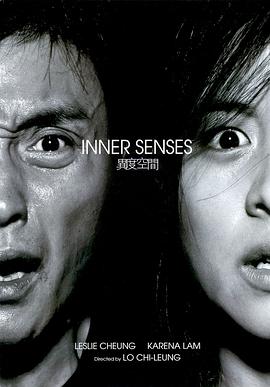
This is the story of Yan, a young woman haunted by fleeting images of what she believes to be dead people. Told that it is all in her mind by her psychologist Jim, Yan still cannot find any other explanations for her visions. Soon, her suspicions are confirmed when Jim begins seeing the same things she does and the two begin to unravel a mystery that leads to a forgotten past
The Butterfly Effect (2004)
The Butterfly Effect WikiData IMDb TMDB Douban Bangumi Min reol Skybridge +4
other title:
蝴蝶效应
/
L'Effet papillon
…
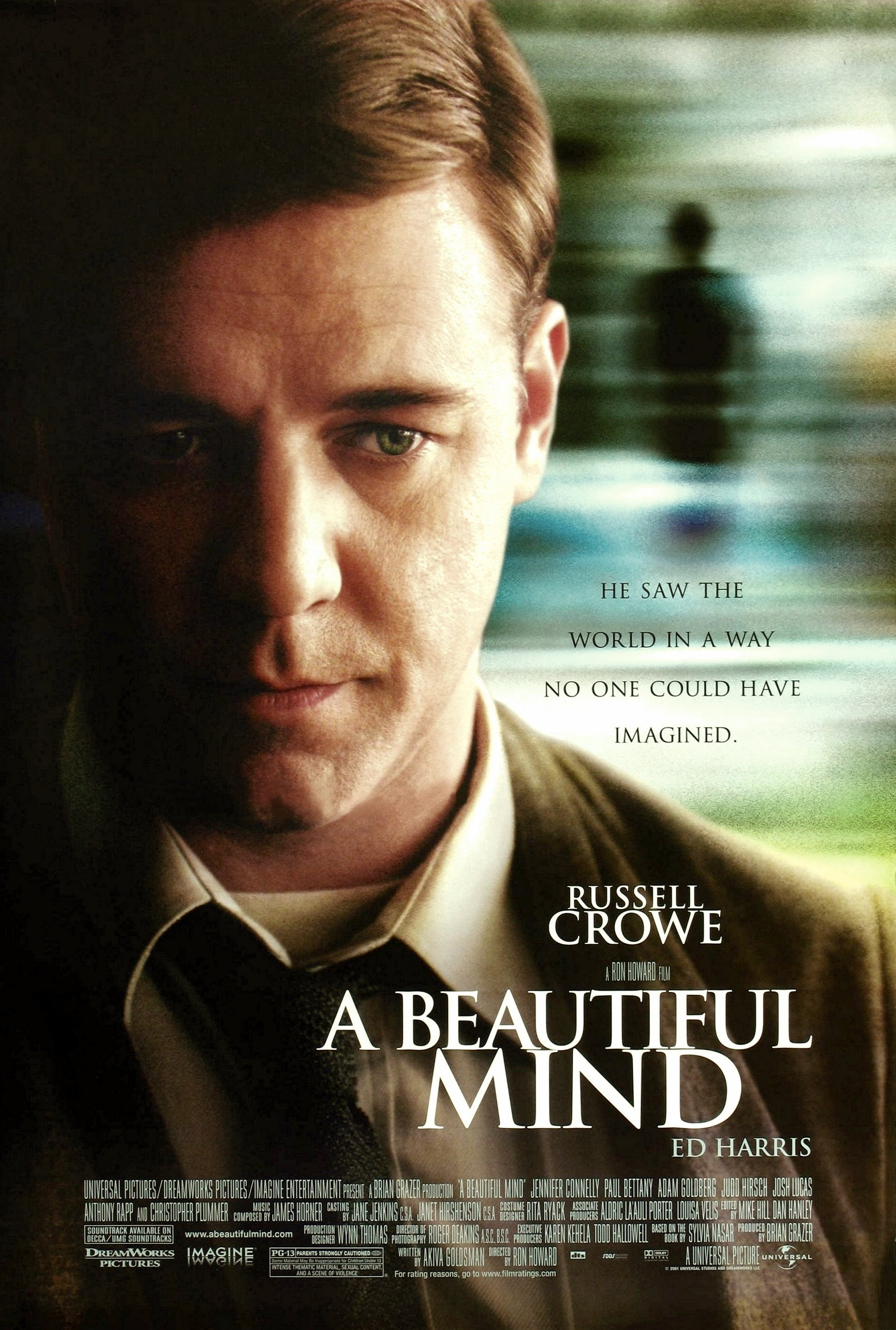
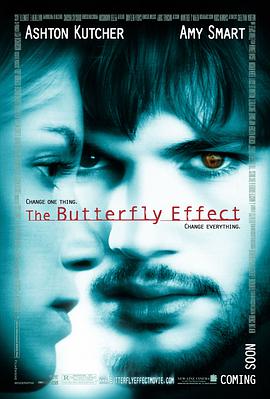
A young man struggles to access sublimated childhood memories. He finds a technique that allows him to travel back into the past, to occupy his childhood body and change history. However, he soon finds that every change he makes has unexpected consequences.