blue-note
The Tokyo Blues
Douban
The Horace Silver Quintet genre: Jazz
release date 1962-01-01 publisher: Blue Note Records
The Tokyo Blues is an album by jazz pianist Horace Silver released on the Blue Note label in 1962, featuring performances by Silver with Blue Mitchell, Junior Cook, Gene Taylor, and John Harris Jr.The Allmusic review awarded the album 4 stars.
Doin' Allright
Douban
Dexter Gordon genre: Jazz
release date 1961-01-01 publisher: Blue Note Records
Dexter Gordon的蓝调别具一格。本专辑携手Freddie Hubbard 和Horace Parlan推出这一精品。特别推荐“Society Red”和“It´s You Or No One”。
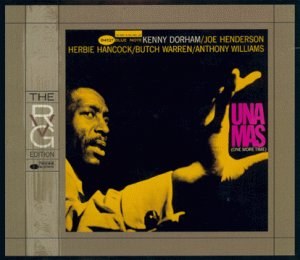
Una Mas
Douban
Kenny Dorham genre: Jazz
release date 1999-09-14 publisher: Blue Note Records
McKinley Howard "Kenny" Dorham (August 30, 1924 – December 5, 1972) was an American jazz trumpeter, singer, and composer. Dorham's talent is frequently lauded by critics and other musicians, but he never received the kind of attention or public recognition from the jazz establishment that many of his peers did.
The Thing to Do
Douban
Blue Mitchell genre: Jazz
release date 1964-07-30 publisher: Blue Note Records
When Horace Silver disbanded his quintet of six years in 1964, Blue Mitchell, Junior Cook and Gene Taylor decided to stay together and form the nucleus of the Blue Mitchell Quintet. The band took shape that summer with newcomers Chick Corea and Al Foster. Mitchell has learned wellfrom his former employer; for this debut album he kept the emphasis on consummahe ultra hip groove of the title tune to the now classic "Footprints," this is among the best. Wayne Shorter: Tenor Saxophone Herbie Hancock: Piano; Reggie Workman: Bass; Joe Chambers: Drums
Prayer Meetin'
Douban
Jimmy Smith
release date 2004-03-23 publisher: Blue Note Records
Jimmy Smith ruled the Hammond organ in the '50s and '60s. He revolutionized the instrument, showing it could be creatively used in a jazz context and popularized in the process. His Blue Note sessions from 1956 to 1963 were extremely influential and many, like 1960's Back at the Chicken Shack and 1958 's The Sermon, are classics. Smith turned the organ into almost an ensemble itself. He provided walking bass lines with his feet, left hand chordal accompaniment, solo lines in the right, and a booming, funky presence that punctuated every song, particularly the up-tempo cuts. Smith turned the fusion of R&B, blues, and gospel influences with bebop references and devices into a jubilant, attractive sound that many others immediately absorbed before following in his footsteps.