英语
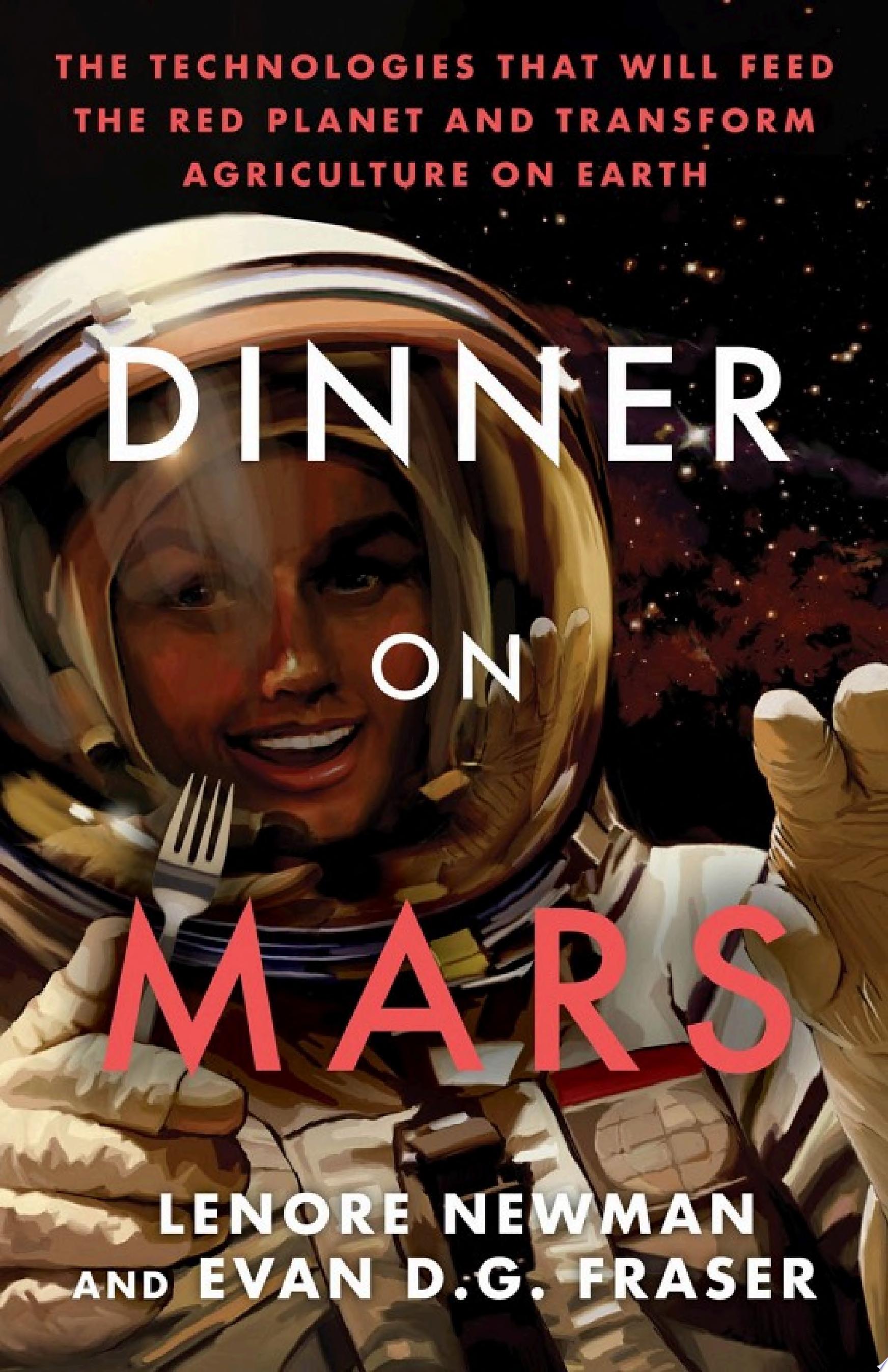
Dinner on Mars
Google Books
Lenore Newman / Evan D. G. Fraser publishing house: ECW Press 2022 - 10
“This culinary cosmic outing is as creative as it is informative.” — STARRED review, Publishers Weekly From Impossible Burgers to lab-made sushi, two witty, plugged-in food scientists explore leading-edge AgTech for the answer to feeding a settlement on Mars — and nine billion Earthlings too Feeding a Martian is one of the greatest challenges in the history of agriculture. Will a Red Planet menu involve cheese and ice cream made from vats of fermented yeast? Will medicine cabinets overflow with pharmaceuticals created from engineered barley grown using geothermal energy? Will the protein of choice feature a chicken breast grown in a lab? Weird, wonderful, and sometimes disgusting, figuring out “what’s for dinner on Mars” is far from trivial. If we can figure out how to sustain ourselves on Mars, we will know how to do it on Earth too. In Dinner on Mars, authors Fraser and Newman show how setting the table off-planet will supercharge efforts to produce food sustainably here at home. For futurists, sci-fi geeks, tech nuts, business leaders, and anyone interested in the future of food, Dinner on Mars puts sustainability and adaptability on the menu in the face of our climate crisis.
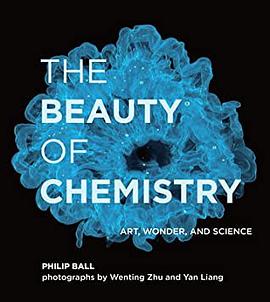
The Beauty of Chemistry: Art, Wonder, and Science
Douban
Philip Ball / Wenting Zhu (Photographs) … publishing house: MIT Press 2011 - 5
Images and text capture the astonishing beauty of the chemical processes that create snowflakes, bubbles, flames, and other wonders of nature. Chemistry is not just about microscopic atoms doing inscrutable things; it is the process that makes flowers and galaxies. We rely on it for bread-baking, vegetable-growing, and producing the materials of daily life. In stunning images and illuminating text, this book captures chemistry as it unfolds. Using such techniques as microphotography, time-lapse photography, and infrared thermal imaging, The Beauty of Chemistry shows us how chemistry underpins the formation of snowflakes, the science of champagne, the colors of flowers, and other wonders of nature and technology. We see the marvelous configurations of chemical gardens; the amazing transformations of evaporation, distillation, and precipitation; heat made visible; and more.
This Is Not Who I Am
Google Books
Emily Bootle publishing house: Ortac Press 2022 - 11
In contemporary culture, there is no stronger imperative than to be authentic. But what does authenticity actually mean? Everywhere we turn, we are urged to "live our truth" an element of Western culture that is almost never questioned. Authenticity in all its contexts is becoming more significant than ever as digital culture breeds fakery and capitalism offers the illusion of infinite choice. In this climate, finding and being yourself is a more complex idea than it sounds - one that should not necessarily be taken as doctrine. In this set of six sharp, lively essays, the writer and journalist Emily Bootle explores how authenticity has pervaded every facet of our culture, from modern celebrity and identity politics to Instagram captions and wellness. Blending pop culture and philosophy, this book dismantles the ideology surrounding being ourselves at all costs, and questions what fuels our authenticity obsession.
Biomimetics for Designers
Google Books
Veronika Kapsali publishing house: Thames & Hudson 2021
Biomimetics - imitating life's natural processes - is one of the hottest areas of design research and inspiration. The natural world contains infinite examples of how to achieve complex behaviours and applications by using simple materials in a clever way, as all organisms make use of limited raw materials to survive. In the popular imagination, the best-known example is the microscopic 'hook' on burrs that led to the development of Velcro, but there are many more applications, from kingfisher beaks inspiring the shape of bullet trains to shark skin being used as a model for advanced swimsuits. This book presents many examples, showing each natural phenomenon alongside its application, with an accessible explanation of the biology and the story of the design. While most are concrete examples that have already been developed, others point the way to what might be possible for an enterprising designer, providing a starting point for creativity. This timely overview is the perfect introduction for designers of all disciplines, and a reminder that inspiration may be just down the garden path. With 439 illustrations
What is Sexual Capital?
Douban
Dana Kaplan / Eva Illouz publishing house: Polity 2022 - 3
We thought of culture as a disinterested activity but sociologists showed long ago that it is a form of capital, used to gain power, status or money. This book does to sex what other sociologists did to culture: it shows that sex, no longer defined by religion, now plays a role in the economy and can yield tangible benefits in terms of money, status and occupation. How do people accumulate sexual capital, and what are the returns for investing money, time, knowledge and affective energy in establishing and enhancing our sexual selves?Dana Kaplan and Eva Illouz disentangle the current cultural politics of heterosexual life, arguing that sex – that messy amalgam of sexual affects and experiences – has increasingly assumed an economic character. Some may opt for plastic surgery to beautify their face or body, while others may consume popular sex advice or join ‘seduction communities’ in order to train their sexual subjectivity to become more confident. These different investments generate a better position in order to compete for sexual access to the bodies of others. But beyond these purely sexual competitions, oriented towards pleasure maximization or the mere feeling of being desired by others, the authors trace an emerging, novel, neoliberal kind of sexual capital. This ‘late modern sexual capital’ is the ability to glean self-appreciation from sexual encounters and to use this self-value to foster employability. It is responsible for phenomena as diverse as Silicon Valley sex parties as expressions of high-tech ideals, genital plastic surgery among upper middle-class patients and even some sex workers’ belief that through their services they are able to garner self-esteem and develop emotional resilience and other employable skills.This highly original book will appeal to students and scholars in sociology, anthropology, gender studies and cultural studies, and to anyone interested in the nature of sex and how it is changing today.
The Virago Book Of Witches
Google Books
Shahrukh Husain publishing house: Little, Brown Book Group 2013 - 09
Beware the women who are called witches, or those who claim the name for themselves... Banshees - a howling night-witch and harbinger of death; She-devils - Lilith and her daughters; or Bitches - Hecate, whose chariot is drawn by dogs. Alluring women, enchantresses, seekers of revenge, wise old women and badly-behaved girls. As Shahrukh Husain says, witches are 'womanhood in all its complexity'. Over fifty stories of crones and nixies, shape shifters and beauties are here, including the loving fox witch of Japan; Italy's Witch-Bea-Witch; Scotland's Goodwife of Laggan; Biddy Earl and the terrifying Kali and Baba Yaga who comes in many forms to haunt, entice, possess, transform and challenge. From every corner of the globe, with tom-foolery, fun, strife and victory, these folklore and legends celebrate women who step out of line.
The Other Milk
Douban
Jia-Chen Fu publishing house: University of Washington Press 2018
In the early twentieth century, China was stigmatized as the Land of Famine. Meanwhile in Europe and the United States, scientists and industrialists seized upon the soybean as a miracle plant that could help build modern economies and healthy nations. Soybeans, protein-packed and domestically grown, were a common food in China, and soybean milk (doujiang) was poised for reinvention for the modern age. Scientific soybean milk became a symbol of national growth and development on Chinese terms, and its competition with cow s milk reflected China s relationship to global modernity and imperialism. The Other Milk explores the curious paths that led to the notion of the deficient Chinese diet and to soybean milk as the way to guarantee food security for the masses. Jia-Chen Fu s in-depth examination of the intertwined relationships between diet, health, and nation illuminates the multiple forces that have been essential in the formation of nutrition science in China.
Square Haunting
Douban
Francesca Wade publishing house: Faber & Faber 2020 - 1
'I like this London life . . . the street-sauntering and square-haunting.' Virginia Woolf, diary, 1925 Mecklenburgh Square, on the radical fringes of interwar Bloomsbury, was home to activists, experimenters and revolutionaries; among them were the modernist poet H. D., detective novelist Dorothy L. Sayers, classicist Jane Harrison, economic historian Eileen Power, and writer and publisher Virginia Woolf. They each alighted there seeking a space where they could live, love and, above all, work independently. Francesca Wade's spellbinding group biography explores how these trailblazing women pushed the boundaries of literature, scholarship, and social norms, forging careers that would have been impossible without these rooms of their own.
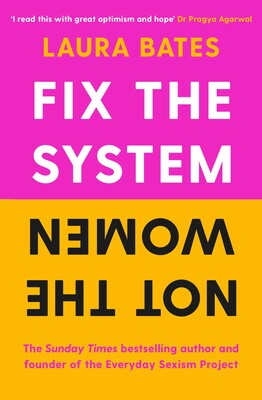
Fix the System, Not the Women
Goodreads
Laura Bates publishing house: Simon Schuster Audio UK 2022 - 5
Too often, we blame women. For walking home alone at night. For not demanding a seat at the table. For not overcoming the odds that are stacked against them. This distracts us from the real problem: the failings and biases of a society that was not built for women. In this explosive book, feminist writer and activist Laura Bates exposes the systemic prejudice at the heart of five of our key institutions. Education Politics Media Policing Criminal justice Combining stories with shocking evidence, Fix the System, Not the Women is a blazing examination of sexual injustice and a rallying cry for reform.
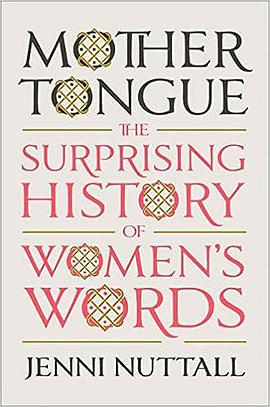
Mother Tongue
Douban
Jenni Nuttall publishing house: Viking 2023 - 8
An enlightening linguistic journey through a thousand years of feminist language—and what we can learn from the vivid vocabulary that English once had for women’s bodies, experiences, and sexuality So many of the words that we use to chronicle women’s lives feel awkward or alien. Medical terms are scrupulously accurate but antiseptic. Slang and obscenities have shock value, yet they perpetuate taboos. Where are the plain, honest words for women’s daily lives? Mother Tongue is a historical investigation of feminist language and thought, from the dawn of Old English to the present day. Dr. Jenni Nuttall guides readers through the evolution of words that we have used to describe female bodies, menstruation, women’s sexuality, the consequences of male violence, childbirth, women’s paid and unpaid work, and gender. Along the way, she challenges our modern language’s ability to insightfully articulate women’s shared experiences by examining the long-forgotten words once used in English for female sexual and reproductive organs. Nuttall also tells the story of words like womb and breast, whose meanings have changed over time, as well as how anatomical words such as hysteria and hysterical came to have such loaded legacies. Inspired by today’s heated debates about words like womxn and menstruators—and by more personal conversations with her teenage daughter—Nuttall describes the profound transformations of the English language. In the process, she unearths some surprisingly progressive thinking that challenges our assumptions about the past—and, in some cases, puts our twenty-first-century society to shame. Mother Tongue is a rich, provocative book for anyone who loves language—and for feminists who want to look to the past in order to move forward.
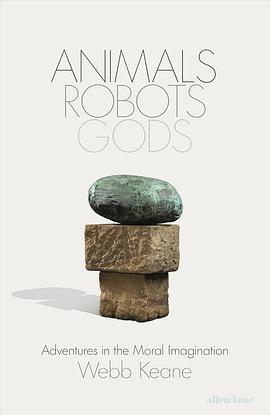
Animals, Robots, Gods
Douban
Webb Keane publishing house: Allen Lane 2024 - 8
How do we live ethical lives alongside others? A fascinating, mind-expanding exploration of our moral universe We have always lived with ethically significant others, whether they are the pets we keep, the gods we believe in or the machines we are endowing with life. How should we treat them as our world changes? In Animals, Robots, Gods, acclaimed anthropologist Webb Keane provides a new vision of ethics, defined less by our minds, religion or society, and more by our interactions with those around us. Drawing on ground-breaking research by fieldworkers around the world, he explores the underpinnings of our moral universe. Along the way we investigate the ethical dilemmas of South Asian animal rights activists, Balinese cockfighters, Japanese robot fanciers -- even macho cowboys. We meet a hunter in the Yukon who explains his prey generously gives itself up to him; a cancer sufferer in Thailand who sees his tumour as a reincarnated ox; a computer that gets you to confess your anxieties as if you were on the psychiatrist's couch. With charm, wit and insight, Keane offers us a better understanding of our doubts and certainties, showing how centuries of conversations between us and non-humans inform our conceptions of morality, and will continue to guide us in the age of AI and beyond.
Will Write for Food: Pursue Your Passion and Bring Home the Dough Writing Recipes, Cookbooks, Blogs, and More
Goodreads
Dianne Jacob publishing house: Balance 2021 - 9
Do you love both food and writing and want to know the secrets of bestselling cookbook authors, successful food bloggers and freelance writers?  Noted journalist and writing instructor Dianne Jacob combines over 20 years of experience to teach you how to take your passion from the plate to the page. With tips for crafting your best work, getting published, and turning your passion into cash, Jacob will transform you from starving artist into well-fed writer. Whether you’ve been writing for years or are just starting out, this updated edition of Will Write for Food offers what you need to know to succeed and thrive,
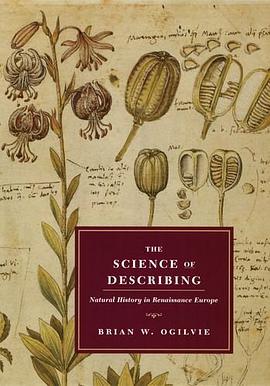
The Science of Describing
Douban
Brian W. Ogilvie publishing house: University Of Chicago Press 2006 - 5
Out of the diverse traditions of medical humanism, classical philology, and natural philosophy, Renaissance naturalists created a new science devoted to discovering and describing plants and animals. Drawing on published natural histories, manuscript correspondence, garden plans, travelogues, watercolors, and drawings, The Science of Describing reconstructs the evolution of this discipline of description through four generations of naturalists. In the late fifteenth and early sixteenth centuries, naturalists focused on understanding ancient and medieval descriptions of the natural world, but by the mid-sixteenth century naturalists turned toward distinguishing and cataloguing new plant and animal species. To do so, they developed new techniques of observing and recording, created botanical gardens and herbaria, and exchanged correspondence and specimens within an international community. By the early seventeenth century, naturalists began the daunting task of sorting through the wealth of information they had accumulated, putting a new emphasis on taxonomy and classification. Illustrated with woodcuts, engravings, and photographs, The Science of Describing is the first broad interpretation of Renaissance natural history in more than a generation and will appeal widely to an interdisciplinary audience.
Beauty and Misogyny
Douban
Jeffreys, Sheila publishing house: Routledge 2005 - 8
Should western beauty practices, ranging from lipstick to labiaplasty, be included within the United Nations understandings of harmful traditional/cultural practices? By examining the role of common beauty practices in damaging the health of women, creating sexual difference, and enforcing female deference, this book argues that they should. In the 1970s feminists criticized pervasive beauty regimes such as dieting and depilation, but some 'new' feminists argue that beauty practices are no longer oppressive now that women can 'choose' them. However, in the last two decades the brutality of western beauty practices seems to have become much more severe, requiring the breaking of skin, spilling of blood and rearrangement or amputation of body parts. Beauty and Misogyny seeks to make sense of why beauty practices are not only just as persistent, but in many ways more extreme. It examines the pervasive use of makeup, the misogyny of fashion and high-heeled shoes, and looks at the role of pornography in the creation of increasingly popular beauty practices such as breast implants, genital waxing and surgical alteration of the labia. It looks at the cosmetic surgery and body piercing/cutting industries as being forms of self-mutilation by proxy, in which the surgeons and piercers serve as proxies to harm women's bodies, and concludes by considering how a culture of resistance to these practices can be created. This essential work will appeal to students and teachers of feminist psychology, gender studies, cultural studies, and feminist sociology at both undergraduate and postgraduate levels, and to anyone with an interest in feminism, women and beauty, and women's health.
Tribal: How the Cultural Instincts That Divide Us Can Help Bring Us Together
Goodreads
Michael Morris publishing house: Thesis 2024 - 10
A revelatory, paradigm-shifting work from a renowned Columbia professor and “one of the great social and cultural psychologists” (Amy Cuddy) that demystifies our tribal instincts and shows us how to use them to create positive change. Tribalism is our most misunderstood buzzword. We’ve all heard pundits bemoan its rise, and it’s been blamed for everything from political polarization to workplace discrimination. But as acclaimed cultural psychologist and Columbia professor Michael Morris argues, our tribal instincts are humanity’s secret weapon. Ours is the only species that lives in groups glued together by their distinctive cultures that can grow to a scale far beyond clans and bands. Morris argues that our psychology is wired by evolution in three distinctive ways. First, the peer instinct to conform to what most people do. Second, the hero instinct to give to the group and emulate the most respected. And third, the ancestor instinct to follow the ways of prior generations. These tribal instincts enable us to share knowledge and goals and work as a team to transmit the accumulated pool of cultural knowledge onward to the next generation. Countries, churches, political parties, and companies are tribes, and tribal instincts explain our loyalties to them and the hidden ways that they affect our thoughts, actions, and identities. Rather than deriding tribal impulses for their irrationality, we can recognize them as powerful levers that elevate performance, heal rifts, and set off shockwaves of cultural change.Weaving together deep research, current and historical events, and stories from business and politics, Morris cuts across conventional wisdom to completely reframe how we think about our tribes. Bracing and hopeful, Tribal unlocks the deepest secrets of our psychology and gives us the tools to manage our misunderstood superpower.
Passing Strange and Wonderful: Aesthetics Nature And Culture
Goodreads
Yi-Fu Tuan publishing house: Island Press 1993 - 3
In this rich and rewarding work, Yi-Fu Tuan vividly demonstrates that feeling and beauty are essential components of life and society. The aesthetic is not merely one aspect of culture but its central core - both its driving force and its ultimate goal. Beginning with the individual and his physical world, Tuan's exploration progresses from the simple to the complex. His initial evaluation of the building blocks of aesthetic experience (sight, hearing, smell, taste, touch) develops gradually into a wide-ranging examination of the most elaborate of human constructs, including art, architecture, literature, philosophy, music, and more.
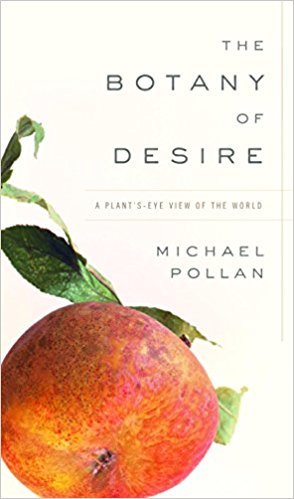
The Botany of Desire: A Plant's-Eye View of the World
Goodreads
publishing house: Random House 2018 - 8
Every schoolchild learns about the mutually beneficial dance of honeybees and flowers: The bee collects nectar and pollen to make honey and, in the process, spreads the flowers’ genes far and wide. In The Botany of Desire, Michael Pollan ingeniously demonstrates how people and domesticated plants have formed a similarly reciprocal relationship. He masterfully links four fundamental human desires—sweetness, beauty, intoxication, and control—with the plants that satisfy them: the apple, the tulip, marijuana, and the potato. In telling the stories of four familiar species, Pollan illustrates how the plants have evolved to satisfy humankind’s most basic yearnings. And just as we’ve benefited from these plants, we have also done well by them. So who is really domesticating whom?
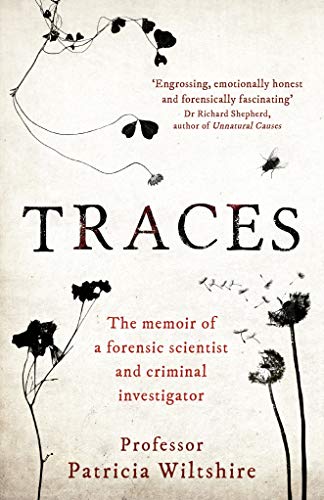
Traces: The Memoir of a Forensic Scientist and Criminal Investigator
Goodreads
Patricia Wiltshire publishing house: Blink Publishing 2019 - 7
Professor Patricia Wiltshire will take you on a journey through the fascinating edgeland where nature and crime are intertwined. She'll take you searching for bodies of loved ones - through woodlands, along hedgerows, field-edges, and through plantations - solving time since death, and disposal of remains, from ditches to living rooms. She will give you glimpses of her own history: her loves, her losses, and the narrow little valley in Wales where she first woke up to the wonders of the natural world. Pat will show you how her work with a microscope reveals tell-tale traces of the world around us, and how these have taken suspects of the darkest criminal activities to court. From flowers, fungi, tree trunks to car pedals, walking boots, carpets, and corpses' hair, Traces is a unique book on life, death, and one's indelible link with nature.