哲学
本托的素描簿
Bento's Sketchbook Douban
★ 9.2 5 ratings
约翰·伯格 translator: 黄华侨 publishing house: 理想国 | 广西师大出版社 2017 - 7
“命运常常具有几何图形版的规则,但却没有可以用来表示它们的名词。素描可以代替一个名词吗?”——约翰·伯格 在《本托的素描簿》这本书中,对素描这项活动能把我们带往何处、指向何物有着深刻体悟的约翰·伯格,将互为参照的文字与素描“缝制”在了一起,并以这样的方式与17世纪荷兰哲学家贝内迪克特·斯宾诺莎对话。 小名叫本托的斯宾诺莎平素很是喜欢画画,据说他会随身携带一本素描簿,用来画下眼见之物。但在他去世后,这本素描簿却没有出现在他的遗物清单中,遂成为一个失落的传奇。对于关注绘画的伯格来说,他常常会想象斯宾诺莎这个人文主义思想的同路人是如何用他的哲学之眼观察事物的,想象他会在这本簿子上画下什么样的素描。如此的想象也激发了伯格自己的创作灵感。于是,在一本被伯格认定是“本托的素描簿”的簿子上,他同时以素描和写作两种方式,与生活在几个世纪前的斯宾诺莎展开了隔空的交谈。 在伯格看来,“素描是一种探测方式。人类最初产生素描的冲动,乃是出于他们的实际需要:搜寻某物,测定位置,安放某物,安置自身。”毫无疑问,这种对素描富于启发性的理解,是伯格的创作之所以发生,也是他与斯宾诺莎的对话之所以可能的主要前提和关键提示。此次《本托的素描簿》全新中文简体版共收录伯格65幅全彩素描水彩,以及由素描引发的内省文字。正是在文字与素描的相遇中,在伯格的思想与斯宾诺莎的思想的相遇中,他们变成了彼此的替身。
人認識到的實在是否受限於自身?
Douban
侯貝(Blanche Robert) translator: 梁家瑜 / 蔡士瑋 … publishing house: 大家 2019 - 3
何谓“理性”?何谓“真实”? 理性是心灵的能力,在认识的范畴中,可用于区分真假;在行动的领域中,可用于分辨善恶。相对于仅限于想象中的事物而言,真实指的是确实存在的事物,以及事实的整体。 为什么要理解“理性与真实”? 当我们用我们的理性去认识真实的时候,我们是否想过,我们所认识的真实是否必定受限于我们的理性能力?我们所认识的真实是否与别人所认识的相同?这些认识论的问题,正是讨论所有哲学问题的基础。 本书讨论了哪些主题: 如果真实只能是人类理性所认识的真实,则真实必定来自于理性对它的重构,然而我们是否意识到了理性的限制? 理论是对真实的解释,理论的成立依赖经验的支持,但仅有经验支持仍然不够,科学理论还要符合哪些条件? 诠释似乎是主观的,是必须避免的,可是我们真的能够避免诠释吗?还是我们应该用诠释让真实更为丰富,并避免任意的诠释? 生命是由物质构成的?或是由物质与精神共同构成的?物质与生命间确实存在不可跨越的界限吗?如果心灵的本质是思考,我们如何看待也会思考的人工智能? 我正在说谎,这句话是真话,还是谎话?诚实是不是无条件的义务?或是我们只对有权利者有诚实的义务?是否存在“善意的谎言”?谁能定义何时需要“善意的谎言”? 思考这些问题“有什么用”? “真实”是否存在?唯一的真实确实存在吗?所谓的真实是否可能是“多个”真实?对于真实的讨论,如何不落入相对主义的迷思?这些提问对于科学、社会科学、历史、新闻、教育等各个领域可以带来更深刻的刺激与反思。
存在主义心理治疗
Existential Psychotherapy Douban Goodreads
★ 9.0 64 ratings
(美) 亚隆 translator: 黄峥 / 张怡玲 … publishing house: 商务印书馆 2015 - 5
存在主义治疗是每一个心理治疗师在其临床工作和个人生活中都可能会采用到的一种精神取向,或者说是生活哲学。心理治疗的根本问题与人类存在的核心问题在这里相遇。 在本书中,亚隆教授从临床经验、实证性研究、哲学文献以及其他大量资料出发,围绕着四个“生命的终极关怀”——死亡、自由、存在的孤独和无意义——逐一进行深入的探讨,阐述每一个存在性关怀的意义,并论述治疗师应该如何通过对他们的理解来进行有效的临床工作。 本书不仅为那些存在主义取向的心理治疗师提供了一部经典的教科书,同时也为所有流派的治疗师以及所有思考过人生意义的人提供了一个对生命和存在进行反思的空间。
Truth, Language, and History
Douban
Donald Davidson publishing house: Clarendon Press 2005 - 4
Truth, Language, and History is the much-anticipated final volume of Donald Davidson's philosophical writings. In the four groups of essays that comprise it, Davidson continues to explore the themes that occupied him for more than fifty years: the relations between language and the world; speaker intention and linguistic meaning; language and mind; mind and body; mind and world; mind and other minds. He asks: what is the role of the concept of truth in these explorations? And, can a scientific world view make room for human thought without reducing it to something material and mechanistic? Davidson's underlying picture, which can be seen in many of these essays, is that we are acquainted directly with the world, not indirectly via some intermediary such as sense-data, representations, or language itself; that thought emerges in the first place through interpersonal communication in a shared material world, and continues to develop as we engage each other in dialogue; and that language depends on communication, not vice versa. This is the triangulating situation - two creatures communicating about a common world - about which Davidson has written elsewhere.As for the mind-body relation: our ontology need posit nothing more that material objects and events; but as explainers we require two mutually irreducible vocabularies: mind and body. In the last six essays Davidson finds interconnections between his own views and those of some of the major philosophers of the past. Including a new introduction by his widow, Marcia Cavell, this volume completes Donald Davidson's colossal intellectual legacy.
Quintessence
Douban
W. V. Quine publishing house: Belknap Press 2008 - 4
Through the first half of the twentieth century, analytic philosophy was dominated by Russell, Wittgenstein, and Carnap. Influenced by Russell and especially by Carnap, another towering figure, Willard Van Orman Quine (1908-2000) emerged as the most important proponent of analytic philosophy during the second half of the century. Yet with twenty-three books and countless articles to his credit - including, most famously, "Word and Object" and "Two Dogmas of Empiricism" - Quine remained a philosopher's philosopher, largely unknown to the general public. "Quintessence" for the first time collects Quine's classic essays in one volume - and thus offers readers a much-needed introduction to his general philosophy.
从逻辑的观点看
Douban
蒯因 translator: 江天骥 / 宋文淦 … publishing house: 上海译文出版社 1987 - 9
本书是W.V.O.蒯因的第一部哲学论著,由九篇论文结集而成。文中提出了一系列具有独创性和挑战性的观点,如关于何物存在的本体论许诺的学说,关于共相(抽象物)问题上唯名论和实在论之争的折中解决方案(概念论),关于经验论“两个教条”(分析命题和综合命题之分与还原论)的批评和整体主义的知识观,关于意义和指称的区别和对“意义”观念的否定,关于数理逻辑的新基础(NF)以及对内涵(模态)逻辑的批评等,都曾引起广泛而热烈的争论,对当代西方哲学的发展产生了重大的影响。
Philosophical Investigations
Philosophische Untersuchungen Douban Goodreads
Ludwig Wittgenstein translator: G.E.M. Anscombe publishing house: Wiley-Blackwell 2001 - 1
Product Description Ludwig Wittgenstein's Philosophical Investigations presents his own distillation of two decades of intense work on the philosophies of mind, language and meaning. When first published in 1953, it immediately entered the centre of philosophical debate, and achieved a classic status it has retained ever since. This revised German–English edition is published on the fiftieth anniversary of Wittgenstein's death. It incorporates final revisions by G. E. M. Anscombe (1919–2001) to her original English translation.
Tractatus Logico-Philosophicus
Douban Goodreads Skybridge
Ludwig Wittgenstein publishing house: Routledge 2001 - 6
Perhaps the most important work of philosophy written in the twentieth century, Tractatus Logico-Philosophicus was the only philosophical work that Ludwig Wittgenstein published during his lifetime. Written in short, carefully numbered paragraphs of extreme brilliance, it captured the imagination of a generation of philosophers. For Wittgenstein, logic was something we use to conquer a reality which is in itself both elusive and unobtainable. He famously summarized the book in the following words: 'What can be said at all can be said clearly; and what we cannot talk about we must pass over in silence.' David Pears and Brian McGuinness received the highest praise for their meticulous translation. The work is prefaced by Bertrand Russell's original introduction to the first English edition.
延迟的否定
Tarrying with the Negative: Kant, Hegel, and the Critique of Ideology Douban
[斯洛文尼亚] 斯拉沃热·齐泽克 translator: 夏莹 publishing house: 南京大学出版社 2015 - 10
《延迟的否定》中文版译后记(待出) 终于将《延迟的否定》彻底的交稿了,深舒一口气的时候,心里多少又有些惶恐。翻译是一个费力不讨好的事情,做好了,大家不过是说原著者的思想深刻,文笔出众,最多不过将译者视为一种中介而已。一旦翻译不好,错误却都在译者身上。总是会说,经是好的,可惜被念歪了。虽然《延迟的否定》已经是我的第三本翻译了,并且最早的那部《符号政治经济学批判》还获得了相当的好评,但如今将这部沉甸甸的书交出去的时候仍然不能安心。译后记是前几日写得,今天早起突然想给自己留给纪念,于是贴在博客上,算作在无声岁月中留下的一道淡淡的痕迹。 出版于1993年的《延迟的否定》,系统地阐发了齐泽克对于康德、黑格尔哲学的拉康化解读。这部书被齐泽克的好友巴特勒称之为“恢弘巨制”,并判定为齐泽克众多著作中“迄今为止最丰富的对黑格尔的理解”[1]。也正因如此,这部书极为晦涩难懂,因为齐泽克着意将同样晦涩难懂的拉康思想加入到康德、黑格尔的思想当中,使得原本已经异常沉重的德国古典哲学百上加斤。但这部书却实在是理解齐泽克思想不能跨越的一个门槛。不管是在其早期成名作《意识形态崇高客体》中,还是在其后各色关涉哲学、大众文化以及政治理论的相关著作中,齐泽克的“黑格尔主义”始终作为某种理论的底色侵染在他所有的著作当中,但齐泽克对黑格尔的解读所呈现出来的独特面貌在纯粹理论层面上是如何被推演出来的?这一解读究竟对于齐泽克的意识形态批判具有着怎样的理论基础性意义?这些问题只在《延迟的否定》中被齐泽克较为系统而理论的阐发出来,因此在某种意义上说,《延迟的否定》是齐泽克思想奠基性的著作。它为齐泽克构建其理论大厦提供了砖瓦,它是齐泽克理论之树的根。 2007年6月,齐泽克造访南京大学,参加了拉康哲学思想的一个研讨会。我也有幸得以与齐泽克第一次面对面的进行交流,之前对于齐泽克的拜物教思想略有研究,但由于时间所限,当时较为熟悉的也仅仅是齐泽克的《意识形态崇高客体》。而那个时候江苏人民出版社刚刚出版了一套齐泽克文集,涵盖了他近年来多部重要的哲学与政治理论著作。但在与齐泽克的交流当中,他谈到,就他个人的观点来看,到目前为止,他最为重要的理论著作却是这本《延迟的否定》。正是这次交流促成了我翻译这部著作的意愿。翻译刚刚结束之际,在与出版社沟通过程中,又闻齐泽克新近刚刚完成了一部近一千页的著作,其核心的内容仍然是对黑格尔哲学思想的阐发,这让我不得不再次强调这部已经翻译完成的著作的重要性。齐泽克是一个善于从不同的角度,用不同的语言,反反复复说着同一件事情的思想家。在其繁杂而曲折的表达当中,很多思想的本质却是不变的,正是基于这一点,我们才可能从他多样化的理论视角,色彩斑斓的理论兴奋点中理解他所贡献的仅属于他个人的理论思想。 整部书的翻译历时近5年的时间,并非出于本人的懈怠,只是在此期间我有了一年远赴法国索邦巴黎第一大学访学的机会。在仅仅能够携带的30公斤行李当中,除了黑格尔的《精神现象学》,我随身携带的就是这部《延迟的否定》,它陪伴我远渡重洋,在那里度过了痛并快乐着的一年时光。在齐泽克的理论形成过程,法国当代哲学的熏陶是显而易见的,他师从拉康的女婿和知识继承人雅克-阿兰·米勒,进入精神分析的视域。因此无论是他对精神分析的运用和解读,还是对黑格尔思想的研究都带有着浓重的当代法国哲学的色彩。所以虽然按照国籍的划分,齐泽克应该隶属于东欧的马克思主义学派,但齐泽克所产生的影响以及与他志同道合之人却总是聚集在法国,他与阿兰·巴迪欧,朱迪斯·巴特勒等人的对话始终是法国思想界津津乐道的话题。在法国书店的排行榜中,位居畅销书前列的除了巴迪欧的,就是齐泽克的,或者是两者合著的书,二者目前的影响力由此可见一斑。 于是在这一年中,我沉迷于索邦大学的图书馆,参加那里每周都会举行的拉康哲学研习班以及21世纪马克思主义研习班,这些对于理解齐泽克的理论来说都是颇有裨益的。当然不能忽略的,还有我在法期间对于巴黎的博物馆所进行的地毯式的搜索和参观。特别是在巴黎当代博物馆中所看到的超现实主义的诸多画作,让我对齐泽克著作中常常谈论的诸如雷内·玛格利特(René Magritte)等人的画作有了最为直观的感受。 翻译齐泽克这部著作是一个极为痛苦的经历,因为他广博的理论视域让人总有目不暇接的感觉。我左右招架,仍感力不从心,常常为了一部电影,一部歌剧,一张画作、一个政治事件,一个南斯拉夫的典故和笑话的准确译名以及相关内容费尽心力。但即便如此,我仍然充满着担忧,因为如果真正能够准确而毫无疏漏的将该著作翻译完成实在需要太多的理论背景:德国古典哲学、后马克思主义意识形态理论、大众文化的最新动态、古典音乐与歌剧的历史,以及当代绘画都是不可或缺的。由于个人涵养所限,担忧之余,也只好找来学界在齐泽克领域中颇有些研究的前辈与同仁,共同帮助我作为最后的修订。中央编译局的孔明安研究员带领他的读书班曾经逐句的对照英文阅读过译稿前几章,提出了诸多宝贵的意见,南开大学的莫雷老师也在百忙中为我的译稿提出了修订的建议,让我的修订多了一份保障。我虽参考了诸位老师的意见和建议,但仍然担心在修订过程中挂一漏万。希望我没有辜负这部书所承载的理论厚重。当然希望也终究是希望,究竟如何,只能留待时间的检验。 最后,还要特别感谢南京大学的 张一兵教授。当初在我与齐泽克的交流中得知这部书的重要性,随即向张老师表达我试图将其翻译成中文的愿望,当时也仅仅是在会议间歇时的偶然一句,但不久就收到了张老师所寄来的该原版书,并被告知已经购买了版权。就此我才获得了这个学习和研究齐泽克思想的难得契机。虽然译稿最终完成被我“延迟”了两年,希望没有辜负张一兵教授对我的支持和信任。 [1] 巴特勒:《齐泽克宝典》,胡大平等译,江苏人民出版社2007年版,第10,11页。
The Portable Nietzsche
Douban Goodreads
Friedrich Nietzsche / Walter Kaufmann translator: Walter Kaufmann publishing house: Penguin (Non-Classics) 1994 - 1
The works of Friedrich Nietzsche have fascinated readers around the world ever since the publication of his first book more than a hundred years ago. As Walter Kaufmann, one of the world's leading authorities on Nietzsche, notes in his introduction, 'Few writers in any age were so full of ideas', and few writers have been so consistently misinterpreted. The "Portable Nietzsche" includes Kaufmann's definitive translations of the complete and unabridged texts of Nietzsche's four major works: "Twilight of the Idols", "The Antichrist", "Nietzsche Contra Wagner" and "Thus Spoke Zarathustra". In addition, Kaufmann brings together selections from his other books, notes, and letters, to give a full picture of Nietzsche's development, versatility, and inexhaustibility. 'In this volume, one may very conveniently have a rich review of one of the most sensitive, passionate, and misunderstood writers in Western, or any, literature' - "Newsweek".
The Problems of Philosophy
Douban
Bertrand Russell publishing house: Oxford University Press, USA 1997 - 10
Bertrand Russell was one of the greatest logicians since Aristotle, and one of the most important philosophers of the past two hundred years. As we approach the 125th anniversary of the Nobel laureate's birth, his works continue to spark debate, resounding with unmatched timeliness and power. The Problems of Philosophy, one of the most popular works in Russell's prolific collection of writings, has become core reading in philosophy. Clear and accessible, this little book is an intelligible and stimulating guide to those problems of philosophy which often mistakenly lead to its status as too lofty and abstruse for the lay mind. Focusing on problems he believes will provoke positive and constructive discussion, Russell concentrates on knowledge rather than metaphysics, steering the reader through his famous 1910 distinction between "knowledge by acquaintance and knowledge by description," and introducing important theories of Descartes, Kant, Hegel, Hume, Locke, Plato, and others to lay the foundation for philosophical inquiry by general readers and scholars alike. With a new introduction by John Perry, this valuable work is a perfect introduction to the field and will continue to stimulate philosophical discussion as it has done for nearly forty years.
Origins of Analytic Philosophy
Douban
Reed, Delbert 2008 - 1
While the relationship between Kant and other major figures in early analytic philosophy, such as Russell, G. E. Moore, and Rudolf Carnap, has been the subject of full length studies, no such work yet exists on the relationship between Kant and Frege. The Origins of Analytic Philosophy Kant and Frege addresses this gap in our understanding of the origins of early analytic philosophy. Its concern is to chart the nature and significance of Frege's break with Kant over the question of whether arithmetic is a synthetic a priori or an analytic a priori science. In rejecting Kant's claim that arithmetic is an a priori synthetic science, Frege returns to a conception of the scope and power of pure reason that shows important similarities to the philosophical outlook of Kant's great predecessor and philosophical opponent Gottfried Leibniz.Delbert Reed shows how, in his attempts to establish the foundations of arithmetic on analytic principles, Frege developed many of the tools, concerns and problems that would dominate the development of analytic philosophy in the 20th century.
The Frege Reader
Douban
Gottlob Frege / ed.MIchael Beaney publishing house: John Wiley & Sons 1997 - 5
This is the first single-volume edition and translation of Frege's philosophical writings to include all of his seminal papers as well as substantial selections from all three of his major works. It is intended to provide the essential primary texts for students of logic, philosophical logic, philosophy of language, and philosophy of mathematics. It contains in particular Frege's four papers "Function and Concept", "On Concept and Object", "On Sense and Reference", and "Thought", and new translations of key parts of the Begriffsschrift, The Foundations of Arithmetic, and the Basic Laws of Arithmetic. The editor's substantial introduction provides the reader with an overview of the significance and development of Frege's philosophy, while the footnotes, appendices and glossary facilitate understanding of some of the more difficult elements of Frege's thought.
Frege's Conception of Logic
Douban
Blanchette, Patricia A. 2012 - 4
In Frege's Conception of Logic Patricia A. Blanchette explores the relationship between Gottlob Frege's understanding of conceptual analysis and his understanding of logic. She argues that the fruitfulness of Frege's conception of logic, and the illuminating differences between that conception and those more modern views that have largely supplanted it, are best understood against the backdrop of a clear account of the role of conceptual analysis in logical investigation. The first part of the book locates the role of conceptual analysis in Frege's logicist project. Blanchette argues that despite a number of difficulties, Frege's use of analysis in the service of logicism is a powerful and coherent tool. As a result of coming to grips with his use of that tool, we can see that there is, despite appearances, no conflict between Frege's intention to demonstrate the grounds of ordinary arithmetic and the fact that the numerals of his derived sentences fail to co-refer with ordinary numerals. In the second part of the book, Blanchette explores the resulting conception of logic itself, and some of the straightforward ways in which Frege's conception differs from its now-familiar descendants. In particular, Blanchette argues that consistency, as Frege understands it, differs significantly from the kind of consistency demonstrable via the construction of models. To appreciate this difference is to appreciate the extent to which Frege was right in his debate with Hilbert over consistency- and independence-proofs in geometry. For similar reasons, modern results such as the completeness of formal systems and the categoricity of theories do not have for Frege the same importance they are commonly taken to have by his post-Tarskian descendants. These differences, together with the coherence of Frege's position, provide reason for caution with respect to the appeal to formal systems and their properties in the treatment of fundamental logical properties and relations.
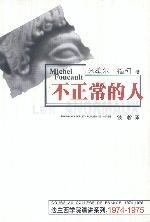
不正常的人
Les anormaux Douban
[法] 米歇尔·福柯 translator: 钱翰 publishing house: 上海人民出版社 2003 - 1
福柯认为“不正常的人”有三个源头,他们由历史上的三种人转变而来:“畸形人”、“需要改造的个人”和“手淫的儿童”。这三种人本身出现的时间是不一样的,畸形人的历史最为悠久,在古罗马的时候就已经出现。我们可以在疾病本身中寻找到某种原因。当然,福柯可以辩解说,他所坚持的方法就是外部分析,不理睬任何内部的逻辑。虽然如此,这么一个如此简单就能找到的原因,被福柯有意地忽略,不能削弱其分析的说服力。
疯癫与文明
Folie et Déraison: Histoire de la folie à l'âge classique Douban Goodreads
★ 9.1 91 ratings
[法] 米歇尔·福柯 translator: 刘北成 / 杨远婴 publishing house: 生活·读书·新知三联书店 2003 - 1 other title: 疯癫与文明
Madness & Civilization: A History of Insanity in the Age of Reason, by Michel Foucault, is an examination of the ideas, practices, institutions, art & literature relating to madness in Western history. It's an abridged English edition of Histoire de la folie à l'âge classique, originally published in 1961 as Folie et déraison. Histoire de la folie à l'âge classique. A full translation, The History of Madness, was published by Routledge in 6/2006. This was his 1st major book, written while Director of the Maison de France in Sweden. This history begins in the Middle Ages, noting the social & physical exclusion of lepers. It argues that with the gradual disappearance of leprosy, madness came to occupy this excluded position. The ship of fools in the 15th century is a literary version of one such exclusionary practice, the practice of sending mad people away in boats. However, during the Renaissance, madness was regarded as a common phenomenon because humans couldn't attain Divine Reason. As Cervantes' Don Quixote, all humans are weak to desires & dissimulation. Therefore, the insane, understood as those who had come too close to God's Reason, were accepted in the middle of society. It isn't before the 17th century, in a movement famously called the Great Confinement, that unreasonable people systematically were institutionalized. In the 18th century, the mad came to be seen as having lost what made them human & become animalistic & treated as such. It isn't before 19th century that madness was regarded as an illness to be cured. Foucault wasn't talking about medical institutions designed specifically for the insane but about the creation of houses of confinement for social outsiders, including not only the insane but also vagrants, the poor & orphans, & what effect those houses of confinement had on the insane & perceptions of madness in the West. He demonstrates that while confinement of social outcastes was a generally European phenomenon, it had a unique development in France & distinct developments in other countries such as Germany & England. Foucault also argues that madness during the Renaissance had the power to signify the limits of social order & to point to a deeper truth. This was silenced by Enlightened Reason. He also examines the rise of modern scientific & humanitarian treatment of the insane, notably at the hands of Philippe Pinel & Samuel Tuke. He claims these modern treatments were no less controlling than previous methods. Tuke's country retreat for the mad consisted of punishing them until they gave up their commitment to madness. Similarly, Pinel's treatment of the mad amounted to an extended aversion therapy, including such treatments as cold showers & straitjackets. This treatment amounted to repeated brutality until the pattern of judgment & punishment was internalized by the patient.
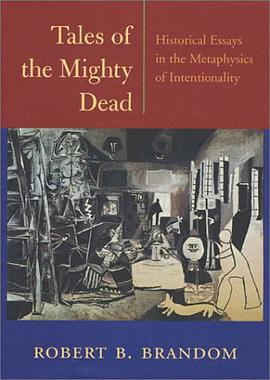
Tales of the Mighty Dead
Douban
Robert B. Brandom publishing house: Harvard University Press 2002 - 11
A work in the history of systematic philosophy that is itself animated by a systematic philosophic aspiration, this book by one of the most prominent American philosophers working today provides an entirely new way of looking at the development of Western philosophy from Descartes to the present. Brandom begins by setting out an historical context and outlining a methodological rationale for his enterprise. Then, in chapters on Spinoza, Leibniz, Hegel, Frege, Heidegger and Sellars, he pursues the most fundamental philosophical issues concerning intentionality, and therefore mindedness itself, revealing an otherwise invisible set of overlapping themes and explanatory strategies. Variously functionalist, inferentialist, holist, normative and social pragmatist in character, the explanations of intentionality offered by these philosophers, taken together, form a distinctive tradition. The fresh perspective afforded by this tradition enriches our understanding of the philosophical topics being addressed, provides a new conceptual vantage point for viewing our philosophical ancestors, and highlights central features of the sort of rationality that consists in discerning a philosophical tradition - and it does so by elaborating a novel, concrete instance of just such an enterprise.
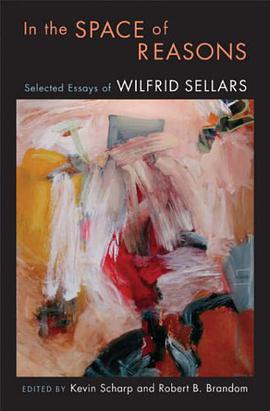
In the Space of Reasons
Douban
Wilfrid Sellars publishing house: Harvard University Press 2007 - 4
Wilfrid Sellars (1912-1989) was, in the opinion of many, the most important American philosopher of the second half of the 20th century. He was, Richard Rorty writes, "as original a mind as C. S. Peirce, and it has taken almost as long for the importance of his ideas to be appreciated." This collection, co edited by Sellars' chief interpreter and intellectual heir, should do much to elucidate and clearly establish the significance of this difficult thinker's vision for contemporary philosophy. The volume presents the most readable of Sellars' essays in a sequence that illuminates what Robert Brandom calls the "inferentialist" conception of meaning at the heart of his work. This conception, laid out in the early essays, is deployed in various epistemological contexts throughout the book so that, upon arriving at the concluding papers on Kant, the reader has been given a tour d'horizon not only of the central topics of philosophy of mind and language, but of much of the history of philosophy as well - and, with this, a sense of what a shifting of analytic philosophy from its Humean into its Kantian stage would entail.