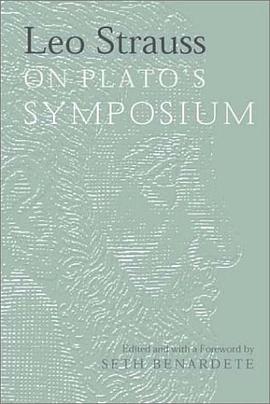
Leo Strauss On Plato's Symposium
Douban Goodreads
Leo Strauss
publishing house:
University Of Chicago Press
2003
- 5
From Library Journal
In fall 1959, Strauss offered a course at the University of Chicago titled "Plato's Political Philosophy," during which he lectured on the Symposium. It was suggested shortly after that the lectures be reworked and published, and Strauss agreed. Benardete (classics, New York Univ.) worked on the manuscript, but Strauss was not satisfied with the results, and the project languished until 1999, when Benardete picked it up again and completed it. The resulting publication is not only an excellent analysis of, and introduction to, the Symposium but a text that mirrors the mind and skills of a renowned teacher. Strauss provides a detailed and careful reading of the dialog, together with a cogent analysis of its place in Plato's work, the nature of Eros, the tension between philosophy and poetry, and other related topics. This is a valuable addition to libraries that support programs in philosophy and/or political studies. Terry Skeats, Bishop's Univ. Lib., Lennoxville, Quebec
Copyright 2001 Reed Business Information, Inc. --This text refers to the Hardcover edition.
Product Description
The first major piece of unpublished work by Leo Strauss to appear in more than thirty years, this volume offers the public the unprecedented experience of encountering this renowned scholar as his students did. Given as a course in autumn 1959 under the title "Plato's Political Philosophy," these provocative lectures—until now, never published, but instead passed down from one generation of students to the next—show Strauss at his subtle and insightful best.