Elgar
杜普蕾:埃尔加大提琴协奏曲/谜语变奏曲
Douban Spotify
Du Pre / Barenboim genre: Classical
release date 2005-10-18 publisher: Sony Classical
巴伦博伊姆和杜普蕾在1967年结婚经常搭档进行室内乐演出,并留下了大量精彩的录音。这给他们提供了一个很好的私密交流空间。虽然杜普蕾早就录制了埃尔加大提琴协奏曲,但是他们期待着能够来一次埃尔加的“回归” 1970年11月,巴伦博伊姆正好在费城管弦乐团担任客席演奏员,杜普蕾也随行。这段录音是他们举行一场音乐会时留下的录音。两人在听过录音后认为这是相当完美一个现场录音:杜普蕾和乐队配合的天衣无缝。这份录音很好地表达了两人的音乐理念:虽然音乐演出碰巧的临场完美发挥,但实际上是实实在在的完美表现而不是几百个演奏员单调的合一。音乐必须能够“呼吸”,是活的,其表达的细微差别是不能用言语来形容的。完美的音乐不仅仅是“正确”,任何一个精心准备的瞬间都有可能出差错。但在这样的场合,任何差错都是正确的。
ELGAR Salut d'Amour & other Elgar favorites
Douban
Nigel Kennedy / Peter Pettinger genre: Classical
release date 1992-10-28 publisher: Chandos
爱德华·埃尔加(Edward Elgar,1857-1934),英国作曲家,自幼随父亲学钢琴与小提琴,异常勤奋,主要靠自学掌握了多种乐器的演奏,尤以小提琴见长。1885年承父业任伍斯特教堂风琴手。他的音乐真实自然,富于创新精神,对英国音乐的发展很有促进。其妻卡罗琳·艾丽丝·罗伯茨对他帮助极大,其成功之作几乎全是在婚后创作的,著名的有:大合唱《杰龙修斯之梦》、《B小调小提琴协奏》、《第一交响曲》、《第二交响曲》、《E小调大提琴协奏曲》、合唱曲《黑色骑士》和《奥拉夫国王》等等,他的艺术毫不偏狭,思维极为宽广,曾受德国浪漫主义的影响,风格庄严而淳朴,英国人民把他看作是英国的贝多芬。他一生忠心耿耿地为提高英国的音乐水平而努力,1904年曾封为爵士并获功绩勋章。此外,还获剑桥大学、牛津大学、坎脱勃莱及美国耶鲁大学音乐博士学位,1924年被聘为英王御前音乐教师。 埃尔加作为作曲家的伟大之处在于他能把高雅脱俗的陈述与流行风格相结合。和他的大型作品并列的有几十首较轻快的小曲。其特点是旋律妩媚、技巧精湛,这完全得益于其自年轻时所开始积累的实践经验。他成为掌握配器法技巧的超级大师之一,但他对于合唱效果之控制,也同样令人叹为观止。他的和声语言源自舒曼和勃拉姆斯,也具备他那一代人所特具的瓦格纳式变化音的色彩,但由于和比才、圣-桑斯的优美雅致相近似,整体显得比较轻快 。他的音乐犹如他的个性,从极其外向的亲切和蔼转为深刻内省的抑郁。 《爱的致意》一译《情人的问候》,作于1888年,原为小提琴与钢琴而作,它不仅是作者埃尔加的代表作之一,而且是小提琴独奏曲中的名篇。本曲具有典型的"小夜曲"风格,轻松而典雅,是极适用于舞会和沙龙等场合的音乐。乐曲为典型的"ABA"三段体加一个尾声构成。A段主题为E大调,4/4拍子,小提琴在高音区奏出饱含深情的旋律,恰似来自情人的绵绵情话;乐曲的B段主题转为 G大调,柔美的曲调中多了一丝哀怨的情调;经过带有泛音色彩的华丽过门,乐曲又回到A段,经过带有复杂情绪的尾声,全曲在A段主题的变奏形式下逐渐减弱而终了,仿佛是情人还在喃喃私语…… 奈杰尔·肯尼迪(Nigel Kennedy)1956年出生于英国布莱顿,其祖父曾任BBC交响乐团首席大提琴,与克莱斯勒、海菲兹、鲁宾斯坦等大师合作演奏,过从甚密;祖母为钢琴家,约翰·麦高麦克的钢琴伴奏,也教过恩里科·卡鲁索的孩子;父亲约翰·肯尼迪也是一名大提琴演奏家,曾任皇家爱乐乐团的首席大提琴。使得肯尼迪大红大紫的是他在1989年与英国室内乐团一起录制的维瓦尔第《四季》,该CD曾以200多万张的销量而成为最畅销的古典音乐作品,打破了当时的吉尼斯世界记录,并在英国古典排行榜上稳居榜首位置达一年之久。1997年,肯尼迪荣获BRIT大奖中的“英国音乐杰出贡献奖,2001年获“年度男艺术家”奖。 本盘由小提琴家奈杰尔·肯尼迪和钢琴家佩蒂吉(Peter Pettinger)联手演绎,企鹅三星评介,在《BBC音乐杂志》的问卷调查中被评为埃尔加小提琴奏鸣曲的首选录音。这也是肯尼迪所录制的第一张CD。
Elgar - Enigma Variations; Introduction & Allegro (LSO, Davis)
Douban
埃尔加 Edward Elgar / 科林·戴维斯 Colin Davis … genre: Classical
release date 2007-06-04 publisher: LSO Live
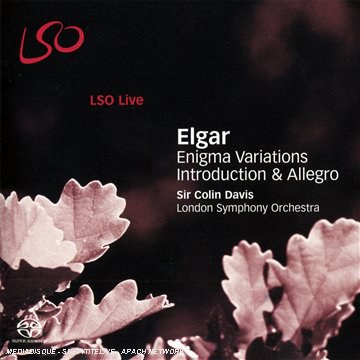
The Variations on an Original Theme, or 'Enigma' as it is commonly known, brought Elgar overnight fame when it appeared in 1899. The music is glorious from start to finish, especially in the serene Nimrod. Each variation is given a cryptic title referring to one of Elgar's friends although the overall enigma behind the original theme has never been deciphered.
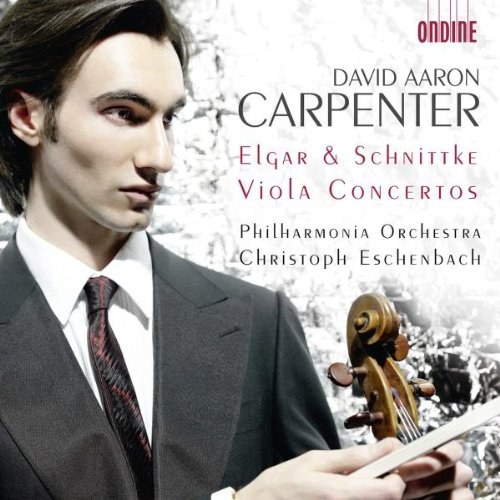
Elgar & Schnittke: Viola Concertos
Douban
David Aaron Carpenter / Philharmonia Orchestra … genre: Classical
release date 2009-09-01 publisher: Ondine
Ondine is delighted to present 22-year-old, New York-born violist David Aaron Carpenter’s debut recording. This will be the first of several recordings under a recent agreement between Ondine and the artist. David Aaron Carpenter has been the protégé of several major international musical figures, such as Pinchas Zukerman, Yuri Bashmet and Christoph Eschenbach. David Aaron Carpenter has recently emerged as one of the world’s most promising young talents, winning, in 2006, the prestigious Walter E. Naumburg Viola Competition and being the 2007 protégé for The Rolex Mentor and Protégé Arts Initiative, the youngest in this mentorship programme’s history. David Aaron Carpenter adapted much of the Elgar Concerto himself, using the well-known and Elgar-sanctioned arrangement by Lionel Tertis as his basis. Ondine shares in David Aaron Carpenter’s mission to focus attention on the viola as a great solo string instrument in its own right.
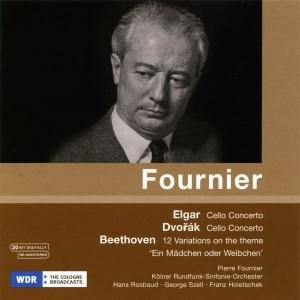
Fournier: Elgar Cello Concerto, Dvorak Cello Concerto, etc
Douban
Pierre Fournier / Cologne Radio Symphony Orchestra / Hans Rosbaud …
release date 2008-01-01 publisher: MEDICI ARTS
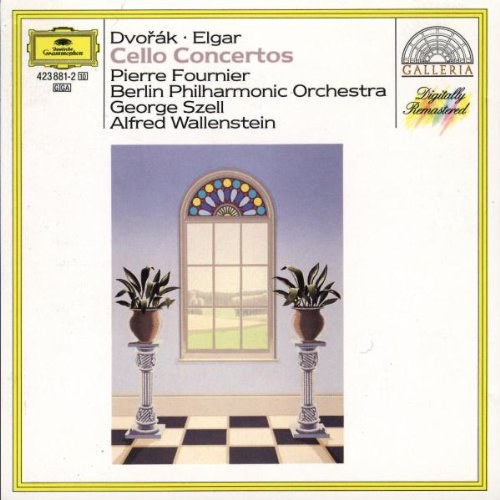
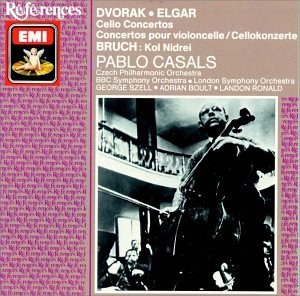
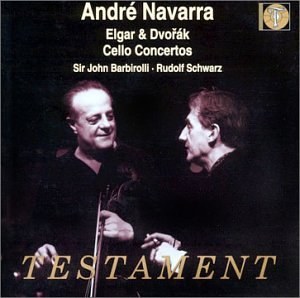
Fournier first performed the Elgar Concerto in 1949. His recording with the Berlin Philharmonic and Wallenstein was made in 1967 and in between came numerous performances, amongst them this one, taped in Cologne in 1955. The conductor was Hans Rosbaud, a superb and still under appreciated, dedicated musician. Fournier represented the noble strain of the French School in this work, in which expressive gestures were at the service of architectural and structural goals – never a means in themselves. The most internationally famous French player of the concerto was Tortelier, who had studied it at college where it was taught, but Fournier’s natural aristocracy offered a valid alternative; Navarra’s rougher-toned but no less important place in this Trinity offered three great and fruitfully divergent approaches. Since I’ve never made much of a secret of the fact that Franco-Belgian string players are probably closest to my heart it’s always a particular pleasure to encounter a broadcast such as this. That said Fournier is on slightly fallible form and pedants will want to note these slips. Intonation is certainly not infallible – Fournier was no Gendron when it came to matters of intonation – and he takes a little while to settle. Dignity and a refusal to linger are hallmarks of Fournier’s Elgar. He’s slightly broader in the slow movement here than in the Berlin recording but fractionally tighter in the first movement, takes exactly the same tempo in the Adagio; half a minute quicker in Cologne than in Berlin in the finale. Rosbaud accents finely; the layering of the string choirs is frequently masterly, though he can’t have been that familiar with the work at the time. He certainly ensures shifting bow weights in the strings’ entries and attacks. Fournier makes a few finger slips in the Scherzo and seems to tire in the finale slightly where intonation occasionally suffers again. For those who prefer a lingering, long drawn out catharsis in this work French players are not your first port of call. I’ve always been more drawn to their way of thinking and to Anthony Pini’s – so, despite the blips, this is a treasurable reading. Its companion sees Fournier teamed with a hero of the Dvořák discography – not least in this work – in the shape of George Szell. His talismanic recording with Casals in 1938 is irreplaceable but he and Fournier clearly enjoyed a sympathetic collaboration. Neither gave in to syrup. They recorded the work in Berlin in the early sixties; other Fournier performances have survived of course – there’s a fine broadcast disc in Prague with Georges Sebastian directing the Czech Philharmonic in 1959. Fournier is on better technical form here. There’s no second subject wallowing, but nor is there the brutish stupidity of Toscanini’s account of this work – an abject disappointment – in which every subtlety and nuance is sacrificed to the dictates of speed. This conversely is a well structured, strongly argued, warmly expressive account all round. It’s certainly faster than the commercial recording made at around the same time but not worryingly so. The proportions of the piece are intact and the noble edifice of the slow movement and the culminatory reflections of the finale find noble interpreters in the two men. I must also note the very distinctive Cologne flautist. As a pendant there’s a witty performance of the Twelve Variations on ‘Ein Mädchen oder Weibchen’ from Mozart’s Die Zauberflöte with pianist Franz Holetschek. Both the concerto performances are worthy adjuncts to, though not replacements for, Fournier’s commercial recordings. by Jonathan Woolf ( )